Mostrando entradas con la etiqueta The Amazon River. Mostrar todas las entradas

domingo, 1 de noviembre de 2015

NSF : How much did indigenous peoples alter the Amazon forest? .- ¿Cuánto pueblos indígenas alteran la selva amazónica?

Hola amigos: A VUELO DE UN QUINDE EL BLOG., Antes de que llegaran los europeos, los pueblos indígenas alteran la selva amazónica - pero sobre todo a lo largo de los principales ríos.
Sus efectos fueron casi imperceptible en zonas de selva tropical más de un día de camino de un río, según un nuevo estudio publicado en la Revista de Biogeografía.
El autor principal Mark Bush, un biólogo en el Instituto de Tecnología de Florida, dice, "nadie duda de la importancia de las acciones humanas a lo largo de los principales cursos de agua, pero si los seres humanos tenían un mayor efecto sobre el ecosistema que cualquier otra criatura grande aún no se ha establecido en el gran parte de la Amazonía ".
More information...........

Effects were likely only along major waterways
hoatzin bird in a tree
A bird called the hoatzin is a hallmark of Amazonian rivers and lakes.
Credit and Larger Version
October 28, 2015
Before Europeans arrived, indigenous peoples altered the Amazon forest--but primarily along major rivers.
Their effects were almost imperceptible in rainforest areas more than a day's walk from a river, according to new research published in the Journal of Biogeography.
Lead author Mark Bush, a biologist at the Florida Institute of Technology, says, "no one doubts the importance of human actions along major waterways, but whether humans had a greater effect on the ecosystem than any other large creature has yet to be established in much of Amazonia."
 
Past human influence
 
Amazonia supported sophisticated cultures before Europeans' arrival, but Bush and an international team of scientists argue that a recent emphasis by researchers on Amazonia as a manufactured landscape overstates the facts.
Bush and his collaborators "have reversed a decades-long trend of finding an ever-increasing extent and ecological effects of human settlement in pre-Columbian Amazonia," says George Malanson, program director in the National Science Foundation (NSF)'s Division of Environmental Biology, which funded the research.
Malanson says this review of paleoecological data aims "to strengthen a moderate view of Amazonia that was neither pristine nor completely settled."
Amazonia, nearly the size of the continental United States, is a vast landscape. "Extrapolations about human effects from a few archaeological sites, mainly located along watercourses, must be tempered in the face of more wide-ranging data," says Dolores Piperno of the Smithsonian Tropical Research Institute, a co-author of the paper.
 
Insights relevant to today
 
The paper's findings are relevant to modern society and conservation, its authors believe.
If forests were heavily modified prior to European arrival--as suggested by some recent research--then, Bush says, "they have regrown in just over one tree generation to support their incredible biodiversity." Such rapid recovery could be used to justify logging forests aggressively because they would regrow, he says.
If, on the other hand, humans had limited influence on forests, the woodlands might not regrow as readily after major disturbances, and logging could lead to long-term degradation.
These questions are important as policymakers decide whether to enforce or relax protections on areas already designated as parks, such as the Yasuni of Ecuador, according to Bush.
The researchers conclude that pre-European land use by the native peoples in Amazonia varied widely in space and time, but that vast areas of the Amazon were hardly affected by human activity.
The study was also supported by Brazil's National Council for Scientific and Technological Development; Brazil's Coordination for the Improvement of Higher Education Personnel; the Smithsonian Tropical Research Institute; and the National Museum of Natural History.
-- 
Cheryl Dybas, NSF (703) 292-7734
Investigators Mark Bush
Dolores Piperno
Related Institutions/Organizations Florida Institute of Technology
Related Awards #0742301 Collaborative Research: Pre-Columbian Human Impacts on Amazonian ecosystems
#1260983 Investigating the timing and consequences of Pleistocene megafaunal population collapse in the Neotropics
Total Grants $865,491
Related WebsitesNSF News: Catastrophic Drought Looms for Capital City of Bolivia: https://www.nsf.gov/news/news_summ.jsp?org=NSF&cntn_id=118047&preview=false
NSF News: Scientists Reconstruct Pre-Columbian Human Effects on the Amazon Basin: http://www.nsf.gov/news/news_summ.jsp?cntn_id=124287
map showing the Amazon river watershed
The Amazon River watershed covers a vast area; research took place in various Amazonian countries.
Credit and Larger Version
A false-color satellite image shows a western Amazonian river course
A false-color satellite image shows a western Amazonian river that has meandered in its course.
Credit and Larger Version
Researcher Jake Schiferl uses a soil augur to extract samples from the flood-plain forest of Peru.
Credit and Larger Version
Scientist Crystal McMichael with a helper next to a downed tree
Scientist Crystal McMichael with a helper from a village near Lake Kumpaka, Ecuador.
Credit and Larger Version
A family home on a low bluff above an Amazonian river.
Credit and Larger Version
the National Science Foundation
Guillermo Gonzalo Sánchez Achutegui
ayabaca@gmail.com
ayabaca@hotmail.com
ayabaca@yahoo.com
Inscríbete en el Foro del blog y participa : A Vuelo De Un Quinde - El Foro!

domingo, 3 de agosto de 2014

NASA : NASA Selects Instruments to Track Climate Impact on Vegetation


Amazon rainforest
Two new spaceborne Earth-observing instruments will help scientists better understand how global forests and ecosystems are affected by changes in climate and land use change. This image of the Amazon rainforest is from a 2010 global map of the height of the world’s forests based on multiple satellite datasets.
Image Credit: 
NASA Earth Observatory
 
NASA has selected proposals for two new instruments that will observe changes in global vegetation from the International Space Station. The sensors will give scientists new ways to see how forests and ecosystems are affected by changes in climate or land use change.
A laser-based system from the University of Maryland, College Park, will observe the structure of forest canopy. This instrument will be completed in 2019 and will not cost more than $94 million. A high-resolution multiple wavelength imaging spectrometer from NASA's Jet Propulsion Laboratory (JPL) in Pasadena, California, will study the effectiveness of water use by vegetation. This instrument will be completed in 2018 and not cost more than $30 million.
"We are excited to expand the use of the International Space Station to make critical Earth observations that will help scientists understand the diversity of forests and vegetation and their response to a changing climate," said John Grunsfeld, associate administrator of NASA's Science Mission Directorate in Washington. "These innovative Earth Venture Instruments will join a growing suite of NASA Earth-observing sensors to be deployed to the station starting this year."
The instruments were competitively selected from 20 proposals submitted to NASA's Earth Venture Instrument program. Part of the Earth System Science Pathfinder program Earth Venture investigations are small, targeted science investigations that complement NASA's larger research missions. The National Research Council recommended in 2007 that NASA undertake this type of regularly solicited, quick-turnaround project. The program's first selection was awarded in 2010.
Ralph Dubayah, of the University of Maryland, is the principal investigator for the Global Ecosystem Dynamics Investigation (GEDI) Lidar. This project will use a laser-based system to study a range of climates, including the observation of the forest canopy structure over the tropics, and the tundra in high northern latitudes. This data will help scientists better understand the changes in natural carbon storage within the carbon cycle from both human-influenced activities and natural climate variations.
Simon Hook of JPL is the principal investigator for the ECOsystem Spaceborne Thermal Radiometer Experiment on Space Station (ECOSTRESS). This project will use a high-resolution thermal infrared radiometer to measure plant evapotranspiration, the loss of water from growing leaves and evaporation from the soil. These data will reveal how ecosystems change with climate and provide a critical link between the water cycle and effectiveness of plant growth, both natural and agricultural.
The GEDI team has extensive experience in observing and modeling forest and vegetation dynamics. Dubayah has led numerous vegetation lidar observations from sub-orbital platforms throughout his career. The team includes partnerships with NASA's Goddard Space Flight  Center, Greenbelt, Maryland; Woods Hole Research Center, Woods Hole, Massachusetts; the U.S. Forest Service, Ogden, Utah; and Brown University, Providence, Rhode Island.
The ECOSTRESS team has extensive experience in development and analysis of thermal infrared spectroscopic images of the Earth’s surface. Hook has served as project scientist for the Advanced Spaceborne Thermal Emission Reflection Radiometer (ASTER) instrument on NASA's Earth Observing System Terra satellite and has been involved in numerous sub-orbital field campaigns. The team includes partnerships with the U.S. Department of Agriculture, Beltsville, Maryland, and Maricopa, Arizona; Princeton University, Princeton, New Jersey; and University of Idaho, Moscow, Idaho.
The International Space Station provides several in-orbit capabilities useful to both instruments. The space station orbit is inclined relative to the poles, providing more observation time of forests and vegetation over temperate land masses than possible from the polar orbits commonly used for other types of Earth observations. The GEDI laser requires significant power resources, which the space station can provide. Also, the relatively low altitude of the station's orbit, about 260 miles up, benefits GEDI by ensuring a higher return energy for laser pulses reflected from the ground.
In 2012, NASA selected the first Earth Venture Instrument investigation, the Tropospheric Emissions: Monitoring of Pollution (TEMPO) mission. TEMPO will be the first space-based sensor to monitor major air pollutants across North American hourly during daytime. It will share a ride on a commercial satellite as a hosted payload and orbit about 22,000 miles above the equator.
NASA's Langley Research Center in Hampton, Virginia, manages the Earth System Science Pathfinder program for NASA's Science Mission Directorate. The missions in this program provide an innovative approach to address Earth science research with periodic windows of opportunity to accommodate new scientific priorities.
For more information, visit:
NASA
Guillermo Gonzalo Sánchez Achutegui

martes, 15 de abril de 2014

nsf.gov - National Science Foundation - Drought and fire in the Amazon lead to sharp increases in forest tree mortality

Deforestation and fragmentation of forests help create tinderbox conditions
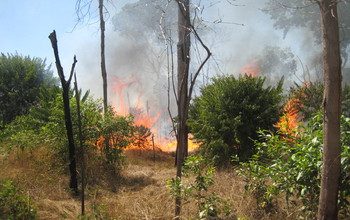
Grasses on fire in Mato Grosso, Brazil
Grasses in Mato Grosso, Brazil, catch fire regularly near the edges of forests and croplands.
Credit and Larger Version
April 14, 2014
Ongoing deforestation and fragmentation of forests in the Amazon help create tinderbox conditions for wildfires, contributing to rapid and widespread forest loss during drought years, according to a team of researchers.
Their findings show that forests in the Amazon could reach a "tipping point" when severe droughts coupled with forest fires lead to large-scale loss of trees, making recovery more difficult, said Jennifer Balch, a geographer at Penn State University.
"We documented one of the highest tree mortality rates witnessed in Amazon forests," Balch said. "Over the course of our experiment, 60 percent of the trees died with combined drought and repeated fire.
"Our results suggest that a perfect firestorm, caused by drought conditions and previous fire disturbance, crossed a threshold in forest resistance."
The researchers conclude in today's issue of the journal Proceedings of the National Academy of Sciences (PNAS) that "efforts to end deforestation in the Amazon must be accompanied by programs and policies that reduce the accidental spread of land management fires into neighboring forests--and effectively control forest fires when started."
Balch noted that climate change is expected to warm the air in the Amazon region by several degrees and substantially reduce regional precipitation, making understanding the interactions between droughts and fires even more important.
"However, before any prediction of Amazon climate warming occurs, our study demonstrates that drought and fire are already driving forest dieback," she said.
The eight-year study is the largest and longest-running fire experiment in tropical forests. The researchers burned 50-hectare forest plots in the Southeastern Amazon, a region prone to the effects of climate change.
"If drought and wildfires happen in the same time-frame, there are far-reaching consequences for the health of Amazon forests," said Henry Gholz, a program director in the National Science Foundation Division of Environmental Biology, which funded the research. "When climate change becomes part of the mix, questions for these forests loom yet larger."
The plots were burned every year, every three years, or not at all. The timeframe for the study included 2007, a year of severe drought.
By comparing the tree deaths for the plots each year, the researchers could assess the effect of drought on fire intensity and tree deaths.
"Drought causes more intense and widespread fires," said lead PNAS paper author Paulo Brando of the Instituto de Pesquisa Ambiental da Amazônia, Carnegie Institution for Science, and Woods Hole Research Center.
"Four times more adult trees were killed by fire during a drought year, which means that there was also more carbon dioxide released to the atmosphere, more tree species loss and a greater likelihood of grasses invading the forest."
The researchers found that fragmented forests are more susceptible to the effects of drought and fire, and that drought leads to an increase in fuel such as leaves and branches.
The findings are key, in part, because most climate change models have not included the effects of fires on Amazon forests.
"Basically, none of the models used to evaluate future Amazon forest health includes fire, so most of these predictions underestimate the amount of tree death and overestimate overall forest health," said Michael Coe, a scientist at the Woods Hole Research Center.
Fire as a forest management tool can contribute to an increase in severe fires because the resulting thinner canopy leads to drier forest conditions.
This lack of humidity does not dampen fires but does encourage airflow between fields and forests. Fragmented forests also have more edge space, which is susceptible to both fire and invasive grasses, another potential fuel.
"These forests are tough and can take a lot, but if drought reaches a certain level, big trees begin to die," said Daniel Nepstad of the Earth Innovation Institute, who also co-led the project. "We now know that severe drought makes fires more intense, creating a second tree mortality threshold."
The results are important because large portions of the Amazon forest already experience droughts and are susceptible to fire--they are broken into smaller blocks by agriculture and are close to human settlements, the predominant source of fire in the Amazon.
The researchers analyzed NASA satellite data to provide regional context for results from the experimental burns.
"In 2007, fires in Southeast Amazonia burned 10 times more forest than in an average climate year -- an area equivalent to a million soccer fields," said scientist Douglas Morton of NASA.
"These smaller forest fragments have more edges than large blocks of forest, which expose them to the hotter, drier conditions in the surrounding landscape and make them more vulnerable to escaped fires," said researcher Marcia Macedo of the Woods Hole Research Center.
By 2011, about eight percent of Southeast Amazonia's forests were less than 328 feet from an agricultural or pasture clearing. This lattice-like network of degraded forest edges is now very susceptible to future fires.
The research was also funded by the Packard Foundation, NASA and the Max Planck Institute for Biogeochemistry.
-NSF-
Media Contacts Cheryl Dybas, NSF, (703) 292-7734, cdybas@nsf.gov
Eunice Yeomans, WHRC, (508) 444-1509, eyoumans@whrc.org
Anne Danahy, PSU, (814) 865-4504, acd2@psu.edu
The National Science Foundation (NSF) is an independent federal agency that supports fundamental research and education across all fields of science and engineering. In fiscal year (FY) 2014, its budget is $7.2 billion. NSF funds reach all 50 states through grants to nearly 2,000 colleges, universities and other institutions. Each year, NSF receives about 50,000 competitive requests for funding, and makes about 11,500 new funding awards. NSF also awards about $593 million in professional and service contracts yearly.
Useful NSF Web Sites:
NSF Home Page: http://www.nsf.gov
NSF News: http://www.nsf.gov/news/
For the News Media: http://www.nsf.gov/news/newsroom.jsp
Science and Engineering Statistics: http://www.nsf.gov/statistics/
Awards Searches: http://www.nsf.gov/awardsearch/

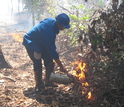
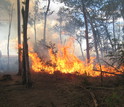
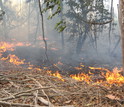
Experimental fire burning the understory of a forest between Cerrado and Amazonia, Brazil.
Credit and Larger Version
Scientist advancing  a fire line in an experimental fire plot in Mato Grosso, Brazil.
Advancing fire line in an experimental fire plot in Mato Grosso, Brazil.
Credit and Larger Version
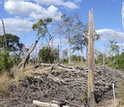
Forest with bare land degraded by experimental fires in Mato Grosso, Brazil.
Forest degraded by experimental fires in Mato Grosso, Brazil.
Credit and Larger Version
An experimental fire in the Brazilian forest
Igniting an experimental fire in the Brazilian forest, using a drip torch.
Credit and Larger Version
Fire experiment in Mato Grasso, Brazil with tinderbox grasses along the forest
Fire experiment in Mato Grasso, Brazil; tinderbox grasses lie along forests and croplands.
Credit and Larger Version
 
The National Science Foundation (NSF)
Guillermo Gonzalo Sánchez Achutegui

jueves, 14 de junio de 2012

Science: Scientists Reconstruct Pre-Columbian Human Effects on the Amazon Basin

Hi My Friends: A VUELO DE UN QUINDE EL BLOG., Small, shifting human populations existed in the Amazon before the arrival of Europeans, with little long-term effect on the forest.

Findings overturn idea that the Amazon had large populations of humans that transformed the landscape
 Scientists travel along rivers in the Peruvian Amazon to look at environmental change.
Credit: Crystal McMichael

Download the high-resolution JPG version of the image. (836 KB)

Sampling location, seen from atop a river bluff in the Peruvian Amazon.
Credit: Crystal McMichael

Download the high-resolution JPG version of the image. (911 KB)
Crystal McMichael and other scientists collect soils in the Peruvian Amazon.
Credit: Crystal McMichael

Download the high-resolution JPG version of the image. (1.7 MB)

Researcher Luiz Lobato prepares vehicles for travel along the Porto Velho-Manaus transect.
Credit: Crystal McMichael

Download the high-resolution JPG version of the image. (1.6 MB)

Scientists make their way along the Amazon River to sample soils along river bluffs.
Credit: Crystal McMichael

Download the high-resolution JPG version of the image. (995 KB)
River bluff field research locations along the Madre de Dios River in Peru.
Credit: Crystal McMichael

Download the high-resolution JPG version of the image. (948 KB)

The researchers' work is described in the June 15, 2012 issue of the journal Science.
Credit: Copyright AAAS 2012

Download the high-resolution JPG version of the image. (530 KB)

Small, shifting human populations existed in the Amazon before the arrival of Europeans, with little long-term effect on the forest.
That's the result of research led by Crystal McMichael and Mark Bush of the Florida Institute of Technology (FIT). The finding overturns the idea the Amazon was a cultural parkland in pre-Columbian times with large human populations that transformed vast tracts of the landscape.
The Amazon Basin is an of area of Earth that has one of the highest instances of biodiversity. Understanding how it was modified by humans in the past is important for conservation and for understanding the ecological processes in tropical rainforests.
McMichael, Bush and a team of researchers looked at how widespread human effects were in Amazonia before Europeans arrived. They published their results in this week's issue of the journal Science.
"The findings have major implications for how we understand the effect of the land-use change now occurring in Amazonia," said Alan Tessier, program director in the National Science Foundation's Division of Environmental Biology, which funded the research.
"Making the assumption that this system is resilient to deforestation, it turns out, isn't a position supported by historical evidence," Tessier said.
If the pre-Columbian Amazon was a highly altered landscape, then most of the Amazon's current biodiversity could have come from human effects.
The team retrieved 247 soil cores from 55 locations throughout the central and western Amazon, sampling sites that were likely disturbed by humans, such as river banks and other areas known from archaeological evidence to have been occupied by people.
They used markers in the cores to track the histories of fire, vegetation and human alterations of the soil.
The scientists conclude that people lived in small groups, with larger populations in the eastern Amazon--and most people lived near rivers.
They did not live in large settlements throughout the basin as was previously thought. Even sites of supposedly large settlements did not show evidence of high population densities and large-scale agriculture.
All the signs point to smaller, mobile populations before Europeans arrived. These small populations did not alter the forests substantially.
"The amazing biodiversity of the Amazon is not a by-product of past human disturbance," said McMichael. "We can't assume that these forests will be resilient to disturbance, because most of them have, at most, been lightly disturbed in the past.
"There is no parallel in western Amazonia for the scale of modern disturbance that accompanies industrial agriculture, road construction and the synergies of those disturbances with climate change."
Other co-authors of the paper are D.R. Piperno of the Smithsonian National Museum of Natural History; M.R. Silman of Wake Forest University; A.R. Zimmerman of the University of Florida; M.F. Raczka of FIT; and L.C. Lobato of the Federal University of Rondônia in Brazil.
-NSF-

Media Contacts Cheryl Dybas, NSF (703) 292-7734 cdybas@nsf.gov
Karen Rhine, FIT (321) 674-8964 krhine@fit.edu


The National Science Foundation (NSF) is an independent federal agency that supports fundamental research and education across all fields of science and engineering. In fiscal year (FY) 2012, its budget is $7.0 billion. NSF funds reach all 50 states through grants to nearly 2,000 colleges, universities and other institutions. Each year, NSF receives over 50,000 competitive requests for funding, and makes about 11,000 new funding awards. NSF also awards nearly $420 million in professional and service contracts yearly.
 Get News Updates by Email 
Useful NSF Web Sites:
NSF Home Page: http://www.nsf.gov
NSF News: http://www.nsf.gov/news/
For the News Media: http://www.nsf.gov/news/newsroom.jsp
Science and Engineering Statistics: http://www.nsf.gov/statistics/
Awards Searches: http://www.nsf.gov/awardsearch/
 The National Science Foundation (NSF)
 Guillermo Gonzalo Sánchez Achutegui
 ayabaca@gmail.com
 ayabaca@hotmail.com
 ayabaca@yahoo.com
 Inscríbete en el Foro del blog y participa : A Vuelo De Un Quinde - El Foro!

Mi lista de blogs