Mostrando entradas con la etiqueta The Bats. Mostrar todas las entradas

domingo, 2 de octubre de 2016

The National Science Foundation (NSF): To slow spread of infectious diseases, NSF, NIH, USDA invest $16.6 million:.- Para frenar la propagación de enfermedades infecciosas, NSF, NIH, USDA van a invertir $ 16,6 millones de dólares

https://www.nsf.gov/news/news_summ.jsp?cntn_id=189832&WT.mc_id=USNSF_51&WT.mc_ev=click

Scientists will study disease transmission among humans, other animals and environment

Infectious disease transmission links disease vectors, disease hosts and human habitations.

Infectious disease transmission links disease vectors, disease hosts and human habitations.
Credit and Larger Version

September 27, 2016
Outbreaks of infectious diseases such as Zika increasingly threaten global public health. Scientists expect five such new diseases to emerge each year.
To find out whether our interaction with the environment is somehow responsible, the Ecology and Evolution of Infectious Diseases (EEID) program -- a joint effort of the National Science Foundation (NSF), National Institutes of Health (NIH) and the U.S. Department of Agriculture (USDA) -- has awarded $16.6 million in new grants.

Rapid response

"Our ability to rapidly respond to disease outbreaks requires a basic understanding of how pathogens spread and evolve," says Sam Scheiner of NSF's Directorate for Biological Sciences and EEID program officer at NSF. "The EEID awards provide that broad knowledge by addressing infectious diseases in humans, in agricultural and wildlife animals, and in plants. They also enhance our capacity for response by building international collaborations and through extensive student training."
EEID projects allow scientists to study how habitat destruction, invasions of non-native species, pollution and other large-scale environmental events alter the risks of emergence of viral, parasitic and bacterial diseases in humans and other animals.
Researchers funded by EEID advance basic theory related to infectious diseases, and apply that knowledge to improve scientists' understanding of how pathogens spread through populations at a time of increasing global change.
"Predicting, controlling and preventing infectious disease threats requires multi-disciplinary research and international collaboration," says Christine Jessup of NIH's Fogarty International Center. "Through this unique and long-standing multi-agency partnership, NIH continues to support disease ecology research focused on threats to human health, including research in resource-poor countries, with the goal of fostering locally-relevant solutions."
 
Current, future threats
 
This year's EEID awardees conduct research on such subjects as: disease transmission in migratory birds along the Palearctic-African flyway; transmission networks and their implications for bee disease; the disease leishmaniasis in humans, dogs and sandflies in peri-urban Brazil; multi-species interactions in the microbiomes of plants, such as the grass tall fescue; and the discovery and characterization of viruses in primates, rodents and bats.
"The National Institute of Food and Agriculture is a key supporter of extramural research on food safety and security," says Sonny Ramaswamy, director of USDA's National Institute of Food and Agriculture. "Through our partnership with the Ecology and Evolution of Infectious Diseases program, NIFA is supporting cutting-edge research that ultimately can help American farmers combat infectious diseases that affect the health of crops and livestock animals."
Adds Yair Rotstein, executive director of the U.S.-Israel Binational Science Foundation, which is also supporting this year's awards: "Infectious diseases don't recognize countries' borders. Research on their eradication is therefore likely to benefit greatly from international cooperation. The U.S.-Israel Binational Science Foundation is proud to fund the Israeli scientist looking into the role of migratory birds in the spread of infectious diseases, demonstrating the importance of cross-border cooperation."
2016 EEID Awards
NSF-funded
Jonathan Epstein, Ecohealth Alliance Inc.,
RCN: EcoHealth Net 2.0: A One Health approach to disease ecology research & education
Wayne Getz, University of California, Berkeley,
US-Israel Collab: Pathogens take wings: disease transmission in migratory birds along the Palearctic-African flyway
Kurt Vandegrift, Pennsylvania State University, University Park,
 The community ecology of viromes: Virome assembly and pathogen transmission in a changing landscape
NIH-funded
Janis Antonovics, University of Virginia,
 Ecology and evolution of transmission mode: vector and aerial transmission in anther-smut
Scott McArt, Cornell University,
Transmission networks in trait-based communities: implications for bee disease
Jacob Oleson, University of Iowa,
 Epidemic modeling framework for complex, multi-species disease processes and the impact of vertical and vector transmission: A study of Leishmaniasis in Peri-Urban Brazil
USDA-funded
Charles Mitchell, University of North Carolina at Chapel Hill,
 Multispecies interactions in the microbiome: dynamic responses of parasite individuals, populations, and communities
-NSF-

Media Contacts Cheryl Dybas, NSF, (703) 292-7734,
cdybas@nsf.gov

Related WebsitesNSF News (2015 EEID Awards): To slow the spread of infectious diseases, NSF, NIH, USDA support new research:
https://www.nsf.gov/news/news_summ.jsp?cntn_id=136044
NSF News (2014 EEID Awards): Racing ahead of disease outbreaks: $12 million in new research grants:
https://www.nsf.gov/news/news_summ.jsp?cntn_id=132570
NSF News (2013 EEID Awards): Outbreak: Ecology and Evolution of Infectious Disease grants support research on disease transmission:
https://www.nsf.gov/news/news_summ.jsp?cntn_id=129280
NSF Special Report: Ecology and Evolution of Infectious Diseases: https://www.nsf.gov/news/special_reports/ecoinf/
NSF EEID Discovery Article Series: Seeking Zika: Where and when will Zika-carrying mosquitoes strike next?:
https://www.nsf.gov/news/news_summ.jsp?cntn_id=137712


The National Science Foundation (NSF) is an independent federal agency that supports fundamental research and education across all fields of science and engineering. In fiscal year (FY) 2016, its budget is $7.5 billion. NSF funds reach all 50 states through grants to nearly 2,000 colleges, universities and other institutions. Each year, NSF receives more than 48,000 competitive proposals for funding and makes about 12,000 new funding awards. NSF also awards about $626 million in professional and service contracts yearly.
 Get News Updates by Email 
Useful NSF Web Sites:
NSF Home Page:
 https://www.nsf.gov
NSF News:
https://www.nsf.gov/news/
For the News Media:
https://www.nsf.gov/news/newsroom.jsp
Science and Engineering Statistics:
 https://www.nsf.gov/statistics/
Awards Searches:
 https://www.nsf.gov/awardsearch/
EEID grantees will study interactions between white-footed mice and blacklegged, or deer, ticks.
Credit and Larger Version
Disease transmission networks in bee disease is the subject of a new EEID project.
Credit and Larger Version
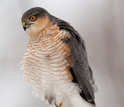
Pathogens take wing: Diseases in migratory birds on the Palearctic-African Flyway are under study.
Credit and Larger Version
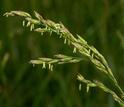
EEID biologists will conduct research on the microbiome of a widespread grass called tall fescue.
Credit and Larger Version
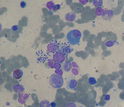
The disease leishmaniasis under a microscope. EEID researchers will track it in peri-urban Brazil.
Credit and Larger Versión
The National Science Foundation (NSF)
Guillermo Gonzalo Sánchez Achutegui
ayabaca@gmail.com
ayabaca@hotmail.com
ayabaca@yahoo.com
Inscríbete en el Foro del blog y participa : A Vuelo De Un Quinde - El Foro!

domingo, 25 de octubre de 2015

NSF : How a flying bat sees space .- ¿Cómo un murciélago volando hace un hueco?

Hola amigos: A VUELO DE UN QUINDE EL BLOG., Las grabaciones de ecolocación de cerebros murciélagos  tienen por primera vez dado a los investigadores una visión de cómo los mamíferos entender el espacio 3-D.
Por murciélagos de entrenamiento para volar alrededor de obstáculos en una habitación, y se sientan pacientemente en una plataforma, del equipo de investigación de la Fundación Nacional de Ciencia (NSF)  financiado fueron capaces de interpretar cómo los animales utilizan la ecolocalización - un sonido sistema de navegación de alta frecuencia que los murciélagos utilizan de caza - para percibir su entorno. Los resultados fueron presentados hoy en la reunión anual de la Sociedad para la Neurociencia.
Los investigadores se centraron en una parte particular del cerebro bate, el colículo superior del cerebro medio. Todos los cerebros de mamíferos tienen un colículo superior, y juega un papel en "el comportamiento de orientación", o cómo las especies se mueven a través del espacio. En los seres humanos, lo que significa el uso de señales visuales. Para los murciélagos, que significa los acústicos, o la ecolocalización.
Murciélagos dirigir su haz de sonido para inspeccionar objetos en su entorno, al igual que los primates se mueven los ojos para ver su entorno, dijo Cynthia musgo de la Universidad Johns Hopkins. Ella investiga la percepción espacial, la memoria, comportamientos motores y mucho más. Su Batlab realizó la investigación.
¿Por qué centrarse en los murciélagos?
"Ofrecen una tremenda ventaja sobre otros mamíferos, debido a que utilizan un sistema de detección activa, que nos da acceso directo a la información que están utilizando para guiar su comportamiento", dijo Moss. "Podemos utilizar las señales para conseguir realmente el interior de la cabeza del palo."
Su equipo creó un "modelo de eco" que calcula cómo el bate recibe y procesa todas esas señales. Se alinearon una sala de 20 por 20 pies con micrófonos - para capturar todos los sonidos del murciélago - y añaden cámaras infrarrojas de alta velocidad, para capturar la posición del murciélago y donde haces sonar sus vocalizaciones. El modelo de eco incorpora el momento de la llamada del murciélago, el momento de la eco y la dirección de ese eco en el espacio.
Combinado con grabaciones neuronales del cerebro medio colículo superior - de un murciélago entrenado para esperar en una plataforma para recibir un regalo gusano de la harina - permite Moss y su equipo para entender cómo los murciélagos representan el espacio 3-D en su cerebro. Sus grabaciones muestrearon las neuronas individuales, calcular el trabajo de cada neurona - para registrar si un objeto está lejos o cerca, por ejemplo.
La investigación representa la primera vez que los científicos han entendido cómo funciona la ecolocalización en un nivel neural en un murciélago en vuelo libre.
"Realmente queríamos traer estos experimentos hasta el punto en que podíamos mirar a la actividad neuronal en el contexto de las conductas naturales", dijo Moss. "Así que esto ha sido realmente un gran avance, para hacer estas grabaciones."
Una mejor comprensión de la ecolocalización podría ayudar a mejorar los vehículos aéreos no tripulados y otras tecnologías que utiliza el sonar, dijo Ninad Kothari, un estudiante graduado en el laboratorio de musgo que construyó el modelo eco. También podría ayudar a las personas ciegas navegar mejor su mundo, "si pueden utilizar las reglas que los murciélagos utilizan", dijo Kothari.
Y podría ayudarnos a entender cómo los mamíferos, en general, comprender su entorno.
"Nos ocupamos de una gran cantidad de información compleja", dijo Melville Wohlgemuth, estudiante postdoctoral en el laboratorio de Moss, quien trabajó en la investigación. "Cuando se pone toda esta información compleja en conjunto hay que analizar lo que es importante. El sistema de murciélago es muy bueno para eso. Cuando hacen una vocalización, obtienen ecos de vuelta de todo su mundo. Tienen que escoger el eco que es importante para ellos. Así que esto también nos da una buena idea de la integración lo sensoriomotor por asistir a un estímulo específico en su mundo se lleva a cabo en el cerebro ".

More Information....
http://www.nsf.gov/news/news_summ.jsp?cntn_id=136675&WT.mc_id=USNSF_51&WT.mc_ev=click

For the first time, neural recordings reveal how flying bats comprehend 3-D space

bat flying in a room
Video available View video
Researchers recorded bats navigating around a room to learn how their brains comprehend 3-D space.
Credit and Larger Version
October 20, 2015
Recordings from echolocating bat brains have for the first time given researchers a view into how mammals understand 3-D space.
By training bats to fly around obstacles in a room, and sit patiently on a platform, a National Science Foundation (NSF)-funded research team were able to interpret how the animals use echolocation--a high-frequency sound navigation system that bats use to hunt--to sense their environment. The results were presented today at the annual meeting of the Society for Neuroscience.
The researchers focused on a particular portion of the bat brain, the mid-brain superior colliculus. All mammal brains have a superior colliculus, and it plays a role in "orienting behavior," or how species move through space. In humans, that means using visual cues. For bats, it means acoustic ones, or echolocation.
Bats direct their sound beam to inspect objects in their environment, just as primates move their eyes to see their environment, said Cynthia Moss of Johns Hopkins University. She researches spatial perception, memory, motor behaviors and more. Her Batlab conducted the research.
Why focus on bats?
"They offer a tremendous advantage over other mammals, because they use an active sensing system that gives us direct access to the information they're using to guide their behavior," said Moss. "We can use the signals to really get inside the bat's head."
Her team created an "echo model" that calculates how the bat receives and processes all those signals. They lined a 20-by-20-foot room with microphones--to capture all of the bat's sounds--and added high-speed infrared cameras, to capture the position of the bat and where it beams its sonar vocalizations. The echo model incorporates the time of the bat's call, the time of the echo and the direction of that echo in space.
Combined with neural recordings from the mid-brain superior colliculus--from a bat trained to wait on a platform to receive a mealworm treat--it allows Moss and her team to understand how bats represent 3-D space in their brain. Their recordings sampled individual neurons, figuring out the job of each neuron--to record whether an object is far away or close by, for example.
The research represents the first time scientists have understood how echolocation works on a neural level in a free-flying bat.
"We really wanted to bring these experiments to the point where we could look at the neural activity in the context of natural behaviors," Moss said. "So this has been a really big breakthrough, to make these recordings."
A better understanding of echolocation could help improve unmanned aerial vehicles and other technology that uses sonar, said Ninad Kothari, a graduate student in Moss's lab who built the echo model. It could also help blind people better navigate their world, "if they can use the rules that bats use," Kothari said.
And it could help us understand how mammals, in general, comprehend their environment.
"We deal with a lot of complex information," said Melville Wohlgemuth, a postdoctoral student in Moss's lab who worked on the research. "When you put all this complex information together you have to parse out what's important. The bat system is really good for that. When they make a vocalization, they get echoes back from all around their world. They need to pick out the one emammals echo that is important to them. So this also gives us a good idea of how sensorimotor integration for attending to a specific stimulus in your world is conducted in the brain."
-NSF-
Media Contacts Jessica Arriens, NSF, (703) 292-2243, jarriens@nsf.gov
The National Science Foundation (NSF) is an independent federal agency that supports fundamental research and education across all fields of science and engineering. In fiscal year (FY) 2015, its budget is $7.3 billion. NSF funds reach all 50 states through grants to nearly 2,000 colleges, universities and other institutions. Each year, NSF receives about 48,000 competitive proposals for funding, and makes about 11,000 new funding awards. NSF also awards about $626 million in professional and service contracts yearly.
Useful NSF Web Sites:
NSF Home Page:
 http://www.nsf.gov
NSF News:
 http://www.nsf.gov/news/
For the News Media:
 http://www.nsf.gov/news/newsroom.jsp
Science and Engineering Statistics:
 http://www.nsf.gov/statistics/
Awards Searches:
 http://www.nsf.gov/awardsearch/
a bat flying
View Video
Researchers recorded the brain activity of bats echolocating to see how bats understand orientation.
Credit and Larger Version

The National Science Foundation (NSF)
Guillermo Gonzalo Sánchez Achutegui
ayabaca@gmail.com
ayabaca@hotmail.com
ayabaca@yahoo.com
Inscríbete en el Foro del blog y participa : A Vuelo De Un Quinde - El Foro!

Mi lista de blogs