Mostrando entradas con la etiqueta the Birds. Mostrar todas las entradas

domingo, 2 de octubre de 2016

The National Science Foundation (NSF): To slow spread of infectious diseases, NSF, NIH, USDA invest $16.6 million:.- Para frenar la propagación de enfermedades infecciosas, NSF, NIH, USDA van a invertir $ 16,6 millones de dólares

https://www.nsf.gov/news/news_summ.jsp?cntn_id=189832&WT.mc_id=USNSF_51&WT.mc_ev=click

Scientists will study disease transmission among humans, other animals and environment
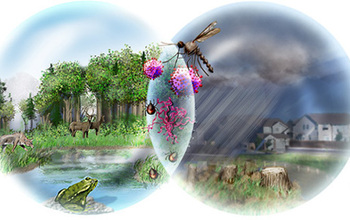
Infectious disease transmission links disease vectors, disease hosts and human habitations.

Infectious disease transmission links disease vectors, disease hosts and human habitations.
Credit and Larger Version

September 27, 2016
Outbreaks of infectious diseases such as Zika increasingly threaten global public health. Scientists expect five such new diseases to emerge each year.
To find out whether our interaction with the environment is somehow responsible, the Ecology and Evolution of Infectious Diseases (EEID) program -- a joint effort of the National Science Foundation (NSF), National Institutes of Health (NIH) and the U.S. Department of Agriculture (USDA) -- has awarded $16.6 million in new grants.

Rapid response

"Our ability to rapidly respond to disease outbreaks requires a basic understanding of how pathogens spread and evolve," says Sam Scheiner of NSF's Directorate for Biological Sciences and EEID program officer at NSF. "The EEID awards provide that broad knowledge by addressing infectious diseases in humans, in agricultural and wildlife animals, and in plants. They also enhance our capacity for response by building international collaborations and through extensive student training."
EEID projects allow scientists to study how habitat destruction, invasions of non-native species, pollution and other large-scale environmental events alter the risks of emergence of viral, parasitic and bacterial diseases in humans and other animals.
Researchers funded by EEID advance basic theory related to infectious diseases, and apply that knowledge to improve scientists' understanding of how pathogens spread through populations at a time of increasing global change.
"Predicting, controlling and preventing infectious disease threats requires multi-disciplinary research and international collaboration," says Christine Jessup of NIH's Fogarty International Center. "Through this unique and long-standing multi-agency partnership, NIH continues to support disease ecology research focused on threats to human health, including research in resource-poor countries, with the goal of fostering locally-relevant solutions."
 
Current, future threats
 
This year's EEID awardees conduct research on such subjects as: disease transmission in migratory birds along the Palearctic-African flyway; transmission networks and their implications for bee disease; the disease leishmaniasis in humans, dogs and sandflies in peri-urban Brazil; multi-species interactions in the microbiomes of plants, such as the grass tall fescue; and the discovery and characterization of viruses in primates, rodents and bats.
"The National Institute of Food and Agriculture is a key supporter of extramural research on food safety and security," says Sonny Ramaswamy, director of USDA's National Institute of Food and Agriculture. "Through our partnership with the Ecology and Evolution of Infectious Diseases program, NIFA is supporting cutting-edge research that ultimately can help American farmers combat infectious diseases that affect the health of crops and livestock animals."
Adds Yair Rotstein, executive director of the U.S.-Israel Binational Science Foundation, which is also supporting this year's awards: "Infectious diseases don't recognize countries' borders. Research on their eradication is therefore likely to benefit greatly from international cooperation. The U.S.-Israel Binational Science Foundation is proud to fund the Israeli scientist looking into the role of migratory birds in the spread of infectious diseases, demonstrating the importance of cross-border cooperation."
2016 EEID Awards
NSF-funded
Jonathan Epstein, Ecohealth Alliance Inc.,
RCN: EcoHealth Net 2.0: A One Health approach to disease ecology research & education
Wayne Getz, University of California, Berkeley,
US-Israel Collab: Pathogens take wings: disease transmission in migratory birds along the Palearctic-African flyway
Kurt Vandegrift, Pennsylvania State University, University Park,
 The community ecology of viromes: Virome assembly and pathogen transmission in a changing landscape
NIH-funded
Janis Antonovics, University of Virginia,
 Ecology and evolution of transmission mode: vector and aerial transmission in anther-smut
Scott McArt, Cornell University,
Transmission networks in trait-based communities: implications for bee disease
Jacob Oleson, University of Iowa,
 Epidemic modeling framework for complex, multi-species disease processes and the impact of vertical and vector transmission: A study of Leishmaniasis in Peri-Urban Brazil
USDA-funded
Charles Mitchell, University of North Carolina at Chapel Hill,
 Multispecies interactions in the microbiome: dynamic responses of parasite individuals, populations, and communities
-NSF-

Media Contacts Cheryl Dybas, NSF, (703) 292-7734,
cdybas@nsf.gov

Related WebsitesNSF News (2015 EEID Awards): To slow the spread of infectious diseases, NSF, NIH, USDA support new research:
https://www.nsf.gov/news/news_summ.jsp?cntn_id=136044
NSF News (2014 EEID Awards): Racing ahead of disease outbreaks: $12 million in new research grants:
https://www.nsf.gov/news/news_summ.jsp?cntn_id=132570
NSF News (2013 EEID Awards): Outbreak: Ecology and Evolution of Infectious Disease grants support research on disease transmission:
https://www.nsf.gov/news/news_summ.jsp?cntn_id=129280
NSF Special Report: Ecology and Evolution of Infectious Diseases: https://www.nsf.gov/news/special_reports/ecoinf/
NSF EEID Discovery Article Series: Seeking Zika: Where and when will Zika-carrying mosquitoes strike next?:
https://www.nsf.gov/news/news_summ.jsp?cntn_id=137712


The National Science Foundation (NSF) is an independent federal agency that supports fundamental research and education across all fields of science and engineering. In fiscal year (FY) 2016, its budget is $7.5 billion. NSF funds reach all 50 states through grants to nearly 2,000 colleges, universities and other institutions. Each year, NSF receives more than 48,000 competitive proposals for funding and makes about 12,000 new funding awards. NSF also awards about $626 million in professional and service contracts yearly.
 Get News Updates by Email 
Useful NSF Web Sites:
NSF Home Page:
 https://www.nsf.gov
NSF News:
https://www.nsf.gov/news/
For the News Media:
https://www.nsf.gov/news/newsroom.jsp
Science and Engineering Statistics:
 https://www.nsf.gov/statistics/
Awards Searches:
 https://www.nsf.gov/awardsearch/
EEID grantees will study interactions between white-footed mice and blacklegged, or deer, ticks.
Credit and Larger Version
Disease transmission networks in bee disease is the subject of a new EEID project.
Credit and Larger Version
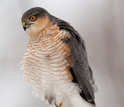
Pathogens take wing: Diseases in migratory birds on the Palearctic-African Flyway are under study.
Credit and Larger Version
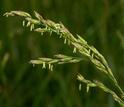
EEID biologists will conduct research on the microbiome of a widespread grass called tall fescue.
Credit and Larger Version
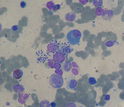
The disease leishmaniasis under a microscope. EEID researchers will track it in peri-urban Brazil.
Credit and Larger Versión
The National Science Foundation (NSF)
Guillermo Gonzalo Sánchez Achutegui
ayabaca@gmail.com
ayabaca@hotmail.com
ayabaca@yahoo.com
Inscríbete en el Foro del blog y participa : A Vuelo De Un Quinde - El Foro!

sábado, 10 de septiembre de 2016

NSF: Discovery .- Seasonality of bird migration responds to environmental cues, scientists show.- Los científicos muestran que la estacionalidad de la migración de las aves responde a señales del medio ambiente

http://www.nsf.gov/discoveries/disc_summ.jsp?cntn_id=189610&WT.mc_id=USNSF_51&WT.mc_ev=click
La estacionalidad de la migración de las aves está cambiando en respuesta al cambio climático. Como resultado, las aves en los Estados Unidos están llegando a sus lugares de cría del norte a principios de la primavera - y pueden partirán más tarde en el otoño.
Los científicos apoyados por la National Science Foundation (NSF) realizan el seguimiento de  la migración y el  descubrimiento de desplazamiento gracias a la información agregada de dos fuentes: los datos de teledetección radar de vigilancia de tiempo y los datos basados en tierra recogidas en las bases de datos de ciencia ciudadana.

Data from weather radar and ground-based citizen science projects yield new insights
Biologists and atmospheric scientists track migrating birds like this summer tanager.

Biologists and atmospheric scientists track migrating birds like this summer tanager.

September 6, 2016
The seasonality of bird migration is shifting in response to climate change. As a result, birds in the United States are arriving at their northern breeding grounds earlier in spring -- and may be departing later in fall.
Scientists supported by the National Science Foundation (NSF) made the migration shift discovery thanks to information aggregated from two sources: remote-sensing data from weather surveillance radar and ground-based data collected in citizen science databases.
 
Biology meets atmospheric science
 
Working with atmospheric scientists, biologists demonstrated that the combination of data yielded robust migration timing indexes.
The indexes reflect the movements of millions of birds of many species over large regions, says biologist Jeff Kelly of the University of Oklahoma, lead author of a paper describing the team's results in the journal Ecosphere, published by the Ecological Society of America.
"Understanding which environmental cues link migration timing to patterns of global change is key to forecasting future responses," Kelly said. "Novel data sources like the weather surveillance radar network and citizen science databases are enabling development of an index of migration phenology [cyclic or seasonal natural phenomena] that can be used to answer this question in future studies."
The combination of two novel data sources provides new insights into how, and when, migrations occur.
"These scientists combined citizen science observations with data from radar, satellites and weather predictions to understand the cues birds use in their migrations across continents," says Liz Blood, program director in NSF's Division of Environmental Biology, which funded the research through NSF's MacroSystems Biology Program. "The results show that birds migrate in time with temperature changes and with seasonal changes in the landscape."
 
Migration cues
 
Researchers say the migration indexes can help address a gap in scientists' knowledge about the cues birds use to fine-tune migration timing in response to climate.
They found that temperature likely plays a role in how migrating birds make adjustments in their timing and their routes. The researchers' findings also contradict the idea that a commonly used index of vegetation greenness is a useful cue for migration timing in some locales.
Results of the study, conducted in the eastern United States, expand on more traditional measures of migration timing based on a few individuals of a particular species.
Collaborators on the research include Todd Fagin and Eli Bridge of the Oklahoma Biological Survey; Kyle Horton, Phillip Chilson and Kirsten de Beurs of the University of Oklahoma; and Phillip Stepanian, formerly with the Advanced Radar Research Center.
The U.S. Department of Agriculture provided additional funding for the project.
-- Cheryl Dybas, NSF (703) 292-7734 cdybas@nsf.gov
-- Jana Smith, University of Oklahoma (405) 325-1322 jana.smith@ou.edu
-- Liza Lester, Ecological Society of America (202) 833-8773 llester@esa.org


Investigators Eli Bridge
Le Gruenwald
Jeffrey Kelly
Phillip Chilson
Valliappa Lakshmanan
Related Institutions/Organizations University of Oklahoma Norman Campus
Total Grants $301,641
Related WebsitesScientists track nighttime bird migration using weather radar:
Prothonotary warblers may migrate over distances as great as 5,000 miles or more.
Credit and Larger Version
Indigo buntings often migrate by night, using the stars to navigate.
Credit and Larger Version
Black-throated green warblers migrate south to Mexico, Central America, West Indies and Florida.
Credit and Larger Version
Chestnut-sided warblers migrate mostly by night. Peak fall migration is in September.
Credit and Larger Version
Green herons may migrate from the northern U.S. as far south as Panama and South America.
Credit and Larger Version
The National Science Foundation (NSF)
Guillermo Gonzalo Sánchez Achutegui
ayabaca@gmail.com
ayabaca@hotmail.com
ayabaca@yahoo.com
Inscríbete en el Foro del blog y participa : A Vuelo De Un Quinde - El Foro!

jueves, 14 de enero de 2016

NSF: Discovery Peering into the secret world of life beneath winter snows .- Mirando en el mundo secreto de la vida bajo las nieves del invierno

Hola amigos: A VUELO DE UN QUINDE EL BLOG.,  la Fundación de Ciencias de los Estados Unidos de América, the National Science Foundation (NSF), ha hecho un gran descubrimiento como viven la fauna y la flora, durante le crudo invierno en el Hemisferio Norte.
NSF, nos dice : La nieve cubre alrededor del 40 por ciento de las masas de tierra años de la Tierra tras año. Y, como los científicos están descubriendo, la nieve es crítica para los animales y plantas que viven en las latitudes del norte, así como aquellos en latitudes muy lejos del sur, como la Patagonia en la punta de América del Sur. Asegura su - y nuestra - la supervivencia.

"Sin la nieve, la vida vegetal y animal sería completamente diferente", dice el biólogo Jonathan Pauli de la Universidad de Wisconsin-Madison.

Pauli y científicos como Ben Zuckerberg, también de la Universidad de Wisconsin-Madison, son miembros de una nueva generación de investigadores llamados ecologistas invierno. El campo, que se centra en las relaciones entre los animales, plantas y sus entornos nevados, es relativamente nuevo.

"En comparación con otros hábitats, ecosistemas de nieve han sido escasamente explorado", dice Pauli. "Eso es un descuido importante, teniendo en cuenta la importancia de la nieve es en la vida de tantas especies."
More information.....

Snow sustains species from frogs to birds to mammals in winter and beyond
illustration showing plants and animals under snow
A secret world, unseen by most humans, is alive just beneath the winter snow.
Credit and Larger Version
January 5, 2016
Snow covers some 40 percent of Earth's land masses year in and year out. And, as scientists are discovering, snow is critical to animals and plants that live in northern latitudes, as well as those in far southern latitudes like Patagonia at the tip of South America. It ensures their -- and our -- survival.
"Without snow, plant and animal life would be completely different," says biologist Jonathan Pauli of the University of Wisconsin-Madison.
Pauli and scientists such as Ben Zuckerberg, also of the University of Wisconsin-Madison, are members of a new breed of researchers called winter ecologists. The field, which focuses on relationships among animals, plants and their snow-covered environments, is relatively new.
"Compared to other habitats, snow ecosystems have been barely explored," Pauli says. "That's a major oversight, considering how important snow is in the lives of so many species."
That list of species includes humans. Our spring and summer water resources depend heavily on meltwater from winter snows.
 
Nature's igloo
 
With a grant from the National Science Foundation (NSF)'s MacroSystems Biology Program, Pauli and Zuckerberg conduct research on what's called the subnivium, a seasonal and sensitive refuge beneath the snow's surface that's insulated and maintains a constant temperature. It's nature's igloo.
"We know very little about plants and animals that survive winter beneath the snow," says Liz Blood, a program director in NSF's Directorate for Biological Sciences. "This research is taking an innovative approach to studying the consequences of climate change on overwintering success of plants and animals in the subnivium."
What will happen if snow disappears in a warmer world?
Pauli and colleagues believe warming winters caused by climate change reduce the subnivium's duration, depth and insulation.
As a result of these altered conditions, they report in the journals Frontiers in Ecology and the Environment and PLOS One, the subnivium is showing more temperature variability and decreased -- not increased -- temperatures. Without enough snow, temperatures fall due to loss of insulation.
"In a warmer world with less snow, winter soils would be colder because the insulating snow layer on top is reduced," says Henry Gholz, a program director in NSF's Division of Environmental Biology. "That has implications for farmers planting crops in spring, as well as for the many burrowing mammals, microbes and insects that overwinter in snow."
The changes will have important implications for species that need the subnivium to survive, Zuckerberg says, "and will lead to large-scale shifts in their ranges."
Everything depends, adds Pauli, on having enough snow.
 
No two snowflakes, nor snows, alike
 
As children learn, no two snowflakes form in quite the same way. And, as northern peoples like the Inuit of Alaska know, nor are there two snows, nor snowfalls, exactly alike.
Annui, api, pukak. Qali, siqoq, kimoagruk. Upsik, qamaniq, siqoqtoaq -- these are the snow-words of the Inuit of northwestern Alaska. They've also become terms for snow used by many winter ecologists.
  • Perhaps you're reading this article nestled by a roaring fire, protected from the elements in a warm den or living room. Outside your icicle-laden window, you notice falling snow: annui.
  • Should you awaken one morning to snow covering the ground, you're seeing api.
  • Pukak is the layer at the bottom of a snow bank, "which is critical to the small mammals that live there in winter," Pauli says. "There's an entire world going on beneath the snow that we can't see."
  • Qali snow, nature's paintbrush, frosts the limbs of trees, and is no less ecologically important, providing shelter to birds and other animals seeking escape from the cold. The golden-crowned kinglet, for example, a tiny songbird of northern forests, survives winter's frigid nights because it can huddle under qali on conifer branches.
  • Trees whose branches are iced-over are said to be covered with kanik, and snow that swirls in whorls is siqoq. When those snows form drifts, they're known as kimoagruk.
  • Winter winds may eventually compact snow into a hard surface, called upsik, which offers a highway to animals like deer and moose that navigate best on hard-packed surfaces.
  • Qamaniq leaves hollows around the bases of trees; it offers shelter to birds such as ruffed and spruce grouse, and to snowshoe hares.
  • As spring arrives, it brings siqoqtoaq, "the sun crust" in the surface layer of snow that melts by day and re-freezes by night. In siqoqtoaq, microbes called snow algae, dormant during early winter months, bloom bright red and green.
Species need snow
 
Gazelles in the Gobi Desert in northern China and southern Mongolia rely on "snow mines," oases of water from melting snows buried beneath the sand. Other species use snow in ways that are just as resourceful.
Tiny mammals like shrews don't migrate but spend their winters in the subnivium. River otters slide down snowbanks and through openings in ice-covered waters to find fish. Gangly moose use snow as a footstools, to better reach tender shoots at the ends of branches. And some of the tiniest forms of life -- fungi and other microorganisms that live in and under the snow -- remain active throughout the winter.
Without fungi, wildflowers' summer bloom in mountain environments wouldn't happen. Fungi increase their metabolism as winter progresses, releasing nutrients from their by-products as snow melts in spring.
 
Snow research in a greenhouse
 
Since plants and animals depend on snow cover in winter, what lies ahead when the global climate's increased warmth has reduced snow levels?
"We should be very concerned about these changes," Pauli says.
He, Zuckerberg, Warren Porter of the University of Wisconsin-Madison and Brian McMahon of Operation Fresh Start are working to assess climate change effects on the sensitive subnivian habitat.
Using micro-greenhouses placed at sites in Wisconsin, Minnesota and Michigan, the ecologists mimic climate conditions predicted for the Great Lakes region by 2050. The micro-greenhouses automatically open when it snows, allowing a subnivium to form inside.
The research reveals how future subnivium conditions will affect the physiology, survival and distribution of species dependent on this realm-beneath-the-snow.
To date, micro-greenhouse experiments show that although ambient temperature within a micro-greenhouse is set at 5 degrees Celsius warmer than the temperature outside the greenhouse, "the natural daily minimum subnivium temperature drops significantly lower inside," Pauli says.
Translation: less snow is falling.
Without snow cover and its insulation, the greenhouse interior -- and its subnivian inhabitants such as hibernating amphibians -- are exposed to the winter cold.
"Our findings suggest climate change could have considerable effects on the refuge quality of the subnivium," Pauli says.
The future for plants and animals, including us, say Pauli and Zuckerberg, looks brightest as a white, not green, winter.
-- Cheryl Dybas, NSF (703) 292-7734
 cdybas@nsf.gov
Related Programs MacroSystems Biology
Related WebsitesNSF Grant: Warming Winters and Regional Implications for the Subnivean Climate: http://www.nsf.gov/awardsearch/showAward?AWD_ID=1340632&HistoricalAwards=false
NSF Discovery: The Search for White Gold: Snowmelt:
http://nsf.gov/discoveries/disc_summ.jsp?cntn_id=127580
NSF Discovery: The Depths of Winter: How Much Snow Is In Fact On the Ground?: http://www.nsf.gov/news/news_summ.jsp?cntn_id=123106
NSF Discovery: Dust-on-Snow: On Spring Winds, Something Wicked This Way Comes: http://www.nsf.gov/discoveries/disc_summ.jsp?cntn_id=116707
NSF Discovery: Inside a Snowstorm: Scientists Obtain Close-Up Look at Old Man Winter: http://www.nsf.gov/news/news_summ.jsp?cntn_id=118365
NSF Discovery: A Tree Stands in the Sierra Nevada: The Link Among Conifers, Snowmelt and Water Resources:
 http://www.nsf.gov/discoveries/disc_summ.jsp?cntn_id=125091&org=NSF
Video: Snow in warming winters:
 https://vimeo.com/134676387
a willow ptarmigan
The willow ptarmigan is a common resident of the subnivium; it uses snow as an insulating blanket.
Credit and Larger Version
frozen wood frog on snow
How do wood frogs survive being frozen in winter? By living under the snow surface.
Credit and Larger Version
A winter ecologist peers beneath the subnivium and into the den of a porcupine living there.
A winter ecologist peers beneath the subnivium and into a porcupine den.
Credit and Larger Version
map of north america showing snwo cover
The depth and extent of snow cover in North America are rapidly decreasing, affecting the subnivium.
Credit and Larger Version
A micro-greenhouse and research equipment in the field with snow
A micro-greenhouse can reproduce climate change's effects on the world under snow.
Credit and Larger Version
the National Science Foundation (NSF)
Guillermo Gonzalo Sánchez Achutegui
ayabaca@gmail.com
ayabaca@hotmail.com
ayabaca@yahoo.com
Inscríbete en el Foro del blog y participa : A Vuelo De Un Quinde - El Foro!

viernes, 6 de noviembre de 2015

NSF : Risk assessment, for the birds .- La evaluación del riesgo, para las aves

Hola amigos: A VUELO DE UN QUINDE EL BLOG., Cada año, las aves canoras del patio trasero de los Estados Unidos hacen un arduo viaje a climas de invierno más cálidos. Migran cientos de millas, en ocasiones desafiando terreno duro y mal tiempo. A veces, no tienen lugar para parar y repostar en el camino.

Aves en realidad pesan estos riesgos utilizando una combinación de factores - la grasa, el clima y la fecha - para hacer una evaluación de los riesgos de migración, según un nuevo estudio financiado por la National Science Foundation (NSF). Los hallazgos pueden servir como base para la construcción de mejores estrategias de conservación, dicen los investigadores.

El trabajo se centró en tres especies de aves canoras, vireos de ojos rojos, zorzales de Swainson y tordos, mientras cruzaban el Golfo de México, desde Alabama costera de la Península de Yucatán. Los investigadores publicaron sus hallazgos hoy en las Actas de la Academia Nacional de Ciencias (PNAS).
More information.......

Complex factors determine when migrating songbirds make their journeys

Red-eyed vireo with transmitter
Red-eyed vireo with radio transmitter attached to its back.
Credit and Larger Versión
November 2, 2015
Every year, backyard songbirds across the United States make an arduous journey to warmer winter climes. They migrate hundreds of miles, occasionally braving tough terrain and nasty weather. Sometimes, they have no place to stop and refuel along the way.
Birds actually weigh these risks using a combination of factors--fat, weather and date--to make a migration risk assessment, according to new research funded by the National Science Foundation (NSF). The findings can serve as the basis for building better conservation strategies, researchers say.
The work focused on three species of songbirds, red-eyed vireos, Swainson's thrushes and wood thrushes, as they crossed the Gulf of Mexico, from coastal Alabama to the Yucatan Peninsula. The researchers published their findings today in the Proceedings of the National Academy of Sciences (PNAS).
"There are a lot of studies looking at bird's departure behavior or arrival behavior," said Jill Deppe, a biologist at Eastern Illinois University and principal investigator on the NSF award. "This is the first time we've been able to take a subset of birds and gather data on both."
The team used radio telemetry to track the birds as they migrated from one side of the gulf to the other, a distance of some 600 miles. Radio telemetry relies on miniature transmitters, smaller than the average watch battery, to record birds' locations. The researchers attached transmitters to birds' backs without harming them or interfering with their ability to fly. Each transmitter emits a radio signal at a specific frequency, picked up by antennas on the team's radio towers, which line part of the coast in Alabama and Mexico.
The researchers found birds generally used two cues--weather and their body fat levels--to make migration risk assessments. If humidity was too high, birds wouldn't depart. Birds that didn't carry large amounts of fat changed their routes, going farther inland and sometimes entirely around the gulf to avoid an open-water crossing. Researchers measured the fat content by looking at the birds' subcutaneous fat deposits, visible just underneath the skin.
Departure time also influenced the birds' success. Those that left at the end of September through mid-October, when gulf weather is more favorable, were more successful.
Surprisingly, however, age didn't seem to matter; young birds were just as successful in migration as older birds, an "interesting and unexpected" outcome that merits further study, Deppe said.
There are still many unanswered questions about bird migration, especially for small birds. "It's not that they're unanswerable," Deppe said. "They've simply been challenging to study given current technological limitations. But that's changing."
Her team for this research involved not only biologists, but also engineers and atmospheric scientists. One of the co-authors on the PNAS paper, Gil Bohrer of Ohio State University, received funding from NASA to develop new tools for understanding relationships between climate and animal migration. His work helped the team's biologists understand how weather played into the songbird's migration decisions.
 
Research can help protect migrating birds
 
Migration carries costs--among them, the tribulations of navigating unfamiliar territory and crossing ecological features like the Gulf of Mexico. But for birds, the benefits outweigh those costs.
"These birds have evolved to make this flight," Deppe said. "It probably gives them some time and energy savings on a direct route. They're not exposed to predators as much over the open water, they're less exposed to parasites, too."
Songbirds spend a significant chunk of their lives--about 30 percent--migrating. Red-eyed Vireos, for example, can spend the spring and summer breeding season in deciduous forests of the eastern United States, and winter in the South American tropics. The five-inch songbird can travel upwards of 3,000 miles, twice a year.
"They are quite successful at negotiating the barriers, at assessing the risk that's involved," said Frank Moore, another author on the PNAS paper and a biologist at the University of Southern Mississippi. "And if you think about it, some of the factors that are important in this risk, they can control. Other factors are outside their control."
Now that we know what criteria birds use to migrate, that information can be used to build more effective conservation strategies, Deppe said. Those include protecting high-quality habitats along the birds' migration routes. In those areas, the birds can eat and gain the fat necessary for them to survive migration.
Songbirds play an important role in the ecosystem, both as food for larger predators and as consumers of fruits and seeds that shape plant distributions.
"Survival of migrating songbirds, like migrating butterflies, has been declining for some time," said Michelle Elekonich, a program director in NSF's Directorate for Biological Sciences, which funded the research. "This work will help us understand migration better and may allow us to better protect migrants."
-NSF-
Media Contacts Jessica Arriens, NSF, (703) 292-2243, jarriens@nsf.gov
Program Contacts Michelle Elekonich, NSF, (703) 292-7202, melekoni@nsf.gov
The National Science Foundation (NSF) is an independent federal agency that supports fundamental research and education across all fields of science and engineering. In fiscal year (FY) 2015, its budget is $7.3 billion. NSF funds reach all 50 states through grants to nearly 2,000 colleges, universities and other institutions. Each year, NSF receives about 48,000 competitive proposals for funding, and makes about 11,000 new funding awards. NSF also awards about $626 million in professional and service contracts yearly.
 Get News Updates by Email 
Useful NSF Web Sites:
NSF Home Page:
 http://www.nsf.gov
NSF News:
 http://www.nsf.gov/news/
For the News Media:
 http://www.nsf.gov/news/newsroom.jsp
Science and Engineering Statistics:
http://www.nsf.gov/statistics/
Awards Searches:
http://www.nsf.gov/awardsearch/
Close-up of hands radiotagging a Swainson's thrush
A Swainson's Thrush being fitted with a radio transmitter.
Credit and Larger Version
Man in radio tower
Radio telemetry towers, like this one in Alabama, pick up signals from transmitters on the birds.
Credit and Larger Version
The National Science Foundation (NSF)
Guillermo Gonzalo Sánchez Achutegui
ayabaca@gmail.com
ayabaca@hotmail.com
ayabaca@yahoo.com
Inscríbete en el Foro del blog y participa : A Vuelo De Un Quinde - El Foro!

Mi lista de blogs