Mostrando entradas con la etiqueta Titanio. Mostrar todas las entradas

domingo, 13 de noviembre de 2016

ESA : Un revestimiento para mantener fríos los satélites europeos

http://www.esa.int/esl/ESA_in_your_country/Spain/Un_revestimiento_para_mantener_frios_los_satelites_europeos

Spacebus Neo de Thales Alenia Space
 
4 noviembre 2016
Una tecnología de revestimiento para superficies, desarrollada originalmente para implantes médicos, será la encargada de proteger la próxima generación de satélites de telecomunicaciones europeos.
La empresa irlandesa ENBIO empezó adaptando su tecnología de revestimiento ‘CoBlast’ a la fabricación de implantes de titanio mejorados, pero los ingenieros espaciales no tardaron en identificar su potencial para hacer que los satélites resistan la intensa radiación solar que sufren en órbita.
Los revestimientos de ENBIO se aplican retirando de un determinado metal una capa de óxido y adhiriendo el revestimiento directamente sobre el metal subyacente, todo ello en un único paso. El revestimiento pasa así a formar parte integral del metal. Como resultado se obtienen superficies altamente estables, con un comportamiento óptico y térmico de gran resistencia, y cuyas características pueden personalizarse según los deseos del cliente.
Otra ventaja es que el proceso se lleva a cabo a temperatura y presión ambientes, por lo que no precisa de un manejo especial, respeta el medio ambiente y no produce residuos nocivos.
 
Revestimiento SolarWhite de ENBIO

“Empezamos a trabajar en el sector espacial a través de la ESA, aplicando protecciones térmicas a sus misiones científicas —cuenta Kevin O’Flynn, director de Desarrollo Empresarial Internacional de ENBIO—. Las misiones científicas suelen ser proyectos únicos y con una alta exigencia técnica, pero nuestra tecnología de ‘protección solar’ para satélites ha demostrado funcionar según los estándares exigidos. Ahora, la ESA prevé emplearla en su programa Neosat, donde colaborará con fabricantes de satélites europeos para diseñar los satélites de telecomunicaciones del futuro para el mercado principal”.
Los satélites de telecomunicaciones permanecen mucho más cerca de la Tierra que las misiones científicas de larga distancia, que suelen operar en órbita geoestacionaria, en punto fijos con relación a la superficie terrestre, a unos 36.000 km de distancia. No obstante, tienen que funcionar sin descanso y de forma fiable durante más de quince años, a pesar de estar expuestos constantemente y sin filtros a la radiación solar.
 
Instalaciones de ENBIO

Estos satélites deben mantener una temperatura interna estable para que su electrónica no se vea afectada. Además, los cambios extremos de temperatura entre las partes expuestas y no expuestas al sol también podrían provocar deformaciones estructurales, llegando incluso a desalinear los haces estrechos de las antenas de comunicación.
Los revestimientos con control térmico de ENBIO impiden el sobrecalentamiento de los satélites, permitiendo que funcionen con la máxima eficiencia. Aunque su sede central se encuentra en Dublín, ENBIO abrió en la primavera de 2015 una planta dedicada a la gestión térmica espacial en Clonmel, en el condado irlandés de Tipperary, con el respaldo de la ESA y de la agencia de desarrollo Enterprise Ireland.
“La ESA nos ha brindado un apoyo inestimable, por lo que ha sido un placer poder devolverles el favor ofreciendo soluciones de alto rendimiento para misiones tanto científicas como de telecomunicaciones” —añade el doctor O’Flynn—. También estamos consiguiendo otros clientes comerciales para nuestros productos en los sectores espaciales europeo y estadounidense”.
 
Eurostar Neo de Airbus Defence and Space
 
El trabajo de ENBIO con la ESA también ha servido de inspiración para un número cada vez mayor de aplicaciones en tierra de su tecnología de revestimientos. Por ejemplo, ayudando a mantener sistemas electrónicos a baja temperatura, o protegiendo de la corrosión equipos para la industria del gas y el petróleo en entornos marinos.
ESA
Guillermo Gonzalo Sánchez Achutegui


Inscríbete en el Foro del blog y participa : A Vuelo De Un Quinde - El Foro!

ESA: Friction stir welding of titanium .- Soldadura con agitación por fricción de titanio............

http://www.esa.int/spaceinimages/Images/2016/11/Friction_stir_welding_of_titanium

Details

Open/Close
  • Title Friction stir welding of titanium
  • Released 01/11/2016 4:17 pm
  • Copyright ESA/TWI/Airbus Defence & Space
  • Description
    It’s welding, but not as we know it.
    Only a bare sliver of glowing metal is visible during this ‘friction stir welding’. The result is a more robust titanium propellant tank produced more rapidly and cheaply than with traditional welding.
    A rotating tool heats and softens the metal before mixing the two pieces together through mechanical pressure, like joining clay or dough. Requiring no external heat source, friction stir welding results in stronger joins.
    “This type of welding is today widely used to join together aluminium components,” comments ESA metallurgist Andy Norman, “but the reliable welding of titanium demonstrated through this project is a new application for the technique.”
    ESA’s Materials Technology section worked with welding specialist TWI in the UK, the original developer of the technique, as well as Airbus Defence and Space to produce a demonstration tank.
    Titanium is a strong and highly resistant metal, but its very strength makes it hard to work with, requiring different pieces to be forged separately and then machined to the required thickness before being fusion-welded together. The result is resilient, but takes a long time to produce – in this case up to 12 months.
    For this project, the pieces of the tank were instead cast – or set from molten metal – to near the required dimensions, requiring much less follow-up machining. It is possible to reach comparable levels of performance because friction stir welding imparts less stress to joints than standard fusion-welding.
  • Id 367941

TAGS

Open/Close

Talking technology

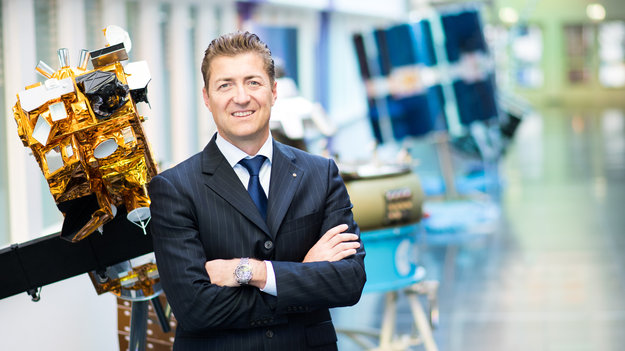
Tommaso Ghidini

Materials make the space mission

Tommaso Ghidini, Head of ESA’s Materials Technology section
Materials make the space mission: manufacturing materials and processes must be chosen with great care. 
Space is a not a single environment, but many: simply getting into orbit stresses materials to their limits. A rocket launch combines high temperatures and pressure with additional stresses due to shock, vibration, aerodynamic and acoustic forces.  The earliest satellites launched by Europe simply went into Earth orbit, but then came interplanetary missions like Ulysses, Huygens and Rosetta which had to contend with the cold darkness of deep space. 
Meanwhile probes to the inner Solar System were faced with the opposite problem of escalating solar flux and temperatures, starting with Venus Express, then the BepiColombo mission to Mercury (to be launched in April 2018) – which could at least shelter behind the innermost planet during part of its orbit.
 
Tommaso Ghidini: Materials make the space mission
 
But ESA’s Solar Orbiter, also launching in 2018, will have nowhere to hide, tasked with high-resolution imaging of the Sun from as near as 42 million km away –  a little more than a quarter Earth’s distance from its parent star. In the process it will be operating in the continuous direct view of the Sun, enduring 13 times the intensity of terrestrial sunlight, resulting in surface satellite temperatures of 500°C or more.
As the head of ESA’s Materials Technology section – focused mainly on metallic materials and their related preparation and manufacturing processes – Solar Orbiter is a good example of the kind of challenges that come our team’s way.
The spacecraft’s main body takes cover behind a multi-layer 3.1m by 2.4 heat shield.  This heat shield works to absorb sunlight, then convert it to infrared to radiate it back to space. To achieve this its surface has to maintain constant ‘thermo-optical properties’ – to keep the same colour despite years of exposure to extreme ultraviolet radiation.
At the same time, the shield surface cannot crack, shed material or release vapour, because this might contaminate Solar Orbiter’s highly-sensitive instruments. Any build-up of static from the close-up solar wind was also unacceptable. Tests in our STAR ‘Synergistic Temperature Accelerated Radiation’ Chamber showed that our current suite of materials and coatings were unable to meet the performance we needed.
It was time to look for a solution outside the space industry
It was time to look for a solution outside the space industry. As materials processes experts, we are constantly scanning the European industrial landscape, looking for emerging technologies with potential for space.
In this instance we found it with an Irish company called ENBIO and a technique called ‘Co-Blast’, developed to coat titanium-made medical implants. It works with reactive metals like titanium, aluminium and stainless steel, which possess a natural surface oxide layer. This surface is stripped away and switched for with a ‘dopant’ material, ending up bonded to the metal, rather than painted or stuck on – effectively becoming part of it. The material to be added to the outermost titanium layer of Solar Orbiter’s heat shield is called ‘Solar Black’ – a type of black calcium phosphate processed from burnt-bone charcoal, commonly used by industry – and found also in prehistoric cave paintings.
The treated titanium underwent a gamut of testing to ensure it met baseline requirements, everything from accelerated sunlight and UV exposure to ‘tape pull’ – simply applying then pulling off adhesive tape. 
That was only the start however; we needed to bring up the material and its production process to a certain level of maturity, which involved installing a laboratory at ENBIO’s facilities and working closely with them to meet the specific mission needs. So – within a relatively rapid two years –Solar Black ended up baselined for the heat shield and another ENBIO product called ‘Solar White’ ended up treating other parts of Solar Orbiter, including its antenna and instrument booms and solar array attachments.
If you qualify for space, it’s really a sign you’re able to do everything else too. So ENBIO, having achieved ESA acceptance, has gone on to find other lucrative space and hi-tech markets, set to supply coatings to commercial telecom satellites as well as a large North American cars manufacturer. And thanks to meeting the needs of this ambitious space science mission, and our continuous monitoring and mapping of the European industry, we’ve been able to help bring the company up to the next level of the market.
Last update: 1 November 2016
ESA
Guillermo Gonzalo Sánchez Achutegui
ayabaca@gmail.com
ayabaca@hotmail.com
ayabaca@yahoo.com
Inscríbete en el Foro del blog y participa : A Vuelo De Un Quinde - El Foro!

Mi lista de blogs