Mostrando entradas con la etiqueta Agriculture. Mostrar todas las entradas

domingo, 18 de septiembre de 2016

NSF : NSF awards $18.9 million for research to transform our understanding of life on Earth.- NSF, ofrece premios hasta $ 18,9 millones para la investigación para transformar nuestra comprensión de la vida en la Tierra......

http://www.nsf.gov/news/news_summ.jsp?cntn_id=189723&WT.mc_id=USNSF_51&WT.mc_ev=click

Topics range from coral reef sponge microbiomes to the evolution of snake venom

A diverse community of marine sponges on a coral reef in St. Croix, U.S. Virgin Islands.

A diverse community of marine sponges on a coral reef in St. Croix, U.S. Virgin Islands.
Credit and Larger Version

September 16, 2016
Humans are largely made up of millions of microbes, collectively called our microbiomes. These microbial "ecosystems" contribute to keeping us healthy. It's the same for corals and other species such as marine sponges, scientists are finding.
Through a new National Science Foundation (NSF) Dimensions of Biodiversity grant, Michael Lesser of the University of New Hampshire and colleagues are studying the evolutionary ecology of sponges, and how their microbiomes drive diversity on coral reefs.
The project is one of 10 funded this year through the Dimensions of Biodiversity program, a unique research initiative that integrates multiple areas of study, in contrast to traditional biodiversity research that focuses on one taxonomic group or ecosystem.
A total of $18.9 million has been invested in the awards, with contributions from NSF's Directorates for Biological Sciences and for Geosciences, as well as the São Paulo Research Foundation (FAPESP) of Brazil.
"These grants will allow us to find new ways of understanding how organisms form, interact, and change through time," says James Olds, NSF assistant director for Biological Sciences. "This year's Dimensions of Biodiversity awardees will investigate some of the least-known and perplexing 'innovations of nature,' from the ability of plant plankton to metabolize vitamins, to how various types of snake venom developed, to why humidity-loving mosses can tolerate arid conditions."
The Dimensions of Biodiversity program links functional, genetic and phylogenetic dimensions of biodiversity, offering opportunities to produce rapid advances in understanding the creation, maintenance and loss of biodiversity.
"This research will help us understand, for example, the incredible diversity of marine life and how it functions," says Roger Wakimoto, NSF assistant director for Geosciences. "In a time of changing seas, that knowledge is of great importance in comprehending, and conserving, the species in Earth's vast oceans."
The research will fill in gaps in biodiversity knowledge, scientists say. It also has the potential to lead to significant progress in agriculture, fuel, manufacturing and health.
For example, plant and animal extinctions are detrimental to human health, scientists have found. Species losses in ecosystems such as forests and fields result in increases in pathogens, or disease-causing organisms. The species most likely to disappear as biodiversity declines are often those that buffer infectious disease transmission. Those that remain tend to be ones that magnify diseases such as Lyme disease.
Economic sustainability also depends on the diversity of life on Earth. Many industrial materials, such as fibers and dyes, come from biological sources. In addition, biodiversity is important to resources such as water, food and pharmaceuticals.
To conserve Earth's biodiversity, scientists funded through the Dimensions of Biodiversity program are working to better understand interactions between, for example, plants and insects.
The new Dimensions of Biodiversity projects focus on topics including desiccation and diversity in dryland mosses; sensory systems such as vision in unusual habitats; and predicting how species in river floodplains will respond to climate change.

2016 NSF Dimensions of Biodiversity Awards
Janette Boughman, Michigan State University: Dimensions: Diversification of sensory systems in novel habitat: enhanced vision or compensation in other modalities?
Jeffrey Feder, University of Notre Dame: Dimensions: Collaborative Research: Time after Time: Adaptive Seasonal Timing Drives the Sequential Origin of Community Biodiversity
Lisle Gibbs, Ohio State University: Collaborative Research: Dimensions US-BIOTA-Sao Paulo: Scales of biodiversity - Integrated studies of snake venom evolution and function across multiple levels of diversity
Zach Gombert, Utah State University: Collaborative Proposal: Dimensions: The evolution of novel interactions within a network of plant, insect and microbial biodiversity
Michael Lesser, University of New Hampshire: Collaborative Research: Dimensions: Evolutionary Ecology of Sponges and their Microbiome Drives Sponge Diversity on Coral Reefs
Elena Litchman, Michigan State University: Dimensions: Collaborative Research: Genetic, functional and phylogenetic diversity determines marine phytoplankton community responses to changing temperature and nutrients
Gordon Luikart, University of Montana: Dimensions - Predicting Biodiversity Vulnerability to Climate Change: Integrating Phylogenetic, Genomic, and Function Diversity in River Floodplains
Jason Slot, Ohio State University: Collaborative Research: Dimensions: Secondary metabolites as drivers of fungal endophyte community diversity
Lloyd Stark, University of Nevada, Las Vegas: Collaborative Research: Dimensions: Desiccation and Diversity in Dryland Mosses
Alexandra Worden, Monterey Bay Aquarium Research Institute: Dimensions: Collaborative Research: Functional and genomic diversity in vitamin B1 metabolism and impacts on plankton networks and productivity
-NSF-

Media Contacts Cheryl Dybas, NSF, (703) 292-7734, cdybas@nsf.gov

Related WebsitesNSF News (2015 Awards): Life on Earth: National Science Foundation awards $23 million for studies of planet's biodiversity:
https://www.nsf.gov/news/news_summ.jsp?cntn_id=136222
NSF News (2014 Awards): Whither the diversity of life on Earth? NSF, partners award $23 million for studies of planet's biodiversity:
https://www.nsf.gov/news/news_summ.jsp?cntn_id=132506
NSF News (2013 Awards): In race against time, NSF grants fund research on Earth's threatened biodiversity:
 https://www.nsf.gov/news/news_summ.jsp?cntn_id=129242
NSF Discovery: Staple of recipe favorites--the tomato--reveals processes that maintain biodiversity: https://nsf.gov/discoveries/disc_summ.jsp?cntn_id=129676
NSF Discovery: Earth Week: A Stream Is a Stream Is a Stream: Or Is It?: http://www.nsf.gov/discoveries/disc_summ.jsp?cntn_id=123855&org=NSF
NSF Discovery: Earth Day is on the horizon. But is 'greener' always better?: http://www.nsf.gov/discoveries/disc_summ.jsp?cntn_id=134374


The National Science Foundation (NSF) is an independent federal agency that supports fundamental research and education across all fields of science and engineering. In fiscal year (FY) 2016, its budget is $7.5 billion. NSF funds reach all 50 states through grants to nearly 2,000 colleges, universities and other institutions. Each year, NSF receives more than 48,000 competitive proposals for funding and makes about 12,000 new funding awards. NSF also awards about $626 million in professional and service contracts yearly.
 Get News Updates by Email 
Useful NSF Web Sites:
NSF Home Page:
 https://www.nsf.gov
NSF News:
https://www.nsf.gov/news/
For the News Media:
 https://www.nsf.gov/news/newsroom.jsp
Science and Engineering Statistics:
 https://www.nsf.gov/statistics/
Awards Searches:
 https://www.nsf.gov/awardsearch/
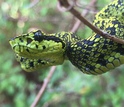
The Talamancan palm-pitviper, found in the highlands of the Talamancan Cordillera in Costa Rica.
Credit and Larger Version
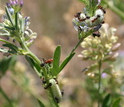
Melissa blue caterpillars in Idaho feed on alfalfa while being tended by beneficial ants.
Credit and Larger Version
Researchers at work on an evolutionary endocrinology project to track the timing of dormancy.
Credit and Larger Version
Threespine stickleback fish that were captured in a spring-fed freshwater lake.
Credit and Larger Version
Scientists are isolating fungi from the leaves of coffee plants.
Credit and Larger Version
The National Science Foundation (NSF)
Guillermo Gonzalo Sánchez Achutegui
ayabaca@gmail.com
ayabaca@hotmail.com
ayabaca@yahoo.com
Inscríbete en el Foro del blog y participa : A Vuelo De Un Quinde - El Foro!

domingo, 3 de julio de 2016

NSF: Researchers discover oldest evidence of 'farming' -- by insects .- Investigadores descubren evidencia más antigua de la 'agricultura' - por insectos

http://www.nsf.gov/news/news_summ.jsp?cntn_id=138928&WT.mc_id=USNSF_51&WT.mc_ev=click

Oldest fossil evidence of agriculture, but not by humans

A 25 million-year-old termite nest with the remains of a

A 25 million-year-old termite nest with the remains of a "fungus garden" preserved inside.
Credit and Larger Version

June 22, 2016
Scientists have discovered the oldest fossil evidence of agriculture -- not by humans, but by insects.
The team, led by Eric Roberts of James Cook University along with researchers from Ohio University, discovered the oldest known examples of "fungus gardens" in 25 million-year-old fossil termite nests in East Africa. 
The results are published today in the journal PLOS ONE.
Some termite species cultivate fungi in "gardens" in subterranean nests or chambers, helping to convert plant material into a more easily digestible termite food source. 
Scientists had previously used DNA from modern termites to estimate that termite fungus farming began 25 to 30 million years ago. The fossil evidence from Tanzania confirmed that date, allowing researchers to more accurately characterize the timing and evolution of the symbiotic relationship between termites and fungi. The relationship likely significantly modified the environment, scientists say. 
"The origin of this behavior likely had a profound effect on how nutrients were concentrated across the landscape, influencing the evolution of Africa's biota," said study co-author Nancy Stevens of Ohio University.
"Since some 90 percent of the wood in the dry environment studied is digested by termites, understanding the development of this symbiotic relationship is important to our knowledge of the history of carbon cycling in this region," said Paul Filmer, program director in the National Science Foundation (NSF) Directorate for Geosciences, which funded the research. 
The transition to fungus agriculture increased the range of possible habitats for both the fungus-growing termites and their domesticated fungi. It's a process similar to what happened tens of millions of years later with humans and domesticated crops and livestock, said study co-author Duur Aanen of Wageningen University in the Netherlands. 
"This study emphasizes the need for integrating perspectives from the fossil record with modern approaches in comparative biology -- it's a holistic approach to evolutionary biology and increases our understanding of environmental change in 'deep time,'" said scientist Patrick O’Connor of Ohio University, also a study co-author. 
The African rain forest may have served as the cradle of termite agriculture. The transition to fungiculture helped termites disperse to less hospitable dry savannas, and eventually to migrate out of Africa and into Asia. 
"The phenomenon might have been triggered by the development of the Great Rift Valley and the transformation of the landscape around that time," Roberts said. 
The study is part of an ongoing research project on the evolution of the Rukwa Rift Basin in Tanzania.
The research was also funded by James Cook University, Ohio University, the National Geographic Society, the Portuguese Foundation for Science and Fellowship, and a Marie Curie Fellowship.
-NSF-
Media Contacts Cheryl Dybas, NSF, (703) 292-7734,
cdybas@nsf.gov
James Phillips, Ohio University, (740) 593-2202,
Related WebsitesNSF Grant: 100 million Years of Biotic and Tectonic Evolution in the Western Branch of the East African Rift System:


The National Science Foundation (NSF) is an independent federal agency that supports fundamental research and education across all fields of science and engineering. In fiscal year (FY) 2016, its budget is $7.5 billion. NSF funds reach all 50 states through grants to nearly 2,000 colleges, universities and other institutions. Each year, NSF receives more than 48,000 competitive proposals for funding and makes about 12,000 new funding awards. NSF also awards about $626 million in professional and service contracts yearly.
Useful NSF Web Sites:
NSF Home Page:
 http://www.nsf.gov
NSF News:
 http://www.nsf.gov/news/
For the News Media:
http://www.nsf.gov/news/newsroom.jsp
Science and Engineering Statistics:
 http://www.nsf.gov/statistics/
Awards Searches:
 http://www.nsf.gov/awardsearch/
A termite
A termite "fungus garden"; the darker layer was freshly added.
Credit and Larger Version
Map of the Great Rift Valley in East Africa with the Rukwa Rift study area highlighted.
Credit and Larger Version
A view of the Great Rift Valley, Rukwa Rift, in southwestern Tanzania.
Credit and Larger Version
The researchers' field camp in the Rukwa Rift Basin in southwestern Tanzania.
Credit and Larger Version
The transition to fungiculture helped termites set up housekeeping in dry savannas.
Credit and Larger Version
The National Science Foundation (NSF)
Guillermo Gonzalo Sánchez Achutegui
ayabaca@gmail.com
ayabaca@hotmail.com
ayabaca@yahoo.com
Inscríbete en el Foro del blog y participa : A Vuelo De Un Quinde - El Foro!

domingo, 20 de mayo de 2012

Science: Cellular Secrets of Plant Fatty Acid Production Understood

Hi My Friends: A VUELO DE UN QUINDE EL BLOG., A curious twist in a family of plant proteins called chalcone-isomerase recently was discovered by Salk Institute for Biological Studies scientist Joseph Noel and colleagues at Iowa State University led by Eve Wurtele.

 Research into the plant protein, chalcone-isomerase, and its family of proteins that are key in fatty acid production will help bio-engineers to contribute to the fields of agriculture, biomedicine and renewable energy. By bringing about changes in the genes for this protein family, researchers discovered an effect on seed oil content that may be beneficial for both plants and humans.

Credit: Zina Deretsky, National Science Foundation


May 13, 2012
A curious twist in a family of plant proteins called chalcone-isomerase recently was discovered by Salk Institute for Biological Studies scientist Joseph Noel and colleagues at Iowa State University led by Eve Wurtele.
Pursuing basic scientific discovery, they found three similar proteins that could soon translate into positive results for bio-renewable fuels, commodity chemicals like plastics, food security and nutrition and biomedicine.
The findings, reported May 13 in the advance online publication of the journal Nature, may lead to higher-yield crops and quantities of oils, help to address growing world demands for food and fuel, and mitigate environmental pressures on stressed ecosystems.
Researchers long wondered about the origin and action of the chalcone-isomerase. They knew it played a key role in producing flavonoids--compounds important to plants for many reasons, including defense as natural sunscreens and antibiotics, as well as attraction of pollinators and development.
Flavonoids are also seen as valuable in disease prevention agents as "nutraceuticals" and in plant-rich diets employed in fighting cancer and other age-related diseases.
Looking into the evolution of the plant protein, the researchers discovered three chalcone-isomerase "cousins" that bind fatty acids.
"This is a beautiful study demonstrating that chalcone-isomerase arose from another important class of proteins, which have no enzymatic activity but bind fatty acids," said Greg Warr, acting deputy director of the National Science Foundation's Division of Molecular and Cellular Biosciences, which funded the study.
"The findings may have important implications for agriculture and biofuel development."
Researchers found the chalcone-isomerase cousins clustered in something called chloroplasts, specialized parts of a cell that serve as the engines of photosynthesis, but are also the key place for making essential fatty acids, including omega-3 fatty acids.
Fatty acids, such as omega-3s, are as important to both plant and human well-being as the flavonoids. Noel and colleagues' research shows that bringing about changes in the genes that encoded for the chalcone-isomerase cousins produced reproductive changes in plants.
Bringing about changes in the genes for this protein family had an effect on seed oil content, something vital for the energy stores of the plant embryo but also for human nutrition and new kinds of renewable fuels.
As the benefits of over a decade of basic research on chalcone-isomerase are reaped, biologists look forward to opening the door for bio-engineers. Armed with the structures of the four proteins, bio-engineers will be able to adjust the plant cellular factory for fatty acid production to the advantage and benefit of agriculture as well as the fields of renewable energy, biorenewable chemicals and biomedicine.
-NSF-
Guillermo Gonzalo Sánchez Achutegui
 ayabaca@gmail.com
 ayabaca@hotmail.com
 ayabaca@yahoo.com
 Inscríbete en el Foro del blog y participa : A Vuelo De Un Quinde - El Foro!

Mi lista de blogs