Mostrando entradas con la etiqueta Humans. Mostrar todas las entradas

lunes, 8 de mayo de 2017

The National Science Foundation (NSF) : Discovery.- Infectious disease transmission in fish, mammals, other animals has implications for humans .- Descubrimiento .- La transmisión de enfermedades infecciosas en peces, mamíferos y otros animales tiene implicaciones para los seres humanos

https://www.nsf.gov/discoveries/disc_summ.jsp?cntn_id=191484&WT.mc_id=USNSF_1

Researchers looked at how animals interact with each other in 43 individual species
Contact network showing male tortoises (blue nodes), females (red nodes) and burrows (gray nodes).

Contact network showing male tortoises (blue nodes), females (red nodes) and burrows (gray nodes).
Credit and Larger Version

April 3, 2017
Scientists once thought that being part of a community would protect animal populations from infectious disease outbreaks, but now they've learned otherwise, according to a study published this week in the journal Proceedings of the National Academy of Sciences (PNAS).
The researchers found that the spread of infection is largely unaffected by the presence of communities.
An animal community is made up of the species of animals present and interacting in an ecosystem. For example, the animal community of Arizona's Sonoran Desert includes snakes, spiders, birds of prey, desert tortoises and many additional species. In the sea, coral reef communities like those on Australia's Great Barrier Reef include fish, sea turtles, dolphins, seabirds and others.
Georgetown University scientists Shweta Bansal and Pratha Sah, along with researchers at Pennsylvania State University and the U.S. Geological Survey, say their study has implications for disease control in humans and other animals.
"Although we know that social networks can be important for spreading diseases from one person to another, models are still needed that can predict how that spread will happen," says Sam Scheiner, a director of the National Science Foundation's (NSF) Ecology and Evolution of Infectious Diseases (EEID) program, which funded the study. "The results of these experiments have provided critical information that can be used to model disease spread in many species, including humans."
NSF's Biological Sciences and Geosciences directorates supported the research.
Using computational networks and infectious disease models, the team looked at the social interactions of 43 different animal species, including fish, insects, birds, reptiles and mammals.
"It's an important advance that the analyses in this paper extended to marine species," says Dave Garrison, an EEID program director in NSF's Division of Ocean Sciences. "This is an area where we know disease is common, but information is still scarce."
The scientists found that formation of communities is common across all animal populations, including social species such as dolphins, ants and chimpanzees, and solitary species like desert tortoises and Australian sleepy lizards.
The researchers discovered that animal societies that are highly subdivided -- or fragmented -- experience smaller but longer disease outbreaks because disease spread in these populations gets trapped in local communities.
"Our results suggest that effective animal disease management should aim to control infection spillovers between communities when populations are less subdivided, and should also aim to control local disease transmission within communities in highly subdivided animal populations," Bansal says.
For example, she says, if there is a disease outbreak at a college, control should focus on residence halls where the infection was first reported. "But in the surrounding town, control should focus on restricting travel in neighborhoods where infection has occurred."
Bansal says that scientists previously assumed that the presence of communities helped to reduce the spread of infectious diseases in social animal species while retaining the benefits of social living, such as increased mating opportunities, protection from predators and cooperative care of young.
"Our study rejects that hypothesis," Bansal says. "Our work provides insights into a fundamental question of disease ecology."
-- Cheryl Dybas, NSF (703) 292-7734
 cdybas@nsf.gov
-- Nancy Robertson, Georgetown University (202) 687-4317
 Nancy.Robertson@georgetown.edu

Investigators
Ken Nussear 
Peter Hudson 
Shweta Bansal 
C. Richard Tracy 

Related Institutions/Organizations
Pennsylvania State Univ University Park

Related Programs

Related Awards
#1216054 EID: Collaborative Research: Invasion and Infection: Translocation and Transmission: An Experimental Study with Mycoplasma in Desert Tortoises 

Total Grants$2,303,899
A desert tortoise that's likely infected with Mycoplasma, a contagious respiratory infection.
Credit and Larger Version
Pratha Sah, a researcher on the team, conducts field work.
Credit and Larger Version
A desert tortoise in the study population that's been fitted with a tracking device.
Credit and Larger Version
Researcher Christina Aiello takes a sample from a desert tortoise to test for infection.
Credit and Larger Version
The National Science Foundation (NSF)
Guillermo Gonzalo Sánchez Achutegui
ayabaca@gmail.com
ayabaca@hotmail.com
ayabaca@yahoo.com
Inscríbete en el Foro del blog y participa : A Vuelo De Un Quinde - El Foro!

domingo, 18 de septiembre de 2016

NSF : NSF awards $16.7 million for research on how humans, environment interact .- NSF, otorga premios por $ 16,7 millones para la investigación sobre cómo los seres humanos, interactúan con el medio ambiente...........

http://www.nsf.gov/news/news_summ.jsp?cntn_id=189781&WT.mc_id=USNSF_51&WT.mc_ev=click

Projects continue mission of Dynamics of Coupled Natural and Human Systems program

Aerial views of lawns

Aerial views of lawns in San Diego; Miami; Philadelphia; Chicago; Phoenix; and Levittown, N.Y.
Credit and Larger Version

September 16, 2016
Boston and Baltimore. Miami and Minneapolis. Phoenix and Los Angeles. Fanned across the U.S. and in locations from coast to prairie to desert, what do these cities have in common? Perhaps how their human residents tend that icon of America, the urban lawn.
What's right outside our doors -- our lawns -- may be one of the best indicators of where cities and towns need to address sustainability, according to Peter Groffman of the City University of New York.
Groffman is one of 11 recipients of grants made in 2016 by the National Science Foundation (NSF)'s Dynamics of Coupled Natural and Human Systems (CNH) program, which supports research that examines the complex interactions between human and natural systems. Total funding for 2016 CNH grants is $16.7 million.
Lawn fertilizer contains nutrients such as phosphorus and nitrogen that wash into waterways, causing blooms of algae that can rob fish and other aquatic species of oxygen and degrade water quality. Groffman's CNH project will investigate the natural processes regulating the flow of nitrogen from lawns, and look at the sociological factors that influence how homeowners decide to manage their lawns.
CNH is co-funded by NSF's directorates for Biological Sciences (BIO), Geosciences (GEO), and Social, Behavioral and Economic Sciences (SBE). The program has been issuing awards since 2001. This year's grantees will look at ways in which people deal with environmental processes in a range of settings, including cities, mountains, grasslands and forests.
"As has been true for the 15 years since CNH was founded, this year's awards explore a diverse range of ways in which natural and human systems interact with each other," said Tom Baerwald, CNH program director for SBE.
Findings from the CNH projects will enhance society's understanding of environmental quality and the well-being of people.
The 2016 CNH research subjects include: adaptations to climate change in California fisheries and fishing communities; how land transactions and investments affect agricultural production, ecosystem services and food and energy security; how socioecological systems are transformed by hydroelectric dams in the Amazon; the restoration of riparian forests in the southwestern U.S.; and the effects of glaciers melting on the livelihoods of townspeople in Peru's high-elevation Cordillera Blanca.
"The CNH program is unique in that it involves interdisciplinary research teams in solving the complex challenges facing our country and our planet," said Betsy Von Holle, CNH program director for BIO.
CNH considers humans and the environment as one interconnected system.
"The program provides a knowledge base for sound planning that can benefit both people and the environment for years to come," said Richard Yuretich, CNH program director for GEO.

2016 NSF CNH Awards
Joshua Abbott, Arizona State University: The Dynamics of Adaptation to Climate-Driven Variability in California Current Fisheries And Fishing Communities
Arun Agrawal, University of Michigan Ann Arbor: Land transactions and investments: Impacts on agricultural production, ecosystem services, and food-energy security
Clare Aslan, Northern Arizona University: Scale-Dependent Feedbacks Among Protected Areas and Surrounding Socioecological Systems
Brenda Bowen, University of Utah: Adaptation, Mitigation, and Biophysical Feedbacks in the Changing Bonneville Salt Flats
Gillian Bowser, Colorado State University: Andes Bofedales and Cattle: The Impacts of Changing Hydrology and Glacial Retreat on Community Livelihoods in Peru's Cordillera Blanca
Peter Groffman, Research Foundation CUNY - Advanced Science Research Center: Multi-Scale Coupled Natural-Human System Dynamics of Nitrogen in Residential Landscapes
Pamela Jagger, University of North Carolina at Chapel Hill: Energy Transitions and Environmental Change in East and Southern Africa's Coupled Human, Terrestrial, and Atmospheric Systems
Bette Loiselle, University of Florida: RCN: Amazon Dams Network: Advancing Integrative Research and Adaptive Management of Social-ecological Systems Transformed by Hydroelectric Dams
Joy McCorriston, Ohio State University: Pastoral Territory as a Dynamic Coupled System
Nathan Phillips, Boston University: Coupling of Physical Infrastructure, Green Infrastructure, and Communities
Anna Sher, University of Denver: Interactions Between Human Perspectives and Natural System Dynamics in the Restoration of Riparian Forests in the Southwestern U.S.
Erica Smithwick, Pennsylvania State University: Visualizing Forest Futures Under Climate Uncertainty: Integrating Indigenous Knowledge into Decision-Support Tools for Collaborative Decision Making
-NSF-

Media Contacts Cheryl Dybas, NSF, (703) 292-7734, cdybas@nsf.gov

Related WebsitesNSF News (CNH 2015 Awards): NSF awards $20.4 million for research on how humans and environment interact:
https://www.nsf.gov/news/news_summ.jsp?cntn_id=136047
NSF News (CNH 2014 Awards): National Science Foundation awards $9.47 million for research on coupled natural and human systems:
https://www.nsf.gov/news/news_summ.jsp?cntn_id=132412
NSF News (CNH 2013 Awards): National Science Foundation awards $19.4 million for research on coupled natural and human systems:
https://www.nsf.gov/news/news_summ.jsp?cntn_id=129178
CNH Discovery Article: Summertime: Hot Time in the City: https://www.nsf.gov/discoveries/disc_summ.jsp?cntn_id=128204
CNH Discovery Article: Cooking Up Clean Air in Africa: https://www.nsf.gov/discoveries/disc_summ.jsp?cntn_id=126403
CNH Discovery Article: Studying Nature's Rhythms: Soundscape Ecologists Spawn New Field: https://www.nsf.gov/discoveries/disc_summ.jsp?cntn_id=123046
CNH Discovery Article: Wildlife species provide clues to spread of antibiotic resistance: https://www.nsf.gov/discoveries/disc_summ.jsp?cntn_id=135187


The National Science Foundation (NSF) is an independent federal agency that supports fundamental research and education across all fields of science and engineering. In fiscal year (FY) 2016, its budget is $7.5 billion. NSF funds reach all 50 states through grants to nearly 2,000 colleges, universities and other institutions. Each year, NSF receives more than 48,000 competitive proposals for funding and makes about 12,000 new funding awards. NSF also awards about $626 million in professional and service contracts yearly.
 Get News Updates by Email 
Useful NSF Web Sites:
NSF Home Page:
https://www.nsf.gov
NSF News:
 https://www.nsf.gov/news/
For the News Media:
 https://www.nsf.gov/news/newsroom.jsp
Science and Engineering Statistics:
 https://www.nsf.gov/statistics/
Awards Searches:
 https://www.nsf.gov/awardsearch/
Sardines
CNH grantees are studying California Current fisheries. Pictured here: sardines.
Credit and Larger Version
Peru's Cordillera Blanca.
CNH researchers are looking at glacier melting and human communities in Peru's Cordillera Blanca.
Credit and Larger Version
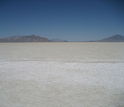
Bonneville Salt Flats in Utah
The changing Bonneville Salt Flats in Utah are the subject of a new CNH grant.
Credit and Larger Version
Interactions between humans and riparian forests in the southwestern U.S. are a CNH study subject.
Credit and Larger Version
Land transactions and their effects on agriculture
Land transactions and their effects on agriculture are the focus of a new CNH project.
Credit and Larger Version
The National Science Foundation (NSF)
Guillermo Gonzalo Sánchez Achutegui
ayabaca@gmail.com
ayabaca@hotmail.com
ayabaca@yahoo.com
Inscríbete en el Foro del blog y participa : A Vuelo De Un Quinde - El Foro!

Mi lista de blogs