Mostrando entradas con la etiqueta Climate Change. Mostrar todas las entradas

domingo, 26 de marzo de 2017

ESA : ESA Euronews : Atmospheric pollution .- ESA Euronews: Contaminación atmosférica


  • Watch in:
  • en
  • fr
  • de
  • it
  • es
  • pt
  • gr
  • hu
  • DOWNLOADMP4(72.42 MB)
    SOURCEMP4(221.13 MB)
     

    Details

    Open/Close
    • Title ESA Euronews : Atmospheric pollution
    • Released: 17/03/2017
    • Length 00:08:30
    • Language English, French, German, Italian, Spanish, Portuguese, Greek, Hungarian
    • Footage Type Animation
    • Copyright ESA/Euronews
    • Description
      This special edition of Space explores how atmospheric pollution is measured – and forecast – by satellites.
      You have probably used an app on your mobile phone to get the weather forecast. Now, thanks to a satellite network and ground-based stations, it is possible to get through an app on your phone information about pollution in your cities.
      Earth's atmosphere is a complicated system, influenced by a large number of factors. Observation satellites orbiting around our planet constantly monitor the state of the air we breathe and how natural and man-made pollution are affecting the quality of the atmosphere.
      Researchers at the University of Bremen have pioneered the measurement of atmospheric pollution. a vuelo

    TAGS

    Open/Close
    ESA
    Guillermo Gonzalo Sánchez Achutegui
    ayabaca@gmail.com
    ayabaca@hotmail.com
    ayabaca@yahoo.com
    Inscríbete en el Foro del blog y participa : A Vuelo De Un Quinde - El Foro!

    domingo, 5 de febrero de 2017

    ESA : Satellites monitor landslide in the Alps .-Los satélites monitorean deslizamientos en los Alpes

    http://www.esa.int/Our_Activities/Observing_the_Earth/Satellites_monitor_landslide_in_the_Alps


    Aletsch Glacier

    Satellites monitor landslide in the Alps

    3 February 2017
    Climate change-driven glacial melt is causing landslides in alpine regions. Data from the Sentinel-1 satellite mission are being inserted into a new cloud computing system to monitor such hazards globally.
    The Aletsch Glacier, the largest in the Alps, is experiencing an average retreat of about 50 m a year. The adjacent rocks that were previously constrained by the ice mass are progressively being released, generating slope instabilities. For this reason, the Aletsch region is a unique place where scientists can investigate how changes in glaciers affect the long- and short-term evolution of rock slope stability.
    To monitor the progressive changes occurring throughout a 2 sq km area southeast of the glacier – called the Moosfluh slope – the Chair of Engineering Geology at the Swiss Federal Institute of Technology in Zurich (ETHZ) installed ground-based instruments in 2013.
    Between September and October 2016, Moosfluh experienced an abnormal acceleration. The deformation generated several deep cracks and rock failures, hindering access to hiking paths visited by tourists, and affecting a cable car station located near the crest of the slope.
     
    Moosfluh slope instability

    To investigate the extent of the landslide further, radar images from the Copernicus Sentinel-1 satellite mission over August to November 2016 were analysed with the ESA’s Geohazards Exploitation Platform – or GEP – to produce a velocity map of the unstable area.
    The satellite data also helped scientists to define the most active areas and identify locations to place additional instruments on the ground.
    “With the help of satellite data and of GEP, we have improved our capability to monitor the spatial evolution of surface displacements at Moosfluh, as well as to provide a better interpretation of the ongoing physical processes during the critical phase,” said Andrea Manconi from ETHZ.
    GEP is one of six Thematic Exploitation Platforms – or TEPs – developed by ESA to serve data-user communities.
    These cloud-based platforms provide an online venue to access information, processing tools and computing resources for collaboration, allowing for knowledge to be extracted from the large environmental datasets produced through Europe’s Copernicus programme and from other Earth-observing satellites.
    The two-satellite Copernicus Sentinel-1 mission is particularly useful for monitoring geophysical hazards like landslides. The satellites each carry a radar sensor that can detect small changes in the ground between each overflight, every 6–12 days.
    The frequency of Sentinel-1’s data acquisition paired with GEP’s processing tools may allow for the quick detection of slope instabilities and their consequential risks.
     
    Geohazards TEP
    ESA
    Guillermo Gonzalo Sánchez Achutegui
    Inscríbete en el Foro del blog y participa : A Vuelo De Un Quinde - El Foro!

    jueves, 8 de diciembre de 2016

    The National Science Foundation (NSF) : Extreme downpours could increase 400 percent across parts of U.S..- Las lluvias extremas podrían aumentar 400 por ciento a través de partes de EE.UU.........

    https://www.nsf.gov/news/news_summ.jsp?cntn_id=190537&WT.mc_id=USNSF_51&WT.mc_ev=click


    A warming climate could also boost individual storm intensity

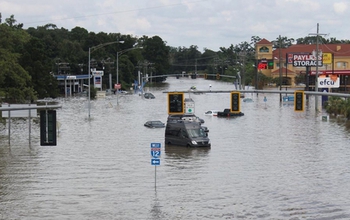
    The August, 2016, floods in Baton Rouge, Louisiana, wreaked havoc throughout the area.

    The August, 2016, floods in Baton Rouge, Louisiana, wreaked havoc throughout the area.
    Credit and Larger Version

    December 5, 2016
    By century's end, the number of summertime storms that produce extreme downpours could increase by more than 400 percent across parts of the United States -- including sections of the Gulf Coast, Atlantic Coast, and the Southwest -- according to a new study funded by the National Science Foundation (NSF).
    The study, by scientists at the National Center for Atmospheric Research (NCAR) and published today in the journal Nature Climate Change, also reports that the intensity of individual extreme rainfall events could increase by as much as 70 percent in some areas.
    "These are huge increases," said NCAR scientist Andreas Prein, lead author of the study. "Imagine the most intense thunderstorm you typically experience in a single season. Our study finds that, in the future, parts of the U.S. could expect to experience five of those storms in a season, each with an intensity as strong, or stronger, than current storms."
    Anjuli Bamzai, a program director in NSF's Geosciences Directorate, added that the research has potential public safety benefits. "Extreme precipitation events affect our infrastructure through flooding, landslides and debris flows. We need to better understand how these extreme events are changing. By supporting this research, NSF is working to foster a safer environment for all of us."

    Storms and supercomputers

    An increase in extreme precipitation is one of the expected effects of climate change. Scientists know that as the atmosphere warms, it can hold more water, and a wetter atmosphere can produce heavier rain. Researchers have already measured an increase in precipitation intensity across all regions of the U.S.
    However, climate models are generally unable to simulate these downpours, making it difficult for researchers to assess future changes in storm frequency and intensity.
    For the new study, the team used a dataset created when NCAR scientists and study co-authors Roy Rasmussen, Changhai Liu, and Kyoko Ikeda employed a Weather Research and Forecasting (WRF) model with the ability to simulate individual storms.
    The simulations, which required a year to run, were performed at the NCAR-Wyoming Supercomputing Center, on a system known as Yellowstone. Prein and his co-authors used the new dataset to investigate changes in downpours over North America.
    The researchers looked at how storms that happened between the years 2000 and 2013 might change if they occurred in a climate that was warmer by 5 degrees Celsius (9 degrees Fahrenheit) -- the temperature increase expected by the end of the century if greenhouse gas emissions continue unabated.
    Prein cautioned that this approach is a simplified way of comparing present and future climate. It does not reflect possible changes to storm tracks or to weather systems associated with climate change.
    The advantage, however, is that scientists can more easily isolate the effect of additional heat and associated moisture on future storm formation.
    "The ability to simulate realistic downpours is a quantum leap in climate modeling," Prein said. "This enables us to investigate changes in hourly rainfall extremes that are related to flash flooding for the very first time. To do this took a tremendous amount of computational resources."

    Effects vary

    The scientists anticipate that the number of summertime storms producing extreme precipitation will increase across the entire country, although the amount varies by region.
    The Midwest, for example, could have an increase of nearly 100 percent across swaths of Nebraska, the Dakotas, Minnesota, and Iowa. But the Gulf Coast, Alabama, Louisiana, Texas, New Mexico, Arizona, and Mexico could see increases ranging from 200 percent to more than 400 percent.
    The study also found that the intensity of extreme rainfall events in summer could increase across nearly the entire country, with some regions, including the Northeast and parts of the Southwest, seeing particularly large increases -- in some cases more than 70 percent.
    A surprising result, the scientists said, is that extreme downpours could also increase in areas that are getting drier on average, especially the Midwest.
    Researchers expect the moderate rainfall events that serve as this region's major source of moisture during summer to decrease significantly, while extreme events will likely increase in frequency and intensity. This shift from moderate to intense rainfall could increase the potential for flash floods and mudslides, and would have effects on agriculture.
    "Understanding how climate change may affect the environments that produce the most intense storms is essential because of the significant impacts these kinds of storms have on society," Prein said.
    The study was also funded by the Research Partnership to Secure Energy for America.
    -NSF-

    Media Contacts Cheryl Dybas, NSF, (703) 292-7734,
    cdybas@nsf.gov
    Laura Snider, NCAR, (303) 497-8605,
     lsnider@ucar.edu


    The National Science Foundation (NSF) is an independent federal agency that supports fundamental research and education across all fields of science and engineering. In fiscal year (FY) 2016, its budget is $7.5 billion. NSF funds reach all 50 states through grants to nearly 2,000 colleges, universities and other institutions. Each year, NSF receives more than 48,000 competitive proposals for funding and makes about 12,000 new funding awards. NSF also awards about $626 million in professional and service contracts yearly.
     Get News Updates by Email 
    Useful NSF Web Sites:
    NSF Home Page:
    https://www.nsf.gov
    NSF News:
    https://www.nsf.gov/news/
    For the News Media:
    https://www.nsf.gov/news/newsroom.jsp
    Science and Engineering Statistics:
     https://www.nsf.gov/statistics/
    Awards Searches:
    https://www.nsf.gov/awardsearch/
    Summer storms that produce extreme downpours could increase by 400 percent across parts of the U.S.
    Summer storms that produce extreme downpours could increase by 400 percent across parts of the U.S.
    Credit and Larger Version
    Extreme downpours could increase flooding like that in Boulder, Colorado, in 2013.
    Extreme downpours could increase flooding like that in Boulder, Colorado, in 2013.
    Credit and Larger Version
    Such extreme rainfall events result in widespread risks to infrastructure, such as roads.
    Such extreme rainfall events result in widespread risks to infrastructure, such as roads.
    Credit and Larger Version
    The Boulder, Colorado, flooding of 2013 resulted in risks to life and property.
    The Boulder, Colorado, flooding of 2013 resulted in risks to life and property.
    Credit and Larger Version
    Highway to nowhere: Traffic along a road near Islip, New York, is stalled by heavy rains.
    Highway to nowhere: Traffic along a road near Islip, New York, is stalled by heavy rains.
    Credit and Larger Version
    The National Science Foundation (NSF)
    Guillermo Gonzalo Sánchez Achutegui
    ayabaca@gmail.com
    ayabaca@hotmail.com
    ayabaca@yahoo.com
    Inscríbete en el Foro del blog y participa : A Vuelo De Un Quinde - El Foro!

    jueves, 29 de septiembre de 2016

    NSF : awards $13 million in third set of coastal sustainability grants .- Premios de $ 13 millones para el tercer juego de becas de sostenibilidad costeras................

    http://www.nsf.gov/news/news_summ.jsp?cntn_id=189824&WT.mc_id=USNSF_51&WT.mc_ev=click

    In the face of sea-level rise and other threats, awards will lead to better management of coastal environments
    A new NSF Coastal SEES award addresses sustainability of the Ganges-Brahmaputra Delta.

    A new NSF Coastal SEES award addresses sustainability of the Ganges-Brahmaputra Delta.
    Credit and Larger Version

    September 21, 2016
    At a time when sea-level rise is flooding cities in the U.S. Southeast, harmful algae blooms are threatening seashore communities, and climate change is affecting fisheries just offshore, how do we coexist with our coastlines?
    To answer that question, the National Science Foundation (NSF), through its Coastal SEES (Science, Engineering and Education for Sustainability) program, has funded a third set of awards totaling $13 million to study coasts in the U.S. and around the world.
    The program is largely supported by the Division of Ocean Sciences in NSF's Directorate for Geosciences. It funds research on the sustainability of coastal systems, the swaths of land closely connected to the seas -- including barrier islands, wetlands, mudflats, beaches and estuaries, as well as coastal cities, towns, recreational areas, maritime facilities -- as well as the continental seas and shelves and the atmosphere.
    "Coastal systems are crucial to regional and national economies, and to human safety and sustainability," says Rick Murray, director of NSF's Division of Ocean Sciences. "This third set of Coastal SEES awards will help us preserve our coasts at a time when they're under pressure from all sides, including sea-level rise, changes in storm intensity and frequency, ocean acidification, and development of coastal lands."
    We've left a large footprint in coastal sands. In the year 2000, more than half the world's human population lived in coastal areas. By 2025, that number is expected to rise to 75 percent. By 2020, if current population trends continue, the crowded U.S. coast is projected to see its population grow from 123 million people to nearly 134 million.
    NSF's new Coastal SEES projects address topics such as: apex predators, ecosystems and community sustainability in Alaska; climate change, management decisions and ecological functions in Chesapeake Bay; climate change effects on fisheries in the California Current ecosystem; new modeling tools to predict ocean acidification effects on coastal ecosystems; and landscape dynamics, mass balance and network connectivity for a sustainable Ganges-Brahmaputra Delta.

    2016 NSF Coastal SEES Awards
    Mya Breitbart, University of South Florida; Maryann Cairns, Northeastern University:
    John Campbell, University of California, Merced; Joseph Berry, Carnegie Institutution for Science; Roger Samelson, Oregon State University; Nicole Ardoin, Stanford University; Ulrike Seibt, University of California Los Angeles:
    Ginny Eckert, University of Alaska Fairbanks; Heidi Pearson, University of Alaska SE Juneau; Stephen Langdon, University of Alaska Anchorage:
    Jerome Fiechter, University of California, Santa Cruz:
    Steven Goodbred, Vanderbilt University; Irina Overeem, University of Colorado Boulder; Carol Wilson, Louisiana State University; Paola Passalacqua, University of Texas Austin:
    Carl Hershner, College of William & Mary, Virginia Institute of Marine Science; Randolph Chambers College of William & Mary; Shana Jones, University of Georgia; Michelle Covi, Old Dominion University:
    Arthur Miller, University of California, San Diego, Scripps Institution of Oceanography; Arielle Levine, San Diego State University; Junjie Zhang, University of California San Diego:
    Allison Steiner, University of Michigan; Frank Lupi, Michigan State University; Daniel Obenour, North Carolina State University; Christine Kirchhoff, University of Connecticut:
    -NSF-

    Media Contacts Cheryl Dybas, NSF, (703) 292-7734, cdybas@nsf.gov

    Related WebsitesNSF News: NSF awards first coastal sustainability grants for research on world's most populated areas:
    https://www.nsf.gov/news/news_summ.jsp?cntn_id=129266
    NSF News: NSF awards $15 million in second set of coastal sustainability grants: https://www.nsf.gov/news/news_summ.jsp?cntn_id=132637


    The National Science Foundation (NSF) is an independent federal agency that supports fundamental research and education across all fields of science and engineering. In fiscal year (FY) 2016, its budget is $7.5 billion. NSF funds reach all 50 states through grants to nearly 2,000 colleges, universities and other institutions. Each year, NSF receives more than 48,000 competitive proposals for funding and makes about 12,000 new funding awards. NSF also awards about $626 million in professional and service contracts yearly.
     Get News Updates by Email 
    Useful NSF Web Sites:
    NSF Home Page:
     https://www.nsf.gov
    NSF News:
    https://www.nsf.gov/news/
    For the News Media:
     https://www.nsf.gov/news/newsroom.jsp
    Science and Engineering Statistics:
     https://www.nsf.gov/statistics/
    Awards Searches:
    https://www.nsf.gov/awardsearch/

    View Video
    NSF Ocean Sciences Division Director Rick Murray talks about co-existing with our coastlines.
    Credit and Larger Version

    Pteropods are shelled animals that live in the sea; they're affected by ocean acidification.
    Pteropods are shelled animals that live in the sea; they're affected by ocean acidification.
    Credit and Larger Version
    Oyster in Chesapeake Bay. Climate change/management/ecology of the bay is a Coastal SEES topic.
    Oyster in Chesapeake Bay. Climate change/management/ecology of the bay is a Coastal SEES topic.
    Credit and Larger Version
    NSF Coastal SEES grantees are studying communities threatened by harmful algae blooms.
    NSF Coastal SEES grantees are studying communities threatened by harmful algae blooms.
    Credit and Larger Version
    As sea level rises, the coast of Louisiana begins to go underwater.
    As sea level rises, the coast of Louisiana begins to go underwater.
    Credit and Larger Version
    NSF Coastal SEES awardees are studying climate change effects on California Current fisheries.
    NSF Coastal SEES awardees are studying climate change effects on California Current fisheries.
    Credit and Larger Versión

     
    NSF awards $15.9 million to foster new understanding of biological systems on regional to continental scales .-
     
    Macrosystems biology and early NEON science awards support predictive understanding of large-scale biological responses to climate, land-use change

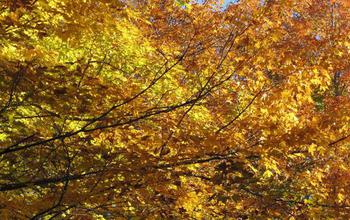
    NSF MacroSystems Biology and Early NEON Science researchers are studying tree genes to canopies.

    NSF MacroSystems Biology and Early NEON Science researchers are studying tree genes to canopies.
    Credit and Larger Version

    September 22, 2016
    Have you looked closely at a stream, lake or woodland and observed changes in it over time? That's exactly what scientists are trying to do on a larger, regional-to-continental scale -- a macrosystems biology scale.
    Macrosystems biology might be called biological sciences writ large. To better detect, understand and predict the effects of climate and land-use changes on organisms and ecosystems at these large scales, the National Science Foundation (NSF) Directorate for Biological Sciences has awarded $15.9 million for 12 new MacroSystems Biology and Early NEON (National Ecological Observatory Network) Science projects.
    Early NEON Science grants go to projects that don't otherwise fit into the macrosystems biology focus on regional- to continental-scale questions, but use or leverage NEON data and/or NEON samples and specimens to address innovative ecological or other biological questions, or develop analytic or computational tools that enhance the use and value of NEON data.
    How will the biosphere respond to natural and human-induced changes across a range of time and space scales? What is the pace and pattern of these responses? What are the effects on ecosystem services -- such as the availability of freshwater -- across regions and continents?
    "Our current understanding of the biosphere is largely based on knowledge derived from small plot research or from satellite-scale remote sensing," says James Olds, NSF assistant director for Biological Sciences. "But the basic scientific knowledge needed to predict the consequences of climate and land-use change, or invasive species effects on living systems, is difficult to obtain from studies conducted at local or global scales. We need to look at them at the regional-to-continental scale."
    That's where NSF's MacroSystems Biology and Early NEON Science awards come in, says Olds. "They allow us to study issues that have become critical to the future of our planet in ways that will foster a new understanding of, for example, the ecology of major cities and the water quality of lakes in the continental U.S."
    A significant part of these new approaches involves the integration of biology with other fields, including the geosciences, engineering, mathematical and physical sciences, and social, economic and behavioral sciences.
    How are regional-scale processes in plant and animal invasions, and in disease transmission, shaped by continent-wide environmental and land-use patterns? How can continent-wide data lead to better forecasts of disease outbreaks? How do invasive species and infectious diseases arrive at new locations, sometimes across great distances?
    MacroSystems Biology and Early NEON Science investigators are seeking answers.
    Among the topics awardees will address are: forest function from genes to canopies; how local and migratory foraging affects networks of plants, pollinators and pathogens; alternative ecological futures for the "American Residential Macrosystem" (our homes and lawns) in six study cities from Boston to Los Angeles; and "mice-o-scapes": understanding the effects of climate and landscape change on small mammal ecology over the past 100 years.
    The projects crisscross regions and continents, and bring together scientists from biological sciences, geosciences and other fields in an effort to find out what makes Earth's biosphere tick.

    2016 MacroSystems Biology and Early NEON Science Projects
    Jennifer Cotton, California State University, Northridge:
    Michael Dietze, Boston University:
    Songlin Fei, Purdue University:
    Peter Groffman, City University of New York-Advance Science Research Center:
    Catherine Hulshof, University of Puerto Rico, Mayaguez:
    Jaclyn Matthes, Wellesley College:
    Scott Ollinger, University of New Hampshire:
    Kevin Rose, Rensselaer Polytechnic Institute:
    Patricia Soranno, Michigan State University:
    Nathan Swenson, University of Maryland:
    Phillip Townsend, University of Wisconsin-Madison:
    Erin Wilson-Rankin, University of California-Riverside:
    -NSF-
    Media Contacts Cheryl Dybas, NSF, (703) 292-7734,
     cdybas@nsf.gov


    The National Science Foundation (NSF) is an independent federal agency that supports fundamental research and education across all fields of science and engineering. In fiscal year (FY) 2016, its budget is $7.5 billion. NSF funds reach all 50 states through grants to nearly 2,000 colleges, universities and other institutions. Each year, NSF receives more than 48,000 competitive proposals for funding and makes about 12,000 new funding awards. NSF also awards about $626 million in professional and service contracts yearly.
     Get News Updates by Email 
    Useful NSF Web Sites:
    NSF Home Page:
     https://www.nsf.gov
    NSF News:
     https://www.nsf.gov/news/
    For the News Media:
     https://www.nsf.gov/news/newsroom.jsp
    Science and Engineering Statistics:
     https://www.nsf.gov/statistics/
    Awards Searches:
    https://www.nsf.gov/awardsearch/

    The National Science Foundation (NSF)
    Guillermo Gonzalo Sánchez Achutegui
    ayabaca@gmail.com
    ayabaca@hotmail.com
    ayabaca@yahoo.com
    Inscríbete en el Foro del blog y participa : A Vuelo De Un Quinde - El Foro!

    domingo, 18 de septiembre de 2016

    NSF : NSF awards $16.7 million for research on how humans, environment interact .- NSF, otorga premios por $ 16,7 millones para la investigación sobre cómo los seres humanos, interactúan con el medio ambiente...........

    http://www.nsf.gov/news/news_summ.jsp?cntn_id=189781&WT.mc_id=USNSF_51&WT.mc_ev=click

    Projects continue mission of Dynamics of Coupled Natural and Human Systems program

    Aerial views of lawns

    Aerial views of lawns in San Diego; Miami; Philadelphia; Chicago; Phoenix; and Levittown, N.Y.
    Credit and Larger Version

    September 16, 2016
    Boston and Baltimore. Miami and Minneapolis. Phoenix and Los Angeles. Fanned across the U.S. and in locations from coast to prairie to desert, what do these cities have in common? Perhaps how their human residents tend that icon of America, the urban lawn.
    What's right outside our doors -- our lawns -- may be one of the best indicators of where cities and towns need to address sustainability, according to Peter Groffman of the City University of New York.
    Groffman is one of 11 recipients of grants made in 2016 by the National Science Foundation (NSF)'s Dynamics of Coupled Natural and Human Systems (CNH) program, which supports research that examines the complex interactions between human and natural systems. Total funding for 2016 CNH grants is $16.7 million.
    Lawn fertilizer contains nutrients such as phosphorus and nitrogen that wash into waterways, causing blooms of algae that can rob fish and other aquatic species of oxygen and degrade water quality. Groffman's CNH project will investigate the natural processes regulating the flow of nitrogen from lawns, and look at the sociological factors that influence how homeowners decide to manage their lawns.
    CNH is co-funded by NSF's directorates for Biological Sciences (BIO), Geosciences (GEO), and Social, Behavioral and Economic Sciences (SBE). The program has been issuing awards since 2001. This year's grantees will look at ways in which people deal with environmental processes in a range of settings, including cities, mountains, grasslands and forests.
    "As has been true for the 15 years since CNH was founded, this year's awards explore a diverse range of ways in which natural and human systems interact with each other," said Tom Baerwald, CNH program director for SBE.
    Findings from the CNH projects will enhance society's understanding of environmental quality and the well-being of people.
    The 2016 CNH research subjects include: adaptations to climate change in California fisheries and fishing communities; how land transactions and investments affect agricultural production, ecosystem services and food and energy security; how socioecological systems are transformed by hydroelectric dams in the Amazon; the restoration of riparian forests in the southwestern U.S.; and the effects of glaciers melting on the livelihoods of townspeople in Peru's high-elevation Cordillera Blanca.
    "The CNH program is unique in that it involves interdisciplinary research teams in solving the complex challenges facing our country and our planet," said Betsy Von Holle, CNH program director for BIO.
    CNH considers humans and the environment as one interconnected system.
    "The program provides a knowledge base for sound planning that can benefit both people and the environment for years to come," said Richard Yuretich, CNH program director for GEO.

    2016 NSF CNH Awards
    Joshua Abbott, Arizona State University: The Dynamics of Adaptation to Climate-Driven Variability in California Current Fisheries And Fishing Communities
    Arun Agrawal, University of Michigan Ann Arbor: Land transactions and investments: Impacts on agricultural production, ecosystem services, and food-energy security
    Clare Aslan, Northern Arizona University: Scale-Dependent Feedbacks Among Protected Areas and Surrounding Socioecological Systems
    Brenda Bowen, University of Utah: Adaptation, Mitigation, and Biophysical Feedbacks in the Changing Bonneville Salt Flats
    Gillian Bowser, Colorado State University: Andes Bofedales and Cattle: The Impacts of Changing Hydrology and Glacial Retreat on Community Livelihoods in Peru's Cordillera Blanca
    Peter Groffman, Research Foundation CUNY - Advanced Science Research Center: Multi-Scale Coupled Natural-Human System Dynamics of Nitrogen in Residential Landscapes
    Pamela Jagger, University of North Carolina at Chapel Hill: Energy Transitions and Environmental Change in East and Southern Africa's Coupled Human, Terrestrial, and Atmospheric Systems
    Bette Loiselle, University of Florida: RCN: Amazon Dams Network: Advancing Integrative Research and Adaptive Management of Social-ecological Systems Transformed by Hydroelectric Dams
    Joy McCorriston, Ohio State University: Pastoral Territory as a Dynamic Coupled System
    Nathan Phillips, Boston University: Coupling of Physical Infrastructure, Green Infrastructure, and Communities
    Anna Sher, University of Denver: Interactions Between Human Perspectives and Natural System Dynamics in the Restoration of Riparian Forests in the Southwestern U.S.
    Erica Smithwick, Pennsylvania State University: Visualizing Forest Futures Under Climate Uncertainty: Integrating Indigenous Knowledge into Decision-Support Tools for Collaborative Decision Making
    -NSF-

    Media Contacts Cheryl Dybas, NSF, (703) 292-7734, cdybas@nsf.gov

    Related WebsitesNSF News (CNH 2015 Awards): NSF awards $20.4 million for research on how humans and environment interact:
    https://www.nsf.gov/news/news_summ.jsp?cntn_id=136047
    NSF News (CNH 2014 Awards): National Science Foundation awards $9.47 million for research on coupled natural and human systems:
    https://www.nsf.gov/news/news_summ.jsp?cntn_id=132412
    NSF News (CNH 2013 Awards): National Science Foundation awards $19.4 million for research on coupled natural and human systems:
    https://www.nsf.gov/news/news_summ.jsp?cntn_id=129178
    CNH Discovery Article: Summertime: Hot Time in the City: https://www.nsf.gov/discoveries/disc_summ.jsp?cntn_id=128204
    CNH Discovery Article: Cooking Up Clean Air in Africa: https://www.nsf.gov/discoveries/disc_summ.jsp?cntn_id=126403
    CNH Discovery Article: Studying Nature's Rhythms: Soundscape Ecologists Spawn New Field: https://www.nsf.gov/discoveries/disc_summ.jsp?cntn_id=123046
    CNH Discovery Article: Wildlife species provide clues to spread of antibiotic resistance: https://www.nsf.gov/discoveries/disc_summ.jsp?cntn_id=135187


    The National Science Foundation (NSF) is an independent federal agency that supports fundamental research and education across all fields of science and engineering. In fiscal year (FY) 2016, its budget is $7.5 billion. NSF funds reach all 50 states through grants to nearly 2,000 colleges, universities and other institutions. Each year, NSF receives more than 48,000 competitive proposals for funding and makes about 12,000 new funding awards. NSF also awards about $626 million in professional and service contracts yearly.
     Get News Updates by Email 
    Useful NSF Web Sites:
    NSF Home Page:
    https://www.nsf.gov
    NSF News:
     https://www.nsf.gov/news/
    For the News Media:
     https://www.nsf.gov/news/newsroom.jsp
    Science and Engineering Statistics:
     https://www.nsf.gov/statistics/
    Awards Searches:
     https://www.nsf.gov/awardsearch/
    Sardines
    CNH grantees are studying California Current fisheries. Pictured here: sardines.
    Credit and Larger Version
    Peru's Cordillera Blanca.
    CNH researchers are looking at glacier melting and human communities in Peru's Cordillera Blanca.
    Credit and Larger Version
    Bonneville Salt Flats in Utah
    The changing Bonneville Salt Flats in Utah are the subject of a new CNH grant.
    Credit and Larger Version
    Interactions between humans and riparian forests in the southwestern U.S. are a CNH study subject.
    Interactions between humans and riparian forests in the southwestern U.S. are a CNH study subject.
    Credit and Larger Version
    Land transactions and their effects on agriculture
    Land transactions and their effects on agriculture are the focus of a new CNH project.
    Credit and Larger Version
    The National Science Foundation (NSF)
    Guillermo Gonzalo Sánchez Achutegui
    ayabaca@gmail.com
    ayabaca@hotmail.com
    ayabaca@yahoo.com
    Inscríbete en el Foro del blog y participa : A Vuelo De Un Quinde - El Foro!

    NSF : NSF awards $18.9 million for research to transform our understanding of life on Earth.- NSF, ofrece premios hasta $ 18,9 millones para la investigación para transformar nuestra comprensión de la vida en la Tierra......

    http://www.nsf.gov/news/news_summ.jsp?cntn_id=189723&WT.mc_id=USNSF_51&WT.mc_ev=click

    Topics range from coral reef sponge microbiomes to the evolution of snake venom

    A diverse community of marine sponges on a coral reef in St. Croix, U.S. Virgin Islands.

    A diverse community of marine sponges on a coral reef in St. Croix, U.S. Virgin Islands.
    Credit and Larger Version

    September 16, 2016
    Humans are largely made up of millions of microbes, collectively called our microbiomes. These microbial "ecosystems" contribute to keeping us healthy. It's the same for corals and other species such as marine sponges, scientists are finding.
    Through a new National Science Foundation (NSF) Dimensions of Biodiversity grant, Michael Lesser of the University of New Hampshire and colleagues are studying the evolutionary ecology of sponges, and how their microbiomes drive diversity on coral reefs.
    The project is one of 10 funded this year through the Dimensions of Biodiversity program, a unique research initiative that integrates multiple areas of study, in contrast to traditional biodiversity research that focuses on one taxonomic group or ecosystem.
    A total of $18.9 million has been invested in the awards, with contributions from NSF's Directorates for Biological Sciences and for Geosciences, as well as the São Paulo Research Foundation (FAPESP) of Brazil.
    "These grants will allow us to find new ways of understanding how organisms form, interact, and change through time," says James Olds, NSF assistant director for Biological Sciences. "This year's Dimensions of Biodiversity awardees will investigate some of the least-known and perplexing 'innovations of nature,' from the ability of plant plankton to metabolize vitamins, to how various types of snake venom developed, to why humidity-loving mosses can tolerate arid conditions."
    The Dimensions of Biodiversity program links functional, genetic and phylogenetic dimensions of biodiversity, offering opportunities to produce rapid advances in understanding the creation, maintenance and loss of biodiversity.
    "This research will help us understand, for example, the incredible diversity of marine life and how it functions," says Roger Wakimoto, NSF assistant director for Geosciences. "In a time of changing seas, that knowledge is of great importance in comprehending, and conserving, the species in Earth's vast oceans."
    The research will fill in gaps in biodiversity knowledge, scientists say. It also has the potential to lead to significant progress in agriculture, fuel, manufacturing and health.
    For example, plant and animal extinctions are detrimental to human health, scientists have found. Species losses in ecosystems such as forests and fields result in increases in pathogens, or disease-causing organisms. The species most likely to disappear as biodiversity declines are often those that buffer infectious disease transmission. Those that remain tend to be ones that magnify diseases such as Lyme disease.
    Economic sustainability also depends on the diversity of life on Earth. Many industrial materials, such as fibers and dyes, come from biological sources. In addition, biodiversity is important to resources such as water, food and pharmaceuticals.
    To conserve Earth's biodiversity, scientists funded through the Dimensions of Biodiversity program are working to better understand interactions between, for example, plants and insects.
    The new Dimensions of Biodiversity projects focus on topics including desiccation and diversity in dryland mosses; sensory systems such as vision in unusual habitats; and predicting how species in river floodplains will respond to climate change.

    2016 NSF Dimensions of Biodiversity Awards
    Janette Boughman, Michigan State University: Dimensions: Diversification of sensory systems in novel habitat: enhanced vision or compensation in other modalities?
    Jeffrey Feder, University of Notre Dame: Dimensions: Collaborative Research: Time after Time: Adaptive Seasonal Timing Drives the Sequential Origin of Community Biodiversity
    Lisle Gibbs, Ohio State University: Collaborative Research: Dimensions US-BIOTA-Sao Paulo: Scales of biodiversity - Integrated studies of snake venom evolution and function across multiple levels of diversity
    Zach Gombert, Utah State University: Collaborative Proposal: Dimensions: The evolution of novel interactions within a network of plant, insect and microbial biodiversity
    Michael Lesser, University of New Hampshire: Collaborative Research: Dimensions: Evolutionary Ecology of Sponges and their Microbiome Drives Sponge Diversity on Coral Reefs
    Elena Litchman, Michigan State University: Dimensions: Collaborative Research: Genetic, functional and phylogenetic diversity determines marine phytoplankton community responses to changing temperature and nutrients
    Gordon Luikart, University of Montana: Dimensions - Predicting Biodiversity Vulnerability to Climate Change: Integrating Phylogenetic, Genomic, and Function Diversity in River Floodplains
    Jason Slot, Ohio State University: Collaborative Research: Dimensions: Secondary metabolites as drivers of fungal endophyte community diversity
    Lloyd Stark, University of Nevada, Las Vegas: Collaborative Research: Dimensions: Desiccation and Diversity in Dryland Mosses
    Alexandra Worden, Monterey Bay Aquarium Research Institute: Dimensions: Collaborative Research: Functional and genomic diversity in vitamin B1 metabolism and impacts on plankton networks and productivity
    -NSF-

    Media Contacts Cheryl Dybas, NSF, (703) 292-7734, cdybas@nsf.gov

    Related WebsitesNSF News (2015 Awards): Life on Earth: National Science Foundation awards $23 million for studies of planet's biodiversity:
    https://www.nsf.gov/news/news_summ.jsp?cntn_id=136222
    NSF News (2014 Awards): Whither the diversity of life on Earth? NSF, partners award $23 million for studies of planet's biodiversity:
    https://www.nsf.gov/news/news_summ.jsp?cntn_id=132506
    NSF News (2013 Awards): In race against time, NSF grants fund research on Earth's threatened biodiversity:
     https://www.nsf.gov/news/news_summ.jsp?cntn_id=129242
    NSF Discovery: Staple of recipe favorites--the tomato--reveals processes that maintain biodiversity: https://nsf.gov/discoveries/disc_summ.jsp?cntn_id=129676
    NSF Discovery: Earth Week: A Stream Is a Stream Is a Stream: Or Is It?: http://www.nsf.gov/discoveries/disc_summ.jsp?cntn_id=123855&org=NSF
    NSF Discovery: Earth Day is on the horizon. But is 'greener' always better?: http://www.nsf.gov/discoveries/disc_summ.jsp?cntn_id=134374


    The National Science Foundation (NSF) is an independent federal agency that supports fundamental research and education across all fields of science and engineering. In fiscal year (FY) 2016, its budget is $7.5 billion. NSF funds reach all 50 states through grants to nearly 2,000 colleges, universities and other institutions. Each year, NSF receives more than 48,000 competitive proposals for funding and makes about 12,000 new funding awards. NSF also awards about $626 million in professional and service contracts yearly.
     Get News Updates by Email 
    Useful NSF Web Sites:
    NSF Home Page:
     https://www.nsf.gov
    NSF News:
    https://www.nsf.gov/news/
    For the News Media:
     https://www.nsf.gov/news/newsroom.jsp
    Science and Engineering Statistics:
     https://www.nsf.gov/statistics/
    Awards Searches:
     https://www.nsf.gov/awardsearch/
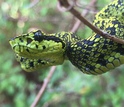
    The Talamancan palm-pitviper, found in the highlands of the Talamancan Cordillera in Costa Rica.
    The Talamancan palm-pitviper, found in the highlands of the Talamancan Cordillera in Costa Rica.
    Credit and Larger Version
    Melissa blue caterpillars in Idaho feed on alfalfa while being tended by beneficial ants.
    Melissa blue caterpillars in Idaho feed on alfalfa while being tended by beneficial ants.
    Credit and Larger Version
    Researchers at work on an evolutionary endocrinology project to track the timing of dormancy.
    Researchers at work on an evolutionary endocrinology project to track the timing of dormancy.
    Credit and Larger Version
    Threespine stickleback fish that were captured in a spring-fed freshwater lake.
    Threespine stickleback fish that were captured in a spring-fed freshwater lake.
    Credit and Larger Version
    Scientists are isolating fungi from the leaves of coffee plants.
    Scientists are isolating fungi from the leaves of coffee plants.
    Credit and Larger Version
    The National Science Foundation (NSF)
    Guillermo Gonzalo Sánchez Achutegui
    ayabaca@gmail.com
    ayabaca@hotmail.com
    ayabaca@yahoo.com
    Inscríbete en el Foro del blog y participa : A Vuelo De Un Quinde - El Foro!

    Mi lista de blogs