Mostrando entradas con la etiqueta Coral reefs. Mostrar todas las entradas

domingo, 18 de septiembre de 2016

NSF : NSF awards $18.9 million for research to transform our understanding of life on Earth.- NSF, ofrece premios hasta $ 18,9 millones para la investigación para transformar nuestra comprensión de la vida en la Tierra......

http://www.nsf.gov/news/news_summ.jsp?cntn_id=189723&WT.mc_id=USNSF_51&WT.mc_ev=click

Topics range from coral reef sponge microbiomes to the evolution of snake venom

A diverse community of marine sponges on a coral reef in St. Croix, U.S. Virgin Islands.

A diverse community of marine sponges on a coral reef in St. Croix, U.S. Virgin Islands.
Credit and Larger Version

September 16, 2016
Humans are largely made up of millions of microbes, collectively called our microbiomes. These microbial "ecosystems" contribute to keeping us healthy. It's the same for corals and other species such as marine sponges, scientists are finding.
Through a new National Science Foundation (NSF) Dimensions of Biodiversity grant, Michael Lesser of the University of New Hampshire and colleagues are studying the evolutionary ecology of sponges, and how their microbiomes drive diversity on coral reefs.
The project is one of 10 funded this year through the Dimensions of Biodiversity program, a unique research initiative that integrates multiple areas of study, in contrast to traditional biodiversity research that focuses on one taxonomic group or ecosystem.
A total of $18.9 million has been invested in the awards, with contributions from NSF's Directorates for Biological Sciences and for Geosciences, as well as the São Paulo Research Foundation (FAPESP) of Brazil.
"These grants will allow us to find new ways of understanding how organisms form, interact, and change through time," says James Olds, NSF assistant director for Biological Sciences. "This year's Dimensions of Biodiversity awardees will investigate some of the least-known and perplexing 'innovations of nature,' from the ability of plant plankton to metabolize vitamins, to how various types of snake venom developed, to why humidity-loving mosses can tolerate arid conditions."
The Dimensions of Biodiversity program links functional, genetic and phylogenetic dimensions of biodiversity, offering opportunities to produce rapid advances in understanding the creation, maintenance and loss of biodiversity.
"This research will help us understand, for example, the incredible diversity of marine life and how it functions," says Roger Wakimoto, NSF assistant director for Geosciences. "In a time of changing seas, that knowledge is of great importance in comprehending, and conserving, the species in Earth's vast oceans."
The research will fill in gaps in biodiversity knowledge, scientists say. It also has the potential to lead to significant progress in agriculture, fuel, manufacturing and health.
For example, plant and animal extinctions are detrimental to human health, scientists have found. Species losses in ecosystems such as forests and fields result in increases in pathogens, or disease-causing organisms. The species most likely to disappear as biodiversity declines are often those that buffer infectious disease transmission. Those that remain tend to be ones that magnify diseases such as Lyme disease.
Economic sustainability also depends on the diversity of life on Earth. Many industrial materials, such as fibers and dyes, come from biological sources. In addition, biodiversity is important to resources such as water, food and pharmaceuticals.
To conserve Earth's biodiversity, scientists funded through the Dimensions of Biodiversity program are working to better understand interactions between, for example, plants and insects.
The new Dimensions of Biodiversity projects focus on topics including desiccation and diversity in dryland mosses; sensory systems such as vision in unusual habitats; and predicting how species in river floodplains will respond to climate change.

2016 NSF Dimensions of Biodiversity Awards
Janette Boughman, Michigan State University: Dimensions: Diversification of sensory systems in novel habitat: enhanced vision or compensation in other modalities?
Jeffrey Feder, University of Notre Dame: Dimensions: Collaborative Research: Time after Time: Adaptive Seasonal Timing Drives the Sequential Origin of Community Biodiversity
Lisle Gibbs, Ohio State University: Collaborative Research: Dimensions US-BIOTA-Sao Paulo: Scales of biodiversity - Integrated studies of snake venom evolution and function across multiple levels of diversity
Zach Gombert, Utah State University: Collaborative Proposal: Dimensions: The evolution of novel interactions within a network of plant, insect and microbial biodiversity
Michael Lesser, University of New Hampshire: Collaborative Research: Dimensions: Evolutionary Ecology of Sponges and their Microbiome Drives Sponge Diversity on Coral Reefs
Elena Litchman, Michigan State University: Dimensions: Collaborative Research: Genetic, functional and phylogenetic diversity determines marine phytoplankton community responses to changing temperature and nutrients
Gordon Luikart, University of Montana: Dimensions - Predicting Biodiversity Vulnerability to Climate Change: Integrating Phylogenetic, Genomic, and Function Diversity in River Floodplains
Jason Slot, Ohio State University: Collaborative Research: Dimensions: Secondary metabolites as drivers of fungal endophyte community diversity
Lloyd Stark, University of Nevada, Las Vegas: Collaborative Research: Dimensions: Desiccation and Diversity in Dryland Mosses
Alexandra Worden, Monterey Bay Aquarium Research Institute: Dimensions: Collaborative Research: Functional and genomic diversity in vitamin B1 metabolism and impacts on plankton networks and productivity
-NSF-

Media Contacts Cheryl Dybas, NSF, (703) 292-7734, cdybas@nsf.gov

Related WebsitesNSF News (2015 Awards): Life on Earth: National Science Foundation awards $23 million for studies of planet's biodiversity:
https://www.nsf.gov/news/news_summ.jsp?cntn_id=136222
NSF News (2014 Awards): Whither the diversity of life on Earth? NSF, partners award $23 million for studies of planet's biodiversity:
https://www.nsf.gov/news/news_summ.jsp?cntn_id=132506
NSF News (2013 Awards): In race against time, NSF grants fund research on Earth's threatened biodiversity:
 https://www.nsf.gov/news/news_summ.jsp?cntn_id=129242
NSF Discovery: Staple of recipe favorites--the tomato--reveals processes that maintain biodiversity: https://nsf.gov/discoveries/disc_summ.jsp?cntn_id=129676
NSF Discovery: Earth Week: A Stream Is a Stream Is a Stream: Or Is It?: http://www.nsf.gov/discoveries/disc_summ.jsp?cntn_id=123855&org=NSF
NSF Discovery: Earth Day is on the horizon. But is 'greener' always better?: http://www.nsf.gov/discoveries/disc_summ.jsp?cntn_id=134374


The National Science Foundation (NSF) is an independent federal agency that supports fundamental research and education across all fields of science and engineering. In fiscal year (FY) 2016, its budget is $7.5 billion. NSF funds reach all 50 states through grants to nearly 2,000 colleges, universities and other institutions. Each year, NSF receives more than 48,000 competitive proposals for funding and makes about 12,000 new funding awards. NSF also awards about $626 million in professional and service contracts yearly.
 Get News Updates by Email 
Useful NSF Web Sites:
NSF Home Page:
 https://www.nsf.gov
NSF News:
https://www.nsf.gov/news/
For the News Media:
 https://www.nsf.gov/news/newsroom.jsp
Science and Engineering Statistics:
 https://www.nsf.gov/statistics/
Awards Searches:
 https://www.nsf.gov/awardsearch/
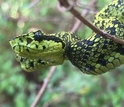
The Talamancan palm-pitviper, found in the highlands of the Talamancan Cordillera in Costa Rica.
Credit and Larger Version
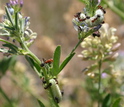
Melissa blue caterpillars in Idaho feed on alfalfa while being tended by beneficial ants.
Credit and Larger Version
Researchers at work on an evolutionary endocrinology project to track the timing of dormancy.
Credit and Larger Version
Threespine stickleback fish that were captured in a spring-fed freshwater lake.
Credit and Larger Version
Scientists are isolating fungi from the leaves of coffee plants.
Credit and Larger Version
The National Science Foundation (NSF)
Guillermo Gonzalo Sánchez Achutegui
ayabaca@gmail.com
ayabaca@hotmail.com
ayabaca@yahoo.com
Inscríbete en el Foro del blog y participa : A Vuelo De Un Quinde - El Foro!

jueves, 12 de febrero de 2015

nsf.go - National Science Foundation .- Good news and bad news for coral reefs

Hola amigos: A VUELO DE UN QUINDE EL BLOG., hemos recibido información de la Fundación Nacional de Ciencias de Los Estados Unidos, que hay  buenas noticias relacionadas con las áreas marinas protegidas, pero la mala noticia relacionada con la pérdida de la cobertura de coral. Hay buenas noticias relacionadas con las áreas marinas protegidas, pero la mala noticia relacionada con la pérdida de la cobertura de coral......................
Hay buenas noticias relacionadas con las áreas marinas protegidas, pero la mala noticia relacionada con la pérdida de la cobertura de coral..........
There's good news related to marine protected areas, but bad news related to loss of coral cover
coral reef and fish near Philippines
Reefscape near Cabilao Island, Philippines.
Credit and Larger Version
February 9, 2015
Some good news for coral reefs: In 2014, President Obama expanded the Pacific Remote Islands Marine National Monument in the central Pacific from about 87,000 square miles to 308,000 square miles. The Monument "is the largest marine protected area in the world and an important part of the most widespread collection of marine life on the planet under a single country's jurisdiction," according to the National Oceanic and Atmospheric Administration (NOAA).
This area sustains a diversity of species, including some of the most pristine coral reefs in the world, as well as a diversity of fish species, shellfish, marine mammals, seabirds, land birds, insects and vegetation not found anywhere else.
Fishing, energy exploration and other activities are prohibited in the Monument. Among the Monument's protected corals are expansive shallow coral reefs and deep coral forests, including some corals that are 5,000 years old.
The expansion of the monument is promising in light of benefits that may be provided by marine protected areas (MPAs). An MPA is a coastal or offshore marine area that is managed to protect natural and/or cultural resources.
In the accompanying video, Paul Sikkel, of Arkansas State University, discusses some of the possible successes of the MPA system in the Philippines. This system was developed back in the early 1970s, when reef fisheries were left virtually unmanaged, and destructive fishing practices, often organized by large commercial fishing companies, ran rampant throughout the Philippines--a cluster of 7,107 islands that harbors more than 1,700 reef species and about 9 percent of global coral reef area.
To help protect its marine resources, the Philippines established at least 985 MPAs covering almost 5 percent of coastal municipal waters. To a large degree, the Philippine MPAs are now co-managed by local communities and local governments along with the national government. This partial de-centralization of authority helps give responsibility for MPA management to those who depend on their ecological health the most: coastal communities.
The Philippine MPAs still fall short of the national goal for coverage area, and conservation enforcement problems remain. Nevertheless, some evidence suggests that the Philippine community-based management system may have generated some conservation victories.
For example, a study published in 2010 showed that species richness of large predatory reef fish increased fourfold over a 14-year period in one Philippine MPA and 11-fold over a 15-year period in another Philippine MPA. The study also showed that as species richness increased in complexity within one of the MPAs, this type of complexity also increased within neighboring fished areas--evidently because of a spillover effect from the MPA.
But even while MPA status may provide protection from local threats, such as pollution or anchor damage, MPAs may remain vulnerable to global threats, such as climate change, which cannot be controlled at local levels.
In the accompanying video, Sikkel also discusses a new mechanism that may be damaging coral reef ecosystems in the Caribbean.  Sikkel identified this potential mechanism through his National Science Foundation-funded research on the relationships between parasites and their host fishes in Caribbean reefs.
-- Lily Whiteman, National Science Foundation (703) 292-8310
  lwhitema@nsf.gov
Investigators Paul Sikkel
Paul Sikkel
Angela Davies
Nicholas Smit
Related Institutions/Organizations Arkansas State University Main Campus
Related Programs Biological Oceanography
Related Awards #1216165 EAGER: Blood Parasite Infections in Fishes and Their Transmission by Gnathiid Isopods on Caribbean Coral Reefs.
Years Research Conducted 2012 - 2015
Paul Sikkel  with colleagues standing next to water at Virgin Islands Environmental Resource Station
Paul Sikkel (third from left) with colleagues at the Virgin Islands Environmental Resource Station.
Credit and Larger Version
fish
View Video
Paul Sikkel of Arkansas State University discusses good news and bad news for coral reefs.
Credit and Larger Version

the National Science Foundation(NSF),
Guillermo Gonzalo Sánchez Achutegui
ayabaca@gmail.com
ayabaca@hotmail.com
ayabaca@yahoo.com
Inscríbete en el Foro del blog y participa : A Vuelo De Un Quinde - El Foro!

domingo, 14 de septiembre de 2014

nsf.gov - National Science Foundation - Whither the diversity of life on Earth? NSF partners award $23 million for studies of planet's biodiversity

Research will fill in biodiversity knowledge gaps; results applicable to health, agriculture, energy and manufacturing

A view of tropical forest biodiversity 15 years after former pastures were abandoned.
Credit and Larger Version
September 10, 2014
Tropical deforestation has dramatic effects on biodiversity--and on the functioning of entire ecosystems.
Scientist Jorge Rodrigues of the University of California, Davis is investigating how microbial diversity in Amazon rainforests responds to changes in land use and how these changes affect the cycling of methane, a greenhouse gas.
Results from the study will help answer how biodiversity responds to and recovers from deforestation in Amazon forests. It will also help answer the extent to which microbes can regulate methane in these altered ecosystems.
Rodrigues' project is one of twelve funded this year by the National Science Foundation's (NSF) Dimensions of Biodiversity Program.
A total of $23 million dollars has been invested with contributions from NSF's Directorates for Biological Sciences and Geosciences, the São Paulo Research Foundation and the National Natural Science Foundation of China.
The Dimensions of Biodiversity Program is unique in its approach. In contrast to traditional biodiversity research that focuses on one taxonomic group or ecosystem, Dimensions of Biodiversity integrates multiple aspects into research projects.
The program links functional, genetic and phylogenetic/taxonomic dimensions of biodiversity, offering opportunities to make rapid advances in understanding the generation, maintenance and loss of biodiversity.
"This year's portfolio of projects will accelerate our understanding of biodiversity across disciplines and across scales of time and space," says Penny Firth, director of NSF's Division of Environmental Biology. "Through this program, we're witnessing a transformation in our ability to bridge scientific approaches and perspectives."
The research will fill in gaps in biodiversity knowledge, Firth says. It also has the potential for significant impacts in the realms of agriculture, fuel, manufacturing and health.
For example, plant and animal extinctions are detrimental to human health, scientists have found. Species losses in ecosystems such as forests and fields result in increases in pathogens or disease-causing organisms. The species most likely to disappear as biodiversity declines are often those that buffer infectious disease transmission. Those that remain tend to be the ones that magnify diseases such as West Nile virus, Lyme disease and hantavirus.
Economic sustainability, researchers say, depends on the diversity of life on Earth. Many industrial materials, such as fiber and dye, come from biological sources. Biodiversity is also important to such resources as water and food.
Dimensions of Biodiversity scientists are working to stem the tide of species losses around the world.
The new Dimensions of Biodiversity projects focus on interactions between microbes and intertidal macroalgae and how their relationships change in response to natural and human-driven stresses; the role novel microbes play in fixing atmospheric nitrogen in Western pine trees; understanding the diversity and adaptive strategies of microorganisms in permafrost; investigating the genetic and ecological factors that foster diversification among yeast relatives; and the diversity of plant metabolism strategies in water-limited environments.
The Dimensions Program is also funding research to understand dormancy and its role in maintaining microbial biodiversity; relationships and interactions between ants and their gut microflora; mechanisms behind sensory adaptations in bats; parallel radiations of plants and microbes in United States' and Chinese forests and how historical constraints and local adaptations affect these interactions; the diversity of relationships among South American plants, caterpillars and parasites in food webs; and how the diversity of coral microbial communities explains the overall vulnerability of corals to stress and disease.
Dimensions of Biodiversity is part of NSF's Science, Engineering and Education for Sustainability (SEES) initiative.
2014 NSF Dimensions of Biodiversity Awards
Susan Brawley, University of Maine:
Dimensions: The macroalgal microbiome in space and time -- Maintaining primary producers in the Atlantic rocky intertidal zone
Liliana Davalos Alvarez, State University of New York at Stony Brook:
 Dimensions: Discovering genomic and developmental mechanisms that underlie sensory innovations critical to adaptive diversification
Lee Dyer, University of Nevada Reno and Massuo Jorge Kato, University of São Paulo:
 Dimensions US-Biota São Paulo: Chemically mediated multi-trophic interaction diversity across tropical gradients
Anna Carolin Frank, University of California, Merced:
 Dimensions: Taxonomic, genetic and functional biodiversity of above-ground bacterial endophytes in subalpine conifers
Christopher Hittinger, University of Wisconsin, Madison:
 Dimensions: The Making of Biodiversity Across the Yeast Subphylum
James Leebens-Mack, University of Georgia:
Dimensions: Molecular, ecological and evolutionary dynamics of carbon fixation and diversification in Agavoideae (Asparagaceae) and Oncidiinae (Orchidaceae)
Jay Lennon, Indiana University:
Dimensions: Microbial seed banks: processes and patterns of dormancy-driven biodiversity
Corrie Moreau, Field Museum of Natural History:
Dimensions: Identifying how the ecological and evolutionary interactions between host and symbiont shape holobiont biodiversity
Jorge Rodrigues, University of California, Davis and Siu Mui Tsai, University of São Paulo: Dimensions US-BIOTA-São Paulo: Integrating dimensions of microbial biodiversity across land use change in tropical forests
Pamela Soltis, University of Florida and Zhiduan Chen, Institute of Botany, Chinese Academy of Sciences:
Dimensions US-China: How historical constraints, local adaptation, and species interactions shape biodiversity across an ancient floristic disjunction
Rebecca Vega, Oregon State University:
 Dimensions: Coevolution of scleractinian corals and their associated microorganisms
Tatiana Vishnivetskaya, University of Tennessee, Knoxville:
 Dimensions: Genetic, phylogenetic, and functional microbial diversity in permanently frozen aquatic sediments over geologic time
-NSF-

Media Contacts Cheryl Dybas, NSF, (703) 292-7734, cdybas@nsf.gov

Related WebsitesDOB 2013 Awards: In race against time, NSF grants fund research on Earth's threatened biodiversity: http://www.nsf.gov/news/news_summ.jsp?cntn_id=129242
DOB 2012 Awards: Stemming the Tide of Biodiversity Loss on Earth: http://www.nsf.gov/news/news_summ.jsp?cntn_id=125495&org=NSF&from=news
DOB 2011 Awards: NSF Awards Grants for Study of Dimensions of Biodiversity: http://www.nsf.gov/news/news_summ.jsp?cntn_id=122098
DOB 2010 Awards: NSF Awards Grants to Study Dimensions of Earth's Biodiversity: http://www.nsf.gov/news/news_summ.jsp?cntn_id=117811&org=NSF&from=news
DOB: A Stream Is a Stream Is a Stream: Or Is It?: http://www.nsf.gov/discoveries/disc_summ.jsp?cntn_id=123855&org=NSF
DOB: Staple of recipe favorites--the tomato--reveals processes that maintain biodiversity: http://nsf.gov/discoveries/disc_summ.jsp?cntn_id=129676


The National Science Foundation (NSF) is an independent federal agency that supports fundamental research and education across all fields of science and engineering. In fiscal year (FY) 2014, its budget is $7.2 billion. NSF funds reach all 50 states through grants to nearly 2,000 colleges, universities and other institutions. Each year, NSF receives about 50,000 competitive requests for funding, and makes about 11,500 new funding awards. NSF also awards about $593 million in professional and service contracts yearly.
 Get News Updates by Email 
Useful NSF Web Sites:
NSF Home Page:
 http://www.nsf.gov
NSF News:
http://www.nsf.gov/news/
For the News Media:
 http://www.nsf.gov/news/newsroom.jsp
Science and Engineering Statistics:
 http://www.nsf.gov/statistics/
Awards Searches:
http://www.nsf.gov/awardsearch/
NSF Dimensions of Biodiversity scientists will look at coral reef ecosystems around the world.
Credit and Larger Version
Jamaican fruit bat in flight: this bat species can smell the volatile compounds in fruit.
Jamaican fruit bat in flight: this bat species can "smell" the volatile compounds in fruit.
Credit and Larger Version
Qiyunshan, a national park in eastern China, has similar forests to those of eastern North America.
Credit and Larger Version
Caterpillar parasitized by an unknown wasp; white splotches are the silk cocoons of wasp larvae.
Credit and Larger Version
Researchers will study the biodiversity of subalpine forests in Colorado's Rocky Mountains.
Credit and Larger Versión
The National Science Foundation (NSF)
Guillermo Gonzalo Sánchez Achutegui
ayabaca@gmail.com
ayabaca@hotmail.com
ayabaca@yahoo.com
Inscríbete en el Foro del blog y participa : A Vuelo De Un Quinde - El Foro!

lunes, 24 de febrero de 2014

nsf.gov - National Science Foundation - Overfishing of Caribbean coral reefs favors coral-killing sponges

Caribbean-wide study shows protected coral reefs dominated by sponges with chemical defenses
Image of a sponge smothering a living coral head on a reef
A sponge smothers a living coral head on a reef that lacks predatory angelfish.
Credit and Larger Version
February 24, 2014
Scientists had already demonstrated that overfishing removes angelfish and parrotfish that feed on sponges growing on coral reefs--sponges that sometimes smother the reefs. That research was conducted off Key Largo, Fla.
Now, new research by the same team of ecologists suggests that removing these predators by overfishing alters sponge communities across the Caribbean.
Results of the research, by Joseph Pawlik and Tse-Lynn Loh of the University of North Carolina Wilmington, are published this week in the journal Proceedings of the National Academy of Sciences (PNAS).
"In fact," says Pawlik, "healthy coral reefs need predatory fish--they keep sponge growth down."
The biologists studied 109 species of sponges at 69 Caribbean sites; the 10 most common species made up 51 percent of the sponge cover on the reefs.
"Sponges are now the main habitat-forming organisms on Caribbean coral reefs," says Pawlik.
Reefs in the Cayman Islands and Bonaire--designated as off-limits to fishing--mostly have slow-growing sponges that manufacture chemicals that taste bad to predatory fish.
Fish numbers are higher near these reefs. Predatory fish there feast on fast-growing, "chemically undefended" sponges. What's left? Only bad-tasting, but slow-growing, sponges.
Overfished reefs, such as those off Jamaica and Martinique, are dominated by fast-growing, better-tasting sponges. "The problem," says Pawlik, "is that there are too few fish around to eat them." So the sponges quickly take over the reefs.
"It's been a challenge for marine ecologists to show how chemical defenses influence the structure of ocean communities," says David Garrison, a program director in the National Science Foundation's (NSF) Division of Ocean Sciences, which funded the research.
"With this clever study, Pawlik and Loh demonstrate that having--or not having--chemical defenses structures sponge communities on Caribbean coral reefs."
The results support the need for marine protected areas to aid in coral reef recovery, believes Pawlik.
"Overfishing of Caribbean coral reefs, particularly by fish trapping, removes sponge predators," write Loh and Pawlik in their paper. "It's likely to result in greater competition for space between faster-growing palatable sponges and endangered reef-building corals."
The researchers also identified "the bad-tasting molecule used by the most common chemically-defended sponge species," says Pawlik. "It's a compound named fistularin 3."
Similar chemical compounds defend some plants from insects or grazers (deer, for example) in onshore ecosystems, "but the complexity of those ecosystems makes it difficult to detect the advantage of chemical defenses across large areas," says Pawlik.
When it comes to sponges, the view of what's happening is more direct, he says. "The possibility of being eaten by a fish may be the only thing a reef sponge has to worry about."
And what happens to reef sponges may be critical to the future of the Caribbean's corals.
-NSF-
Media Contacts Cheryl Dybas, NSF, (703) 292-7734, cdybas@nsf.gov
Related WebsitesNSF grant: Chemical ecology of sponges on Caribbean coral reefs:
The National Science Foundation (NSF) is an independent federal agency that supports fundamental research and education across all fields of science and engineering. In fiscal year (FY) 2014, its budget is $7.2 billion. NSF funds reach all 50 states through grants to nearly 2,000 colleges, universities and other institutions. Each year, NSF receives about 50,000 competitive requests for funding, and makes about 11,500 new funding awards. NSF also awards about $593 million in professional and service contracts yearly.
Useful NSF Web Sites:
NSF Home Page: http://www.nsf.gov
NSF News: http://www.nsf.gov/news/
For the News Media: http://www.nsf.gov/news/newsroom.jsp
Science and Engineering Statistics: http://www.nsf.gov/statistics/
Awards Searches: http://www.nsf.gov/awardsearch/

More than five species of sponges cover a coral reef in the Bahamas.
Credit and Larger Version
photo of Aplysina cauliformis on Agelas clathrodes
Aplysina cauliformis (violet) on Agelas clathrodes (orange); both carry potent chemicals.
Credit and Larger Version
Large sponges on a reef with  sponge-eating fish in the Bahamas.
Large chemically-defended sponges on a reef with abundant sponge-eating fish in the Bahamas.
Credit and Larger Version
A yellow burrowing sponge on a plate-forming stony coral.
A yellow burrowing sponge attacking a plate-forming stony coral.
Credit and Larger Version
Close-up of the brilliantly-colored Ailochroia crassa (purple) and Agelas sp. (brown).
Credit and Larger Version
The National Science Foundation (NSF)
Guillermo Gonzalo Sánchez Achutegui

martes, 18 de junio de 2013

nsf.gov - National Science Foundation - Natural Underwater Springs Show How Coral Reefs Respond to Ocean Acidification

Ocean acidification reduces the density of coral skeletons, making them more vulnerable.-
 
 Coral reef as seen underwater 
Researchers study how coral responds to ocean acidification at natural undersea springs.
Credit: Elizabeth Crook
 Download the high-resolution JPG version of the image. (960 KB)

 corals and fish at submarine springs along the Caribbean Coast of Mexico.
Vibrant coral community at submarine springs along the Caribbean Coast of Mexico.
Credit: Elizabeth Crook
Download the high-resolution JPG version of the image. (400 KB)
 Diver deploying a metal pH sensor near coral reef
Scientists deploy pH sensors to find out how acid the waters are near the springs.
Credit: Elizabeth Crook
Download the high-resolution JPG version of the image. (194 KB)
 Fish, plants and the coral reef
Submarine springs and the coral reefs that live near them sustain other species.
Credit: Elizabeth Crook
Download the high-resolution JPG version of the image. (1.6 MB)
 Denizens of the reefs near springs
Denizens of the reefs near the springs depend on healthy corals.
Credit: Elizabeth Crook
Download the high-resolution JPG version of the image. (2.3 MB)
 Eroded coral growing in more acidic conditions
Some corals grow in low pH (more acid) conditions, but are more easily eroded.
Credit: Elizabeth Crook
Download the high-resolution JPG version of the image. (2.4 MB)

Ocean acidification due to rising carbon dioxide levels reduces the density of coral skeletons, making coral reefs more vulnerable to disruption and erosion.
The results are from a study of corals growing where underwater springs naturally lower the pH of seawater. (The lower the pH, the more acidic.)
The findings are published today in the journal Proceedings of the National Academy of Sciences and are the first to show that corals are not able to fully acclimate to low pH conditions in nature.
"People have seen similar effects in laboratory experiments," said paper co-author Adina Paytan, a marine scientist at the University of California at Santa Cruz (UCSC).
"We looked in places where corals are exposed to low pH for their entire life span. The good news is that they don't just die. They are able to grow and calcify, but they are not producing robust structures."
With atmospheric carbon dioxide rising steadily, the oceans are absorbing more carbon dioxide, which lowers the pH of surface waters.
Ocean acidification refers to changes in seawater chemistry that move it closer to the acidic range of the pH scale, although seawater is not expected to become literally acidic.
"In our efforts to understand and predict ocean acidification and its long-term effects on marine chemistry and ecosystems, we must deal with a slow process that challenges our ability to detect change," said Don Rice, program director in the National Science Foundation's (NSF) Division of Ocean Sciences.
"This study shows that, with a little effort, we can find ocean sites where nature is already doing the experiments for us."
NSF funded the research through its Ocean Acidification Program, part of the agency's Science, Engineering and Education for Sustainability Investment.
The scientists studied coral reefs along the Caribbean coastline of Mexico's Yucatan Peninsula, where submarine springs lower the pH of the surrounding seawater in a natural setting.
The effect is similar to the widespread ocean acidification that's occurring as the oceans absorb increasing amounts of carbon dioxide from the atmosphere.
Led by first author Elizabeth Crook of UCSC, the researchers deployed instruments to monitor seawater chemistry around the springs and removed skeletal cores from colonies of Porites astreoides, an important Caribbean reef-building coral.
They performed CT scans of the cores in the lab of co-author Anne Cohen at the Woods Hole Oceanographic Institution in Woods Hole, Mass., to measure densities and determine annual calcification rates.
The results show that coral calcification rates decrease significantly along a natural gradient in seawater pH.
Ocean acidification lowers the concentration of carbonate ions in seawater, making it more difficult for corals to build their calcium carbonate skeletons.
"Carbonate ions are the building blocks corals need to grow skeletons," said Paytan.
"When the pH is lower, corals have to use more energy to accumulate these carbonate building blocks internally. As a result, the calcification rate is lower and they lay down less dense skeletons."
The reduced density of the coral skeletons makes them more vulnerable to mechanical erosion during storms, to organisms that bore into corals and to parrotfish, which sometimes feed on corals.
This could lead to a weakening of the reef framework and degradation of the coral reef ecosystem.
"There are likely to be major shifts in reef species and some loss of coral cover, but if ocean acidification is the only factor there won't be total destruction," Paytan said.
"We need to protect corals from other stressors, such as pollution and overfishing. If we can control those, the impact of ocean acidification might not be as bad."
In addition to Crook, Cohen and Paytan, co-authors of the paper include Mario Rebolledo-Vieyra and Laura Hernandez of the Centro de Investigacion Cientifica de Yucatan.
The research was also funded by UC-MEXUS.
-NSF-
Media Contacts Cheryl Dybas, NSF (703) 292-7734
 cdybas@nsf.gov
Tim Stephens, UCSC (831) 459-2495  
Related WebsitesNSF Science, Engineering and Education for Sustainability Programs:
 http://www.nsf.gov/sees
NSF Publication: Discoveries in Sustainability: 
http://www.nsf.gov/pubs/2012/disco12001/disco12001.pdf
NSF News Release: Ocean Acidification: Finding New Answers Through National Science Foundation Research Grants:
The National Science Foundation (NSF) is an independent federal agency that supports fundamental research and education across all fields of science and engineering. In fiscal year (FY) 2012, its budget was $7.0 billion. NSF funds reach all 50 states through grants to nearly 2,000 colleges, universities and other institutions. Each year, NSF receives about 50,000 competitive requests for funding, and makes about 11,500 new funding awards. NSF also awards about $593 million in professional and service contracts yearly.
Useful NSF Web Sites:
NSF Home Page:
 http://www.nsf.gov
NSF News:
 http://www.nsf.gov/news/
For the News Media:
 http://www.nsf.gov/news/newsroom.jsp
Science and Engineering Statistics:
 http://www.nsf.gov/statistics/
Awards Searches: 
 The National Science Foundation (NSF)

 Guillermo Gonzalo Sánchez Achutegui
ayabaca@gmail.com
ayabaca@hotmail.com
ayabaca@yahoo.com
Inscríbete en el Foro del blog y participa : A Vuelo De Un Quinde - El Foro!

domingo, 6 de enero de 2013

nsf.gov - National Science Foundation - Life in the Fast Lane: Racing to Identify Species as Biodiversity Shrinks

A conversation about conserving and naming species.-
 http://www.nsf.gov/news/mmg/media/images/ocean-h.jpg
Without significant changes, more than 50 percent of the world's marine species may be perched on the brink of extinction by 2100, according to UNESCO.
Credit: Dan Norton (for commercial use, contact photobank@coral.org)
Download the high-resolution JPG version of the image. (1.1 MB)
 http://www.nsf.gov/news/mmg/media/images/DAPHNE-h.jpg
 Daphne Fautin searches for new organisms while conducting a marine survey.
Credit: Rita Tan of www.wildsingapore.com
Download the high-resolution JPG version of the image. (272 KB)
 graphic with headphones and text audio only
Name that Species! A conversation about conserving, finding and naming species with NSF Program Manager Daphne Fautin
Credit: National Science Foundation
Download the high-resolution JPG version of the image. (8 KB)
A little more than 39 years ago, on December 28, 1973, the Endangered Species Act was enacted to conserve threatened and endangered species and their ecosystems. To honor this anniversary, Daphne Fautin of the National Science Foundation answered questions about biodiversity.
As a marine biologist, Fautin has literally gone to the ends of the Earth--from the poles to the tropics--to study marine life. She is currently a program manager at the National Science Foundation, a professor of ecology and evolutionary biology at the University of Kansas, and a commissioner with the International Commission on Zoological Nomenclature, which produces rules on giving scientific names to animals.
What is biodiversity?
Biodiversity--short for "biological diversity"--is the variety and abundance of plants, animals and other living things on Earth and in particular locations. Biodiversity is absolutely essential to ecosystem health. And human survival depends on the health of our planet's ecosystem.
Rain forests and coral reefs are known for their biodiversity. Why is so much biodiversity concentrated in these types of ecosystems?
More than 25 percent of the world's fish species and between nine and 12 percent of all of the world's fisheries are associated with coral reefs. More than half of the world's plant and animal species live in rainforests.
We don't know for sure why rain forests and coral reefs harbor so much biodiversity. One idea is that these ecosystems occur in tropical climates, and so they are quite climatically consistent year-round.
According to this idea, tropical organisms diverged because they don't have to deal with the climatic extremes that organisms at higher latitudes (and altitudes) do. A rabbit, for example, that lives in a non-tropical place must be able to eat certain plants in the summer and certain other plants in the winter. Therefore, it must remain a generalist to survive.
By contrast, a rabbit that lives in the tropics may specialize in eating certain plants that are available year-round; at the same time, other species of rabbits (or other organisms) may evolve that specialize in eating other plants. Such specialization promotes diversity.
But some evidence does refute this idea--such as the fact that not all groups of plants and animals demonstrate more diversity in the tropics than at higher latitudes. So, many other ideas have also been proposed to explain the extraordinary biodiversity of the tropics.
Insects account for a large proportion of the biodiversity on Earth. Why?
Many statistics bear out the biodiversity of insects. For example, more than 850,000 insect species have been named. And the total estimated weight of just ants in the Amazon is four times the estimated weight of all land vertebrates in the Amazon--including all mammals, birds, reptiles and amphibians!
We don't really know why insects account for so much of the Earth's biodiversity. That is one of the questions that is being studied by entomologists--the people who research insects.
One idea is that insects began to diversify when flowering plants evolved on Earth, and so insects evolved along with flowering plants because they are so important in the pollination of plants.
Insects tend to be small and specialized: So there may be a certain insect that sucks out the cell sap from the stems of a particular plant; other insects that eat that plant's leaves; other insects that feed on that plant's nectar; and other insects that feed on that plant's pollen and pollinate the plant in the process. So as flowers evolved, many insects evolved as well.
This idea about the evolutionary connections between flowering plants and insects is consistent with what we see in the oceans: Relatively few species of flowering plants live in the oceans, and relatively few species of insects live in the oceans.
(By the way, NSF recently issued a press release that identified some interesting reasons why humans need insects--even pesky ones.)
How many species have been described and named by scientists, so far?
The Encyclopedia of Life estimates that there are 1.9 million known eukaryotic organisms. (Eukaryotic organisms are those that are made of one or more cells with a nucleus; bacteria and viruses are not eukaryotic organisms.)
How many species exist on Earth?
Estimates range from 2 million species to 10 million species.
A recent estimate of 8.7 million species received a lot of press, in part, I suspect, because of its supposed accuracy and because it corresponds quite well to the often-bandied figure that 80 percent of the Earth's biodiversity has yet to be discovered/named. The Encyclopedia of Life states that "at least four times" the number of known species exist on Earth. Based on its own figures, this translates to around 8 million species.
A paper estimating the number of marine species (which I contributed to) was recently published. According to this paper, 226,000 species that live in the ocean have been named and described by scientists, and 72,000 additional species are in collections waiting to be named and described.
But who knows what hasn't been collected yet? And of course, as I previously mentioned, oceans have few insects, but insects account for the bulk of biodiversity.
How can scientists estimate the total number of species on Earth when it is obviously impossible to count what has not yet been counted. In other words, how can we know what we don't know?
People have used various creative methods to estimate the total number of organisms on Earth. For example, there was a very large estimate made years ago by a scientist who went to the jungles of Panama and used insecticide to spray a tree in the jungle. Then, lots of insects died and fell from the tree to the ground. And the scientist and his colleagues identified and counted as many of these fallen insects as they could, and the rest were counted as unknown. Then, the scientist extrapolated from the proportion of species in that one tree that were known vs. unknown to produce a global estimate of known vs. unknown species.
It was good first try. But a lot of people point to the fact that in many parts of the world, the proportion of known species to unkown species is higher than it is in Panama. So this fact would suggest that the estimate may be excessive.
In 2011, an NSF-funded researcher provided the first empirical evidence of what had been long suspected: That biodiversity promotes water quality. What are some of the other reasons why need biodiversity?
We need biodiversity to eat, we need to preserve species that we use as food, including fish from the sea. We also need to preserve those species that serve as food for the fish we eat, so that our food supply persists. And we also need to preserve all the species that create the habitat that enables all of these needed species to live, spawn, and raise their young.
So, there are all of these connections in the great "web of life" that we don't even know yet. And these connections support all of the species on Earth, including species that provide us with food and clothing.
Also, 50 percent of the oxygen we breathe is produced by microscopic plants that live in the ocean and the other 50 percent is produced by plants that live on land.
(If you want to learn more about the ways in which the various species of plants help humans survive, watch this dynamic, upbeat video produced by NSF.)
The planet's ecosystem is sometimes compared to an airplane. You can lose one rivet from an airplane, and the airplane will probably fly. You can lose two rivets for an airplane and the airplane will still probably fly. But eventually, if you lose too many rivets (how many?), the plane will crash.
The same principle applies to ecology: You can lose some species without major harm. But no one knows how many species can be lost before the planet's ecosystem will crash.
What does it mean to discover a new species?
A new species is one that hasn't yet been formally described and named according to scientific procedures--not one that is newly evolved.
People on the street or people in the jungle may have a name for it. But if we haven't followed the internationally recognized rules of nomenclature for describing and naming a species, it doesn't exist for certain scientific purposes.
When we have discovered a new species, it means we have finally found and gone through the procedures of formally describing it (distinguishing it from other species) and giving it a name following the rules of nomenclature.
How many new species are named each year?
Between 15,000 and 20,000 new species are named each year.
A species may be discovered and collected before it is described and named. But it isn't recognized as a new, distinct species until it is described and named.
How many species go extinct each year?
We don't know. The World Wildlife Fund's Web site says that experts have calculated that between .01 percent and .10 percent of all species on Earth go extinct each year.
But because we don't know how many species there are, we don't know how many species those percentages actually represent. And so, if the low estimate of the number of species on Earth is true--if there are around 2 million species on our planet--then between 200 and 2,000 extinctions occur each year.
But if, in fact, there really are 10 million species on Earth, then between 10,000 and 100,000 extinctions occur each year.
What would you say to naysayers who argue that newly discovered species offset species losses, and so there really is no extinction crisis?
"New" species are not newly evolved. They evolved a long time ago. They are simply being newly discovered by science. They may be very well known to the people living in the areas where they live. So they aren't new in that sense; they are only new to those of us who name them.
What does the process of naming a species involve?
It can be long, protracted and difficult process that can take many years. First, you want to be sure that the animal or plant hasn't been named before.
This can be difficult for a variety of reasons. For one thing, many descriptions that were prepared in the early days were very vague. And usually, only small groups of experts have the specialized expertise to know what has and hasn't been described before.
And in order to name a species, you also have to describe it. To do this, you have to know what kinds of features are used to identify species, and figure out what distinguishes the "new" species from known species. This is important, because at least according to the rules of zoological nomenclature, when you publish a description of a new species, you have to write out what makes it different from everything that is already known--including organisms that are not closely related to it, but that look like it anyway.
For example, suppose you have an organism that has a red spot; then you have to distinguish your "new" species from everything that is red-spotted, even if those other red-spotted species are not closely related to your species. That way, when somebody comes across your species, they can say, "AHA! This is another one of those red-spotted organisms that is covered by that new name; it's not another thing with red spots."
Other rules in the codes of nomenclature require you to name species in Latin or make them sound like Latin. You also have make sure a specimen of your species is deposited in a natural history collection (typically in a museum or herbarium). If the "new" species is an animal, you may also have to register the name in ZooBank.
And then you have to publish your description of the species in a scientific journal, so that other scientists can look at it and agree that it is correct.
It is interesting to note that names that are accepted are frequently later "sunk" for various reasons. For example, when the exhaustive homework that is required for describing and naming a "new" species is not conducted in a comprensive and thorough way, it may ultimately turn out that the "new" species has already been described and named.
Alternatively, a name for a "new" species may be sunk because the difference that was thought to distinguish it from others does not hold up. For example, I have a colleague who described several coral reef fish as "new"--only to ultimately discover that the "new" species was a member of a species for which only one sex had previously identified. So the "new" species was really just a female (or male) of a known species!
Do you have to be a professional taxonomist to identify and name new species?
About half of the species that are named each year are named by people who aren't employed as taxonomists--whose job isn't in a museum or university. In fact, some of the people with the most expertise and time to do this are not professionals in the field.
For example, I knew a dentist who is one of the world's foremost authorities on tiger beetles. He had earned a master's degree in entomology. And then he realized that if he had gone into academic entomology, he would be spending his time teaching, writing grant proposals and doing administrative work--but he wanted to catch tiger beetles.
And so he went into dentistry so that he could make enough money to take time off each year to catch tiger beetles. He probably thereby ended up being able to spend more time chasing tiger beetles as a dentist than he would have if he had become a professional entomologist.
A new species of frog was recently identified by an NSF-funded researcher right smack in New York City. Is that common for new species to be discovered in such populated places?
I think that it is quite common for new species to be found in populated areas.
In the summer of 2012, an NSF-funded researcher named a new coral reef crustacean after Bob Marley, the singer. Is that unusual for species to be named after celebrities?
It may be less common than it used to be.
Many years ago, it would be common for a patron to fund the travels of a scientist to exotic places, and then species that were found during those travels would be named for the patron.
Tell me about one of the big problems that is reducing biodiversity in the oceans?
We have depleted the oceans of many of the big fish that we eat.
Part of the reason we are able to overfish is due to technology. We have fish-finders: various types of tracking devices, including sonar equipment, and airplanes that are used to help find schools of fish. And we now know enough about marine biology to predict where fish and crustaceans will be under particular conditions. Fishing is no longer about a fisherman just saying, I'll drop a line here or there." Fishing has become very scientific and methodical.
When we trawl, we drag nets along the ocean floor. And whatever else gets swept by these nets in addition to the target fish is called "bycatch." This bycatch gets thrown back into the ocean because we are not licensed to take it or because it's not profitable to take.
But how many organisms can manage to survive after being caught in a big net, pulled up and then thrown back into the ocean? What's more, trawling destroys habitat; after the ocean floor has been trawled, it may no longer be a suitable home for what is thrown back.
The analogous situation on land would be if we flew an airplane that dragged a big net across the ground to catch grazing cattle. And we would draw up the net periodically--and keep the cattle, but toss back the dogs, trees and everything else that we happened to net in addition to the cattle. That is similar to what we do to the oceans.
Many people assume that it is necessarily better to consume farmed fish and shrimp than wild caught fish and shrimp. But many fish and shrimp farming practices are also harmful to the environment. Just because it is farmed doesn't mean that it is environmentally neutral or preferred over wild caught.
Can you cite any "good news" stories in biodiversity?
I read the other day that we have lost 97 percent of wild tigers in just over a century. Only about 3,200 tigers currently remain in the wild. We can infer that the populations of many smaller species are plummeting just like populations of many large species are plummeting.
But I am happy to say that a few species have come off the endangered species list, like the wolf and the bald eagle, because plans for their recovery were enacted.
Also, there are "good news" stories in the history of whales. Many of them were hunted to the brink of extinction, and then they were listed as endangered. It therefore became legally, socially and economically difficult to harvest whales, and so populations of many whale species have fortunately recovered.
These kinds of successes show that if we stop harvesting species, and if their habitat is conserved, life is resilient and endangered species may recover.
Additional Resources
To learn more about biodiversity and help promote conservation:
--  Lily Whiteman, National Science Foundation (703) 292-8310 lwhitema@nsf.gov
Investigators
Daphne Fautin 
Guillermo Gonzalo Sánchez Achutegui
ayabaca@gmail.com
ayabaca@hotmail.com
ayabaca@yahoo.com  
 Inscríbete en el Foro del blog y participa : A Vuelo De Un Quinde - El Foro!

Mi lista de blogs