Mostrando entradas con la etiqueta Biological Sciences. Mostrar todas las entradas

domingo, 18 de septiembre de 2016

NSF : NSF awards $18.9 million for research to transform our understanding of life on Earth.- NSF, ofrece premios hasta $ 18,9 millones para la investigación para transformar nuestra comprensión de la vida en la Tierra......

http://www.nsf.gov/news/news_summ.jsp?cntn_id=189723&WT.mc_id=USNSF_51&WT.mc_ev=click

Topics range from coral reef sponge microbiomes to the evolution of snake venom

A diverse community of marine sponges on a coral reef in St. Croix, U.S. Virgin Islands.

A diverse community of marine sponges on a coral reef in St. Croix, U.S. Virgin Islands.
Credit and Larger Version

September 16, 2016
Humans are largely made up of millions of microbes, collectively called our microbiomes. These microbial "ecosystems" contribute to keeping us healthy. It's the same for corals and other species such as marine sponges, scientists are finding.
Through a new National Science Foundation (NSF) Dimensions of Biodiversity grant, Michael Lesser of the University of New Hampshire and colleagues are studying the evolutionary ecology of sponges, and how their microbiomes drive diversity on coral reefs.
The project is one of 10 funded this year through the Dimensions of Biodiversity program, a unique research initiative that integrates multiple areas of study, in contrast to traditional biodiversity research that focuses on one taxonomic group or ecosystem.
A total of $18.9 million has been invested in the awards, with contributions from NSF's Directorates for Biological Sciences and for Geosciences, as well as the São Paulo Research Foundation (FAPESP) of Brazil.
"These grants will allow us to find new ways of understanding how organisms form, interact, and change through time," says James Olds, NSF assistant director for Biological Sciences. "This year's Dimensions of Biodiversity awardees will investigate some of the least-known and perplexing 'innovations of nature,' from the ability of plant plankton to metabolize vitamins, to how various types of snake venom developed, to why humidity-loving mosses can tolerate arid conditions."
The Dimensions of Biodiversity program links functional, genetic and phylogenetic dimensions of biodiversity, offering opportunities to produce rapid advances in understanding the creation, maintenance and loss of biodiversity.
"This research will help us understand, for example, the incredible diversity of marine life and how it functions," says Roger Wakimoto, NSF assistant director for Geosciences. "In a time of changing seas, that knowledge is of great importance in comprehending, and conserving, the species in Earth's vast oceans."
The research will fill in gaps in biodiversity knowledge, scientists say. It also has the potential to lead to significant progress in agriculture, fuel, manufacturing and health.
For example, plant and animal extinctions are detrimental to human health, scientists have found. Species losses in ecosystems such as forests and fields result in increases in pathogens, or disease-causing organisms. The species most likely to disappear as biodiversity declines are often those that buffer infectious disease transmission. Those that remain tend to be ones that magnify diseases such as Lyme disease.
Economic sustainability also depends on the diversity of life on Earth. Many industrial materials, such as fibers and dyes, come from biological sources. In addition, biodiversity is important to resources such as water, food and pharmaceuticals.
To conserve Earth's biodiversity, scientists funded through the Dimensions of Biodiversity program are working to better understand interactions between, for example, plants and insects.
The new Dimensions of Biodiversity projects focus on topics including desiccation and diversity in dryland mosses; sensory systems such as vision in unusual habitats; and predicting how species in river floodplains will respond to climate change.

2016 NSF Dimensions of Biodiversity Awards
Janette Boughman, Michigan State University: Dimensions: Diversification of sensory systems in novel habitat: enhanced vision or compensation in other modalities?
Jeffrey Feder, University of Notre Dame: Dimensions: Collaborative Research: Time after Time: Adaptive Seasonal Timing Drives the Sequential Origin of Community Biodiversity
Lisle Gibbs, Ohio State University: Collaborative Research: Dimensions US-BIOTA-Sao Paulo: Scales of biodiversity - Integrated studies of snake venom evolution and function across multiple levels of diversity
Zach Gombert, Utah State University: Collaborative Proposal: Dimensions: The evolution of novel interactions within a network of plant, insect and microbial biodiversity
Michael Lesser, University of New Hampshire: Collaborative Research: Dimensions: Evolutionary Ecology of Sponges and their Microbiome Drives Sponge Diversity on Coral Reefs
Elena Litchman, Michigan State University: Dimensions: Collaborative Research: Genetic, functional and phylogenetic diversity determines marine phytoplankton community responses to changing temperature and nutrients
Gordon Luikart, University of Montana: Dimensions - Predicting Biodiversity Vulnerability to Climate Change: Integrating Phylogenetic, Genomic, and Function Diversity in River Floodplains
Jason Slot, Ohio State University: Collaborative Research: Dimensions: Secondary metabolites as drivers of fungal endophyte community diversity
Lloyd Stark, University of Nevada, Las Vegas: Collaborative Research: Dimensions: Desiccation and Diversity in Dryland Mosses
Alexandra Worden, Monterey Bay Aquarium Research Institute: Dimensions: Collaborative Research: Functional and genomic diversity in vitamin B1 metabolism and impacts on plankton networks and productivity
-NSF-

Media Contacts Cheryl Dybas, NSF, (703) 292-7734, cdybas@nsf.gov

Related WebsitesNSF News (2015 Awards): Life on Earth: National Science Foundation awards $23 million for studies of planet's biodiversity:
https://www.nsf.gov/news/news_summ.jsp?cntn_id=136222
NSF News (2014 Awards): Whither the diversity of life on Earth? NSF, partners award $23 million for studies of planet's biodiversity:
https://www.nsf.gov/news/news_summ.jsp?cntn_id=132506
NSF News (2013 Awards): In race against time, NSF grants fund research on Earth's threatened biodiversity:
 https://www.nsf.gov/news/news_summ.jsp?cntn_id=129242
NSF Discovery: Staple of recipe favorites--the tomato--reveals processes that maintain biodiversity: https://nsf.gov/discoveries/disc_summ.jsp?cntn_id=129676
NSF Discovery: Earth Week: A Stream Is a Stream Is a Stream: Or Is It?: http://www.nsf.gov/discoveries/disc_summ.jsp?cntn_id=123855&org=NSF
NSF Discovery: Earth Day is on the horizon. But is 'greener' always better?: http://www.nsf.gov/discoveries/disc_summ.jsp?cntn_id=134374


The National Science Foundation (NSF) is an independent federal agency that supports fundamental research and education across all fields of science and engineering. In fiscal year (FY) 2016, its budget is $7.5 billion. NSF funds reach all 50 states through grants to nearly 2,000 colleges, universities and other institutions. Each year, NSF receives more than 48,000 competitive proposals for funding and makes about 12,000 new funding awards. NSF also awards about $626 million in professional and service contracts yearly.
 Get News Updates by Email 
Useful NSF Web Sites:
NSF Home Page:
 https://www.nsf.gov
NSF News:
https://www.nsf.gov/news/
For the News Media:
 https://www.nsf.gov/news/newsroom.jsp
Science and Engineering Statistics:
 https://www.nsf.gov/statistics/
Awards Searches:
 https://www.nsf.gov/awardsearch/
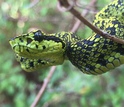
The Talamancan palm-pitviper, found in the highlands of the Talamancan Cordillera in Costa Rica.
Credit and Larger Version
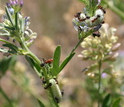
Melissa blue caterpillars in Idaho feed on alfalfa while being tended by beneficial ants.
Credit and Larger Version
Researchers at work on an evolutionary endocrinology project to track the timing of dormancy.
Credit and Larger Version
Threespine stickleback fish that were captured in a spring-fed freshwater lake.
Credit and Larger Version
Scientists are isolating fungi from the leaves of coffee plants.
Credit and Larger Version
The National Science Foundation (NSF)
Guillermo Gonzalo Sánchez Achutegui
ayabaca@gmail.com
ayabaca@hotmail.com
ayabaca@yahoo.com
Inscríbete en el Foro del blog y participa : A Vuelo De Un Quinde - El Foro!

miércoles, 5 de febrero de 2014

nsf.gov - National Science Foundation - Data-intensive ecology needed to understand what makes the biosphere tick

Journal special issue reports new findings on macrosystems biology: biological sciences writ large
cover of the special issue of Frontiers in Ecology journal
This special issue highlights research conducted through NSF's MacroSystems Biology program.
Credit and Larger Version
February 3, 2014
Have you looked closely at a local pond, meadow or forest--or at nature in your suburb or city--and observed changes in it over time? That's exactly what scientists are trying to do on a larger, regional to continental scale--a macrosystems biology scale.
Macrosystems biology might be called "biological sciences writ large."
Scientists funded by the National Science Foundation's (NSF) MacroSystems Biology Program are working to better detect, understand and predict the effects of climate and land-use change on organisms and ecosystems at regional to continental scales.
The researchers have published new results in this month's special issue of the journal Frontiers in Ecology and the Environment, published by the Ecological Society of America.
The ecologists are asking questions such as: How are regional-scale processes in plant and animal invasions, and in disease transmission, shaped by continent-wide environmental and land-use patterns? How can continent-wide data lead to better forecasts of disease outbreaks? How do invasive species and infectious diseases arrive at new locations, sometimes across great distances?
"Scientists conducting macrosystems biology research are working to find answers to these complex questions," says John Wingfield, NSF assistant director for Biological Sciences.
"Current knowledge of the biosphere is largely based on research in small plots of land and on satellite-scale remote sensing," says Wingfield. "But the insights needed to answer critically important questions about the biosphere's future can't always be extrapolated from such studies. They require new approaches."
Now macrosystems biologists are entering a new realm: that of big data.
"Ecologists can no longer sample and study just one or even a handful of ecosystems," says Patricia Soranno, a scientist at Michigan State University and co-editor of the special issue with David Schimel of the California Institute of Technology's Jet Propulsion Lab.
"We also need to study lots of ecosystems and use lots of data to tackle many environmental problems--such as climate change, land-use change and invasive species--because such problems exist at larger scales than other problems we have faced in the past."
Soranno and Schimel worked with many researchers, all funded by NSF's MacroSystems Biology Program, to produce the special issue.
"Data-intensive science is being touted as a new way to do science of any kind, and we think it has a lot to offer ecology," says Soranno.
"Traditionally, ecologists are trained to study and take samples from the field in places like forests, grasslands or wetlands, and measure things in the lab.
"In the future, many ecologists will also need to be trained in advanced computational methods that will allow them to study complex systems using big datasets."
Researchers have accumulated decades and decades of data. The sources include small, individual projects by university biologists; government agency scientists monitoring natural resources; terabytes of data from new or existing field sensors and observation networks; and millions of high-definition satellite images.
Easier access to supercomputers is paired with a near-endless deluge of data. Analyses that once took months or years can now be conducted in hours or days. Scientists also have access to the latest statistical modeling and geographic information system tools, says Soranno.
"Ten years ago, it would have been much harder to take this approach," she says. "We didn't have the intersection we have today of great tools, volumes of data, sufficient computing power and a growing understanding of natural systems at broad scales."
The makeup of macrosystems biology research teams should reflect the demands of data-intensive ecology, these researchers believe. Groups should include database managers, data-mining experts, GIS professionals and others, they say.
"An important question we're facing is how ecologists can best solve many of today's top environmental problems, challenges that need a broad-scale approach," Soranno says.
"From the research that has already been conducted by macrosystems biologists, evidenced by the papers in this special issue, we think we're on the right path."
It's where science needs to go, say these papers' authors, to understand what makes Earth's biosphere tick.
The research papers in the special issue can be accessed online at the Frontiers in Ecology and the Environment website.
-NSF-
Media Contacts Cheryl Dybas, NSF, (703) 292-7734, cdybas@nsf.gov
Layne Cameron, MSU, (517) 353-8819, layne.cameron@cabs.msu.edu
Liza Lester, ESA, (202) 833-8773 x 211, llester@esa.org
Related Websites2013 NSF MacroSystems Biology Awards:
 http://www.nsf.gov/news/news_summ.jsp?cntn_id=129239
2011 NSF MacroSystems Biology Awards:
 http://www.nsf.gov/news/news_summ.jsp?org=NSF&cntn_id=121279&preview=false
Special Issue: Frontiers in Ecology and the Environment:
The National Science Foundation (NSF) is an independent federal agency that supports fundamental research and education across all fields of science and engineering. In fiscal year (FY) 2014, its budget is $7.2 billion. NSF funds reach all 50 states through grants to nearly 2,000 colleges, universities and other institutions. Each year, NSF receives about 50,000 competitive requests for funding, and makes about 11,500 new funding awards. NSF also awards about $593 million in professional and service contracts yearly.
Useful NSF Web Sites:
NSF Home Page: http://www.nsf.gov
NSF News: http://www.nsf.gov/news/
For the News Media: http://www.nsf.gov/news/newsroom.jsp
Science and Engineering Statistics: http://www.nsf.gov/statistics/
Awards Searches: http://www.nsf.gov/awardsearch/
screenshot from animation showing a sketch of a man working on a computer wired to the Earth
View Video
View an animation of ecology in a world of big data.
Credit and Larger Version
lake surrounded by trees
Thousands of lakes are being compared through a macrosystems biology grant from NSF.
Credit and Larger Version
image of  an urban landscape in USA
The ecological homogenization of urban America is the subject of an NSF macrosystems biology award.
Credit and Larger Version
man with laptop looking at a visualization of street trees.
Macrosystems biologists are entering the realm of "big data;" here a visualization of street trees.
Credit and Larger Version
aerial view of land with various uses
NSF-supported macrosystems biologists are studying agricultural landscapes in North Dakota.
Credit and Larger Version
river with muddy water meanderingt rhough vegetation
Macrosystems biologists are conducting research on the resilience of river basins.
Credit and Larger Version
 
The National Science Foundation (NSF)
Guillermo Gonzalo Sánchez Achutegui
ayabaca@gmail.com
ayabaca@hotmail.com
ayabaca@yahoo.com
Inscríbete en el Foro del blog y participa : A Vuelo De Un Quinde - El Foro!

domingo, 29 de septiembre de 2013

nsf.gov - National Science Foundation - NSF grants foster new understanding of biological systems on regional to continental scales

Macrosystems biology awards support predictive understanding of large-scale biological responses to climate, land-use change.
Photo of a pine forest
NSF MSB grantees will study forest management and Earth system modeling, from stand to continent.
Credit and Larger Version
September 26, 2013
Have you looked closely at a local pond, meadow or forest and observed changes in it over time? That's exactly what scientists are trying to do on a larger, regional to continental scale--a macrosystems biology scale.
Macrosystems biology might be called biological sciences writ large.
To better detect, understand and predict the effects of climate and land-use change on organisms and ecosystems at regional to continental scales, the National Science Foundation (NSF) Directorate for Biological Sciences recently awarded $15.3 million in 10 new macrosystems biology grants.
Since the Macrosystems Biology program was launched in 2011, NSF has made 50 such awards.
How will the biosphere respond to natural and human-induced changes across a range of time and space scales? What is the pace and pattern of these responses? What are the effects on ecosystem services--such as the availability of freshwater--across regions and continents?
"Scientists conducting macrosystems biology research are working to find answers to these complex questions," says John Wingfield, NSF assistant director for Biological Sciences.
"Current knowledge of the biosphere is largely based on research in small plots of land and on satellite-scale remote sensing," says Wingfield. "But the insights needed to answer critically important questions about the biosphere's future can't always be extrapolated from such studies. They require new approaches."
A significant part of these new approaches involves the integration of biology with other fields, Wingfield says, including the geosciences, engineering, mathematical and physical sciences, and social, economic and behavioral sciences.
Among the questions NSF's macrosystems biology awardees will ask are:
How are regional-scale processes in plant and animal invasions, and in disease transmission, shaped by continent-wide environmental and land-use patterns? How can continent-wide data lead to better forecasts of disease outbreaks? How do invasive species and infectious diseases arrive at new locations, sometimes across great distances?
Projects include studies of the influence of time and space scales on host-parasite interactions; modeling birds' responses to climate change; quantifying climate-forced extinction risks for lizards, amphibians, fish and plants; building local effects of forest management into Earth system models at continental scales; and investigating methane emissions from far Northern peatlands.
The projects criss-cross regions and continents, and bring together scientists from biological sciences, geosciences and other fields in an effort to find out what makes Earth's biosphere tick.
2013 NSF Macrosystems Biology Awards
Randall Boone, Colorado State University,
Additional Collaborator: Sunil Kumar, Colorado State University
Elizabeth Borer, University of Minnesota-Twin Cities,
Additional Collaborators: Linda Kinkel, Georgiana May and Eric Seabloom, University of Minnesota-Twin Cities; and Kevin Gross, North Carolina State University
Songlin Fei, Purdue University,
Additional Collaborators: Bryan Pijanowski, Purdue University; and Qinfeng Guo and Christopher Oswalt, USDA Forest Service Southern Research Station
Jason McLachlan, University of Notre Dame,
Additional Collaborators: Michael Dietze, Trustees of Boston University; Paul Duffy, Neptune and Company, Inc.; Andrew Finley, Michigan State University; Stephen Jackson, University of Wyoming; Philip Higuera, University of Idaho; Mevin Hooten, Colorado State University; Jennifer Marlon, Yale University; David Moore, University of Arizona; Neil Pederson, Columbia University; and John Williams and Jun Zhu, University of Wisconsin-Madison
Jason Rohr, University of South Florida,
Additional Collaborator: Barry Sinervo, University of California-Santa Cruz
Benjamin Ruddell, Arizona State University,
Additional Collaborator: Daniel Childers, Arizona State University
Barry Sinervo, University of California-Santa Cruz,
Additional Collaborators: Aaron Bauer, Villanova University; Donald Miles, Ohio University; Jarmila Pittermann, University of California-Santa Cruz; and Jack Sites, Brigham Young University
Christina Staudhammer, University of Alabama Tuscaloosa,
Additional Collaborators: Michael Binford, University of Florida; Lindsay Boring, J W Jones Ecological Center; Ankur Desai, University of Wisconsin-Madison; Michael Dietze, Trustees of Boston University; Paul Duffy, Neptune and Company, Inc.; Jerry Franklin, University of Washington; Robert Mitchell, Ichauway, Inc.; Gregory Starr, University of Alabama Tuscaloosa; and Paul Stoy, Montana State University
Christopher Still, Oregon State University,
Additional Collaborators: Michael Goulden, University of California-Irvine; Brent Helliker, University of Pennsylvania; Rebecca Powell, Wake Forest University; Andrew Richardson, Harvard University; and Dar Roberts, University of California-Santa Barbara
Ruth Varner, University of New Hampshire,
Additional Collaborators: Bobby Braswell, Applied GeoSolutions, LLC; Mark Hines, University of Massachusetts Lowell; Changsheng Li, University of New Hampshire; Michael Palace, University of New Hampshire; and Scott Saleska, University of Arizona
-NSF-
Media Contacts Cheryl Dybas, NSF (703) 292-7734 cdybas@nsf.gov
The National Science Foundation (NSF) is an independent federal agency that supports fundamental research and education across all fields of science and engineering. In fiscal year (FY) 2012, its budget was $7.0 billion. NSF funds reach all 50 states through grants to nearly 2,000 colleges, universities and other institutions. Each year, NSF receives about 50,000 competitive requests for funding, and makes about 11,500 new funding awards. NSF also awards about $593 million in professional and service contracts yearly.
Useful NSF Web Sites:
NSF Home Page:
 http://www.nsf.gov
NSF News:
http://www.nsf.gov/news/
For the News Media:
 http://www.nsf.gov/news/newsroom.jsp
Science and Engineering Statistics:
 http://www.nsf.gov/statistics/
Awards Searches:
Photo of different kinds of frogs
MSB awardees are quantifying extinction risks for amphibians, lizards, fish and plants.
Credit and Larger Version
Photo of trees in a forest
Leaves, canopies, regions, and how they're affected by temperatures: the subject of an MSB award.
Credit and Larger Version
Image showing peatland methane on local field
MSB scientists are investigating peatland methane from local to regional to continental scales.
Credit and Larger Version
Photo of bird with fish in its beak
Modeling how birds respond to climate change is the subject of an MSB award.
Credit and Larger Version
Illustration showing a diseased frog and various parasites
The influence of time and space scales on host-parasite interactions is an MSB grant topic.
Credit and Larger Version
The National Science Foundation (NSF)
Guillermo Gonzalo Sánchez Achutegui

nsf.gov National Science Foundation - National Science Foundation awards $19.4 million for research on coupled natural and human systems

Studies will lead to new understanding of how humans and the environment interact.-
Photo of northern forests in New England.
NSF CNH scientists will look at the ecosystem resilience of northern forests in New England.
Credit and Larger Version
September 25, 2013
How and why is tea quality vulnerable to changing climate conditions, and how do these changes affect farming communities and land-use strategies?
Researchers funded by the National Science Foundation's (NSF) Dynamics of Coupled Natural and Human Systems (CNH) program will use tea production and consumption systems as a case study to explore the complex interactions among human and natural systems.
They will look at how links among tea agroecosystems, markets and farmers are affected by increased climate variability and resulting socioecological feedbacks.
The project is one of 21 funded this year by NSF's CNH program, which addresses how humans and the environment interact. Total funding for the 2013 awards is $19.4 million.
NSF's Directorates for Biological Sciences; Geosciences; and Social, Behavioral & Economic Sciences support research conducted through the CNH program. CNH is part of NSF's Science, Engineering and Education for Sustainability investment.
"An important application of advancing the understanding of natural and human systems is improving our ability to predict the environmental and social consequences of alternative policies for resource use, and our chances of choosing wisely for the future," says Peter Alpert, CNH program director in the Directorate for Biological Sciences.
"This year's CNH awards look into the past, across the present and into some of our most productive agricultural systems to make these scientific advances."
Research funded by CNH awards will provide a better understanding of natural processes and cycles and of human behavior and decisions--and how and where they intersect.
New CNH awardees will conduct research on such subjects as an ecological trap for parasites and the parasites' effects on human disease risk, balancing water needs and water uses for humans and nature, and building a socioecological understanding of tropical reforestation.
Also being studied are pastoralism in transition: linking localized interactions and system behavior to evaluate socio-ecological vulnerability, water availability and arid land management, and coupling burning practices, vegetation cover change and fire regimes to determine fire-emission dynamics.
Grantees will look at subjects as diverse as disturbance interactions and ecosystem resilience in the northern forests of New England, the effects of China's Grain-for-Green Program in rural China and a socio-ecological analysis of nitrogen in agricultural systems of the Upper Midwest.
"This year's CNH awards examine the way in which people deal with natural environmental processes in a broad range of settings, including cities, agricultural regions, arid lands and forests," says Tom Baerwald, CNH program director in NSF's Directorate for Social, Behavioral & Economic Sciences.
"Findings from these projects will enhance our understanding of, and increase our capabilities to improve, environmental quality and the well-being of people."
CNH scientists are asking questions such as: how are land-use policies, agricultural intensification, habitat fragmentation and socio-ecological resilience linked in a tropical biological corridor?
And how can the United States better plan for more sustainable agriculture and development of towns and cities by learning from the ancient land-use histories of Neolithic sites in Spain and Italy?
"In CNH, we consider humans and our environment as one interconnected system," says Sarah Ruth, program director in NSF's Directorate for Geosciences.
"Each of these new projects brings together teams of researchers from across the social and natural sciences to help us better understand how this complex system functions, and ultimately, how we may best manage our finite environmental resources."
2013 Dynamics of Coupled Natural and Human Systems (CNH) Awards
Brian Allan, University of Illinois-Urbana-Champaign,
Heidi Asbjornsen, University of New Hampshire,
Ana Barros, Duke University,
C. Michael Barton, Arizona State University,
Michael Blum, Tulane University,
Aram Calhoun, University of Maine,
Arianne Cease, Arizona State University,
Robin Chazdon, University of Connecticut;
Jiquan Chen, University of Toledo,
Melinda Daniels, Kansas State University,
Jennifer Dunne, Santa Fe Institute,
Paul Evangelista, Colorado State University,
Elizabeth King, University of Georgia,
Kimberly Kirner, California State University-Northridge,
Paul Laris, California State University-Long Beach,
Colin Orians, Tufts University,
Judith Perlinger, Michigan Technological University,
Erin Simons-Legaard, University of Maine,
Conghe Song, University of North Carolina-Chapel Hill,
Diana Stuart, Michigan State University,
Lisette Waits, University of Idaho,
-NSF-
Media Contacts Cheryl Dybas, NSF (703) 292-7734 cdybas@nsf.gov
Related WebsitesNSF Discovery Article: Cooking Up Clean Air in Africa:
 http://www.nsf.gov/discoveries/disc_summ.jsp?cntn_id=126403&org=NSF
NSF Discovery Article: Studying Nature's Rhythms: Soundscape Ecologists Spawn New Field:
 http://www.nsf.gov/discoveries/disc_summ.jsp?cntn_id=123046&org=NSF
NSF News Release: New Understanding of How Humans and the Environment Interact:
 http://www.nsf.gov/news/news_summ.jsp?cntn_id=121734
NSF News: National Science Foundation Awards Grants for Research on Coupled Natural and Human Systems:
http://www.nsf.gov/news/news_summ.jsp?cntn_id=125578
NSF Publication: Discoveries in Sustainability Science:
 http://www.nsf.gov/pubs/2012/disco12001/disco12001.pdf
NSF News: Human Disease Leptospirosis Identified in New Species, the Banded Mongoose, in Africa: http://www.nsf.gov/news/news_summ.jsp?cntn_id=127914
The National Science Foundation (NSF) is an independent federal agency that supports fundamental research and education across all fields of science and engineering. In fiscal year (FY) 2012, its budget was $7.0 billion. NSF funds reach all 50 states through grants to nearly 2,000 colleges, universities and other institutions. Each year, NSF receives about 50,000 competitive requests for funding, and makes about 11,500 new funding awards. NSF also awards about $593 million in professional and service contracts yearly.
Useful NSF Web Sites:
NSF Home Page:
 http://www.nsf.gov
NSF News:
http://www.nsf.gov/news/
For the News Media:
http://www.nsf.gov/news/newsroom.jsp
Science and Engineering Statistics:
 The National Science Foundation (NSF)
Photo of a tea plantation
CNH grantees will study climate effects on tea plantations.
Credit and Larger Version
The U.S. Upper Midwest is the subject of a CNH grant to research nitrogen in agricultural systems.
Credit and Larger Version
Photo of highlands of Ethiopia
Assessing the vulnerability of provisioning services in the highlands of Ethiopia is a CNH project.
Credit and Larger Version
Photo of plain field in Kansas
CNH researchers will study water supply and water quality on the often-dry U.S. Great Plains.
Credit and Larger Version
Photo of tropical forest
Building a socioecological understanding of tropical reforestation is the focus of a CNH award.
Credit and Larger Version
The National Science Foundation (NSF)
Guillermo Gonzalo Sánchez Achutegui

Mi lista de blogs