Blog dedicado a cuentos, notas de interés, actividades políticas , sociales, historia, artes culinarias, fiestas patronales, astronomía, ciencia ficción, temas del Medio Ambiente ,y del acontecer Peruano y Mundial desde otro punto de vista muy personal y diferente!!!!!
********** Blog Fundado el 03 de Enero del 2008 **********
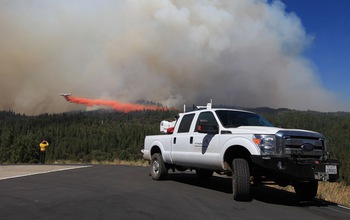
Scientists working close to the line of wildfires are obtaining a new understanding of the fires' smoke plumes. The results are providing real-time information, such as vertical wind profiles, to firefighters battling blazes.
Through this National Science Foundation (NSF)-funded research, Craig Clements, a meteorologist at San José State University (SJSU), and researcher Neil Lareau, also of SJSU, have discovered that wildfires can create their own weather, leading to extreme fire behavior.
In a paper recently published in the Journal of Applied Meteorology and Climatology, the scientists report findings from inside wildfire plumes, information previously obtained only from computer simulations.
"This research offers rare observations of the behavior of wildfire smoke plumes," says Nick Anderson, program director in NSF's Division of Atmospheric and Geospace Sciences, which supported the research. "Improved understanding of wildfire plumes is important for determining whether smoke will stay near the ground and affect air quality and visibility, or whether it will rise into the atmosphere and potentially affect clouds and the amount of sunlight reaching the ground."
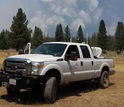
The SJSU researchers mounted Doppler LiDAR (Light Detection and Ranging, a remote-sensing method that uses light in the form of a pulsed laser to measure distances) instruments onto a pickup truck, which they placed near wildfires. "Until now," says Clements, "it has been difficult to sample wildfires with such sophisticated instruments because of logistical and safety concerns."
The team overcame that by obtaining firefighter credentials, which allowed them access to active wildfires, and by using a nimble, truck-mounted system that could be rapidly deployed. "Our work is providing new information about fire-atmosphere interactions and how wildfires spread," says Clements.
In addition to conducting research at active wildfires in the western U.S., the scientists performed controlled field experiments, setting fires and monitoring their rapid spread through an array of atmospheric instrumentation.
These studies gave the researchers information on how wildfires create their own weather systems. Those weather systems, in turn, fuel extreme fire behavior.
In their journal paper, the scientists present observations from the El Portal Fire of July, 2014, in Yosemite National Park, California.
The results revealed vigorous, fire-generated updrafts, says Clements, and strongly turbulent eddies that formed along the fire plume's edges. The data also showed that fire-modified winds extended more than one mile from the fire itself.
The findings confirm longstanding, but previously unvalidated, predictions for how plumes rise from fires, and offer new insights into the processes that control how high and how far wildfire smoke will spread. a vuelo
In addition to the El Portal Fire, the team has studied 22 other large wildfires in the western U.S.
"We're seeing a large number of fires," says Clements. "Many are extreme in terms of intensity. Higher-intensity fires cause deeper plumes, which can help spread fires by lofting embers and causing spot fires.
"That situation is dangerous for both firefighters and communities that are in the paths of fires -- like those in British Columbia and California this summer. We need more sophisticated models to better predict fire behavior, especially in a changing climate."
Language English, French, German, Italian, Spanish, Portuguese, Greek, Hungarian
Footage Type Animation
Copyright ESA/Euronews
Description
This special edition of Space explores how atmospheric pollution is measured – and forecast – by satellites.
You have probably used an app on your mobile phone to get the weather forecast. Now, thanks to a satellite network and ground-based stations, it is possible to get through an app on your phone information about pollution in your cities.
Earth's atmosphere is a complicated system, influenced by a large number of factors. Observation satellites orbiting around our planet constantly monitor the state of the air we breathe and how natural and man-made pollution are affecting the quality of the atmosphere.
Researchers at the University of Bremen have pioneered the measurement of atmospheric pollution. a vuelo
Hola amigos: A VUELO DE UN QUINDE EL BLOG., La NASAy la Repúblicade Coreaestán desarrollandoplanes para unestudio de campocooperativo dela calidad del aireen mayo y juniopara avanzar enla capacidad de controlarla contaminación del airecon precisióndesde el espacio.
A new field study this May and June seeks to advance NASA’s ability to monitor air quality from space. This 2007 NASA satellite image shows a swath of air pollution sweeping east across the Korean peninsula to Japan.
Credits: NASA
Two NASA research aircraft, the UC-12B (top) and the DC-8, will gather atmospheric data across urban, rural and coastal areas of South Korea to help improve the ability to monitor air pollution from space.
Credits: NASA
NASA and the Republic of Korea are developing plans for a cooperative field study of air quality in May and June to advance the ability to monitor air pollution accurately from space.
The Korea U.S.-Air Quality study (KORUS-AQ) will assess air quality across urban, rural and coastal areas of South Korea using the combined observations of aircraft, ground sites, ships and satellites. Findings will play a critical role in the development of observing systems of ground and space-based sensors and computer models to provide improved air quality assessments for decision makers.
“KORUS-AQ is a step forward in an international effort to develop a global air quality observing system,” said James Crawford, a lead U.S. scientist on the project from NASA’s Langley Research Center in Hampton, Virginia. “Both of our countries will be launching geostationary satellites that will join other satellites in a system that includes surface networks, air quality models, and targeted airborne sampling.”
Air quality is a significant environmental concern in the United States and around the world. Scientists are trying to untangle the different contributors to air quality, including local emissions from human activities, pollution from far away, and natural sources such as seasonal fires and wind-blown dust.
South Korea’s capital, Seoul, is one of the globe’s five most-populated metropolitan areas. Because of the country’s varied topography and its location close to both rapidly industrializing mainland China and the ocean, the impacts associated with the many factors controlling air quality are larger and often easier to measure over the Korean peninsula than elsewhere.
“Working with our South Korean colleagues on KORUS-AQ, we will improve our understanding of the detailed factors controlling air quality, how the processes interact, and how they are changing over time,” Crawford said.
In accordance with an agreement NASA recently completed with South Korea’s National Institute of Environmental Research, Korean scientists will collect KORUS-AQ observations on the ground and in the air with a King Air aircraft from Hanseo University in Seosan. To take data during the experiment, NASA will contribute a DC-8 flying laboratory from the agency’s Armstrong Flight Research Center in Edwards, California, and a Beechcraft UC-12B King Air from Langley.
Five South Korean instruments will be part of the DC-8 payload and one NASA instrument will be onboard the Hanseo aircraft. NASA’s DC-8 will conduct eight-hour flights to make direct measurements of the atmosphere from altitudes up to 25,000 feet. The NASA King Air will fly overhead with remote-sensing instruments that simulate satellite observations. The Hanseo King Air will make direct atmospheric measurements focusing on areas less accessible to the larger DC-8. Scientists and air quality modelers from both countries will work together to plan the aircraft flights and analyze the measurements.
South Korea maintains an extensive ground-based, continuous air-quality monitoring network of more than 300 sites. Almost half of the sites are in the Seoul area and just over 80 percent are in urban areas. South Korea will host NASA instruments at some of the monitoring sites that are being enhanced for KORUS-AQ.
KORUS-AQ will benefit the development of a new a constellation of spaceborne science satellites and instruments expected to launch in the years 2018-2022 that will make air quality measurements over Asia, North America, Europe, and North Africa. South Korea’s Geostationary Environment Monitoring Spectrometer instrument will monitor long-term climate change and improve early warnings for major pollution events for the Korean peninsula and Asia-Pacific region.
NASA’s Tropospheric Emissions: Monitoring of Pollution mission, an instrument that will fly as a hosted payload on a commercial communications satellite in geostationary orbit, will collect air pollution measurements over North America from Mexico City to Canada. ESA’s (European Space Agency’s) Sentinel-4 mission will take air quality measurements and monitor stratospheric ozone, solar radiation and climate variables over Europe and Northern Africa.
NASA uses the vantage point of space to increase our understanding of our home planet, improve lives, and safeguard our future. NASA develops new ways to observe and study Earth's interconnected natural systems with long-term data records. The agency freely shares this unique knowledge and works with institutions around the world to gain new insights into how our planet is changing.
For more information about NASA Earth science research, visit:
The sparkling centerpiece of Hubble’s anniversary fireworks is a giant cluster of about 3,000 stars called Westerlund 2, named for Swedish astronomer Bengt Westerlund who discovered the grouping in the 1960s.
In 2015, NASA explored the expanse of our solar system and beyond, and the complex processes of our home planet, while also advancing the technologies for our journey to Mars, and new aviation systems as the agency reached new milestones aboard the International Space Station.
“It was a fantastic year that brought us even closer to Mars,” said NASA Administrator Charles Bolden. “Our space program welcomed advances from commercial partners who will soon launch astronauts from the United States to the International Space Station, and progress on new technologies and missions to take us into deep space, improve aviation and explore our universe and home planet.”
Solar System & Beyond
NASA is exploring our solar system and beyond to unravel the mysteries of our universe. After a decade-long journey, the agency’s New Horizons spacecraft completed a historic flyby of Pluto in July, making it the first-ever space mission to explore a world so far from Earth. New Horizons captured never-before-seen views of the distant dwarf planet and its moons, and collected data that will keep scientists busy for years to come, returning the data and images to Earth using NASA’s Space Network.
NASA’s Dawn spacecraft made history in March with another dwarf planet, Ceres, when it became the first spacecraft to orbit such a celestial body.
In October, NASA’s Cassini spacecraft made the closest-ever flyby of Saturn’s moon Enceladus -- capturing valuable scientific data from the plume of icy spray coming from the moon’s subsurface ocean.
Back on Earth, NASA managers working the early stages of the agency’s Europa mission selected nine science instruments to investigate whether Jupiter’s mysterious icy moon could harbor conditions suitable for life.
The first of 18 flight mirrors for NASA’s James Webb Space Telescope were installed in November, beginning a critical piece of the observatory’s construction ahead of its 2018 launch.
In April, NASA’s Hubble Space Telescope, a Great Observatory that forever transformed our understanding of the universe, celebrated 25 years of scientific discovery. After its last astronaut servicing mission in 2009, Hubble is better than ever and expected to continue to provide valuable data into the next decade.
The agency’s Solar & Heliospheric Observatory (SOHO) celebrated its 20th anniversary as the longest-running solar observatory, as well as the discovery of its 3,000th comet, the study of which can shed light on how our solar system was formed.
In March, the four Magnetospheric Multiscale spacecraft were launched and positioned in Earth’s orbit to study magnetic reconnection, the interaction between our sun and Earth’s magnetic field that can disrupt modern technological systems such as communications networks, GPS navigation, and electrical power grids.
Dark, narrow streaks on Martian slopes such as these at Hale Crater are inferred to be formed by seasonal flow of water on contemporary Mars.
NASA astronaut Suni Williams exits a test version of the Orion spacecraft in the agency’s Neutral Buoyancy Lab in Houston. The testing is helping NASA identify the best ways to efficiently get astronauts out of the spacecraft after deep space missions..
At the Promontory, Utah test facility of Orbital ATK, the booster for NASA’s Space Launch System rocket was fired for a two minute test on March 11, 2015.
NASA’s journey to Mars was advanced in 2015 by valuable science findings from current missions traversing and orbiting the Red Planet. In September, NASA announced its Mars Reconnaissance Orbiter provided the strongest evidence yet that liquid water flows intermittently on present-day Mars.
NASA’s Mars Atmosphere and Volatile Evolution (MAVEN) mission identified the process that appears to have played a key role in the transition of the Martian climate from an early, warm and wet environment that might have supported surface life to the cold, arid planet Mars is today. MAVEN findings also showed how space weather near Mars affected its potential to support life.
The Opportunity and Curiosity rovers continued to explore the surface of the Red Planet this year, with data from Curiosity showing signs of a form of nitrogen -- further evidence that conditions on ancient Mars may have been able to support life
Development of the core capabilities required to send astronauts to Mars in the 2030s continued this year with significant progress on NASA’s Orion crewed spacecraft, Space Launch System (SLS) rocket, Asteroid Redirect Mission, and revitalized space launch complex at the agency’s Kennedy Space Center in Florida. And in October, NASA held its first workshop to brainstorm with the science community to identify the best Martian landing sites for astronauts to carry out scientific exploration.
Building on the success of Orion’s first flight test in 2014, agency officials completed their rigorous technical and programmatic review of Orion to establish NASA’s commitment to the program’s technical, cost and schedule baseline.
In March, Orion’s Launch Abort System (LAS) was tested to prove it can survive the intense temperatures, pressures, noise and vibrations experienced during a launch emergency and get the crew to safety. The spacecraft’s heat shield arrived in June at NASA’s Langley Research Center in Hampton, Virginia, where it will be readied for water-impact tests in 2016.
Technicians at Michoud also have begun welding the primary structure of Orion’s crew module and joined the middle part of the spacecraft to the bottom portion of the crew module, and expect to finish welding in early 2016. Engineers at NASA’s Marshall Space Flight Center in Huntsville, Alabama, analyzed core samples from Orion’s heat shield, which was used in the 2014 spaceflight test, to better understand its performance and to provide improvements in thermal protection models, as the agency continues to refine Orion’s overall design and reduce its mass.
NASA received in November a full-size test version of the Orion European Service Module provided by ESA (European Space Agency), which is being prepared for testing early next year at the Plum Brook Station test facilities in Sandusky, Ohio.
Progress also continues on SLS -- the world’s most powerful rocket. The booster and engines that will propel SLS and the Orion spacecraft to space passed significant tests this year. The upgraded rocket booster passed a major ground test in March after firing for two minutes, the amount of time it will fire when it lifts SLS off the launch pad. Engineers will conduct a second and final qualification booster firing test in 2016. In August, NASA completed the first series of tests for the upgraded developmental RS-25 engines on the A-1 test stand at NASA’s Stennis Space Center near Bay St. Louis, Mississippi. Preparations will continue in 2016 as the flight engines that will power SLS on missions into deep space will be tested for flight.
For the first time in almost 40 years, a NASA human-rated rocket completed all steps needed to clear a critical design review while the hardware is being built: a structural test article of the rocket’s propulsion system was finished and numerous other flight and qualification hardware were completed and are ready for welding.
Work also began on infrastructure projects supporting SLS and Orion. Construction began in May on a 215-foot-tall structural test stand for SLS at Marshall. In August, NASA completed modifications to the Pegasus barge, previously used to move space shuttle hardware. For its new mission, transporting the core stage of the SLS, a 165-foot center section was added to the barge, bringing its total length from 260 feet to 310 feet.
In addition, Kennedy continued its transformation into a 21st century, multi-user spaceport for both government and commercial customers. Modifications continue on the ground structures that will launch the next generation of rockets and spacecraft. Several new work platforms that will be used to access, test and process SLS and Orion arrived on site, and the giant steel platforms are being installed in the center’s Vehicle Assembly Building.
Testing began at Kennedy on the umbilical system that provides power and ground communications between the mobile launcher tower, rocket and Orion spacecraft. Upgrades and designs in progress were reviewed to ensure they will be ready to support all system and processing requirements for the first launch of SLS and Orion.
Working outside the International Space Station on the second spacewalk of Expedition 45, Nov. 6, 2015.
NASA's Asteroid Redirect Mission (ARM) passed a pivotal mission milestone in the spring with the successful completion of the agency's mission concept review. After extensive expert and public engagement forums and workshops to gather ideas on how to best meet the president's challenge to redirect an asteroid, NASA refined its robotic capture approach that will achieve the goal of redirecting a large asteroid boulder back to a parked orbit near our moon, allowing astronauts to train and conduct sampling of the space rock.
Having an asteroid parked near the moon also will open up commercial opportunities for American companies interested in learning the challenges of mining asteroids. In October, NASA issued a call to American industry for innovative ideas on how the agency could obtain a core advanced solar electric propulsion-based spacecraft for the robotic boulder retrieval mission.
The agency also took steps to stimulate the development of deep space capabilities in the commercial aerospace sector with the selection of 12 projects on which NASA will partner to advance development of necessary exploration capabilities.
To further prepare for the journey to Mars, the eight candidates from NASA’s 2013 astronaut class received their astronaut pins in July, symbolizing the completion of their training. And in December, NASA began a search for its next group of astronaut candidates.
In October, Hollywood and NASA science and technology came to audiences around the world with the premier of “The Martian.” The agency collaborated on this journey to Mars film with 20th Century Fox Entertainment, providing guidance on production design and technical consultants. Across NASA, dozens of people already are working on many of the technologies seen in the movie that astronauts will need when they begin to explore Mars in real life.
NASA astronaut Scott Kelly is seen inside a Soyuz simulator at the Gagarin Cosmonaut Training Center, March 4, 2015 in Star City, Russia.
The International Space Station (ISS) is a critical step on the agency’s journey to Mars. 2015 marked the 15th year of continuous human presence aboard the station. Since November 2000, more than 220 people from 17 countries have visited the ISS, and the orbiting laboratory has hosted more than 1,700 research investigations from researchers in more than 80 countries.
NASA astronaut Scott Kelly kicked off a one-year mission in March living and working in space. In October, he broke records for both the most time and cumulative days in space for a NASA astronaut. While Scott is in orbit, his identical twin brother and former NASA astronaut Mark Kelly remains on Earth, and both are participating in the Twins Study. When Scott returns in 2016 and concludes post-flight tests, researchers will have important data about the medical, psychological and biomedical challenges faced by astronauts during long-duration spaceflight.
A total of 16 people lived and worked aboard the space station in 2015. Some of them sampled the first vegetables grown in space. Crew members conducted hundreds of other scientific investigations off the Earth, for the Earth.
Crew members participated in six spacewalks to maintain the space station and continue reconfiguration of ISS systems and modules to accommodate the delivery of new docking adapters, which will be used by future U.S. commercial spacecraft.
With six deliveries thus far in 2015, and a seventh set to arrive to the space station on Dec. 23, four different cargo spacecraft have provided some 30 tons of supplies and science research to the station this year. NASA’s commercial partners conducted three of those missions: SpaceX sent its Dragon spacecraft on two successful missions, and the launch of Orbital ATK’s Cygnus in December heralded a resumption of U.S. cargo resupply missions to the station after mishaps by both companies. The agency is expected to award its second commercial resupply services contract in early 2016 to ensure cargo deliveries to the station through at least 2024.
The Bigelow Expandable Activity Module (BEAM) arrived at Kennedy Space Center this year. When SpaceX’s Dragon returns to flight and brings BEAM to the station during its eighth resupply mission in 2016, the module will be berthed to the station for a two-year test and validation of technology that could help advance the agency’s long-duration human spaceflight goals.
In addition to delivering cargo to the space station, NASA’s commercial crew providers continue to meet critical development and certification milestones on their space systems that will return America’s capability to launch crew members to the station from the United States in 2017. The agency’s Commercial Crew Program ordered its first two crew rotation missions from Boeing for its Crew Space Transportation (CST)-100 Starliner and the first from SpaceX for its Crew Dragon. NASA also named four experienced astronauts and test pilots to train and prepare for these commercial spaceflights, working closely with the commercial companies to develop their systems.
In May, SpaceX successfully demonstrated how crew members would quickly and safely escape from their rocket while on the launch pad and through their ascent into orbit. The low bay of the Commercial Crew and Cargo Processing Facility (C3PF) at Kennedy Space for the Starliner is complete and the high bay is nearing completion. Boeing and United Launch Alliance recently completed construction of the crew access tower at Cape Canaveral Air Force Station’s Space Launch Complex 41, which will provide access to Starliner prior to launch.
The Americas, as captured on Oct. 15, 2015 by NASA’s Earth Polychromatic Imaging Camera (EPIC) on the NASA/NOAA Deep Space Climate Observatory (DSCOVR).
NASA continued in 2015 to develop new ways to observe and study Earth's interconnected natural systems and share this unique knowledge with institutions around the world to gain new insights into how our planet is changing.
NASA launched in October a new website that brings the world to the world with new images every day of the sunlit side of the Earth, captured by a NASA camera on the Deep Space Climate Observatory (DSCOVR), approximately one million miles away.
About 71 percent of the Earth's surface is covered with water, making the health of aquatic ecosystems a critical piece of the overall health of our planet. NASA uses the unique vantage point of space and cutting-edge technologies to study the world’s water, providing vital data. Earth scientists and engineers at NASA's Glenn Research Center in Cleveland have been studying Lake Erie’s algal blooms for a number of years. But when drinking water was declared contaminated for half a million people in Toledo, NASA stepped up its investigation into the nature of the algal blooms to get answers.
The relationship between oceans and climate also was studied in depth in 2015. Over the summer, NASA released the results of a study of ocean temperature measurements that showed extra heat from greenhouse gases has been trapped in the waters of the Pacific and Indian oceans in recent years, accounting for the slowdown in the global surface temperature trend observed during the past decade.
Satellite measurements gathered by NASA and its partners revealed that seas around the world have risen an average of nearly three inches since 1992, with some locations rising more than 9 inches due to natural variation. An intensive research effort, aided by NASA observations and analysis, points to an unavoidable rise of several feet in the future. In November, NASA began research flights for an intensive, five-year investigation into ocean plankton, a tiny sea creature that has an enormous impact on Earth’s climate.
The Stratospheric Aerosol and Gas Experiment III on the International Space Station, or SAGE III on ISS, was shipped to Kennedy Space Center where it is scheduled to launch to the space station in 2016 aboard a SpaceX Falcon 9 rocket. SAGE III will give NASA a new way to monitor Earth’s protective ozone layer and document its ongoing recovery, helping scientists monitor the ozone layer’s gradually improving health.
NASA's Low-Density Supersonic Decelerator hangs from a launch tower at U.S. Navy's Pacific Missile Range Facility in Kauai, Hawaii.
NASA wasted no time in 2015 advancing new technologies with the unveiling in January of its Integrated Structural Assembly of Advanced Composites (ISAAC) robotic arm used at NASA’s Langley Research Center in Hampton, Virginia, to develop lighter, stronger composite structures and materials for aerospace vehicles.
In June, the agency successfully conducted its second, full-scale flight test of its Low Density Supersonic Decelerator (LDSD), a cross-cutting demonstration mission for its rocket-powered, saucer-shaped vehicle. Following up on the 2014 test, this year’s flight served as a crucial milestone for proving two key technologies for landing future robotic and human missions on the surface of Mars.
NASA’s CubeSat Launch Initiative continued to provide opportunities for small satellite payloads to fly on rockets and to the space station. Two 4.5-pound satellites, launched in December to the International Space Station, will test networking technology critical to future operations of small satellite swarms. These Nodes small satellites will be deployed from the station into low-Earth orbit in early 2016.
In a more earthly endeavor, NASA research into flexible, high-temperature space materials may someday improve personal fire shelter systems and help wildland firefighters better survive dangerous wildfires.
NASA also unveiled in 2015 Startup NASA, an initiative that offers start-up companies a diverse portfolio of more than 1,200 patented NASA technologies that range from materials and coatings to sensors, aeronautics technologies, instrumentation and more.
In this photo taken from a chase plane, the Boeing ecoDemonstrator 757 flight test airplane --with NASA's Active Flow Control technology installed on the tail -- makes a final approach to King County Boeing Field in Seattle, Washington.
NASA's long aviation research heritage was marked in 2015 as the agency celebrated the 100th anniversary of the National Advisory Committee for Aeronautics, the organization from which NASA was created in 1958. NASA continued to build on this legacy throughout the year, making significant progress on studies into several technologies aimed at making aviation greener and safer.
NASA’s Environmental Responsible Aviation project concluded demonstrations of eight new technologies to reduce the environmental footprint of aviation through reduced aircraft drag, weight reduction from advanced composite materials, and advanced engines and airframe designs to reduce fuel consumption, emissions and noise. If adopted as an integrated suite, these technologies resulting from an unprecedented six-year effort with industry partners could result in a fuel savings of more than $250 billion by the year 2050. Two of these technologies -- air nozzles on the vertical tail, which could potentially enable the ability to have smaller tails on future aircraft, and special wing coatings, which could reduce bug residue that contributes to drag -- were flown aboard Boeing’s ecoDemonstrator 757 flying laboratory.
NASA continued to push the boundaries of aviation through NASA’s new Convergent Aeronautics Solutions project, exploring the feasibility of novel ideas that would potentially transform aviation as we know it. NASA launched studies of six revolutionary concepts, such as using an aircraft fuselage as a battery for electric propulsion, and equipping an Unmanned Aerial Vehicle with artificial intelligence that could respond to unforeseen situations the same way a human pilot would.
NASA concluded a multi-year effort with the U.S. Defense Department and industry partners. The goal was to develop and demonstrate new engine health management technologies that can improve performance of future aircraft, including aircraft encountering volcanic ash in flight. NASA also studied potentially hazardous icing conditions at high altitude, flying its DC-8 aircraft into tropical storms as part of the High Ice Water Content campaign.
NASA and its government and industry partners made significant progress this year investigating detect and avoid systems and command and control technologies that could enable routine access by full-size unmanned aircraft systems (UAS) into the national airspace. NASA also engaged with the aviation community to identify key challenges and research needs associated with smaller, low-altitude UAS, commonly called drones, and conducted a flight demonstration of initial concepts.
In April, NASA researchers completed initial flight-testing of a radically new morphing wing technology that has the potential to lower fuel costs, reduce drag and airframe weight, and decrease noise during takeoff and landing.
Astronaut Cady Coleman speaks to a group of fifty fourth-grade Girl Scouts about her time in space, at the first-ever White House Campout, hosted by the First Lady as part of the Let's Move! Outside initiative on Tuesday, June 30, 2015 in Washington, DC. NASA also provided telescopes and led a stargazing activity.
Credits: NASA/Aubrey Gemignani
Public Engagement
With an exciting and diverse mission that captivates audiences around the world, public engagement is a vital aspect of NASA’s work. Through events, including South by Southwest, the Essence Festival, World Science Festival and nationwide Earth Day activities, more than two million people had the chance to interact with representative of America’s space agency and more than 400 million people were reached through NASA’s use of social media during these events.
NASA's award-winning website, NASA.gov, launched a major redesign in April that focuses on mission updates, images and videos in a layout that makes it easier for users to discover new content and works equally well across devices. The site's customer satisfaction scores, consistently among the highest in government, rose substantially after the redesign, with October showing the highest user satisfaction level in three years. The site now averages more than a quarter-million visitors a day, up more than 25 percent from 2014, with an increase in new visitors and an audience that is increasingly mobile, social, and international.
NASA‘s award-winning social media presence also continued to soar in 2015. The agency’s Twitter, Facebook, Google+, and Instagram accounts are the most followed in the federal government on those platforms. This year, NASA also launched an official presence on Tumblr. The agency's Twitter account broke into the top 100 Twitter accounts, by number of followers, the only government account to be on a list heavy with celebrities. NASA posted in July the agency’s most-liked image ever onto Instagram -- Pluto from the New Horizons spacecraft -- generating more than 363,000 likes. The agency also hosted 15 NASA Socials, bringing together more than 1,000 followers who engage with NASA via social media for unique in-person experiences of exploration and discovery.
NASA continued its work with other federal agencies, industry partners and academia to provide to students and teachers throughout the United States unique and compelling opportunities in science, technology, engineering and math education. In addition to funding research at minority serving institutions, NASA’s Space Grant program supported science, technology, engineering and math (STEM) programs in schools in every state.
The agency also brought real space exploration experts from NASA and cast members of the movie “The Martian” together during a record-breaking NASA Digital Learning Network event called So You Want to Be a Martian, watched by more than 10,000 students and teachers.
The work NASA does, and will continue in 2016, helps the United States maintain its world leadership in space exploration and scientific discovery. The agency will continue investing in its journey to Mars, returning human spaceflight launches from American soil, fostering groundbreaking technology development, breakthroughs in aeronautics and bringing to every American the awe-inspiring discoveries and images captured by NASA’s missions in our solar system and beyond.
For more about NASA’s missions, research and discoveries, visit:
NASA Study Shows That Common Coolants Contribute to Ozone Depletion
Estudio dela NASAmuestra queRefrigerantescomunescontribuyen al agotamiento delozono
A class of widely used chemical coolants known as hydrofluorocarbons (HFC) contributes to ozone depletion by a small but measurable amount, countering a decades-old assumption, according to a new NASA study.
The paper, published Oct. 22 in Geophysical Research Letters, a journal of the American Geophysical Union, is based on the results of a NASA-derived atmospheric chemistry climate model that projected the impacts of HFC gases on the atmosphere by the year 2050.
The ozone layer comprises a belt of ozone molecules located primarily in the lower stratosphere. It is responsible for absorbing most of the sun’s harmful ultraviolet radiation before it reaches Earth’s surface. Research in the 1990s showed that HFCs, which have replaced more powerful ozone-depleting chemical coolants in recent years, destroy a negligible amount of ozone. But that conclusion was reached by examining only the gases’ ability to break down ozone molecules through chemical reactions that take place following the breakdown of these molecules in the atmosphere.
The new study, which focused on the five types of HFCs expected to contribute the most to global warming in 2050, found that the gases indirectly contribute to ozone depletion. HFC emissions cause increased warming of the stratosphere, speeding up the chemical reactions that destroy ozone molecules, and they also decrease ozone levels in the tropics by accelerating the upward movement of ozone-poor air. According to the model, their impact is such that HFCs will cause a 0.035 percent decrease in ozone by 2050.
A global representation of the projected impacts of hydrofluorocarbons (HFC) on ozone levels at the various latitudes in 2050. The small but measurable amount of ozone loss is quantified in Dobson units, the most common unit for measuring ozone concentration. Over Earth’s surface, the ozone layer’s average thickness is about 300 Dobson units, or three millimeters.
Credits: NASA's Goddard Space Flight Center
HFCs’ contribution to ozone depletion is small compared to its predecessors. For example, trichlorofluoromethane, or CFC-11, a once common coolant that is no longer used, causes about 400 times more ozone depletion per unit mass than HFCs.
“We’re not suggesting HFCs are an existential threat to the ozone layer or to ozone hole recovery, but the impact isn’t zero as has been claimed,” said lead author Margaret Hurwitz, an atmospheric scientist at NASA's Goddard Space Flight Center in Greenbelt, Maryland. “HFCs are, in fact, weak ozone-depleting substances.”
In the study, scientists also found that HFCs have a nearly linear impact on stratospheric temperature and ozone change. For example, reducing HFC emissions by 50 percent would decrease the ozone change by a comparable amount. Such a direct relationship will prove useful for evaluating the impacts of emerging HFCs, Hurwitz said. “We can provide policy makers with an estimate of the stratospheric impacts of new HFC gases.”
HFCs have been adopted as replacements for chlorofluorocarbons (CFC) and hydrochlorofluorocarbons (HCFC) in refrigerators and in home and automobile air conditioners. CFCs were largely responsible for the ozone depletion first observed by scientists in the 1980s, most notably the ozone hole above Antarctica, which continues today. CFC molecules contain chlorine atoms, and each atom can destroy thousands of ozone molecules. Under the auspices of the Montreal Protocol treaty signed in 1987, CFCs were officially phased out of production worldwide in 2010.
While HCFCs contain chlorine atoms, they are less damaging to the ozone layer because they also contain hydrogen atoms, which causes them to break down in the atmosphere faster. HCFCs are currently being phased out in favor of HFCs, which do not contain chlorine.
The study adds nuance to the discussion around HFCs and their full impact on the ozone, according to David Fahey, a research physicist and director of the National Oceanic and Atmospheric Administration’s Earth Systems Research Laboratory, who was not involved in the study.
“What the paper demonstrates is that when you put this much of an infrared radiation-absorbing material in the stratosphere, even though it nominally does not destroy ozone in the same way that mainline ODSs [ozone-depleting substances] do, it’s going to make a difference—it’s going to start changing things,” Fahey said. “It adds a new dimension of thinking that stratospheric scientists need to be aware of as they discuss these matters with policy makers.”
While HFCs are only weak ozone-depleting substances, they are, like CFCs and HCFCs, strong greenhouse gases. If production trends continue, projections show that, by 2050, the amount of global warming by all HFCs could be as large as 20 percent that of carbon dioxide.
Work is also underway to analyze the HFC impacts on surface climate. “We’ve taken a major step towards understanding the effect of HFCs on the stratosphere and the ozone layer,” said Paul Newman, a co-author on the paper and chief scientist for Earth sciences at Goddard. “Our next step is to use a more complex type of model so we can begin to look at the impact of these compounds on land and ocean temperature, rainfall and sea ice.”
Semana Mundial del Ahorro en Perú
-
Semana Mundial del Ahorro en Perú “No ahorres lo que te queda después de
gastar, gasta lo que te queda después de ahorrar”, éstas son palabras
sabias del g...
EL CUERPO DE CRISTO
-
#lamentedeCristoelprimerdia
Ef 2: 19 Así que ya no sois extranjeros ni advenedizos, sino conciudadanos
de los santos, y miembros de la familia de Dios.
Fo...