Mostrando entradas con la etiqueta Brazil. Mostrar todas las entradas

domingo, 26 de marzo de 2017

ESA : Deforestation in Rio Branco .- Deforestación en Rio Branco...

http://www.esa.int/spaceinvideos/Videos/2017/03/Deforestation_in_Rio_Branco


  • Watch in:
  • en
  • DOWNLOADMP4(3.01 MB)
    SOURCEMP4(36.14 MB)

    Details

    Open/Close
    • Title Deforestation in Rio Branco
    • Released: 21/03/2017
    • Length 00:12:00
    • Language English
    • Footage Type Animation
    • Copyright USGS/ESA/contains modified Copernicus Sentinel data (2016), processed by ESA
    • Description
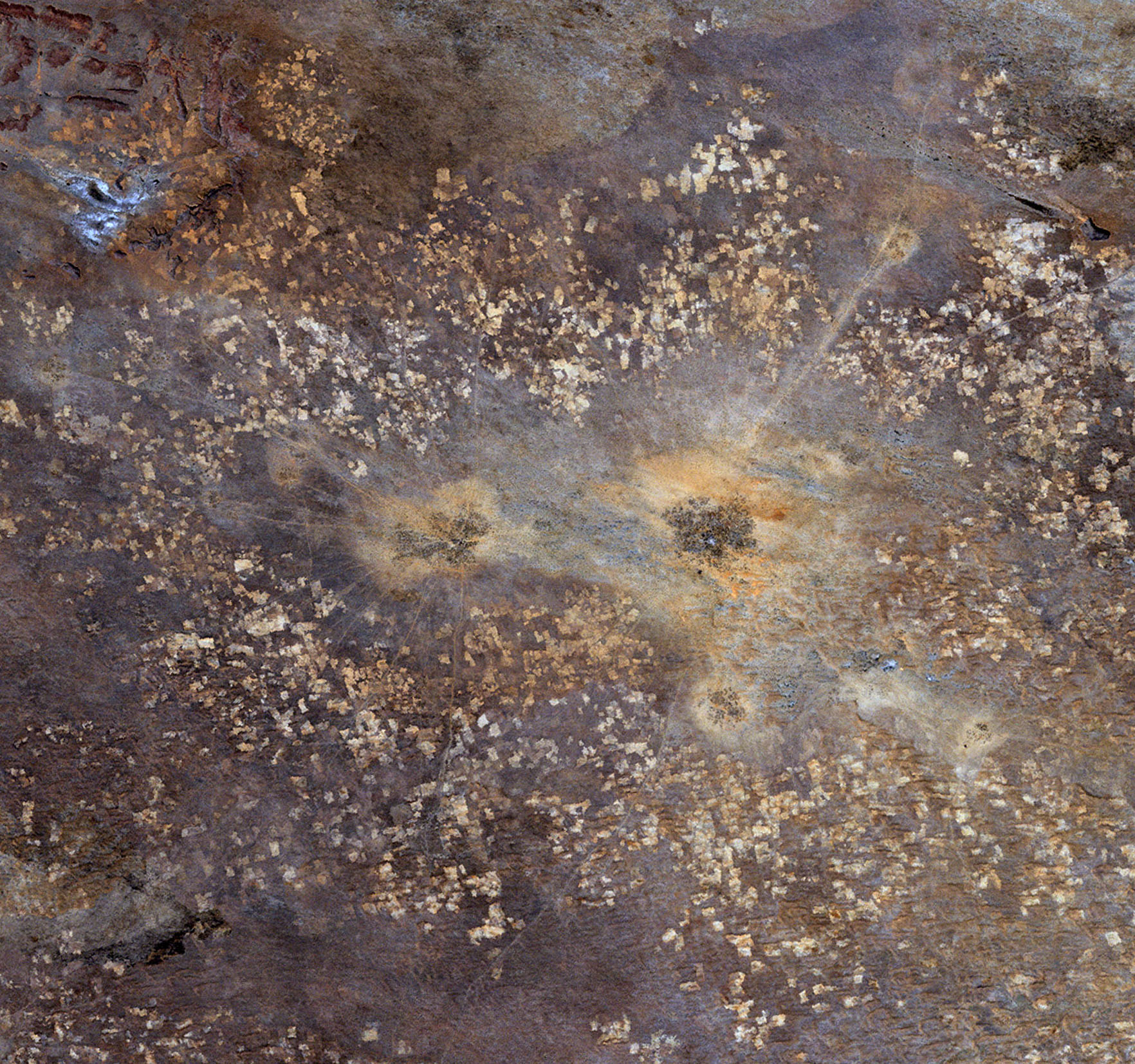
      Deforestation near the northwestern Brazilian city of Rio Branco has made its mark on the rainforest over the last 30 years. By comparing a Landsat-5 image from 1985 with a Copernicus Sentinel-2 image from 2016, we can see where vegetation has been cleared away for logging, farming and other activities.
      Rainforests worldwide are being destroyed at an alarming rate. This is of great concern because they play an important role in global climate, and are home to a wide variety of plants, animals and insects. More than a third of all species in the world live in the Amazon Rainforest.
      Unlike other forests, rainforests do not grow back when they are destroyed and, owing to their composition, their soils are not suitable for long-term agricultural use.
      With their unique view from space, Earth observation satellites have been instrumental in highlighting the vulnerability of the rainforests by documenting the scale of deforestation, particularly in remote areas.
      In these false-colour images, vegetation appears red to help us better distinguish between vegetated and non-vegetated areas.

    ESA
    Guillermo Gonzalo Sánchez Achutegui
    ayabaca@gmail.com
    ayabaca@hotmail.com
    ayabaca@yahoo.com
    Inscríbete en el Foro del blog y participa : A Vuelo De Un Quinde - El Foro!

    sábado, 20 de agosto de 2016

    NASA : Site of 2016 Summer Olympic Games Viewed by NASA's MISR Instrument .- Los Juegos Olímpicos de verano del 2016, al alcance de los instrumentos NASA's MISR............

    http://www.nasa.gov/image-feature/site-of-2016-summer-olympic-games-viewed-by-nasas-misr-instrument

    Satellite image of Rio de Janeiro at left paired with map of aerosols in the region on right
     aboard NASA's Terra satellite passed directly over Rio de Janeiro, Brazil, on Aug. 2, 2016, just prior to the opening of the Summer Olympic Games. On the left is an image from MISR's nadir (downward-looking) camera; the width of the image is 235 miles (378 kilometers), and Rio de Janeiro is visible as the large gray area on the coast in the center. The black asterisk marks the location of the Maracanã Stadium in downtown, where the opening ceremonies were held. 
     
    In the weeks leading up to the Aug. 5 opening ceremonies in Rio de Janeiro, there have been reports of elevated levels of particulate matter in the region. Particulate matter refers to tiny airborne droplets or pieces of soot and dust that can end up in the lungs, comprising an all-too-common problem for many cities around the world.
     
    MISR data are routinely used to estimate the amount of air pollution via measurements of aerosol optical depth, which is a measure of how much incoming light from the sun is blocked by particles in the atmosphere. On the right, a map of aerosol optical depth is superimposed on the image. Individual squares making up this map measure 2.7 miles (4.4 kilometers) on a side, and holes in the map occur where an aerosol amount could not be determined, such as where clouds are present. Optical depth over Rio is slightly elevated compared to its surroundings, most likely due to the presence of air pollution, with values from 0.15-0.25. For reference, an optical depth of 0.2 corresponds to light haze. 
     
    The product shown here is a prototype of a new version of the MISR aerosol product to be publicly released in the near future, and increases the spatial resolution of the aerosol information by a factor of 16 compared to the currently available product, making it possible to observe the fine details of optical depth over urban areas.
     
    These data were captured during Terra orbit 88426. MISR was built and is managed by NASA's Jet Propulsion Laboratory, Pasadena, California, for NASA's Science Mission Directorate, Washington, D.C. The Terra spacecraft is managed by NASA's Goddard Space Flight Center, Greenbelt, Maryland. The MISR data were obtained from the NASA Langley Research Center Atmospheric Science Data Center, Hampton, Virginia. JPL is a division of the California Institute of Technology in Pasadena.
    Image Credit: NASA/GSFC/LaRC/JPL-Caltech, MISR Team
    Last Updated: Aug. 11, 2016
    Editor: Sarah Loff
    NASA
    Guillermo Gonzalo Sánchez Achutegui
    ayabaca@gmail.com
    ayabaca@hotmail.com
    ayabaca@yahoo.com
    Inscríbete en el Foro del blog y participa : A Vuelo De Un Quinde - El Foro!

    domingo, 15 de mayo de 2016

    NSF: Natural regeneration of tropical forests helps global climate mitigation and forest restoration.- La regeneración natural de los bosques tropicales ayuda a mitigar el cambio climático global y la restauración de los bosques

    Hola amigos: A VUELO DE UN QUINDE EL BLOG., la Fundación Nacional de Ciencias de Los Estados Unidos, nos alcanza la información que hay una regeneración natural de bosques tropicales en América Latina, que de alguna manera ayudan a mitigar el cambio climático global.
    More information..........

    New study looks at 43 regions in Latin America

    Photo of small patches of tropical dry forest  on hills
    Small patches of tropical dry forest are regrowing spontaneously in a former pastureland.
    Credit and Larger Version
    May 13, 2016
    This article is the ninth in a series on NSF's Long Term Research in Environmental Biology (LTREB) awards. Visit parts one, two, three, four, five, six , seven and eight.
    Climate scientists have long recognized the importance of forest conservation and forest regrowth in climate mitigation and carbon sequestration -- capturing carbon dioxide (CO2) from the atmosphere. But the detailed information required to make accurate estimates of this potential has remained elusive.
    Now, an international team of 60 scientists, working together as the 2ndFOR Network, has completed studies on the effects of forest conservation and secondary forest regeneration across 43 regions in Latin America.
    In an article titled "Carbon sequestration potential of second-growth forest regeneration in the Latin American tropics," published today in the journal Science Advances, University of Connecticut ecologist and evolutionary biologist Robin Chazdon and her colleagues report a series of new findings.
     
    Long-term studies
     
    "This study uses knowledge gained from long-term studies of tropical forests to address a pressing societal need," says Saran Twombly, program director in the National Science Foundation (NSF) Division of Environmental Biology, which funded the research through NSF's Long Term Research in Environmental Biology, and Dynamics of Coupled Natural and Human Systems, programs. "It shows that natural processes alone can provide a solution to the excess carbon dioxide threatening the planet."
    The studies aimed to model the areas covered by regrowth forests across the lowlands of the Latin American Tropics in two age classes; to project potential above-ground carbon storage in these young forests over four decades; and to illustrate alternative scenarios for carbon storage where 0-80 percent of these forests are allowed to regenerate.
    Chazdon says that "this research is vital because actively growing vegetation takes carbon dioxide out of the atmosphere and converts it to plant tissues such as wood and leaves. Old-growth forests contain large stocks of carbon in their biomass. When these forests are cleared and burned, this carbon is released into the atmosphere, contributing to global warming. This is one of the main reasons why it is important to halt deforestation."
    But scientists have also learned that when forests regrow, their carbon stocks in above-ground biomass increase over time, depending on climate, prior land use and features of the surrounding landscape.
    "This regrowth can happen without planting trees, through the spontaneous process of natural regeneration," says Chazdon. "This is a low-cost way of restoring forests and of reaching carbon mitigation goals."
    Major findings
    Among the major findings of the study are:
    • Models of forest age in 2008 show that 17 percent of the forest area in lowland Latin America consists of young second-growth forest (1-20 years) and 11 percent consists of intermediate age forest (20-60 years).
    • Assuming that 100 percent of the second growth persists and regenerates over 40 years, carbon storage capacity doubles in young second growth and increases by 120 percent in intermediate age forests. In both forest age classes, a net gain of 8.48 trillion kilograms of carbon is stored over 40 years.
    • This amount is equivalent to 31.09 trillion kilograms of CO2, which equals all the carbon emissions from fossil fuel use and other industrial processes in all the countries of Latin America and the Caribbean from 1993 to 2014.
    • Ten countries account for 95 percent of this carbon storage potential, led by Brazil, Colombia, Venezuela and Mexico.
    Forest-based climate change solutions
    Chazdon says that, remarkably, this huge amount of carbon storage doesn't require costly tree plantings or conversion of farmlands. "It is all based on natural forest regrowth and only requires persistence and protection of the young forests and abandoned agricultural fields."
    Forest-based solutions provide many other benefits, including hydrologic regulation, habitats and corridors for conserving biodiversity, and provision of non-timber forest products to local people, Chazdon says.
    Prior carbon storage efforts have placed emphasis on avoiding deforestation. But, Chazdon says, "avoiding deforestation and supporting forest regeneration are complementary and mutually reinforcing activities."
    While forest regeneration and protection alone cannot fully compensate for greenhouse gas emissions on a global scale, researchers say the study affirms that this strategy can contribute significantly toward reaching national and international carbon mitigation targets.
    -NSF-
    Media Contacts Cheryl Dybas, NSF, (703) 292-7734,cdybas@nsf.gov
    Sheila Foran, UCONN, (860) 486-5385,
    Related WebsitesNSF Grant: LTREB: Successional Pathways and Rates of Change in Tropical Forests of Brazil, Costa Rica and Mexico:
     http://www.nsf.gov/awardsearch/showAward?AWD_ID=1147429&HistoricalAwards=false
    NSF Grant: CNH: The Emergence of Adaptive Governance Arrangements for Tropical Forest Ecosystems:
    The National Science Foundation (NSF) is an independent federal agency that supports fundamental research and education across all fields of science and engineering. In fiscal year (FY) 2016, its budget is $7.5 billion. NSF funds reach all 50 states through grants to nearly 2,000 colleges, universities and other institutions. Each year, NSF receives more than 48,000 competitive proposals for funding and makes about 12,000 new funding awards. NSF also awards about $626 million in professional and service contracts yearly.
    Useful NSF Web Sites:
    NSF Home Page:
     http://www.nsf.gov
    NSF News:
    http://www.nsf.gov/news/
    For the News Media:
     http://www.nsf.gov/news/newsroom.jsp
    Science and Engineering Statistics:
     http://www.nsf.gov/statistics/
    Awards Searches:
    http://www.nsf.gov/awardsearch/
    Cattle on pasture and a forest in the background in Chiapas, Mexico.
    Pasture with young second-growth forest in the background in Chiapas, Mexico.
    Credit and Larger Version
    An 18-year-old second-growth wet tropical forest in Costa Rica that was once a pasture.
    An 18-year-old second-growth wet tropical forest in Costa Rica that was once a pasture.
    Credit and Larger Version
    Photo of rainforest at Rio Cachoiera Nature Reserve in Brazil.
    Extensive natural regeneration of Atlantic rainforest at Rio Cachoiera Nature Reserve in Brazil.
    Credit and Larger Version
    Old-growth Atlantic rainforest in background with second-growth in foreground in Bahia, Brazil.
    Old-growth Atlantic rainforest in background with second-growth in foreground in Bahia, Brazil.
    Credit and Larger Version
    The National Science Foundation (NSF)
    Guillermo Gonzalo Sánchez Achutegui
    ayabaca@gmail.com
    ayabaca@hotmail.com
    ayabaca@yahoo.com
    Inscríbete en el Foro del blog y participa : A Vuelo De Un Quinde - El Foro!

    domingo, 20 de septiembre de 2015

    NASA : Satellite Image Shows 2015 Study of Amazon Wildfires is Correct .- Una imagen del satélite Terra, muestra que en 2015 los incendios forestales en el Río Amazonas son correctas.....

    Hola amigos: A VUELO DE UN QUINDE EL BLOG., Los investigadores y los científicos de la NASA y la Universidad de California-Irvine informó este año que el riesgo de incendios forestales de la cuenca occidental del Amazonas debe ser menor este año que en el pasado de años; sin embargo ,la proyección de fuego para la parte oriental será mayor.
     Esta imagen de color natural recogidos por el satélite Terra con el Moderate Resolution Imaging Spectroradiometer, MODIS, instrumento el 10 de septiembre de 2015, parece demostrar que el modelo era correcto.
    En el área de Amazonas, la actividad del fuego es baja, pero en Acre, Mato Grosso, Pará, y Rodonia, la actividad del fuego visto es mucho mayor. El estudio continúa diciendo la razón tiene que ver con el fenómeno de El Niño que se desarrolló a principios de este año y en la actualidad en pleno efecto. Según el estudio, "las temperaturas superficiales del mar en el Océano Pacífico son más cálidas que lo normal - condiciones de El Niño -. Que suprimen las lluvias en la Amazonia oriental.
     Las tres regiones con mayor riesgo son Brasil afirma Maranhão, Mato Grosso y Pará Mientras tanto, la superficie del mar. Las temperaturas en el Atlántico Norte tropical son promedio o más frío de lo normal, manteniendo una mayor cantidad de precipitaciones en el sur y el suroeste del Amazonas ".

    More information..................
    http://www.nasa.gov/image-feature/goddard/wildfires-in-amazonian-region-of-brazil

    Fires in Brazil
    Researchers and scientists at NASA and UC-Irvine reported this year that the wildfire risk for the western Amazon Basin should be lower this year than in year's past, however the fire projection for the eastern part will be higher.  This natural-color image collected by the Terra satellite with the Moderate Resolution Imaging Spectroradiometer, MODIS, instrument on September 10, 2015, seems to prove that model was correct.  In the area of Amazonas, fire activity is low, but in Acre, Mato Grosso, Para, and Rodonia, the fire activity seen is much higher.  The study goes on to say the reason has to do with the El Niño event which developed earlier this year and in currently in full effect.  According to the study, "Sea surface temperatures in the Pacific Ocean are warmer than normal – El Niño conditions – which suppress rainfall in the eastern Amazon. The three regions at highest risk are Brazil states Maranhão, Mato Grosso and Pará. Meanwhile, sea surface temperatures in the tropical North Atlantic are average or cooler than average, keeping higher amounts of rainfall in the south and southwestern Amazon."
    To read the full study:
    Actively burning areas, detected by MODIS’s thermal bands, are outlined in red. NASA image courtesy Jeff Schmaltz LANCE/EOSDIS MODIS Rapid Response Team, GSFC. Caption by Lynn Jenner
    Last Updated: Sep. 11, 2015
    Editor: Lynn Jenner
    NASA
    Guillermo Gonzalo Sánchez Achutegui
    Inscríbete en el Foro del blog y participa : A Vuelo De Un Quinde - El Foro!

    martes, 17 de junio de 2014

    NASA : Astronauts Watch the World Cup Aboard the International Space Station


    Astronauts Watch the World Cup Aboard the International Space Station
    NASA astronauts Reid Wiseman, Steve Swanson and ESA astronaut Alexander Gerst take a break to watch ten minutes of live World Cup matches between science experiments while living and working aboard the International Space Station.
    At the start of  the crew sent down a special message to wish good luck to all the players and teams as they compete in World Cup 2014 in Brazil until the final match July 13. The astronauts have trained for years to work together as a unified crew, but the U.S. astronauts and their German crewmate are feeling a little friendly competition: their home countries will play against each other for a chance to advance out of Group G of the World Cup matches. USA and Germany face off on June 26 at Arena Pernambuco in Recife, Brazil.
    Image Credit: NASA
    NASA
    Guillermo Gonzalo Sánchez Achutegui
    ayabaca@gmail.com
    ayabaca@Hotmail.com
    ayabaca@yahoo.com
    Inscríbete en el Foro del blog y participa : A Vuelo De Un Quinde - El Foro!

    martes, 15 de abril de 2014

    nsf.gov - National Science Foundation - Drought and fire in the Amazon lead to sharp increases in forest tree mortality

    Deforestation and fragmentation of forests help create tinderbox conditions
    Grasses on fire in Mato Grosso, Brazil
    Grasses in Mato Grosso, Brazil, catch fire regularly near the edges of forests and croplands.
    Credit and Larger Version
    April 14, 2014
    Ongoing deforestation and fragmentation of forests in the Amazon help create tinderbox conditions for wildfires, contributing to rapid and widespread forest loss during drought years, according to a team of researchers.
    Their findings show that forests in the Amazon could reach a "tipping point" when severe droughts coupled with forest fires lead to large-scale loss of trees, making recovery more difficult, said Jennifer Balch, a geographer at Penn State University.
    "We documented one of the highest tree mortality rates witnessed in Amazon forests," Balch said. "Over the course of our experiment, 60 percent of the trees died with combined drought and repeated fire.
    "Our results suggest that a perfect firestorm, caused by drought conditions and previous fire disturbance, crossed a threshold in forest resistance."
    The researchers conclude in today's issue of the journal Proceedings of the National Academy of Sciences (PNAS) that "efforts to end deforestation in the Amazon must be accompanied by programs and policies that reduce the accidental spread of land management fires into neighboring forests--and effectively control forest fires when started."
    Balch noted that climate change is expected to warm the air in the Amazon region by several degrees and substantially reduce regional precipitation, making understanding the interactions between droughts and fires even more important.
    "However, before any prediction of Amazon climate warming occurs, our study demonstrates that drought and fire are already driving forest dieback," she said.
    The eight-year study is the largest and longest-running fire experiment in tropical forests. The researchers burned 50-hectare forest plots in the Southeastern Amazon, a region prone to the effects of climate change.
    "If drought and wildfires happen in the same time-frame, there are far-reaching consequences for the health of Amazon forests," said Henry Gholz, a program director in the National Science Foundation Division of Environmental Biology, which funded the research. "When climate change becomes part of the mix, questions for these forests loom yet larger."
    The plots were burned every year, every three years, or not at all. The timeframe for the study included 2007, a year of severe drought.
    By comparing the tree deaths for the plots each year, the researchers could assess the effect of drought on fire intensity and tree deaths.
    "Drought causes more intense and widespread fires," said lead PNAS paper author Paulo Brando of the Instituto de Pesquisa Ambiental da Amazônia, Carnegie Institution for Science, and Woods Hole Research Center.
    "Four times more adult trees were killed by fire during a drought year, which means that there was also more carbon dioxide released to the atmosphere, more tree species loss and a greater likelihood of grasses invading the forest."
    The researchers found that fragmented forests are more susceptible to the effects of drought and fire, and that drought leads to an increase in fuel such as leaves and branches.
    The findings are key, in part, because most climate change models have not included the effects of fires on Amazon forests.
    "Basically, none of the models used to evaluate future Amazon forest health includes fire, so most of these predictions underestimate the amount of tree death and overestimate overall forest health," said Michael Coe, a scientist at the Woods Hole Research Center.
    Fire as a forest management tool can contribute to an increase in severe fires because the resulting thinner canopy leads to drier forest conditions.
    This lack of humidity does not dampen fires but does encourage airflow between fields and forests. Fragmented forests also have more edge space, which is susceptible to both fire and invasive grasses, another potential fuel.
    "These forests are tough and can take a lot, but if drought reaches a certain level, big trees begin to die," said Daniel Nepstad of the Earth Innovation Institute, who also co-led the project. "We now know that severe drought makes fires more intense, creating a second tree mortality threshold."
    The results are important because large portions of the Amazon forest already experience droughts and are susceptible to fire--they are broken into smaller blocks by agriculture and are close to human settlements, the predominant source of fire in the Amazon.
    The researchers analyzed NASA satellite data to provide regional context for results from the experimental burns.
    "In 2007, fires in Southeast Amazonia burned 10 times more forest than in an average climate year -- an area equivalent to a million soccer fields," said scientist Douglas Morton of NASA.
    "These smaller forest fragments have more edges than large blocks of forest, which expose them to the hotter, drier conditions in the surrounding landscape and make them more vulnerable to escaped fires," said researcher Marcia Macedo of the Woods Hole Research Center.
    By 2011, about eight percent of Southeast Amazonia's forests were less than 328 feet from an agricultural or pasture clearing. This lattice-like network of degraded forest edges is now very susceptible to future fires.
    The research was also funded by the Packard Foundation, NASA and the Max Planck Institute for Biogeochemistry.
    -NSF-
    Media Contacts Cheryl Dybas, NSF, (703) 292-7734, cdybas@nsf.gov
    Eunice Yeomans, WHRC, (508) 444-1509, eyoumans@whrc.org
    Anne Danahy, PSU, (814) 865-4504, acd2@psu.edu
    The National Science Foundation (NSF) is an independent federal agency that supports fundamental research and education across all fields of science and engineering. In fiscal year (FY) 2014, its budget is $7.2 billion. NSF funds reach all 50 states through grants to nearly 2,000 colleges, universities and other institutions. Each year, NSF receives about 50,000 competitive requests for funding, and makes about 11,500 new funding awards. NSF also awards about $593 million in professional and service contracts yearly.
    Useful NSF Web Sites:
    NSF Home Page: http://www.nsf.gov
    NSF News: http://www.nsf.gov/news/
    For the News Media: http://www.nsf.gov/news/newsroom.jsp
    Science and Engineering Statistics: http://www.nsf.gov/statistics/
    Awards Searches: http://www.nsf.gov/awardsearch/

    Experimental fire burning the understory of a forest between Cerrado and Amazonia, Brazil.
    Credit and Larger Version
    Scientist advancing  a fire line in an experimental fire plot in Mato Grosso, Brazil.
    Advancing fire line in an experimental fire plot in Mato Grosso, Brazil.
    Credit and Larger Version
    Forest with bare land degraded by experimental fires in Mato Grosso, Brazil.
    Forest degraded by experimental fires in Mato Grosso, Brazil.
    Credit and Larger Version
    An experimental fire in the Brazilian forest
    Igniting an experimental fire in the Brazilian forest, using a drip torch.
    Credit and Larger Version
    Fire experiment in Mato Grasso, Brazil with tinderbox grasses along the forest
    Fire experiment in Mato Grasso, Brazil; tinderbox grasses lie along forests and croplands.
    Credit and Larger Version
     
    The National Science Foundation (NSF)
    Guillermo Gonzalo Sánchez Achutegui

    martes, 9 de julio de 2013

    NASA - Storm Clouds Over the Atlantic Ocean Near Brazil


    Storm Clouds Over the Atlantic Ocean Near Brazil
    One of the Expedition 36 crew members aboard the International Space Station used a 50mm lens to record this image of a large mass of storm clouds over the Atlantic Ocean near Brazil and the Equator on July 4, 2013. A Russian spacecraft, docked to the orbiting outpost, partially covers a small patch of sunglint on the ocean waters in a break in the clouds.
    Image Credit: NASA
     NASA
    Guillermo Gonzalo Sánchez Achutegui
    ayabaca@gmail.com
    ayabaca@hotmail.com
    ayabaca@yahoo.cpm
    Inscríbete en el Foro del blog y participa : A Vuelo De Un Quinde - El Foro!

    martes, 21 de agosto de 2012

    Science: Brazil Joins International Marine Research Effort

    Hi My Friends: A VUELO DE UN QUINDE EL BLOG., Brazil recently joined an international marine research effort to document environmental change by monitoring and sampling the unseen world beneath the sea floor.
     Scientists and engineers at work on the rig floor aboard the drill ship JOIDES Resolution.
    Credit: John Beck
     The drill ship JOIDES Resolution returning from an expedition to study the sea floor.
    Credit: John Beck
     Beneath the rig floor: The area is a beehive of activity during an expedition.
    Credit: John Beck
    Researchers conduct a geochemical analysis of the water in ocean-floor sediments.
    Credit: John Beck 
    Geologists sample a sediment core brought up from beneath the bottom of the sea.
    Credit: John Beck

    Brazil recently joined an international marine research effort to document environmental change by monitoring and sampling the unseen world beneath the sea floor.
    The country's inclusion made it the newest of 26 member countries in the Integrated Ocean Drilling Program (IODP).
    IODP scientists conduct research aboard specialized scientific drilling vessels to advance understanding of the Earth through drilling, coring, monitoring and documenting Earth processes and effects, solid Earth cycles, the subsurface biosphere, and geodynamics.
    "We welcome the addition of Brazil's scientists and engineers to IODP at a time when the world needs the knowledge of its researchers," says Rodey Batiza of the U.S. National Science Foundation's Division of Ocean Sciences.
    NSF manages the program along with Japan's Ministry of Education, Culture, Sports, Science and Technology.
    The first IODP expedition with Brazilian researchers will begin in about six weeks off the coast of Costa Rica. Scientists plan to learn more about the processes that trigger large earthquakes.
    The research will take place aboard the drill ship JOIDES Resolution as part of the Costa Rica Seismogenesis Project. Geoscientists will investigate an erosional subduction zone--a zone where Earth's crust is returning to the mantle at an eroding undersea trench.
    It's the only known seismogenic zone at an erosional trench that's not too deep for current scientific drilling capabilities. Expedition scientists will work to understand how "unstable slip" is triggered in this zone.
    Brazil's membership in IODP will enable recipients of grants through Brazil's "Science Without Frontiers" program to use IODP scientific facilities for their studies. In addition, an organization in Brazil known as Coordination for Improvement of Higher Education Personnel will host IODP's Brazil offices.
    According to Batiza, Brazil's participation in IODP will allow Brazilian scientists to work with other international scientists on common problems at the same time--and give U.S. geoscientists, as well as those from other countries, the opportunity to learn from Brazilian researchers.
    "Brazil's participation brings new opportunities not only for that country," says Batiza, "but for the global community."
    "The most important part of this far-reaching marine geosciences program," he says, "is the first word in its name: integrated. We're all working together to explore the Earth under the sea."
    Additional support comes from the European Consortium for Ocean Research Drilling, the Australia-New Zealand IODP Consortium, India's Ministry of Earth Sciences, the People's Republic of China's Ministry of Science and Technology and the Korea Institute of Geoscience and Mineral Resources.
    The JOIDES Resolution is a scientific research vessel managed by the U.S. Implementing Organization (USIO) of IODP. Texas A&M University, Lamont-Doherty Earth Observatory of Columbia University, and the Consortium for Ocean Leadership comprise the USIO.
    -NSF-

    The National Science Foundation (NSF) is an independent federal agency that supports fundamental research and education across all fields of science and engineering. In fiscal year (FY) 2012, its budget is $7.0 billion. NSF funds reach all 50 states through grants to nearly 2,000 colleges, universities and other institutions. Each year, NSF receives over 50,000 competitive requests for funding, and makes about 11,000 new funding awards. NSF also awards nearly $420 million in professional and service contracts yearly.
    Useful NSF Web Sites:
    NSF Home Page: http://www.nsf.gov
    NSF News: http://www.nsf.gov/news/
    For the News Media: http://www.nsf.gov/news/newsroom.jsp
    Science and Engineering Statistics: http://www.nsf.gov/statistics/
    Awards Searches: http://www.nsf.gov/awardsearch/
     Guillermo Gonzalo Sánchez Achutegui
    ayabaca@gmail.com
    ayabaca@hotmail.com
    ayabaca@yahoo.com
     Inscríbete en el Foro del blog y participa : A Vuelo De Un Quinde - El Foro!

    domingo, 24 de junio de 2012

    The Rio+20 Summit: Earth observation for us and our planet

    Hi My Fiends: A VUELO DE UN QUINDE EL BLOG., The Rio+20 summit on promoting jobs, clean energy and a more sustainable use of our planet’s resources closed today after three days of talks. During the summit, the role of Earth observation in sustainable development was highlighted.

    Download:
     HI-RES JPEG (Size: 994 kb)
     Southeast coast of Brazil – South America’s largest and most populous country – is visible in this image from ESA’s Envisat satellite. The city of Rio de Janeiro is visible as the beige area on the coastline on the right side of the image where the water appears to flow inland. Famous for its varied topography, Rio de Janeiro sits between the ocean and the Serra da Mantiqueira Mountains (seen in dark).
     Credits: ESA

    In 1992, a blueprint to rethink economic growth, advance social equity and ensure environmental protection was adopted at the Earth Summit in Rio de Janeiro, Brazil.
    Now, 20 years later, the Rio+20 Summit brought participants from governments, the private sector, non-govermental organisations and other stakeholders once again to Brazil to evaluate the progress being made.
    During a side event organised by ESA, the significance of observing Earth from space came into focus, in particular how it improves the assessment and the monitoring of essential climate change, biodiversity and land degradation variables.
    Earth-observing satellites allow for efficient, reliable and affordable monitoring of our planet from global to local scales. In many cases, it is the only way to obtain trend information on essential environmental variables.
    The large volume of data acquired from over 30 years of satellite observations gives scientists a unique and detailed view of the changing physical characteristics of the Earth surface, sampled at a rate impossible to obtain with only in-situ observations.
    The strong contributions that space observations can bring to environmental monitoring have now been recognised by the Rio Convention bodies: the UN Framework Convention on Climate Change (UNFCCC), the UN Convention to Combat Desertification (UNCCD) and the Convention on Biological Diversity (CBD).
    ESA began collaborations with these Rio Conventions 10 years ago. 


    Download:
     HI-RES JPEG (Size: 828 kb)
    Signs of land degradation can be seen around settlements in central Sudan in this satellite image. The round, brighter beige shapes indicate areas where vegetation has been largely or completely stripped due to intensive land use. As a consequence of this land use and soil erosion, agricultural fields had to be moved farther away from the villages. These fields are visible as white, yellow and brown spots towards the edges of the image. 
    Credits: GLCF/DLR

    For example, satellite data at national and local scales help the implementation of UNFCCC protocols and assist the Contracting Parties in their reporting duties.
    The CBD develops national strategies for the conservation and sustainable use of biological diversity. Earth-observing satellites are seen as promising instruments for the systematic observations of essential biodiversity variables such as ecosystems status and trends.
    The UNCCD is the centrepiece in the international community’s efforts to combat desertification and land degradation in drylands. The Convention is currently developing a monitoring and assessment process of the world’s drylands, where satellite observations will play a key role.
    During the side event, representatives from all three Conventions reiterated that the collection of Earth observation data needs to be sustained.
    ESA plans to continue to provide operational data delivery to these Conventions as well as for many other applications with the upcoming Sentinel family of satellites being developed under Europe’s Global Monitoring for Environment and Security (GMES) programme.
    At the conclusion of the summit, the Rio+20 Declaration stressed the need for the continuation of a regular review of the state of Earth’s changing environment, as well as access to reliable, relevant and timely data in areas related to sustainable development.
    It also recognised the relevance of global mapping and recognise the efforts in developing global environmental observing systems.
    Rio+20 saw additional side events on Earth observation organised by the Group on Earth Observations, the Japan Aerospace Exploration Agency and the UN Office for Outer Space Affairs.
    ESA 
    Guillermo Gonzalo Sánchez Achutegui
    ayabaca@gmail.com 
     ayabaca@hotmail.com 
    ayabaca@yahoo.com
    Inscríbete en el Foro del blog y participa : A Vuelo De Un Quinde - El Foro!

    domingo, 17 de junio de 2012

    The Earth: Earth from Space: Paraná River in Brazil

    Hi My Friends: A VUELO DE UN QUINDE EL BLOG., The Paraná River cuts through this image of southern Brazil from the Envisat satellite.

    Download:
     HI-RES JPEG (Size: 2178 kb)  HI-RES TIFF (Size: 16 253 kb)
    The Paraná River cuts through this image of southern Brazil, acquired by the MERIS instrument on Envisat on 19 March. In the area pictured, the river marks the borders of the Brazilian states of Mato Grosso do Sul to the north and west, São Paulo to the east and Paraná to the south.
    Agricultural structures are evident in the surrounding land. Near the centre of the image, smoke from a fire was captured blowing southwest from its source. 
    Credits: ESA

    The Paraná River cuts through this image of southern Brazil from the Envisat satellite.

    In the area pictured, the river marks the borders of the Brazilian states of Mato Grosso do Sul to the north and west, São Paulo to the east and Paraná to the south.
    The river along with its tributaries creates a massive watershed that spreads throughout much of the south central part of the continent.
    Agricultural structures are evident in the surrounding land. The area is known as a large producer of coffee.
    Near the centre of the image, smoke from a fire was captured blowing southwest from its source.
    Major fires are visible from space – satellites detect not only the smoke billowing from major conflagrations but also the burn scars left in their wake and even the fires themselves – appearing as hotspots when scanning Earth’s surface in thermal-infrared wavelengths.
    Envisat’s Advanced Along-Track Scanning Radiometer was like a thermometer, measuring thermal-infrared radiation to take the temperature of Earth’s land and sea surfaces.
    Prior to the end of the Envisat mission in April, the radiometer data contributed to the ATSR World Fire Atlas.
    Temperatures exceeding about 39ºC were classed as burning fires by the instrument, which was capable of detecting fires as small as gas flares from industrial sites because of their high temperature. Fires are detected best during local night, when the surrounding land is cooler.
    This image was acquired by the MERIS instrument on Envisat on 19 March.
    The Image of the Week is featured on ESA Web-TV, broadcast online every Friday at 10:00 CEST. 
     ESA
     Guillermo Gonzalo Sánchez Achutegui
     ayabaca@gmail.com
     ayabaca@hotmail.com
     ayabaca@yahoo.com
    Inscríbete en el Foro del blog y participa : A Vuelo De Un Quinde - El Foro!

    Mi lista de blogs