Mostrando entradas con la etiqueta Healthy. Mostrar todas las entradas

domingo, 29 de enero de 2017

The National Science Foundation (NSF) :NSF awards $3 million for plant and animal microbiome and phenomics research .- NSF otorga $ 3 millones para microbioma de plantas y animales e investigación de fenómenos

https://www.nsf.gov/news/news_summ.jsp?cntn_id=190766&WT.mc_id=USNSF_51&WT.mc_ev=click

Studies may lead to advances in human health, agricultural productivity, use of natural resources
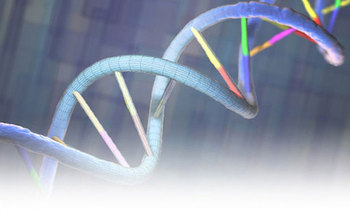
New research on plant and animal microbiomes will lead to advances in human health, agriculture.

New research on plant and animal microbiomes will lead to advances in human health, agriculture.
Credit and Larger Version

January 24, 2017
Millions of microbes living on and in the human body collectively make up our microbiomes. These microbial ecosystems help keep us healthy. The same processes are at work in other animals, as well as in plants.
To better understand the role microbiomes play in human health and in ecosystems around the world, the National Science Foundation's (NSF) Directorate for Biological Sciences has awarded $3 million in Early Concept Grants for Exploratory Research (EAGER). In addition to microbiomes, the research will focus on plant and animal phenomics -- the study of the physical and biochemical traits of organisms as they change in response to genetic mutations and environmental influences.
The findings will foster improved human health and agricultural productivity and more efficient use of natural resources, such as land and water.
"These studies will lead to a better understanding of how microbial communities interact with one another and with their plant and animal hosts," says James Olds, NSF assistant director for Biological Sciences. "The results have the potential to improve human health through, for example, new insights into antibiotic resistance, and may contribute to discoveries of new bioactive compounds and the development of more efficient and sustainable food production."
The funding is a joint effort between NSF and the U.S. Department of Agriculture's National Institute of Food and Agriculture (NIFA). This is the first year the two agencies have partnered on research in the emerging areas of microbiomes and phenomics.
EAGER-funded projects will include research on:
  • Technologies that increase the accuracy and speed of microbiome and phenotype data acquisition.
  • Extending the diversity of phenotypes that can be measured.
  • Automation and mechanization -- including the use of robotics and sensors -- for phenotyping, the process of predicting an organism's observable traits based on its DNA.
  • Technologies to identify the metabolic activities of particular microbes within a microbiome, and to increase knowledge of biochemical communication between microbes, and between microbes and their hosts.
  • New modeling approaches that address questions in microbiome or phenotype structure and function.
The NSF EAGER awards are listed below.
Identifying Small Molecule Inhibitors, Emily Balskus, Harvard University
High-throughput experimental methods to link mobile genetic elements with their bacterial hosts, Ilana Brito, Cornell University
Microfluidic Root Exudate Sampler with High Spatio-Temporal Sampling Resolution, Liang Dong, Iowa State University
Using novel, clone-free sequencing methods to discover host-microbe protein-protein interactions, Joseph Ecker, The Salk Institute for Biological Studies
Introducing Gulliver - an autonomous device to grow and study microorganisms in situ, Slava Epstein, Northeastern University
A Plant Observatory for remote sensing of biochemical reactions in vivo, Wolf Frommer, Carnegie Institution of Washington
Microwell array platform for high-throughput screening and discovery of microbial interactions, Ryan Hansen, Kansas State University
Single-locus multi-hormone reporters for comprehensive plant phenotyping: a synthetic-biology approach, Anna Stepanova, North Carolina State University
Chemical exploration of microbiomes at ecological spatial scales, Matt Traxler, University of California, Berkeley
Tools for Investigating Micron-Scale Spatial Organization of Microbial Communities, Jessica Mark Welch, Marine Biological Laboratory
-NSF-

Media Contacts Cheryl Dybas, NSF, (703) 292-7734, cdybas@nsf.gov


The National Science Foundation (NSF) is an independent federal agency that supports fundamental research and education across all fields of science and engineering. In fiscal year (FY) 2016, its budget is $7.5 billion. NSF funds reach all 50 states through grants to nearly 2,000 colleges, universities and other institutions. Each year, NSF receives more than 48,000 competitive proposals for funding and makes about 12,000 new funding awards. NSF also awards about $626 million in professional and service contracts yearly.
 Get News Updates by Email 
Useful NSF Web Sites:
NSF Home Page: https://www.nsf.gov
NSF News: https://www.nsf.gov/news/
For the News Media: https://www.nsf.gov/news/newsroom.jsp
Science and Engineering Statistics: https://www.nsf.gov/statistics/
Awards Searches: https://www.nsf.gov/awardsearch/
Results of the NSF EAGER grants will offer new insights into antibiotic resistance.
Credit and Larger Version
Antibiotic resistance is on the rise, leading to warnings from major health organizations.
Credit and Larger Version
The NSF-NIFA awards are contributing to the development of sustainable food production.
Credit and Larger Version
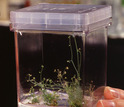
Scientists funded by the grants are improving the future of agricultural science.
Credit and Larger Version
The research may lead to discoveries of new bioactive compounds, such as those found in cranberries.
Credit and Larger Version
The National Science Foundation (NSF)
Guillermo Gonzalo Sánchez Achutegui
ayabaca@gmail.com
ayabaca@hotmail.com
ayabaca@yahoo.com
Inscríbete en el Foro del blog y participa : A Vuelo De Un Quinde - El Foro!

domingo, 20 de marzo de 2016

NSF: Discovery .- Fundamental science will play a key role in finding cancer cure .- Fundamentalmente la ciencia jugará un rol importantísimo para encontrar la curación del Cáncer....

Hola amigos: A VUELO DE UN QUINDE EL BLOG., hemos recibido información de la Fundación Nacional de Ciencias de Los Estados Unidos, quienes afirman que la ciencia fundamentalmente está comprometida en encontrar la cura para combatir el cáncer.
More information............

NSF-supported research to help U.S. achieve cancer 'moonshot'
 micro-biosensor on the side of a coin
A micro-biosensor developed at the University of Michigan will assess the results of chemotherapy.
Credit and Larger Version
March 15, 2016
The nation is abuzz with President Obama's "National Cancer Moonshot" initiative to eliminate cancer, and many federal agencies support this effort.
The National Science Foundation has long supported research that has contributed to the scientific community's understanding of cancer, its biology and treatment. What follows are some examples of novel, fundamental, ongoing science funded across the Foundation.
 
A new probe to identify cancer cells
 
Understanding cancer cell types represents an important first step in cancer diagnosis and treatment. Previous research established that many types of cancer cells are softer or more malleable than normal, healthy cells. However, until recently, this fact had not played a significant role in deciphering the spread of different cancers.
NSF supports UCLA researcher Amy Rowat's research probing hundreds of different types of cancer cells to understand their pliability using a new technology she developed known as the parallel microfiltration method (PMF).
PMF has already demonstrated that more invasive cancer cells are softer than less invasive ones. Rowat hopes to use the technology to identify molecules that can reverse the softness of cancer cells, making make them less invasive.
"Our platform also enables an innovative way to search for compounds that change the stiffness of cells, making cancer cells less harmful, and even targets drug-resistant cells," Rowat says.
 
Computing a cure for cáncer
 
NSF’s Smart and Connected Health program, jointly supported by the National Institutes of Health, examines cancer diagnostics using computer science and technology. The program capitalizes on advances in the speed and networking capacity of today's computers to transform health and healthcare through fundamental computer science.
"The moonshot of improving U.S. health through fundamental science has always been the goal of Smart and Connected Health at NSF," says program director Wendy Nilsen.
Along these lines, David Blaauw of the University of Michigan College of Engineering was part of a team that NSF recently funded to develop millimeter-sized, ultra-low-power electronic biosensors for implantation in tumors to determine chemotherapy impacts.
Monitoring of tumor micro-environments during therapy could inform chemotherapy duration, result in more successful chemotherapy and advance the science of implantable biosensors.
 
Detecting cancer recurrence with nano-materials
 
NSF-supported research also examines cancer survivors' well-being from an engineering perspective. With support from NSF, chemical engineer Nicholas Kotov of the University of Michigan created a metallic nano-material that generates a special kind of light that can screen cancer cells.
The material -- a thin stretchable film coated in gold nanoparticles -- can be made in large quantities and is capable of detecting protein and DNA in the blood for early detection of cancer recurrence. Kotov is incorporating the material into a portable smartphone-sized device to monitor cancer cells and quickly identify disease recurrence.
NSF aims to move cancer research forward by focusing on fundamental research in:
  • Biology, biochemistry and biophysics.
  • Computational advances such as data-driven discovery enabled by machine learning techniques and cyberinfrastructure.
  • And engineered systems in nanotechnology, imaging, material science and robotics.
Continued NSF-supported research advances and innovations in these areas, and others, will help to achieve the Administration's cancer "moonshot."
-- Beth Linas, NSF BLINAS@nsf.gov
Investigators Amy Rowat
David Blaauw
Prabal Dutta
Nicholas Kotov
David Wentzloff
Dennis Sylvester
Related Institutions/Organizations University of Michigan Ann Arbor
University of California-Los Angeles
Locations Ann Arbor , Michigan
Los Angeles , California
Related Programs Biomaterials
Nano-Biosensing
Smart and Connected Health
Biomechanics and Mechanobiology
Physiological and Structural Systems
Instrumentation for Materials Research
Related Awards #1403777 Detection of Protein Misfolding Using Nanorod Assemblies
#1254185 CAREER: Mechanotyping Platform for Studies of Soft Biological Matter
#1111541 CSR: Large: Collaborative Research: Integrating Circuits, Sensing, and Software to Realize the Cubic-mm Computing Class
Total Grants $3,476,047
Related AgenciesDepartment of Defense
National Institutes of Health
Department of Veterans Affairs
Department of Health and Human Services
Related WebsitesFACT SHEET: Investing in the National Cancer Moonshot:
 https://www.whitehouse.gov/the-press-office/2016/02/01/fact-sheet-investing-national-cancer-moonshot
person holding a chiral nanoparticle film
Chiral nanoparticle film made for portable monitoring of cancer cells.
Credit and Larger Version
The National Science Foundation (NSF)
Guillermo Gonzalo Sánchez Achutegui
ayabaca@gmail.com
ayabaca@hotmail.com
ayabaca@yahoo.com
Inscríbete en el Foro del blog y participa : A Vuelo De Un Quinde - El Foro!

Mi lista de blogs