Mostrando entradas con la etiqueta Ecology. Mostrar todas las entradas

domingo, 23 de julio de 2017

MEDIO AMBIENTE : National Science Foundation (NSF) .- Can an ancient ocean shoreline set the stage for a tropical forest of today? .- ¿Puede un antiguo litoral del mar establecer el escenario para un bosque tropical de hoy?

https://www.nsf.gov/discoveries/disc_summ.jsp?cntn_id=242383&WT.mc_id=USNSF_1

Researchers at NSF Critical Zone Observatory and Long-Term Ecological Research sites are finding out.
Dawn mist covers NSF's Luquillo Critical Zone Observatory and Long-Term Ecological Research sites.

Dawn mist covers NSF's Luquillo Critical Zone Observatory and Long-Term Ecological Research sites.
Credit and Larger Version

July 11, 2017
Find related stories on NSF's Critical Zone Observatory Sites. Find related stories on NSF's Long-Term Ecological Research Sites.
Could an ancient ocean shoreline determine what a tropical forest looks like today? National Science Foundation (NSF)-supported researchers are working to answer that question.
Their study is taking place in the rainforest-covered Luquillo Mountains of eastern Puerto Rico, where two NSF research stations are co-located: the Luquillo Critical Zone Observatory (CZO) and the Luquillo Long-Term Ecological Research (LTER) site.
There geoscientist Jane Willenbring of the Scripps Institution of Oceanography at the University of California, San Diego, and ecologist Maria Uriarte of Columbia University in New York have joined forces to determine how the formation of the Luquillo Mountains and their subsequent weathering resulted in today's Luquillo rainforest ecosystem.
 
Where geology and ecology meet
 
More than 4 million years ago, plate tectonics and the movement of Earth's crust in the Caribbean transformed low-elevation islands into the high Luquillo Mountains.
As the islands rose from the sea, bedrock in these newly-formed mountains was deeply eroded by rivers, especially at lower elevations.
"As a result, the uplands have different soils than those on the slopes lower down," says Uriarte. "There are pronounced changes in erosion rates, soil mineralogy and soil fertility between the upper and lower regions."
The underlying geology determines how fast the soils erode, according to Willenbring. "And erosion sets the tempo for how quickly minerals and nutrients are ferried to the surface," she says. "These minerals and nutrients, in turn, feed the forest above. It's surprising how connected the landscape is. It seems as though the trees understand geomorphology."
 
Life in the critical zone
 
"What lies beneath Earth's surface has a visible influence on ecosystems above," says Richard Yuretich, NSF CZO program director. "For example, geologists often use trees to map underlying bedrock. New relationships between the subsurface and what's above it are emerging from research on what's called the critical zone."
The critical zone is, in essence, where rock meets life. It extends from the top of the tree canopy to the base of weathered bedrock.
The minerals in the soil, the soil's ability to hold and circulate water, and the types of microbes living there all contribute to the viability of a forest's plant and animal communities, Yuretich says. These, in turn, determine how fast the underlying bedrock breaks down and how nutrients are recycled in an ecosystem.
"Geology and biology are inseparable when it comes to regulating Earth's environment," says Yuretich.
Scientist Peter Groffman of the City University of New York agrees. "The idea that 'what goes on below' can influence surface ecosystems' structure, function and response to environmental change has far-reaching scientific implications," stated Groffman at the June 5-6, 2017, NSF CZO principal investigators meeting. Groffman, chair of the LTER Science Council, a group that coordinates research activities in the LTER Network, discussed connections between the LTER and CZO networks.
 
Above -- and below -- Luquillo
 
These links are motivating researchers to ask questions such as how a humid, tropical location like Luquillo could experience a drought; in 2015, Luquillo did just that.
"If I were to tell you that a forest received more than 6 feet of rain in one year, you might be surprised that it was also a time of severe drought," says Louis Kaplan, an NSF LTER program director who participated in a panel discussion at the CZO principal investigators meeting. "For the forests of the Luquillo Mountains, where 11 feet of rain each year is the norm, 2015 was indeed a historic drought."
Long-term research at Luquillo is enabling scientists to consider 2015 in the context of decades of tropical forest studies, Kaplan says, and to conclude that 2015's low rainfall was an outlier.
Researchers at Luquillo also recently discovered that the combined disturbances of hurricanes and human land-use decisions can lead to forests with new compositions of tree species. Beyond drought, hurricanes and human land-use, however, what ultimately drives which tree species make up a forest may be what lies under them.
 
Remote sensing leads to on-the-ground insights
 
Along with scientists Jeffrey Wolf of Columbia University, Gilles Brocard of the University of Sydney in Australia, and Stephen Porder of Brown University, Willenbring and Uriarte published initial results of their underground-to-forest investigations in the journal Remote Sensing.
To unearth the connections between bedrock and trees, the researchers looked to the distant past.
Puerto Rico is an island located near the northern boundary of the Caribbean Plate. "Most of its landmass emerged from the ocean approximately 4.2 million years ago, converting an archipelago of low-elevation islands and surrounding marine platforms into high mountaintops," wrote the scientists in Remote Sensing.
The remains of one such marine platform surround the Luquillo Mountains. The platform encloses what's left of a paleoisland, "El Yunque Island," whose peak today reaches 1,100 meters (3,609 feet). El Yunque is a remnant of an ancient supervolcano named Hato Puerco. The volcano was one of the region's largest and most active volcanoes during the Cretaceous period 145 to 66 million years ago.
 
Fast-forward to the present
 
With LiDAR (Light Detection and Ranging, a method that uses light in the form of a pulsed laser to measure distances), the scientists discovered an abrupt 10-meter (33-foot) decline in forest height across Luquillo's long-ago shoreline, but only where there are rocks formed of hard quartz diorite. There the soils are shallow, and trees have difficulty gaining a foothold and finding nutrients -- so they don't grow as high.
The researchers also found that knickpoints, areas with sharp changes in a river's slope, are where changes in forest composition take place. Nutrients in soils above and below knickpoints, which are partially controlled by the type of bedrock beneath, may be the answer to the different forest heights the scientists observed.
"The finding has led to a new understanding of the role of geology in structuring the forest ecosystem of the Luquillo Mountains," says Uriarte.
Adds Kaplan, "This is the first example of bedrock being linked to tropical forest structure. These results are just the beginning of synergies emerging at the interface of CZO and LTER science."
Field campaign to link ancient shorelines with today's forests
The scientists have launched a field campaign to answer the next question: What factors are contributing to the abrupt changes in Luquillo's forest height? A shift in tree species composition may be one answer.
The researchers are determining whether tree communities living at higher and lower elevations than the ancient shoreline are different, and whether lower-elevation species can migrate upslope, given the low fertility of the higher-elevation soils that lie atop hard quartz diorite.
"That's important because rapid upslope migrations of plant species are happening in tropical mountain ranges as a result of climate change," says Uriarte. When it gets hot at lower elevations, plants and animals start moving to higher, cooler spots.
Adds Willenbring, "If the soils on which tropical mountain forests grow play a strong role in which trees make up those forests, geology adds a layer of complexity in projecting species or entire community migrations to higher elevations in response to warming."
The Luquillo field campaign is centered on remote sensing, and conducted with partners from the U.S. Department of Energy and NASA's Goddard Space Flight Center. The results will lead to the identification of tree species over an entire mountain.
The findings will be important in the management and conservation of forest ecosystems, say Kaplan, Yuretich and other scientists, and to predicting the future of tropical forests in a changing world.
-- Cheryl Dybas, NSF (703) 292-7734
 cdybas@nsf.gov
Water flows along what scientists call a knickpoint: a change in the slope of a river.
Credit and Larger Version
LiDAR map of Luquillo's Rio Blanco watershed (green), streams (blue), and knickpoints (yellow).
Credit and Larger Version
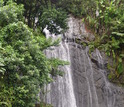
A Luquillo waterfall; such waterfalls are often found at river knickpoints.
Credit and Larger Version
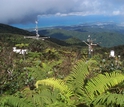
Meteorological station on a clear day in the cloud forest of Puerto Rico's Luquillo Mountains.
Credit and Larger Version
Scientists at Luquillo have shown that carbon cycling by tropical forests is sensitive to climate.
Credit and Larger Version
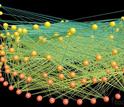
Representation of the complex food web in the tropical forest of the Luquillo Mountains.
Credit and Larger Versión
National Science Foundation (NSF)
Guillermo Gonzalo Sánchez Achutegui
ayabaca@gmail.com
ayabaca@yahoo.com
ayabaca@hotmail.com
Inscríbete en el Foro del blog y participa : A Vuelo De Un Quinde - El Foro!

domingo, 18 de septiembre de 2016

NSF : NSF awards $18.9 million for research to transform our understanding of life on Earth.- NSF, ofrece premios hasta $ 18,9 millones para la investigación para transformar nuestra comprensión de la vida en la Tierra......

http://www.nsf.gov/news/news_summ.jsp?cntn_id=189723&WT.mc_id=USNSF_51&WT.mc_ev=click

Topics range from coral reef sponge microbiomes to the evolution of snake venom

A diverse community of marine sponges on a coral reef in St. Croix, U.S. Virgin Islands.

A diverse community of marine sponges on a coral reef in St. Croix, U.S. Virgin Islands.
Credit and Larger Version

September 16, 2016
Humans are largely made up of millions of microbes, collectively called our microbiomes. These microbial "ecosystems" contribute to keeping us healthy. It's the same for corals and other species such as marine sponges, scientists are finding.
Through a new National Science Foundation (NSF) Dimensions of Biodiversity grant, Michael Lesser of the University of New Hampshire and colleagues are studying the evolutionary ecology of sponges, and how their microbiomes drive diversity on coral reefs.
The project is one of 10 funded this year through the Dimensions of Biodiversity program, a unique research initiative that integrates multiple areas of study, in contrast to traditional biodiversity research that focuses on one taxonomic group or ecosystem.
A total of $18.9 million has been invested in the awards, with contributions from NSF's Directorates for Biological Sciences and for Geosciences, as well as the São Paulo Research Foundation (FAPESP) of Brazil.
"These grants will allow us to find new ways of understanding how organisms form, interact, and change through time," says James Olds, NSF assistant director for Biological Sciences. "This year's Dimensions of Biodiversity awardees will investigate some of the least-known and perplexing 'innovations of nature,' from the ability of plant plankton to metabolize vitamins, to how various types of snake venom developed, to why humidity-loving mosses can tolerate arid conditions."
The Dimensions of Biodiversity program links functional, genetic and phylogenetic dimensions of biodiversity, offering opportunities to produce rapid advances in understanding the creation, maintenance and loss of biodiversity.
"This research will help us understand, for example, the incredible diversity of marine life and how it functions," says Roger Wakimoto, NSF assistant director for Geosciences. "In a time of changing seas, that knowledge is of great importance in comprehending, and conserving, the species in Earth's vast oceans."
The research will fill in gaps in biodiversity knowledge, scientists say. It also has the potential to lead to significant progress in agriculture, fuel, manufacturing and health.
For example, plant and animal extinctions are detrimental to human health, scientists have found. Species losses in ecosystems such as forests and fields result in increases in pathogens, or disease-causing organisms. The species most likely to disappear as biodiversity declines are often those that buffer infectious disease transmission. Those that remain tend to be ones that magnify diseases such as Lyme disease.
Economic sustainability also depends on the diversity of life on Earth. Many industrial materials, such as fibers and dyes, come from biological sources. In addition, biodiversity is important to resources such as water, food and pharmaceuticals.
To conserve Earth's biodiversity, scientists funded through the Dimensions of Biodiversity program are working to better understand interactions between, for example, plants and insects.
The new Dimensions of Biodiversity projects focus on topics including desiccation and diversity in dryland mosses; sensory systems such as vision in unusual habitats; and predicting how species in river floodplains will respond to climate change.

2016 NSF Dimensions of Biodiversity Awards
Janette Boughman, Michigan State University: Dimensions: Diversification of sensory systems in novel habitat: enhanced vision or compensation in other modalities?
Jeffrey Feder, University of Notre Dame: Dimensions: Collaborative Research: Time after Time: Adaptive Seasonal Timing Drives the Sequential Origin of Community Biodiversity
Lisle Gibbs, Ohio State University: Collaborative Research: Dimensions US-BIOTA-Sao Paulo: Scales of biodiversity - Integrated studies of snake venom evolution and function across multiple levels of diversity
Zach Gombert, Utah State University: Collaborative Proposal: Dimensions: The evolution of novel interactions within a network of plant, insect and microbial biodiversity
Michael Lesser, University of New Hampshire: Collaborative Research: Dimensions: Evolutionary Ecology of Sponges and their Microbiome Drives Sponge Diversity on Coral Reefs
Elena Litchman, Michigan State University: Dimensions: Collaborative Research: Genetic, functional and phylogenetic diversity determines marine phytoplankton community responses to changing temperature and nutrients
Gordon Luikart, University of Montana: Dimensions - Predicting Biodiversity Vulnerability to Climate Change: Integrating Phylogenetic, Genomic, and Function Diversity in River Floodplains
Jason Slot, Ohio State University: Collaborative Research: Dimensions: Secondary metabolites as drivers of fungal endophyte community diversity
Lloyd Stark, University of Nevada, Las Vegas: Collaborative Research: Dimensions: Desiccation and Diversity in Dryland Mosses
Alexandra Worden, Monterey Bay Aquarium Research Institute: Dimensions: Collaborative Research: Functional and genomic diversity in vitamin B1 metabolism and impacts on plankton networks and productivity
-NSF-

Media Contacts Cheryl Dybas, NSF, (703) 292-7734, cdybas@nsf.gov

Related WebsitesNSF News (2015 Awards): Life on Earth: National Science Foundation awards $23 million for studies of planet's biodiversity:
https://www.nsf.gov/news/news_summ.jsp?cntn_id=136222
NSF News (2014 Awards): Whither the diversity of life on Earth? NSF, partners award $23 million for studies of planet's biodiversity:
https://www.nsf.gov/news/news_summ.jsp?cntn_id=132506
NSF News (2013 Awards): In race against time, NSF grants fund research on Earth's threatened biodiversity:
 https://www.nsf.gov/news/news_summ.jsp?cntn_id=129242
NSF Discovery: Staple of recipe favorites--the tomato--reveals processes that maintain biodiversity: https://nsf.gov/discoveries/disc_summ.jsp?cntn_id=129676
NSF Discovery: Earth Week: A Stream Is a Stream Is a Stream: Or Is It?: http://www.nsf.gov/discoveries/disc_summ.jsp?cntn_id=123855&org=NSF
NSF Discovery: Earth Day is on the horizon. But is 'greener' always better?: http://www.nsf.gov/discoveries/disc_summ.jsp?cntn_id=134374


The National Science Foundation (NSF) is an independent federal agency that supports fundamental research and education across all fields of science and engineering. In fiscal year (FY) 2016, its budget is $7.5 billion. NSF funds reach all 50 states through grants to nearly 2,000 colleges, universities and other institutions. Each year, NSF receives more than 48,000 competitive proposals for funding and makes about 12,000 new funding awards. NSF also awards about $626 million in professional and service contracts yearly.
 Get News Updates by Email 
Useful NSF Web Sites:
NSF Home Page:
 https://www.nsf.gov
NSF News:
https://www.nsf.gov/news/
For the News Media:
 https://www.nsf.gov/news/newsroom.jsp
Science and Engineering Statistics:
 https://www.nsf.gov/statistics/
Awards Searches:
 https://www.nsf.gov/awardsearch/
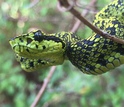
The Talamancan palm-pitviper, found in the highlands of the Talamancan Cordillera in Costa Rica.
Credit and Larger Version
Melissa blue caterpillars in Idaho feed on alfalfa while being tended by beneficial ants.
Credit and Larger Version
Researchers at work on an evolutionary endocrinology project to track the timing of dormancy.
Credit and Larger Version
Threespine stickleback fish that were captured in a spring-fed freshwater lake.
Credit and Larger Version
Scientists are isolating fungi from the leaves of coffee plants.
Credit and Larger Version
The National Science Foundation (NSF)
Guillermo Gonzalo Sánchez Achutegui
ayabaca@gmail.com
ayabaca@hotmail.com
ayabaca@yahoo.com
Inscríbete en el Foro del blog y participa : A Vuelo De Un Quinde - El Foro!

domingo, 17 de mayo de 2015

nsf.gov - National Science Foundation - As Massachusetts ecosystems shrink, hard-working "hotspots" emerge.- Como los ecosistemas en Massachusetts encogen, "puntos calientes" ha costado trabajo emergen

Hola amigos: A VUELO DE UN QUINDE EL BLOG., hemos recibido información de la Fundación Nacional de Ciencia de Los Estados Unidos, sobre la investigación de los ecosistemas en el estado de Massachusetts, se comprueba que todas las tierras que no son iguales. Algunos ecosistemas hacen triple deber de los beneficios que aportan la sociedad. Bosques de Massachusetts, por ejemplo, filtrar el agua potable pública, son el hábitat de especies amenazadas y almacenar carbono para combatir el cambio climático..........
 
More information....
Researchers call hotspots valuable, but say their growing numbers might be cause for concern
forest
Ecosystem "hotspots" provide many benefits to society, including recreation and drinking water.
Credit and Larger Version
May 14, 2015
The following is part 18 in a series on the National Science Foundation's Long-Term Ecological Research (LTER) Network. Visit parts one,two, three, four, five, six, seven, eight, nine, 10, 11, 12,13, 14, 15, 16 and 17.
All land is not created equal. Some ecosystems do triple-duty in the benefits they provide society.
Massachusetts forests, for example, filter public drinking water, provide habitat for threatened species and store carbon to combat climate change.
 
Hotspots: hardest-working ecosystems
 
Ecologists single out the hardest-working ecosystems--called "hotspots"--for their exceptional value.
Results of a study published this week in the Journal of Applied Ecology show that the number of hotspots has increased in Massachusetts over the past decade, with more and more popping up in metro Boston.
But, the authors of the paper say, more hotspots may not be a good thing.
Jonathan Thompson, an ecologist at the National Science Foundation's (NSF) Harvard Forest Long-Term Ecological Research (LTER) site and co-author of the paper, says that the increasing number of hotspots signals a degradation of other ecosystems across the state.
"Over the past 10 years, urban development has increased by more than 6 percent, at the expense of forests and agricultural lands," Thompson says.
"When we lose intact forests, we lose stable flows of clean water, climate regulation, recreational opportunities and wildlife habitat. The remaining forest is left to pick up the slack."
The result is more hotspots that do the work of larger forests.
 
Emerging ecosystems
 
Meghan Blumstein of Harvard University, lead author of the paper, notes that hotspots are valuable and worth saving.
But, she adds, "an increase in their number reflects an ongoing division of the natural landscape into smaller units, which are expected to produce the same number of services with less."
Saran Twombly, lead program director for the NSF LTER program--which funded the research through NSF's Division of Environmental Biology--says that the study takes a broad view to show that exploitation of land affects a wide range of services we expect the natural environment to provide.
"Humans have used the land for millennia to satisfy particular needs," Twombly says.
 
Satellite mapping
 
Using satellite maps, the team tracked changes in land cover, such as forest clearing for agriculture or development, across Massachusetts from 2001 to 2011.
In each 30-meter square on the map grid (about the size of two basketball courts), the scientists used computer models to assess which benefits each ecosystem could provide and how those benefits changed over time.
The researchers found that some benefits, such as providing habitats for wildlife, declined state-wide over the study period.
But other benefits, including carbon sequestration and outdoor recreation, increased. Intact forests are growing rapidly and more land is being conserved.
 
Study scale important
 
For some benefits, the scale of the analysis made a big difference, Blumstein says.
When analyzed at a local scale, an area of forest in the state's Quabbin Reservoir may look less like a hotspot than it does a local park.
But when examined at a regional scale, the continuous forest area around the Quabbin Reservoir provides clean drinking water for millions of Massachusetts residents.
"The sustained delivery of benefits from nature requires an approach that considers conservation at multiple scales," Blumstein says.
In other words, the researchers say, we need to be able to see the forest, not just the trees.
-- Cheryl Dybas, NSF (703) 292-7734 cdybas@nsf.gov
-- Clarisse Hart, NSF Harvard Forest LTER Site (986) 756-6157 hart3@fas.harvard.edu
Investigators David Foster
Related Institutions/Organizations Harvard University
Total Grants $2,940,003
Related WebsitesNSF Long-Term Ecological Research Network:
 http://www.lternet.edu/
NSF Harvard Forest LTER Site:
 http://harvardforest.fas.harvard.edu/research/LTER
Discoveries in Long-Term Ecological Research:
Forests around Quabbin Reservoir in Massachusetts
Forests around Quabbin Reservoir in Massachusetts provide drinking water for metro Boston.
Credit and Larger Version
a moose behind trees
Large, intact blocks of forest offer good habitat for moose and other species.
Credit and Larger Version
leaves on a tree
Ecosystem services recently increased in some areas due to the rapid growth of intact forests.
Credit and Larger Version
Development in Massachusetts surrounded by forest
Development in Massachusetts increased by more than 6 percent from 2001 to 2011.
Credit and Larger Version
houses and roads surrounded by forest
Landscapes perforated by development are less able to provide benefits to society.
Credit and Larger Versión
The National Science Foundation (NSF)
Guillermo Gonzalo Sánchez Achutegui
ayabaca@gmail.com
ayabaca@Hotmail.com
ayabaca@yahoo.com
Inscríbete en el Foro del blog y participa : A Vuelo De Un Quinde - El Foro!
miércoles, 5 de febrero de 2014

nsf.gov - National Science Foundation - Data-intensive ecology needed to understand what makes the biosphere tick

Journal special issue reports new findings on macrosystems biology: biological sciences writ large
cover of the special issue of Frontiers in Ecology journal
This special issue highlights research conducted through NSF's MacroSystems Biology program.
Credit and Larger Version
February 3, 2014
Have you looked closely at a local pond, meadow or forest--or at nature in your suburb or city--and observed changes in it over time? That's exactly what scientists are trying to do on a larger, regional to continental scale--a macrosystems biology scale.
Macrosystems biology might be called "biological sciences writ large."
Scientists funded by the National Science Foundation's (NSF) MacroSystems Biology Program are working to better detect, understand and predict the effects of climate and land-use change on organisms and ecosystems at regional to continental scales.
The researchers have published new results in this month's special issue of the journal Frontiers in Ecology and the Environment, published by the Ecological Society of America.
The ecologists are asking questions such as: How are regional-scale processes in plant and animal invasions, and in disease transmission, shaped by continent-wide environmental and land-use patterns? How can continent-wide data lead to better forecasts of disease outbreaks? How do invasive species and infectious diseases arrive at new locations, sometimes across great distances?
"Scientists conducting macrosystems biology research are working to find answers to these complex questions," says John Wingfield, NSF assistant director for Biological Sciences.
"Current knowledge of the biosphere is largely based on research in small plots of land and on satellite-scale remote sensing," says Wingfield. "But the insights needed to answer critically important questions about the biosphere's future can't always be extrapolated from such studies. They require new approaches."
Now macrosystems biologists are entering a new realm: that of big data.
"Ecologists can no longer sample and study just one or even a handful of ecosystems," says Patricia Soranno, a scientist at Michigan State University and co-editor of the special issue with David Schimel of the California Institute of Technology's Jet Propulsion Lab.
"We also need to study lots of ecosystems and use lots of data to tackle many environmental problems--such as climate change, land-use change and invasive species--because such problems exist at larger scales than other problems we have faced in the past."
Soranno and Schimel worked with many researchers, all funded by NSF's MacroSystems Biology Program, to produce the special issue.
"Data-intensive science is being touted as a new way to do science of any kind, and we think it has a lot to offer ecology," says Soranno.
"Traditionally, ecologists are trained to study and take samples from the field in places like forests, grasslands or wetlands, and measure things in the lab.
"In the future, many ecologists will also need to be trained in advanced computational methods that will allow them to study complex systems using big datasets."
Researchers have accumulated decades and decades of data. The sources include small, individual projects by university biologists; government agency scientists monitoring natural resources; terabytes of data from new or existing field sensors and observation networks; and millions of high-definition satellite images.
Easier access to supercomputers is paired with a near-endless deluge of data. Analyses that once took months or years can now be conducted in hours or days. Scientists also have access to the latest statistical modeling and geographic information system tools, says Soranno.
"Ten years ago, it would have been much harder to take this approach," she says. "We didn't have the intersection we have today of great tools, volumes of data, sufficient computing power and a growing understanding of natural systems at broad scales."
The makeup of macrosystems biology research teams should reflect the demands of data-intensive ecology, these researchers believe. Groups should include database managers, data-mining experts, GIS professionals and others, they say.
"An important question we're facing is how ecologists can best solve many of today's top environmental problems, challenges that need a broad-scale approach," Soranno says.
"From the research that has already been conducted by macrosystems biologists, evidenced by the papers in this special issue, we think we're on the right path."
It's where science needs to go, say these papers' authors, to understand what makes Earth's biosphere tick.
The research papers in the special issue can be accessed online at the Frontiers in Ecology and the Environment website.
-NSF-
Media Contacts Cheryl Dybas, NSF, (703) 292-7734, cdybas@nsf.gov
Layne Cameron, MSU, (517) 353-8819, layne.cameron@cabs.msu.edu
Liza Lester, ESA, (202) 833-8773 x 211, llester@esa.org
Related Websites2013 NSF MacroSystems Biology Awards:
 http://www.nsf.gov/news/news_summ.jsp?cntn_id=129239
2011 NSF MacroSystems Biology Awards:
 http://www.nsf.gov/news/news_summ.jsp?org=NSF&cntn_id=121279&preview=false
Special Issue: Frontiers in Ecology and the Environment:
The National Science Foundation (NSF) is an independent federal agency that supports fundamental research and education across all fields of science and engineering. In fiscal year (FY) 2014, its budget is $7.2 billion. NSF funds reach all 50 states through grants to nearly 2,000 colleges, universities and other institutions. Each year, NSF receives about 50,000 competitive requests for funding, and makes about 11,500 new funding awards. NSF also awards about $593 million in professional and service contracts yearly.
Useful NSF Web Sites:
NSF Home Page: http://www.nsf.gov
NSF News: http://www.nsf.gov/news/
For the News Media: http://www.nsf.gov/news/newsroom.jsp
Science and Engineering Statistics: http://www.nsf.gov/statistics/
Awards Searches: http://www.nsf.gov/awardsearch/
screenshot from animation showing a sketch of a man working on a computer wired to the Earth
View Video
View an animation of ecology in a world of big data.
Credit and Larger Version
lake surrounded by trees
Thousands of lakes are being compared through a macrosystems biology grant from NSF.
Credit and Larger Version
image of  an urban landscape in USA
The ecological homogenization of urban America is the subject of an NSF macrosystems biology award.
Credit and Larger Version
man with laptop looking at a visualization of street trees.
Macrosystems biologists are entering the realm of "big data;" here a visualization of street trees.
Credit and Larger Version
aerial view of land with various uses
NSF-supported macrosystems biologists are studying agricultural landscapes in North Dakota.
Credit and Larger Version
river with muddy water meanderingt rhough vegetation
Macrosystems biologists are conducting research on the resilience of river basins.
Credit and Larger Version
 
The National Science Foundation (NSF)
Guillermo Gonzalo Sánchez Achutegui
ayabaca@gmail.com
ayabaca@hotmail.com
ayabaca@yahoo.com
Inscríbete en el Foro del blog y participa : A Vuelo De Un Quinde - El Foro!
domingo, 17 de noviembre de 2013

nsf.gov - National Science Foundation - Tasmanian devils: Will rare infectious cancer lead to their extinction?


Cartoon character's real-life counterpart may offer clues to human and other animal diseases
Scientist Andrew Storfer checking a Tasmanian devil for tumor facial disease.
Scientist Andrew Storfer checks a Tasmanian devil for signs of devil tumor facial disease.
Credit and Larger Version
November 13, 2013
The following is part seven in a series on the NSF-NIH Ecology and Evolution of Infectious Diseases (EEID) Program.
For part one, see: Cool Cat in a Hot Zone.
Taz, was his name, the Tasmanian devil of Warner Bros. cartoon fame. A scrappy omnivore who ate anything and everything, he spun in a vortex and bit through everything in his path.
The devil was short-lived, however, making television appearances for a few years in the late 1950s and early 1960s before disappearing from view. In 1991, Taz got a reprieve: His own show, "Taz-Mania," which ran for three seasons. Then he was gone for good.
 
From the screen to the wild
Tasmanian devils in the wild are no less imperiled. Carnivorous marsupials, they're found only on the Australian island of Tasmania. With a stocky build, black fur, keen sense of smell and ferocity when feeding, "real-life" Tasmanian devils and their cartoon namesake have much in common.
The size of small dogs, Tasmanian devils became the largest carnivorous marsupials in the world following the 1936 extinction of thylacines (Thylacinus cynocephalus), known as Tasmanian tigers or Tasmanian wolves. Thylacines lived on continental Australia, Tasmania and New Guinea.
Will the fate of Sarcophilus harrisii, the scientific name for the Tasmanian devil, mimic that of the thylacine?
"If a way isn't found to stop devil facial tumor disease, or DFTD," says disease ecologist Andrew Storfer of Washington State University, "models predict that Tasmanian devils could be extinct in as few as10 years."
And vanishing with them, valuable clues to diseases in other species, including humans.
DFTD is an aggressive, non-viral, transmissible parasitic cancer that is 100 percent lethal, says Storfer. "In short," he says, "it's bad news."
 
Can we save the Tasmanian devil?
To study DFTD and find ways of understanding its emergence and spread, Storfer has received a grant from the National Science Foundation (NSF)- National Institutes of Health (NIH) Ecology and Evolution of Infectious Diseases (EEID) Program.
Collaborators include Paul Hohenlohe of the University of Idaho, Hamish McCallum of Griffith University, Menna Jones of the University of Tasmania and Elizabeth Murchison of the Wellcome Trust Sanger Institute.
The NSF-NIH EEID Program supports efforts to understand the ecological and biological mechanisms that link environmental changes and the emergence and transmission of infectious diseases.
Projects funded through the program allow scientists to study how large-scale environmental events--such as habitat destruction, invasions of nonnative species and pollution--alter the risks of emergence of viral, parasitic and bacterial diseases.
Storfer's research may lead to new insights about the spread of flu in humans. It also may help scientists understand other infectious diseases in animals such as bats, and how certain cancers progress.
"This study provides an excellent test-bed for understanding the spread of infectious diseases," says Sam Scheiner, EEID program director at NSF. "The results may help us control the spread of seasonal flu in people, West Nile virus in birds and white-nose syndrome in bats, among many other diseases."
 
Tasmanian devils: extinction on the horizon
The first official case of devil tumor facial disease was reported in 1996. Since then, Tasmania's devil population has declined by 70 percent. Findings reported in 2010 show that 80 percent of the remaining devils are affected.
"Tasmanian devils that live in high-density populations may suffer drastic reductions a few years after emergence of the disease," Storfer says.
DFTD has been slowly moving from east to west across Tasmania for the last 17 years; it's now approaching the west coast. "Soon there may be no known uninfected devils," says Storfer.
The disease is spread when Tasmanian devils bite each other's heads while fighting over food, during territorial interactions and when they spar during mating season.
Devils that contract the disease develop lesions around their mouths that become cancerous tumors. The tumors may spread from their faces to their entire bodies. Devils almost always die within six to nine months.
Devil facial tumor disease likely began in what are called Schwann cells. Schwann cells are found in the peripheral nervous system; they produce myelin and other proteins essential for the functions of nerve cells.
In response to DFTD, Tasmanian devils have changed their reproductive habits. Before the outbreak, females started breeding at two years old. Now they breed by the end of their first year--and often die of DFTD soon afterward.
There's a ray of light, however, in this dark day for devils. Some devils have been found with partial immunity to the disease. Breeding in captivity is underway to try to save the species.
"Emerging infectious diseases like DFTD are one of the great scientific challenges of the 21st century," says Storfer. "Infectious diseases are now the sixth leading cause of species extinctions."
 
Answers in Tasmanian devils' genomes?
Extensive research by Storfer and others, including thousands of samples taken before and after devil die-offs, has given scientists a rare opportunity to study the genomic interactions of an infectious disease and its host--the devils--across an entire species' range.
"The research will tell us about the genetic basis of Tasmanian devils' susceptibility to the tumors," says Storfer, "providing environmental managers with information about which particular devils would be best suited for captive breeding programs."
Knowledge of the rates and direction of past tumor spread will enable scientists to uncover the likely locations of future infections.
Although only a few infectious cancers have been documented, Storfer says, "this disease shares properties with human cancers.
"Our research, especially genetic studies, may reveal the underlying reasons why DTFD is so prevalent and can hold on for so long in a population, perhaps providing information on cancer recurrence in humans."
To test predictions of the course of the epidemic, he and colleagues plan to meld what they call "devil contact network modeling" with genomic studies of Tasmanian devil populations expected to become infected.
"The answers will help in developing responses to this and other disease outbreaks in Tasmanian devils--and potentially in people," says Storfer.
Taz may be gone, but, says Storfer, "Hopefully it's not too late for the real Tasmanian devil."
-- Cheryl Dybas, NSF (703) 292-7734 cdybas@nsf.gov
Investigators Menna Jones
Andrew Storfer
Paul Hohenlohe
Hamish McCallum
Elizabeth Murchison
Related Institutions/Organizations Washington State University
Total Grants $1,675,000
Related WebsitesNSF Special Report: Ecology and Evolution of Infectious Diseases: http://www.nsf.gov/news/special_reports/ecoinf/index.jsp
NSF News: Outbreak: Ecology and Evolution of Infectious Disease grants support research on disease transmission (2013 EEID awards):
http://www.nsf.gov/news/news_summ.jsp?cntn_id=129280
NSF News: Interplay of Ecology, Infectious Disease, Wildlife and Human Health Featured at Annual Conference (2013):
 http://www.nsf.gov/news/news_summ.jsp?cntn_id=128411
NSF News: Controlling the Spread of Diseases Among Humans, Other Animals and the Environment (2012 EEID Awards):
http://www.nsf.gov/news/news_summ.jsp?cntn_id=125496
NSF News: Investigating the Spread of Infectious Diseases With NSF, NIH, U.K. Funding (2011 EEID Awards):
 http://www.nsf.gov/news/news_summ.jsp?cntn_id=121607
tasmanian devil eating roadkill
View Video
Watch a video interview with disease ecologist Andrew Storfer.
Credit and Larger Version

tasmanian devil resting
View Video
Watch a video interview with NSF EEID program director Sam Scheiner.
Credit and Larger Version

A tasmanian devil
Not all Tasmanian devils are docile; many share traits with the cartoon character "Taz."
Credit and Larger Version
Three Tasmanian devils eating
Whirling dervishes when feeding, Tasmanian devils may bite each other when eating.
Credit and Larger Version
Tasmanian devil with Devil facial tumor disease, an infectious cancer,
Devil facial tumor disease, an infectious cancer, is decimating populations of Tasmanian devils.
Credit and Larger Version
Illustration showing aTasmanian devil and the now extinct thylacine
Will the Tasmanian devil (top) follow its relative the thylacine into extinction?
Credit and Larger Version
This still-healthy Tasmanian devil's future hangs in the balance.
Credit and Larger Version

The National Science Foundation (NSF),
Guillermo Gonzalo S´nchez Achutegui
ayabaca@gmail.com
ayabaca@hotmail.com
ayabaca@yahoo.com
Inscríbete en el Foro del blog y participa : A Vuelo De Un Quinde - El Foro!

sábado, 19 de octubre de 2013

nsf.gov : National Science Foundation : Outbreak: Ecology and Evolution of Infectious Disease grants support research on disease transmission

Awards fund studies of how diseases spread among humans, other animals and the environment
A Tasmanian devil
EEID scientists will research an infectious cancer decimating Tasmanian devil populations.
Credit and Larger Version
September 30, 2013
facial disease; infection with antibiotic-resistant staphylococcus; foot-and-mouth disease; malaria: Is our interaction with the environment somehow responsible for the increased incidence of these diseases?
The joint National Science Foundation (NSF) and National Institutes of Health (NIH) Ecology and Evolution of Infectious Diseases (EEID) program is providing answers.
The EEID program supports efforts to understand the ecological and biological mechanisms behind human-induced environmental changes and the emergence and transmission of infectious diseases.
NSF and NIH--in collaboration with the U.S. Department of Agriculture National Institute of Food and Agriculture (NIFA) and the U.K.'s Biotechnology and Biological Sciences Research Council (BBSRC)--have awarded more than $16 million in new EEID grants.
"Our understanding of the ecology and evolution of pathogens comes from knitting together information from many different sources," says Sam Scheiner, NSF EEID program director. At NSF, EEID is funded by the Directorates for Biological Sciences, Geosciences, and Social, Economic & Behavioral Sciences.
"They include diseases of humans, frogs, honeybees and plants," says Scheiner. "Each system provides a different piece of the puzzle that helps us protect human health, the health of our agricultural systems and that of our natural world."
Projects funded through the EEID program allow scientists to study how large-scale environmental events--such as habitat destruction, invasions of non-native species and pollution--alter the risks of emergence of viral, parasitic and bacterial diseases in humans and other animals.
"This year's EEID projects bring together multiple scientific fields to address how human and natural processes influence infectious diseases in humans and other animals, including diseases that affect wildlife and agriculture, as well as those of significant public health concern in the developing world," says Christine Jessup, EEID program director at NIH's Fogarty Center.
"Findings from EEID-supported research are improving public health interventions and management decisions."
Researchers supported by the EEID program are advancing basic theory related to infectious diseases, and improving understanding of how pathogens spread through populations at a time of increasing environmental change.
The benefits of research on the ecology and evolution of infectious diseases include development of theories about how diseases are transmitted, improved understanding of unintended health effects of development projects, increased capacity to forecast disease outbreaks, and knowledge of how infectious diseases emerge and reemerge.
"Animal and plant diseases cause significant losses in food production around the globe and pose risks to human health," says Sonny Ramaswamy, NIFA director.
"As NIFA and the scientific community work toward solutions that ensure our food security, research on the evolution and spread of infectious diseases will help us understand how best to prevent, predict and respond to these threats."
This year's EEID awardees will conduct research on such topics as the emergence of Tasmanian devil facial tumor disease, honeybees and their parasites, the evolution and spread of virulent infectious diseases, the macroecology of infectious disease, and the persistence of foot-and-mouth disease.
"Tackling the infectious diseases that threaten the health of humans and livestock is a critical need, especially in the face of a growing global human population expected to reach 9 billion by 2050," says Douglas Kell, BBSRC chief executive.
"We face many challenges related to food security and health. These EEID projects will combine international expertise to help us find solutions."
Closeup of a bee on a flower
The largest cause of honeybee declines is the Varroa mite, subject of an EEID award.
Credit and Larger Version
Closeup of a mosquitoe on skin
Mosquitoes: the vector for the malaria parasite Plasmodium falciparum.
Credit and Larger Version
Cape buffalo in the field
Cape buffalo in Africa act as a host for the contagious foot-and-mouth disease virus.
Credit and Larger Version
A frog in water
Amphibian pathogens, such as a fungus infecting frogs, are the focus of an EEID award.
Credit and Larger Version
Pigs grazing on a field
Do livestock practices contribute to the emergence of antibiotic-resistant bacteria?
Credit and Larger Version
EEID 2013 Grants
Additional Collaborators: Hamish McCallum, Griffith University; Menna Jones, University of Tasmania; Elizabeth Murchison, Wellcome Trust Sanger Institute; Paul Hohenlohe, University of Idaho
Patrick Stephens, University of Georgia, RCN Proposal: Macroecology of infectious disease
Additional Collaborators: Robert Poulin, University of Otago; Sonia Altizer, University of Georgia; Katherine Smith, Brown University; Alonso Aguirre, Smithsonian-Mason School of Conservation
Additional Collaborators: Jacqueline A. MacDonald, Rachel T. Noble, Marc L. Serre, Steven B. Wing, University of North Carolina at Chapel Hill
Additional Collaborators: Kelli Hoover, Penn State University; Michael Stout, Louisiana State University AgCenter; Vanja Dukic, University of Colorado
Additional Collaborators: Andrew R. Blaustein, Oregon State University, Jason T. Hoverman, Perdue University, Pieter T. Johnson, University of Colorado, Jason R. Rohr, University of South Florida
Additional Collaborators: Berry J. Brosi, Emory University; Keith Delaplane, University of Georgia
Wayne K. Potts, University of Utah, The evolution and spread of virulent infectious disease
Additional Collaborators: Frederick R. Adler, University of Utah; Henry D. Hunt, Michigan State University
Additional Collaborators: Jan Medlock, Oregon State University
Additional Collaborators: Laura E. Jones, Cornell University
-NSF-
Media Contacts Cheryl Dybas, NSF (703) 292-7734 cdybas@nsf.gov
Related WebsitesNSF Special Report: The Ecology and Evolution of Infectious Diseases:
 http://www.nsf.gov/news/special_reports/ecoinf/index.jsp
NSF Discovery Article Series: Ecology and Evolution of Infectious Diseases:
 http://www.nsf.gov/news/news_summ.jsp?cntn_id=117857
NSF News and Photo Gallery: Precautions for Tick-Borne Disease Extend "Beyond Lyme":
 http://www.nsf.gov/news/news_summ.jsp?cntn_id=124286
NSF News: Infectious diseases and climate change intersect with no simple answers:
 http://www.nsf.gov/news/news_summ.jsp?cntn_id=128617
NSF News: Interplay of Ecology, Infectious Disease, Wildlife and Human Health Featured at Annual Conference: http://www.nsf.gov/news/news_summ.jsp?cntn_id=128411
The National Science Foundation (NSF) is an independent federal agency that supports fundamental research and education across all fields of science and engineering. In fiscal year (FY) 2012, its budget was $7.0 billion. NSF funds reach all 50 states through grants to nearly 2,000 colleges, universities and other institutions. Each year, NSF receives about 50,000 competitive requests for funding, and makes about 11,500 new funding awards. NSF also awards about $593 million in professional and service contracts yearly.
Useful NSF Web Sites:
NSF Home Page:
 http://www.nsf.gov
NSF News:
 http://www.nsf.gov/news/
For the News Media:
 http://www.nsf.gov/news/newsroom.jsp
Science and Engineering Statistics:
 
The National Science Foundation (NSF)
Guillermo Gonzalo Sánchez Achutegui

Mi lista de blogs