Mostrando entradas con la etiqueta Biology. Mostrar todas las entradas

viernes, 17 de febrero de 2017

the National Science Foundation's (NSF)Las rosas son rojas. Las violetas son azules. ¿Qué da a las flores esos tonos llamativos?: :

https://www.blogger.com/blogger.g?blogID=4869326791454944253#editor/target=post;postID=5673167643806913556

To find answers, scientists delve into the world of plant genetics
Knock-your-eyes-out red: A flowering plant native to Mexico called early jessamine or red cestrum.


Knock-your-eyes-out red: A flowering plant native to Mexico called early jessamine or red cestrum.
Credit and Larger Version

February 13, 2017
To solve the mystery of why roses are red and scientists are peering into the genes of plant petals.
"When you ask anyone how one flower is different from another, for most of us, color is the feature that first comes to mind," says evolutionary biologist Stacey Smith of the University of Colorado Boulder.
Most people don't think about why a flower is a particular color, but it's an important question for biologists, says Prosanta Chakrabarty, a program director in the National Science Foundation's (NSF) Division of Environmental Biology, which funds Smith's research.
Smith and her team are "looking at the genetics of flower colors, and at changes in those colors over time," Chakrabarty says.
 
It all comes down to biochemistry
 
In nature, flowers come in hues that span the rainbow.
"On a microscopic level, the colors come from the biochemical composition of petal cells," Smith says.
Pigments are the main chemicals responsible. Plants contain thousands of pigment compounds, all of which belong to three major groups: flavonoids, carotenoids and betalains. Most flower colors come from flavonoids and carotenoids.
"In addition to giving flowers their colors, carotenoids and anthocyanins -- which are flavonoids -- have antioxidant and other medicinal properties, including anti-cancer, antibacterial, antifungal and anti-inflammatory activity," says Simon Malcomber, a program director in NSF's Division of Environmental Biology.
Malcomber says the research could show how plants evolved to synthesize the carotenoids and anthocyanins that produce red flowers. "The results could be used in future drug discovery research," he says.
Much of Smith's work is focused on understanding how changes in flavonoid and carotenoid biochemistry relate to differences in flower colors. She and colleagues conduct research on the tomato family, a group of about 2,800 species that includes tomatoes, eggplants, chili peppers, tobacco and potatoes.
"These domesticated species don't have a terribly wide range of flower colors and patterns, but their wild relatives often do," Smith says. "So we study wild, or undomesticated, species, which are most diverse in South America."
 
Hot pursuit of red-hot color
 
Smith has had her share of adventures in the field -- like the time she tried to find a plant with red flowers that lives at the base of a volcanic crater in Ecuador.
"It was my very first field trip, and I wasn't super-savvy," Smith says. "I took a bus to the outside of the crater, dragged my suitcase up to the rim then down into the crater, assuming there would be a village and a way to get out. There was neither. Thankfully, there was a park station nearby where I was able to stay overnight. I found the species in full flower in the forest the next day."
Smith is currently in hot pursuit of an answer to the question: When did red flowers first appear in the tomato family? "We thought that red flowers might have evolved many times independently of each other because red-flowered species are scattered among many branches of this family tree," she says.
Just 34 species in the entire tomato family, however, have red flowers.
"With such a small number, we can take samples of every one of these species to find out whether it represents an independent origin, and to determine the biochemistry of how it makes red flowers," Smith says.
She and other biologists traveled from Brazil to Colombia to Mexico to track down red flowers and measure their pigments. "We found surprising patterns," Smith says, "including that nearly every red-flowered species represents a new origin of the color, so red flowers have evolved at least 30 different times."
While the researchers expected that flowers would be red due to the presence of red pigments, they found that plants often combine yellow-orange carotenoids with purple anthocyanins to produce red flowers.
"Our studies are now aimed at tracing the entire genetic pathway by which plants make flower colors and identifying genetic changes to see if there are common mechanisms," Smith says.
The scientists want to know, for example, what changes have taken place since flowers first became red.
 
Answers in a petunia
 
"We're focusing on a single branch of the tomato family [petunias], creating an evolutionary history and conducting measurements of gene expression, pigment production and flower color," says Smith.
Petunias and their colorful relatives are good choices for this research, according to Smith.
"Most of us have seen the tremendous variation in petunia colors at our local nurseries, and indeed, petunias have served as models for studying flower color and biochemistry for decades."
Few people, though, are aware of the variation in petunias' wild relatives, most of which are found in Argentina and Brazil. "We're harnessing this natural diversity, as well as genetic information already available from ornamental petunias, to reconstruct the evolutionary history of flower colors," says Smith.
"If earlier studies taught us anything," she adds, "we shouldn't expect flowers to play by the rules."
Will roses always be red, and violets blue?
-- Cheryl Dybas, NSF (703) 292-7734 cdybas@nsf.gov

Investigators                                 Stacey Smith
Related Institutions/Organizations University of Colorado Boulder
Related Awards #1553114 CAREER: Testing The Predictability of Flower Color Evolution at a Phylogenetic Scale in the Petunieae Clade (Solanaceae)
#1413855 Evolution and diversification of red flowers: Testing the macroevolutionary causes of rarity
#1355518 Mechanisms of convergent flower color evolution above and below the species level
Total GrantsScientist Stacey Smith collecting plant samples near Tambo de Viso in central Peru.
Scientist Stacey Smith collecting plant samples near Tambo de Viso in central Peru.
Credit and Larger Version
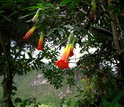
The flowers of <em>Brugmansia sanguinea</em> are a vibrant blood-red, hence the plant's name.
The flowers of Brugmansia sanguinea are a vibrant blood-red, hence the plant's name.
Credit and Larger Version
Microscope view of a red <em>Calibrachoa</em> flower's petal. The plant is also known as million bells.
Microscope view of a red Calibrachoa flower's petal.
Credit and Larger Version
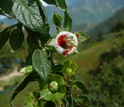
The flowers of the <em>Jaltomata</em> plant are awash in red nectar at the bases of their flowers.
The flowers of the Jaltomata plant are awash in red nectar at the bases of their flowers.
Credit and Larger Version
Researchers found extensive color variation in this single flower species in Bolivia.
Credit and Larger Versión
the National Science Foundation(NSF)
Guillermo Gonzalo Sánchez Achutegui
ayabaca@gmail.com
ayabaca@hotmail.com
ayabaca@yahoo.com
Inscríbete en el Foro del blog y participa : A Vuelo De Un Quinde - El Foro!

sábado, 10 de septiembre de 2016

NSF: Discovery .- Seasonality of bird migration responds to environmental cues, scientists show.- Los científicos muestran que la estacionalidad de la migración de las aves responde a señales del medio ambiente

http://www.nsf.gov/discoveries/disc_summ.jsp?cntn_id=189610&WT.mc_id=USNSF_51&WT.mc_ev=click
La estacionalidad de la migración de las aves está cambiando en respuesta al cambio climático. Como resultado, las aves en los Estados Unidos están llegando a sus lugares de cría del norte a principios de la primavera - y pueden partirán más tarde en el otoño.
Los científicos apoyados por la National Science Foundation (NSF) realizan el seguimiento de  la migración y el  descubrimiento de desplazamiento gracias a la información agregada de dos fuentes: los datos de teledetección radar de vigilancia de tiempo y los datos basados en tierra recogidas en las bases de datos de ciencia ciudadana.

Data from weather radar and ground-based citizen science projects yield new insights
Biologists and atmospheric scientists track migrating birds like this summer tanager.

Biologists and atmospheric scientists track migrating birds like this summer tanager.

September 6, 2016
The seasonality of bird migration is shifting in response to climate change. As a result, birds in the United States are arriving at their northern breeding grounds earlier in spring -- and may be departing later in fall.
Scientists supported by the National Science Foundation (NSF) made the migration shift discovery thanks to information aggregated from two sources: remote-sensing data from weather surveillance radar and ground-based data collected in citizen science databases.
 
Biology meets atmospheric science
 
Working with atmospheric scientists, biologists demonstrated that the combination of data yielded robust migration timing indexes.
The indexes reflect the movements of millions of birds of many species over large regions, says biologist Jeff Kelly of the University of Oklahoma, lead author of a paper describing the team's results in the journal Ecosphere, published by the Ecological Society of America.
"Understanding which environmental cues link migration timing to patterns of global change is key to forecasting future responses," Kelly said. "Novel data sources like the weather surveillance radar network and citizen science databases are enabling development of an index of migration phenology [cyclic or seasonal natural phenomena] that can be used to answer this question in future studies."
The combination of two novel data sources provides new insights into how, and when, migrations occur.
"These scientists combined citizen science observations with data from radar, satellites and weather predictions to understand the cues birds use in their migrations across continents," says Liz Blood, program director in NSF's Division of Environmental Biology, which funded the research through NSF's MacroSystems Biology Program. "The results show that birds migrate in time with temperature changes and with seasonal changes in the landscape."
 
Migration cues
 
Researchers say the migration indexes can help address a gap in scientists' knowledge about the cues birds use to fine-tune migration timing in response to climate.
They found that temperature likely plays a role in how migrating birds make adjustments in their timing and their routes. The researchers' findings also contradict the idea that a commonly used index of vegetation greenness is a useful cue for migration timing in some locales.
Results of the study, conducted in the eastern United States, expand on more traditional measures of migration timing based on a few individuals of a particular species.
Collaborators on the research include Todd Fagin and Eli Bridge of the Oklahoma Biological Survey; Kyle Horton, Phillip Chilson and Kirsten de Beurs of the University of Oklahoma; and Phillip Stepanian, formerly with the Advanced Radar Research Center.
The U.S. Department of Agriculture provided additional funding for the project.
-- Cheryl Dybas, NSF (703) 292-7734 cdybas@nsf.gov
-- Jana Smith, University of Oklahoma (405) 325-1322 jana.smith@ou.edu
-- Liza Lester, Ecological Society of America (202) 833-8773 llester@esa.org


Investigators Eli Bridge
Le Gruenwald
Jeffrey Kelly
Phillip Chilson
Valliappa Lakshmanan
Related Institutions/Organizations University of Oklahoma Norman Campus
Total Grants $301,641
Related WebsitesScientists track nighttime bird migration using weather radar:
Prothonotary warblers may migrate over distances as great as 5,000 miles or more.
Credit and Larger Version
Indigo buntings often migrate by night, using the stars to navigate.
Credit and Larger Version
Black-throated green warblers migrate south to Mexico, Central America, West Indies and Florida.
Credit and Larger Version
Chestnut-sided warblers migrate mostly by night. Peak fall migration is in September.
Credit and Larger Version
Green herons may migrate from the northern U.S. as far south as Panama and South America.
Credit and Larger Version
The National Science Foundation (NSF)
Guillermo Gonzalo Sánchez Achutegui
ayabaca@gmail.com
ayabaca@hotmail.com
ayabaca@yahoo.com
Inscríbete en el Foro del blog y participa : A Vuelo De Un Quinde - El Foro!

domingo, 19 de junio de 2016

NSF: Biophysics fights cancer .- La Biofísica combate el cáncer

¿Por qué los tratamientos de cáncer se vuelven ineficaces ha confundido a los clínicos a largo y es la principal razón detrás de letalidad del cáncer?. Este proyecto va a caracterizar la red molecular que causa esta resistencia a los medicamentos. Los investigadores se centrarán en dos tipos de cáncer: cáncer de mama estrógeno positivo y el melanoma, el cáncer de piel más letal. Utilizando el análisis cuantitativo de la red, que van a trabajar para identificar las redes responsables de la resistencia a los medicamentos y explorar formas de evitar que la resistencia a nivel molecular. Si tiene éxito, la teoría de probabilidades se podría utilizar para mejorar los tratamientos para otros tipos de cáncer que se enfrentan a problemas de resistencia a los medicamentos....."
Lea mas abajo adjunto.......
http://www.nsf.gov/news/news_summ.jsp?cntn_id=138782&WT.mc_id=USNSF_51&WT.mc_ev=click

Novel approaches aim to leap forward cancer research, treatment

colon cancer cells
Theoretical physics brings an important perspective to studying biological issues.
Credit and Larger Version
June 13, 2016
Whether it focuses on determining why certain cancers develop drug resistance, finding a way to improve individual's immune systems or better understanding cancer cell evolution, fundamental scientific research will "stand up to cancer" with three new awards from the National Science Foundation (NSF). The awards arose through an innovative public-private partnership between NSF, Stand Up To Cancer (SU2C), the V Foundation for Cancer Research, The Lustgarten Foundation, Breast Cancer Research Foundation and Bristol-Myers Squibb.
"These research projects are quite dissimilar, but they have two things in common," said Fleming Crim, assistant director for NSF's Mathematical and Physical Sciences Directorate. "They challenge what we know and don't know about cancer at the most fundamental level, and they are attempting to tackle some of the most pressing issues in cancer treatment today."
Announced in September 2014, the partnership committed $5 million towards transformational, theoretical, biophysical approaches to cancer, with the potential for significant impact on basic science research and potentially on treatment.
"This is an example of how biology, physical sciences and mathematics can work together to address complex problems in biology," said James Olds, assistant director for NSF's Biological Sciences Directorate.
"Theoretical physics brings an important perspective to studying biological issues," said Krastan Blagoev, program director of NSF's Physics of Living System Program, who worked on building the unique public-private partnership. "Using an interdisciplinary approach to living systems helps researchers solve some basic science problems that stop us from making further progress in understanding and treating cancer."
"Stand Up To Cancer has demonstrated we can accelerate new effective cancer treatments through collaborations across institutions and research disciplines, getting researchers out of their silos," said SU2C Scientific Advisory Chairperson Phillip A. Sharp, professor at the Koch Institute for Integrative Cancer Research at the Massachusetts Institute of Technology. "With these convergence teams, SU2C will advance translational cancer research beyond the long-held view that scientists 'discover,' engineers 'invent,' and entrepreneurs 'innovate.'"
In February 2015, SU2C held a workshop to follow up on the cancer partnership announcement. The workshop brought together leading clinicians and theoretical physicists to hone in on transformative approaches with the potential to catapult cancer research forward.
The three awards are:
 
Rational design of anticancer drug combinations with dynamic multidimensional input
 
Réka Albert, Penn State University; Eric Siggia, Rockefeller University; José Baselga, Memorial Sloan Kettering Cancer Center; Levi Garraway, Dana-Farber/Harvard Cancer Center; and Raul Rabadan, Columbia University
Why cancer treatments become ineffective has long confounded clinicians and is the main reason behind cancer's deadliness. This project will characterize the molecular network that causes this drug resistance. The researchers will focus on two cancers: estrogen-positive breast cancer and melanoma, the most lethal skin cancer. Using quantitative network analysis, they will work to identify networks responsible for drug resistance and explore ways to bypass that resistance at a molecular level. If successful, the theory could likely be used to improve treatments for other cancers that face drug resistance issues.
 
Liberating T-cell mediated immunity to pancreatic cáncer
 
Jeffrey Drebin, University of Pennsylvania; Curtis Callan, Princeton University; David Ting, Massachusetts General Hospital and Harvard Medical School
A promising recent approach to cancer treatment is immunotherapy, which works by stimulating patients' own immune systems to fight tumor cells. Unfortunately, this approach has had little success in pancreatic cancer. Mechanisms that prevent an effective immune response include the release of immune-suppressing molecules by the tumor environment, as well as the physical barrier in the tissue preventing immune cells from reaching their target. The heart of this proposal uses theoretical modeling and statistical understanding of T-cell repertoires to design immunotherapy treatment strategies that can be tested in clinical settings.
 
The genetic, epigenetic and immunological underpinnings of cancer evolution through treatment
 
Ross Levine, Memorial Sloan Kettering Cancer Center; Daniel Fisher, Stanford University; Harlan Robins, Fred Hutchinson Cancer Research Center; Jeffrey Engelman, Massachusetts General Hospital; Steven Altschuler, University of California, San Francisco; and Chang Chan, Rutgers University
A single cancerous tumor can contain many different kinds of mutations in different cells, which affect patient prognosis: a higher degree of heterogeneity (cell variation) in a tumor corresponds to a lower survival rate. In this project, oncologists and physicists will study evolutionary dynamics leading to heterogeneity in cancer, focusing on acute myeloid leukemia and a specific type of non-small cell lung cancer. They hope to develop a quantitative framework from science-based data mining to produce more accurate survival forecasts that facilitate better treatment decisions.
-NSF-
Media Contacts Ivy F. Kupec, NSF, (703) 292-8796,
 ikupec@nsf.gov
Jessica Arriens, NSF, (703) 292-2243,
Program Contacts Krastan B. Blagoev, NSF, (703) 292-4666,
Related WebsitesStand Up to Cancer:
The National Science Foundation (NSF) is an independent federal agency that supports fundamental research and education across all fields of science and engineering. In fiscal year (FY) 2016, its budget is $7.5 billion. NSF funds reach all 50 states through grants to nearly 2,000 colleges, universities and other institutions. Each year, NSF receives more than 48,000 competitive proposals for funding and makes about 12,000 new funding awards. NSF also awards about $626 million in professional and service contracts yearly.
Useful NSF Web Sites:
NSF Home Page:
http://www.nsf.gov
NSF News:
http://www.nsf.gov/news/
For the News Media:
http://www.nsf.gov/news/newsroom.jsp
Science and Engineering Statistics:
 http://www.nsf.gov/statistics/
Awards Searches:
The National Science Foundation (NSF)
Guillermo Gonzalo Sánchez Achutegui
ayabaca@gmail.com
ayabaca@hotmail.com
ayabaca@yahoo.com
Inscríbete en el Foro del blog y participa : A Vuelo De Un Quinde - El Foro!

miércoles, 4 de mayo de 2016

NSF: Researchers find that Earth may be home to 1 trillion species .- Los investigadores han descubierto que la Tierra puede ser el hogar de 1 billón de especies

Hola amigos: A VUELO DE UN QUINDE EL BLOG., Tierra podría contener cerca de 1 billón de especies, con sólo una milésima parte de un 1 por ciento ahora identificada, según los resultados de un nuevo estudio.
La estimación, basada en leyes de escala universales aplicadas a grandes conjuntos de datos, aparece hoy en las revista Proceedings de la Academia Nacional de Ciencias. Los autores del informe son Jay Lennon y Kenneth Locey de la Universidad de Indiana en Bloomington, Indiana.
Los científicos combinaron microbianas, vegetales y animales conjuntos de datos procedentes de fuentes científicas gubernamental, académico y ciudadano, lo que resulta en la mayor recopilación de este tipo.
En conjunto, estos datos representan más de 5,6 millones de especies microscópicas y no microscópicas de 35.000 localidades a través de todos los océanos y los continentes del mundo, excepto en la Antártida.
More information....
 
Largest analysis of microbial data reveals that 99.999 percent of all species remain undiscovered

Grand Prismatic Spring in Yellowstone
Grand Prismatic Spring in Yellowstone; such hot pools often bubble with undiscovered microbes.
Credit and Larger Version
May 2, 2016
Earth could contain nearly 1 trillion species, with only one-thousandth of 1 percent now identified, according to the results of a new study.
The estimate, based on universal scaling laws applied to large datasets, appears today in the journal Proceedings of the National Academy of Sciences. The report's authors are Jay Lennon and Kenneth Locey of Indiana University in Bloomington, Indiana.
The scientists combined microbial, plant and animal datasets from government, academic and citizen science sources, resulting in the largest compilation of its kind.
Altogether, these data represent more than 5.6 million microscopic and non-microscopic species from 35,000 locations across all the world's oceans and continents, except Antarctica.
 
Great challenge in biology
 
"Estimating the number of species on Earth is among the great challenges in biology," Lennon said. "Our study combines the largest available datasets with ecological models and new ecological rules for how biodiversity relates to abundance. This gave us a new and rigorous estimate for the number of microbial species on Earth."
He added that "until recently, we've lacked the tools to truly estimate the number of microbial species in the natural environment. The advent of new genetic sequencing technology provides a large pool of new information."
The work is funded by the National Science Foundation (NSF) Dimensions of Biodiversity program, an effort to transform our understanding of the scope of life on Earth by filling major gaps in knowledge of the planet's biodiversity.
"This research offers a view of the extensive diversity of microbes on Earth," said Simon Malcomber, director of the Dimensions of Biodiversity program. "It also highlights how much of that diversity still remains to be discovered and described."
 
Estimating numbers of microbial species
 
Microbial species are forms of life too small to be seen with the naked eye, including single-celled organisms such as bacteria and archaea, as well as certain fungi.
Many earlier attempts to estimate the number of species on Earth ignored microorganisms or were informed by older datasets based on biased techniques or questionable extrapolations, Lennon said.
"Older estimates were based on efforts that dramatically under-sampled the diversity of microorganisms," he added. "Before high-throughput genetic sequencing, scientists characterized diversity based on 100 individuals, when we know that a gram of soil contains up to a billion organisms, and the total number on Earth is more than 20 orders of magnitude greater."
The realization that microorganisms were significantly under-sampled caused an explosion in new microbial sampling efforts over the past several years.
 
Extensive sampling efforts
 
The study's inventory of data sources includes 20,376 sampling efforts on bacteria, archaea and microscopic fungi, as well as 14,862 sampling efforts on communities of trees, birds and mammals.
"A massive amount of data has been collected from these surveys," said Locey. "Yet few have tried to pull together all the data to test big questions."
He added that the scientists "suspected that aspects of biodiversity, like the number of species on Earth, would scale with the abundance of individual organisms. After analyzing a massive amount of data, we observed simple but powerful trends in how biodiversity changes across scales of abundance."
 
Scaling laws for all species
 
The researchers found that the abundance of the most dominant species scales with the total number of individuals across 30 orders of magnitude, "making it the most expansive scaling law in biology," says Lennon.
Scaling laws, like that discovered by the scientists, are known to accurately predict species numbers for plant and animal communities. For example, the number of species scales with the area of a landscape.
"Until now, we haven't known whether aspects of biodiversity scale with something as simple as the abundance of organisms," Locey said. "As it turns out, the relationships are not only simple but powerful, resulting in our estimate of upward of one trillion species."
The study's results also suggest that identifying every microbial species on Earth presents a huge challenge.
"Of those species cataloged, only about 10,000 have ever been grown in a lab, and fewer than 100,000 have classified genetic sequences," Lennon said. "Our results show that this leaves 100,000 times more microorganisms awaiting discovery -- and 100 million to be fully explored.
"Microbial biodiversity, it appears, is greater than we ever imagined."
-NSF-

Media Contacts Cheryl Dybas, NSF, (703) 292-7734,
 cdybas@nsf.gov
Kevin Fryling, Indiana University, (812) 856-2988,
 kfryling@iu.edu

Related WebsitesLife on Earth: National Science Foundation awards $23 million for studies of planet's biodiversity: https://www.nsf.gov/news/news_summ.jsp?cntn_id=136222
New insights into coral health hidden in reefs' microbiomes: http://www.nsf.gov/discoveries/disc_summ.jsp?cntn_id=138157
Earth Day is on the horizon. But is 'greener' always better?: http://nsf.gov/discoveries/disc_summ.jsp?cntn_id=134374&org=NSF
Staple of recipe favorites--the tomato--reveals processes that maintain biodiversity: http://nsf.gov/discoveries/disc_summ.jsp?cntn_id=129676
A Stream Is a Stream Is a Stream: Or Is It?: http://www.nsf.gov/discoveries/disc_summ.jsp?cntn_id=123855&org=NSF


The National Science Foundation (NSF) is an independent federal agency that supports fundamental research and education across all fields of science and engineering. In fiscal year (FY) 2016, its budget is $7.5 billion. NSF funds reach all 50 states through grants to nearly 2,000 colleges, universities and other institutions. Each year, NSF receives more than 48,000 competitive proposals for funding and makes about 12,000 new funding awards. NSF also awards about $626 million in professional and service contracts yearly.
 Get News Updates by Email 
Useful NSF Web Sites:
NSF Home Page:
 http://www.nsf.gov
NSF News:
http://www.nsf.gov/news/
For the News Media:
 http://www.nsf.gov/news/newsroom.jsp
Science and Engineering Statistics:
http://www.nsf.gov/statistics/
Awards Searches:
 http://www.nsf.gov/awardsearch/
 microbes forming a mat at Octopus Geyser in Yellowstone.
Heat-loving microbes form extensive mats at Octopus Geyser in Yellowstone.
Credit and Larger Version
vegetation under water
The oceans' surface waters harbor vast numbers of life-sustaining microbes.
Credit and Larger Version
microscopic view of bacteria
Bacteria, like these from a freshwater lake, are the most abundant organisms on the planet.
Credit and Larger Version
microbes in a substance in a petri dish
Soil is one of Earth's largest reservoirs of microbial diversity.
Credit and Larger Version
man and woman with hiking gear in a forest
Data collected by field biologists were used to understand patterns of microbial biodiversity.
Credit and Larger Version
The National Science Foundation (NSF)
Guillermo Gonzalo Sánchez Achutegui
ayabaca@gmail.com
ayabaca@hotmail.com
ayabaca@yahoo.com
Inscríbete en el Foro del blog y participa : A Vuelo De Un Quinde - El Foro!

domingo, 14 de septiembre de 2014

nsf.gov - National Science Foundation - A river runs through it: U.S. cities' waterways show consistent patterns of evolution

Urban waters record salt in our food, cement in our sidewalks
Stream restoration involving reconnection of an urban waterway near Baltimore with its floodplain.
Credit and Larger Version
September 10, 2014
The following is part sixteen in a series on the National Science Foundation's Long-Term Ecological Research (LTER) Network. Visit parts one, two, three, four, five, six, seven, eight, nine, ten, eleven, twelve, thirteen, fourteen, and fifteen.
Boston and Baltimore, San Juan and Tucson. What do they have in common?
The cities' ecosystems, especially their waterways, are all threatened by road salt, dissolved concrete, sewage overflows and algae blooms, say urban ecologists publishing a series of 14 papers this week in a special issue of the journal Biogeochemistry.
The issue is edited by University of Maryland geologist Sujay Kaushal and University of New Hampshire ecologists William McDowell and Wilfred Wollheim.
The studies were funded by the National Science Foundation (NSF), with much of the research conducted at NSF's Long-Term Ecological Research (LTER) sites in Baltimore, Md.; Plum Island, Mass.; and Luquillo, Puerto Rico, among others.
NSF's Critical Zone Observatory(CZO) Network, through the Luquillo CZO site, also supported the research.
"This synthesis brings the power of evolutionary biology to understanding ecosystem processes in urban environments, some of the most rapidly changing habitats globally," says Saran Twombly, NSF LTER program director.
"Merging evolutionary biology with ecosystem sciences is an exciting frontier for long-term ecological research, beginning with this issue on biogeochemical cycles."
 
Urban research from Boston to Baltimore, San Juan to Tucson
 
In the journal papers, scientists from across the United States review the effects of human actions on the geology, chemistry and biology of urban ecosystems.
Urban landscapes are more complex than they seem, but from coast to coast may work in surprisingly similar ways, says Kaushal.
"Urban ecosystems can change relatively quickly in response to human activities," he says. "These changes can result in rapid losses of ecosystem functions, like flood protection and pollution filtration--or can result in progress toward ecological health and productivity. The difference depends on how they are managed."
In an overview article, Kaushal, McDowell and Wollheim point out the factors that affect the evolution of urban ecosystems. For example, the streams, lakes and land surfaces that make up cities' watersheds show consistent patterns of change over time.
 
Waterways need a low-salt diet
 
Urban waters are becoming saltier, partly due to road salt used for de-icing, and partly because the salt people eat ends up in urban streams.
Excess salt in the human diet is excreted in human waste and captured by sewer systems. Crumbling sewage pipes leak this chloride-laden waste into groundwater, where it eventually mingles with surface water.
The researchers propose that one way to track the spread of urbanization is by looking at the chloride content of cities' freshwater rivers and streams.
 
Dissolved concrete: gone but not forgotten
 
City streams and rivers carry the chemical signature of dissolving concrete, a major building material in urban areas since the mid-20th century.
Most concrete contains cement made of powdered limestone, which weathers easily when exposed to acid rain or chemicals.
The scientists found that many cities now have their own human-made geology: concrete surfaces that mimic a type of limestone called karst.
This "urban karst" is constantly breaking down into its constituent elements, including calcium and carbonate minerals, which flow into urban streams and affect their pH, or acidity, and therefore their ability to sustain aquatic life.
 
Urban hotspots: sewage overflows, auto exhaust degrade rivers and streams
 
Urban ecosystems develop "hot spots," such as road crossings where automobile exhaust, litter, de-icing salt and other human-made substances may alter downstream water quality.
They also experience what the researchers call "hot moments," such as heavy rainstorms that wash large pulses of organic matter and manufactured chemicals into streams, or cause sewage overflows. These hot moments can suddenly change water chemistry in ways that shock natural systems.
 
Where does one watershed end and another begin?
 
The networks that supply cities with water--including storm drains, sewer pipes, roofs and gutters--evolve and expand over time, leaking groundwater and wastewater that humans bring into the area.
Boundaries between nearby cities' watersheds are blurring, making it hard to define, study and manage them.
 
Hope for the future
 
"There's a lot of good urban restoration work underway," says McDowell, "but often it only has a short-term effect, because urban watersheds follow their own evolutionary paths.
"For example, utility managers may build a stormwater retention pond to capture polluted runoff, such as excess nitrogen. And it may work very well for a few years. Then it fills in with sediment and becomes a wetland, and it's no longer functioning the way engineers designed it to work."
Adds Kaushal, "We hope scientists, managers and citizens will work together to make decisions that allow for what we call 'urban evolution'--that is, changes in the ecology of cities over time.
"If we do that, we can find effective ways to understand and manage urban ecosystems toward sustainability."
Copies of the 14 papers in the special issue are available free-of-charge for 30 days at the Biogeochemistry website.
-- Cheryl Dybas, NSF (703) 292-7734 cdybas@nsf.gov
-- Heather Dewar, University of Maryland (301) 405-9267
  hdewar@umd.edu
Related WebsitesNSF Grant: Baltimore Ecosystem Study Phase III: Adaptive Processes in the Baltimore Socio-Ecological System from the Sanitary to the Sustainable City: http://www.nsf.gov/awardsearch/showAward?AWD_ID=1027188&HistoricalAwards=false
NSF Grant: LTER-PIE: Interactions Between External Drivers, Humans and Ecosystems in Shaping Ecological Process in a Mosaic of Coastal Landscapes and Estuarine Seascapes: http://www.nsf.gov/awardsearch/showAward?AWD_ID=1238212&HistoricalAwards=false
NSF Grant: Luquillo CZO: The role of hot spots and hot moments in tropical landscape evolution and functioning of the critical zone:
http://www.nsf.gov/awardsearch/showAward?AWD_ID=1331841&HistoricalAwards=false
NSF Publication: Discoveries in Long-Term Ecological Research: http://www.nsf.gov/pubs/2013/nsf13083/nsf13083.pdf
NSF Publication: Where Life Meets Rock: Discoveries in the Critical Zone: http://www.nsf.gov/pubs/2013/nsf13112/nsf13112.pdf
Urban landscapes change with human activities such as creation of stormwater ponds.
Credit and Larger Version
A Maryland State Highway Administration loader moves salt stored for use in winter.
Credit and Larger Version
Aging sewer lines and erosion of stream banks contribute to water pollution in cities.
Credit and Larger Version
Algae blooms often occur in urban streams; excess nutrients lead to the blooms.
Credit and Larger Version
Extreme heat events affect urban ecosystems in cities such as Phoenix.
Credit and Larger Versión

the National Science Foundation (NSF),
Guillermo Gonzalo Sánchez Achutegui
ayabaca@gmail.com
ayabaca@hotmail.com
ayabaca@yahoo.com
Inscríbete en el Foro del blog y participa : A Vuelo De Un Quinde - El Foro!

lunes, 24 de febrero de 2014

nsf.gov - National Science Foundation - Seed dispersal study shows value of conservation corridors

Ecologists study how wind moves seeds through longleaf pines

plant with flowers
Seeds and flowers of the wind-dispersed species Solidago odora, part of the corridor experiment.
Credit and Larger Version
February 24, 2014
Field ecologists go to great lengths to get data. Radio collars and automatic video cameras are among their tools for documenting the natural world.
So when a group of ecologists set out to see how wind moves seeds through isolated patches of habitat carved into a longleaf pine plantation, they came up with a novel way of addressing this question. They twisted colored yarn to create mock seeds that would drift with the wind much like native seeds.
The scientists discovered that both wind and the corridors between the patches of habitat matter to seed dispersal in the longleaf pine forest.
Their experimental "seeds" were dusted with fluorescent powder and inserted into custom-made boxes mounted on poles, then released as the scientists monitored local wind conditions.
That night, the field crew returned for a black-light treasure hunt, locating more than 80 percent of the fake seeds, which glowed under the ultraviolet light.
The paths of these glowing seeds were matched with output from a computer model to produce the first accurate picture of how wind moves seeds through corridors linking two patches of habitat.
The study results are published in a paper in this week's issue of the journal Proceedings of the National Academy of Sciences (PNAS).
Conservation biologists have long discussed building conservation corridors to link isolated patches of protected land.
"Understanding the conservation impact of corridors is at the cutting edge of conservation," says lead paper author Ellen Damschen, a zoologist at the University of Wisconsin-Madison.
Corridors are designed to improve conditions for uncommon native species living in separated habitats.
Small populations in these "islands" of habitat may be killed by storms or disease. They may lack genetic diversity and be prone to inbreeding. And they may be unable to reach new habitat.
"It makes intuitive sense that these connections could foster genetic and biological diversity," says Damschen. "But there has been little scientific evidence for if and how they work."
Most of the studies have involved animals, she adds, even though plants provide the basic energy and structure to land ecosystems.
Wind matters for the movement of seeds and whole organisms, Damschen says. "In many open habitats, more than one-third of plants are wind dispersed, but there are also insects, spiders, pathogens and fungi that move on the wind."
The experiment, supported by the National Science Foundation (NSF) and the U.S. Forest Service, began in 2000 with the creation of eight groups of patches at the Savannah River Site, a large holding of the U.S. Department of Energy. Each set of patches was built at a different orientation to prevailing winds.
"Relatively few researchers have investigated the effects of habitat configuration on wind-dispersed species," says Betsy Von Holle, a program director in NSF's Division of Environmental Biology, which funded the research. "This study demonstrates that influences on wind-dispersed species are more complex than previously thought."
A research group of meteorologists and ecologists found that corridors increased the movement of wind and of their glowing artificial seeds, echoing the results of a computer model developed by Gil Bohrer at The Ohio State University, a paper co-author.
And when Damschen and colleagues counted newly dispersed plants over the 12-year experiment, they found that a corridor linking two patches of land indeed promotes the diversity of plants dispersed by wind - especially if the corridor is oriented roughly parallel to the prevailing winds.
Both the data and the model showed that wind speeds up in certain areas of the patches, and that a strong vertical air movement is present.
"Uplift is important because the wind tends to be faster higher above the ground," Damschen says, "and uplift can lead to long-distance dispersal, which is significant for moving plants around the landscape."
That's why the study matters for conservation biology, Damschen says.
"We predicted that corridors in line with the dominant winds would move more species, and this is what we found. Wind alignment matters for species diversity in conservation areas."
The results are especially relevant to threatened Midwestern ecosystems like grasslands, prairies and savannas, where big bluestem and milkweed are two of many native plants that loft their seeds on the wind.
"In conservation science, it is often assumed that wind-dispersed seeds can go everywhere, but that's not true," Damschen says.
"Wind direction, and the shape of the habitat, control where these seeds go.
"While this adds another factor to consider in management of natural areas, the information is on the table so we can make better decisions about how to achieve management goals."
Other co-authors of the paper are: Dirk Baker of the University of Wisconsin-Madison; Ran Nathan of The Hebrew University of Jerusalem; John Orrock of the University of Wisconsin-Madison; Jay Turner of Washington University in St. Louis; Lars Brudvig of Michigan State University; Nick Haddad of North Carolina State University; Doug Levey of the University of Florida, Gainesville; and Joshua Tewksbury of the University of Washington.
-NSF-

Media Contacts Cheryl Dybas, NSF, (703) 292-7734, cdybas@nsf.gov
David Tenenbaum, U. Wisconsin-Madison, (608) 265-8549,

Related WebsitesConservation Corridor Digests:

The National Science Foundation (NSF) is an independent federal agency that supports fundamental research and education across all fields of science and engineering. In fiscal year (FY) 2014, its budget is $7.2 billion. NSF funds reach all 50 states through grants to nearly 2,000 colleges, universities and other institutions. Each year, NSF receives about 50,000 competitive requests for funding, and makes about 11,500 new funding awards. NSF also awards about $593 million in professional and service contracts yearly.
Useful NSF Web Sites:
NSF Home Page: http://www.nsf.gov
NSF News: http://www.nsf.gov/news/
For the News Media: http://www.nsf.gov/news/newsroom.jsp
Science and Engineering Statistics: http://www.nsf.gov/statistics/
Awards Searches: http://www.nsf.gov/awardsearch/
Aerial view of a conservation corridor experiment with four patches of habitat in a pine forest.
Aerial view of a conservation corridor experiment shows four patches of habitat in a pine forest.
Credit and Larger Version
Meteorological tower next to a forest
Meteorological towers measured three-dimensional wind speed as part of the study.
Credit and Larger Version
Glow-in-the-dark seeds on the ground in a forest
Glow-in-the-dark seeds were created to determine whether corridors affect where seeds go.
Credit and Larger Version
Dirk Baker releasing seeds near a forest
Dirk Baker releases seeds that glow in the dark; seeds are retrieved at night with a black light.
Credit and Larger Version
 The National Science Foundation (NSF)
Guillermo Gonzalo Sánchez Achutegui
ayabaca@gmail.com
ayabaca@hotmail.com
ayabaca@yahoo.com

miércoles, 5 de febrero de 2014

nsf.gov - National Science Foundation - Data-intensive ecology needed to understand what makes the biosphere tick

Journal special issue reports new findings on macrosystems biology: biological sciences writ large
cover of the special issue of Frontiers in Ecology journal
This special issue highlights research conducted through NSF's MacroSystems Biology program.
Credit and Larger Version
February 3, 2014
Have you looked closely at a local pond, meadow or forest--or at nature in your suburb or city--and observed changes in it over time? That's exactly what scientists are trying to do on a larger, regional to continental scale--a macrosystems biology scale.
Macrosystems biology might be called "biological sciences writ large."
Scientists funded by the National Science Foundation's (NSF) MacroSystems Biology Program are working to better detect, understand and predict the effects of climate and land-use change on organisms and ecosystems at regional to continental scales.
The researchers have published new results in this month's special issue of the journal Frontiers in Ecology and the Environment, published by the Ecological Society of America.
The ecologists are asking questions such as: How are regional-scale processes in plant and animal invasions, and in disease transmission, shaped by continent-wide environmental and land-use patterns? How can continent-wide data lead to better forecasts of disease outbreaks? How do invasive species and infectious diseases arrive at new locations, sometimes across great distances?
"Scientists conducting macrosystems biology research are working to find answers to these complex questions," says John Wingfield, NSF assistant director for Biological Sciences.
"Current knowledge of the biosphere is largely based on research in small plots of land and on satellite-scale remote sensing," says Wingfield. "But the insights needed to answer critically important questions about the biosphere's future can't always be extrapolated from such studies. They require new approaches."
Now macrosystems biologists are entering a new realm: that of big data.
"Ecologists can no longer sample and study just one or even a handful of ecosystems," says Patricia Soranno, a scientist at Michigan State University and co-editor of the special issue with David Schimel of the California Institute of Technology's Jet Propulsion Lab.
"We also need to study lots of ecosystems and use lots of data to tackle many environmental problems--such as climate change, land-use change and invasive species--because such problems exist at larger scales than other problems we have faced in the past."
Soranno and Schimel worked with many researchers, all funded by NSF's MacroSystems Biology Program, to produce the special issue.
"Data-intensive science is being touted as a new way to do science of any kind, and we think it has a lot to offer ecology," says Soranno.
"Traditionally, ecologists are trained to study and take samples from the field in places like forests, grasslands or wetlands, and measure things in the lab.
"In the future, many ecologists will also need to be trained in advanced computational methods that will allow them to study complex systems using big datasets."
Researchers have accumulated decades and decades of data. The sources include small, individual projects by university biologists; government agency scientists monitoring natural resources; terabytes of data from new or existing field sensors and observation networks; and millions of high-definition satellite images.
Easier access to supercomputers is paired with a near-endless deluge of data. Analyses that once took months or years can now be conducted in hours or days. Scientists also have access to the latest statistical modeling and geographic information system tools, says Soranno.
"Ten years ago, it would have been much harder to take this approach," she says. "We didn't have the intersection we have today of great tools, volumes of data, sufficient computing power and a growing understanding of natural systems at broad scales."
The makeup of macrosystems biology research teams should reflect the demands of data-intensive ecology, these researchers believe. Groups should include database managers, data-mining experts, GIS professionals and others, they say.
"An important question we're facing is how ecologists can best solve many of today's top environmental problems, challenges that need a broad-scale approach," Soranno says.
"From the research that has already been conducted by macrosystems biologists, evidenced by the papers in this special issue, we think we're on the right path."
It's where science needs to go, say these papers' authors, to understand what makes Earth's biosphere tick.
The research papers in the special issue can be accessed online at the Frontiers in Ecology and the Environment website.
-NSF-
Media Contacts Cheryl Dybas, NSF, (703) 292-7734, cdybas@nsf.gov
Layne Cameron, MSU, (517) 353-8819, layne.cameron@cabs.msu.edu
Liza Lester, ESA, (202) 833-8773 x 211, llester@esa.org
Related Websites2013 NSF MacroSystems Biology Awards:
 http://www.nsf.gov/news/news_summ.jsp?cntn_id=129239
2011 NSF MacroSystems Biology Awards:
 http://www.nsf.gov/news/news_summ.jsp?org=NSF&cntn_id=121279&preview=false
Special Issue: Frontiers in Ecology and the Environment:
The National Science Foundation (NSF) is an independent federal agency that supports fundamental research and education across all fields of science and engineering. In fiscal year (FY) 2014, its budget is $7.2 billion. NSF funds reach all 50 states through grants to nearly 2,000 colleges, universities and other institutions. Each year, NSF receives about 50,000 competitive requests for funding, and makes about 11,500 new funding awards. NSF also awards about $593 million in professional and service contracts yearly.
Useful NSF Web Sites:
NSF Home Page: http://www.nsf.gov
NSF News: http://www.nsf.gov/news/
For the News Media: http://www.nsf.gov/news/newsroom.jsp
Science and Engineering Statistics: http://www.nsf.gov/statistics/
Awards Searches: http://www.nsf.gov/awardsearch/
screenshot from animation showing a sketch of a man working on a computer wired to the Earth
View Video
View an animation of ecology in a world of big data.
Credit and Larger Version
lake surrounded by trees
Thousands of lakes are being compared through a macrosystems biology grant from NSF.
Credit and Larger Version
image of  an urban landscape in USA
The ecological homogenization of urban America is the subject of an NSF macrosystems biology award.
Credit and Larger Version
man with laptop looking at a visualization of street trees.
Macrosystems biologists are entering the realm of "big data;" here a visualization of street trees.
Credit and Larger Version
aerial view of land with various uses
NSF-supported macrosystems biologists are studying agricultural landscapes in North Dakota.
Credit and Larger Version
river with muddy water meanderingt rhough vegetation
Macrosystems biologists are conducting research on the resilience of river basins.
Credit and Larger Version
 
The National Science Foundation (NSF)
Guillermo Gonzalo Sánchez Achutegui
ayabaca@gmail.com
ayabaca@hotmail.com
ayabaca@yahoo.com
Inscríbete en el Foro del blog y participa : A Vuelo De Un Quinde - El Foro!

Mi lista de blogs