Mostrando entradas con la etiqueta Microbiology. Mostrar todas las entradas

lunes, 8 de mayo de 2017

The National Science Foundation (NSF) :Researchers uncover clue about how tiny microbes self-mutate .-Investigadores descubren pistas sobre cómo los minúsculos microbios se auto-mutan

https://www.nsf.gov/news/news_summ.jsp?cntn_id=191443&WT.mc_id=USNSF_51&WT.mc_ev=click

Discovery expands the tree of life
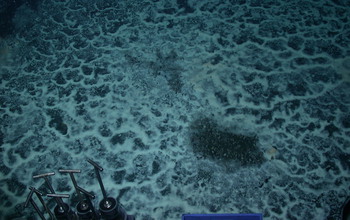
A seafloor hydrocarbon seep is one location where self-mutating microbes were previously found.

A seafloor hydrocarbon seep is one location where self-mutating microbes were previously found.
Credit and Larger Version

April 3, 2017
Researchers have discovered that previously unidentified microorganisms have a genetic element that enables them to self-mutate. What's more, these organisms are so plentiful they dramatically expand the diversity of the tree of life.
"This discovery reveals how rapid evolution happens in some of Earth's smallest and most common, yet least-known, microbes," said Mike Sieracki, program director in the National Science Foundation's (NSF) Division of Ocean Sciences and co-director of the Dimensions of Biodiversity program, which supported the research.
The new findings appear in the journal Nature Microbiology.
"These microorganisms can be 500 times smaller than bacteria like E. coli," said University of California, Santa Barbara (UCSB) microbiologist David Valentine. "They also do unusual things to some of the key genes used for identification, like splitting them into pieces small enough to render them invisible to scientific surveillance. This, combined with their ultra-small size, explains why they were missed until recently."
When analyzing the microorganisms' genomes, the researchers detected unusual genetic elements previously encountered in deep-sea samples. These genetic elements, called diversity-generating retroelements (DGRs), let microbes target their own genes for accelerated mutation.
Valentine and Blair Paul, also of UCSB, along with scientists from UC Berkeley, UC San Diego and UCLA, showed that DGRs are active in the lineages of certain recently discovered archaea -- primitive, single-celled, bacteria-like microorganisms.
The new biological classes appear to disproportionately harbor DGRs.
"There is still so much to discover about the microbial world, and this research provides a glimpse into the unique mechanisms that allow adaptation and responses to environmental stress," said Leslie Rissler, co-director of the NSF Dimensions of Biodiversity program.
The researchers analyzed more than 500 microbial genomes out of a pool of 2,500 and found that the majority of a certain class of archaea, as well as a yet-to-be-characterized categories of organisms closely related to bacteria, appear to have DGRs.
"If a microorganism shrinks down its genome and its cell to a very minimal lifestyle, it has to have mechanisms that allow it to evolve new capabilities but also to shed unneeded ones," Valentine said. The DGR mechanism might allow these organisms to do both.
"The finding that DGRs are relatively widespread in tiny bacteria is of great interest because these elements likely contribute to the incredible diversity of protein sequences found in these organisms," said co-author Jill Banfield of UC Berkeley.
While very little is known about how DGRs self-regulate, scientists are finding that the elements are able to guide and target specific sites for mutation. By examining DNA sequences from the genomes, the researchers saw recent mutation activity and observed the mechanism in action.
Four compounds known as nucleotides make up the basic structural unit of DNA: adenine, cytosine, guanine and thymine. The DGR mechanism targets only adenine to initiate a new mutation.
Nucleic acid synthesis and degradation require enzymes. In fact, researchers first discovered the mechanism from a biochemical artifact of an enzyme. A distinctive signature and location, as well as mutations in only the adenine nucleotide, are hallmarks of this mechanism.
Because so much is still unknown about the newly discovered microorganisms, scientists have yet to determine what the vast majority of what the microbes' proteins do.
"An important question is whether these mutations alter the proteins the genes encode, or if they are meant to interrupt the genes themselves and target them for removal from the genome," Paul said. "If this mechanism forces mutations that cause some genes to go defunct, it could be linked with evolutionary benefits."
-NSF-
Media ContactsCheryl Dybas, NSF, (703) 292-7734,
 cdybas@nsf.gov
Julie Cohen, UCSB, (805) 893-7220, 
The National Science Foundation (NSF) is an independent federal agency that supports fundamental research and education across all fields of science and engineering. In fiscal year (FY) 2016, its budget is $7.5 billion. NSF funds reach all 50 states through grants to nearly 2,000 colleges, universities and other institutions. Each year, NSF receives more than 48,000 competitive proposals for funding and makes about 12,000 new funding awards. NSF also awards about $626 million in professional and service contracts yearly.
Useful NSF Web Sites:
NSF Home Page: https://www.nsf.gov
NSF News: https://www.nsf.gov/news/
For the News Media: https://www.nsf.gov/news/newsroom.jsp
Science and Engineering Statistics: https://www.nsf.gov/statistics/
Awards Searches: https://www.nsf.gov/awardsearch/
Blair Paul samples a sediment core from the seafloor area where self-mutating organisms were found.
Credit and Larger Version
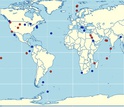
Geographic distribution of samples in which the new genetic abilities have been located.
Credit and Larger Version
Artistic rendering of DNA-encoded mutations.
Credit and Larger Version
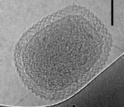
An ultra-small cell of a bacterium that may be a relative of the self-mutating microbes.
Credit and Larger Version
 The National Science Foundation (NSF)
Guillermo Gonzalo Sánchez Achutegui
ayabaca@gmail.com
ayabaca@hotmail.com
ayabaca@yahoo.com
Inscríbete en el Foro del blog y participa : A Vuelo De Un Quinde - El Foro!

jueves, 6 de septiembre de 2012

Science: New Research Suggests Bacteria Are Social Microorganisms

Hi My Friends: A VUELO DE UN QUINDE EL BLOG., MIT scientists: Bacteria plays different social roles, including attacking and defending other bacteria
 Scientist from the Massachusetts Institute of Technology, along with researchers from the French Research Institute for Exploitation of the Sea and Woods Hole Oceanographic Institution in Massachusetts, studied whether population-level organization exists for bacteria in the wild. They assembled an all-against-all battleground for 185 closely-related, but distinct, members of an ocean-based family of bacteria called Vibrionaceae and examined about 35,000 chemical reactions to determine whether some bacteria play different social roles.
Credit: Thinkstock

New Research Suggests Bacteria Are Social Microorganisms


New research from the Massachusetts Institute of Technology reveals that some unlikely subjects--bacteria--can have social structures similar to plants and animals.
The research shows that a few individuals in groups of closely related bacteria have the ability to produce chemical compounds that kill or slow the growth of other populations of bacteria in the environment, but not harm their own.
Published in the September 7 issue of the journal Science, the finding suggests that bacteria in the environment can play different social roles and that competition occurs not only among individual bacteria, but also among coexisting ecological populations.
The National Science Foundation, an independent federal agency that supports fundamental research and education across all fields of science and engineering, funded the research.
"Bacteria typically have been considered purely selfish organisms and bacterial populations as groups of clones," said Otto Cordero, a theoretical biologist and lead researcher on the paper. "This result contrasts with what we know about animal and plant populations, in which individuals can divide labors, perform different complementary roles and act synergistically."
Cordero and colleagues from MIT, along with researchers from the French Research Institute for Exploitation of the Sea and Woods Hole Oceanographic Institution in Massachusetts, studied whether population-level organization exists for bacteria in the wild.
They reasoned social structure can reduce conflict within populations of plants and animals and determine aggression towards competing biological populations. "Think of a population of lions in the Serengeti or a population of fish in a lake," said Cordero. But could the same be true for populations of bacteria?
"It is difficult to know what the environmental interactions really are, because microbes are too small for us to observe them in action," said Martin Polz, an organismic and evolutionary biologist at MIT and principal investigator for the Polz Microbial Ecology and Evolution Lab. "But our research provides strong evidence that antibiotics play a role in fending off competitors."
The researchers found evidence by looking at direct, aggressive competition between ecological populations of bacteria. They reconstructed a large network of bacterial fights--or antibiotic-mediated interactions--between bacteria from the ocean.
The scientists analyzed interactions called interference competitions, wherein bacteria produce antibiotics as a means of chemical warfare, to gain a competitive edge by directly hindering the survival of potential competitors.
This typically occurs when bacteria compete for the same portion of habitat.
The researchers assembled an all-against-all battleground for 185 closely-related, but distinct, members of an ocean-based family of bacteria called Vibrionaceae. They measured bacterial compounds produced by Vibrio isolates that directly antagonized other Vibrio isolates.
The framework provided Cordero and colleagues an opportunity to examine about 35,000 possible antibiotic-mediated interactions.
The researchers found that ecologically delineated bacterial populations act as socially cohesive units. "In these populations, a few individuals produced antibiotics to which closely related individuals in the population were resistant, whereas individuals in other populations were sensitive," said Cordero.
Thus, aggressive chemical reactions occur between, rather than within natural populations.
"It appears to be a group effort where individuals assume the role of antibiotic producers and hence defenders," said Polz. "Of course, competing groups could also produce antibiotics. It's a potential arms race out there."
"Those individuals that don't produce antibiotics can benefit from association with the producers, because they are resistant," added Cordero. "In other words, antibiotics have a social effect, because they can benefit the population as a whole."
The findings may help scientists answer questions about the natural role of antibiotics in human contexts.
"The research has the potential to bridge gaps in our understanding of the relationships between plants and humans and their non-disease- and disease-causing bacterial flora," said Robert Fleischmann, a program director in the Division of Biological Infrastructure for the National Science Foundation.
"We use antibiotics to kill pathogenic microbes, which cause harm to humans and animals," said Polz. "As an unfortunate side effect, this has lead to the widespread buildup of resistance, particularly in hospitals where pathogens and humans encounter each other often."
In addition, the results help scientists make sense of why closely related bacteria are so diverse in their gene content. Part of the answer, they say, is that the diversity allows the bacteria to play different social roles.
Social differentiation, for example, could mitigate the negative effects of two species competing for the same limiting resource--food or habitat, for instance--and generate population level behavior that emerges from the interaction between close relatives.
"Microbiology builds on the study of pure cultures," said Cordero, "that is genotypes isolated from their population. Our work shows that we need to start focusing on population based phenomena to better understand what these organisms are doing in the wild."
-NSF-
Media Contacts Bobbie Mixon, NSF (703) 292-8485 bmixon@nsf.gov
Program Contacts Robert Fleischmann, NSF (703) 292-7191 rfleisch@nsf.gov
Principal Investigators Otto Cordero, Massachusetts Institute of Technology ottoxcordero@gmail.com
Co-Investigators Martin Polz, Massachusetts Institute of Technology (617) 253-7128 mpolz@mit.edu
The National Science Foundation (NSF) is an independent federal agency that supports fundamental research and education across all fields of science and engineering. In fiscal year (FY) 2012, its budget is $7.0 billion. NSF funds reach all 50 states through grants to nearly 2,000 colleges, universities and other institutions. Each year, NSF receives over 50,000 competitive requests for funding, and makes about 11,000 new funding awards. NSF also awards nearly $420 million in professional and service contracts yearly. 

Useful NSF Web Sites:
NSF Home Page: http://www.nsf.gov
NSF News: http://www.nsf.gov/news/
For the News Media: http://www.nsf.gov/news/newsroom.jsp
Science and Engineering Statistics: http://www.nsf.gov/statistics/
Awards Searches: http://www.nsf.gov/awardsearch/
 The National Science Foundation (NSF) 
Guillermo Gonzalo Sánchez Achutegui
ayabaca@gmail.com
ayabaca@hotmail.com
ayabaca@yahoo.com
 Inscríbete en el Foro del blog y participa : A Vuelo De Un Quinde - El Foro!

Mi lista de blogs