Mostrando entradas con la etiqueta the National Science Foundation(NSF). Mostrar todas las entradas

viernes, 17 de febrero de 2017

the National Science Foundation's (NSF)Las rosas son rojas. Las violetas son azules. ¿Qué da a las flores esos tonos llamativos?: :

https://www.blogger.com/blogger.g?blogID=4869326791454944253#editor/target=post;postID=5673167643806913556

To find answers, scientists delve into the world of plant genetics
Knock-your-eyes-out red: A flowering plant native to Mexico called early jessamine or red cestrum.


Knock-your-eyes-out red: A flowering plant native to Mexico called early jessamine or red cestrum.
Credit and Larger Version

February 13, 2017
To solve the mystery of why roses are red and scientists are peering into the genes of plant petals.
"When you ask anyone how one flower is different from another, for most of us, color is the feature that first comes to mind," says evolutionary biologist Stacey Smith of the University of Colorado Boulder.
Most people don't think about why a flower is a particular color, but it's an important question for biologists, says Prosanta Chakrabarty, a program director in the National Science Foundation's (NSF) Division of Environmental Biology, which funds Smith's research.
Smith and her team are "looking at the genetics of flower colors, and at changes in those colors over time," Chakrabarty says.
 
It all comes down to biochemistry
 
In nature, flowers come in hues that span the rainbow.
"On a microscopic level, the colors come from the biochemical composition of petal cells," Smith says.
Pigments are the main chemicals responsible. Plants contain thousands of pigment compounds, all of which belong to three major groups: flavonoids, carotenoids and betalains. Most flower colors come from flavonoids and carotenoids.
"In addition to giving flowers their colors, carotenoids and anthocyanins -- which are flavonoids -- have antioxidant and other medicinal properties, including anti-cancer, antibacterial, antifungal and anti-inflammatory activity," says Simon Malcomber, a program director in NSF's Division of Environmental Biology.
Malcomber says the research could show how plants evolved to synthesize the carotenoids and anthocyanins that produce red flowers. "The results could be used in future drug discovery research," he says.
Much of Smith's work is focused on understanding how changes in flavonoid and carotenoid biochemistry relate to differences in flower colors. She and colleagues conduct research on the tomato family, a group of about 2,800 species that includes tomatoes, eggplants, chili peppers, tobacco and potatoes.
"These domesticated species don't have a terribly wide range of flower colors and patterns, but their wild relatives often do," Smith says. "So we study wild, or undomesticated, species, which are most diverse in South America."
 
Hot pursuit of red-hot color
 
Smith has had her share of adventures in the field -- like the time she tried to find a plant with red flowers that lives at the base of a volcanic crater in Ecuador.
"It was my very first field trip, and I wasn't super-savvy," Smith says. "I took a bus to the outside of the crater, dragged my suitcase up to the rim then down into the crater, assuming there would be a village and a way to get out. There was neither. Thankfully, there was a park station nearby where I was able to stay overnight. I found the species in full flower in the forest the next day."
Smith is currently in hot pursuit of an answer to the question: When did red flowers first appear in the tomato family? "We thought that red flowers might have evolved many times independently of each other because red-flowered species are scattered among many branches of this family tree," she says.
Just 34 species in the entire tomato family, however, have red flowers.
"With such a small number, we can take samples of every one of these species to find out whether it represents an independent origin, and to determine the biochemistry of how it makes red flowers," Smith says.
She and other biologists traveled from Brazil to Colombia to Mexico to track down red flowers and measure their pigments. "We found surprising patterns," Smith says, "including that nearly every red-flowered species represents a new origin of the color, so red flowers have evolved at least 30 different times."
While the researchers expected that flowers would be red due to the presence of red pigments, they found that plants often combine yellow-orange carotenoids with purple anthocyanins to produce red flowers.
"Our studies are now aimed at tracing the entire genetic pathway by which plants make flower colors and identifying genetic changes to see if there are common mechanisms," Smith says.
The scientists want to know, for example, what changes have taken place since flowers first became red.
 
Answers in a petunia
 
"We're focusing on a single branch of the tomato family [petunias], creating an evolutionary history and conducting measurements of gene expression, pigment production and flower color," says Smith.
Petunias and their colorful relatives are good choices for this research, according to Smith.
"Most of us have seen the tremendous variation in petunia colors at our local nurseries, and indeed, petunias have served as models for studying flower color and biochemistry for decades."
Few people, though, are aware of the variation in petunias' wild relatives, most of which are found in Argentina and Brazil. "We're harnessing this natural diversity, as well as genetic information already available from ornamental petunias, to reconstruct the evolutionary history of flower colors," says Smith.
"If earlier studies taught us anything," she adds, "we shouldn't expect flowers to play by the rules."
Will roses always be red, and violets blue?
-- Cheryl Dybas, NSF (703) 292-7734 cdybas@nsf.gov

Investigators                                 Stacey Smith
Related Institutions/Organizations University of Colorado Boulder
Related Awards #1553114 CAREER: Testing The Predictability of Flower Color Evolution at a Phylogenetic Scale in the Petunieae Clade (Solanaceae)
#1413855 Evolution and diversification of red flowers: Testing the macroevolutionary causes of rarity
#1355518 Mechanisms of convergent flower color evolution above and below the species level
Total GrantsScientist Stacey Smith collecting plant samples near Tambo de Viso in central Peru.
Scientist Stacey Smith collecting plant samples near Tambo de Viso in central Peru.
Credit and Larger Version
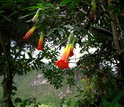
The flowers of <em>Brugmansia sanguinea</em> are a vibrant blood-red, hence the plant's name.
The flowers of Brugmansia sanguinea are a vibrant blood-red, hence the plant's name.
Credit and Larger Version
Microscope view of a red <em>Calibrachoa</em> flower's petal. The plant is also known as million bells.
Microscope view of a red Calibrachoa flower's petal.
Credit and Larger Version
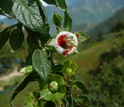
The flowers of the <em>Jaltomata</em> plant are awash in red nectar at the bases of their flowers.
The flowers of the Jaltomata plant are awash in red nectar at the bases of their flowers.
Credit and Larger Version
Researchers found extensive color variation in this single flower species in Bolivia.
Credit and Larger Versión
the National Science Foundation(NSF)
Guillermo Gonzalo Sánchez Achutegui
ayabaca@gmail.com
ayabaca@hotmail.com
ayabaca@yahoo.com
Inscríbete en el Foro del blog y participa : A Vuelo De Un Quinde - El Foro!

jueves, 15 de septiembre de 2016

NSF : Rabies could spread to Peru's coast by 2020 .- La rabia podría extenderse a costa de Perú en 2020

http://www.nsf.gov/discoveries/disc_summ.jsp?cntn_id=189583&WT.mc_id=USNSF_51&WT.mc_ev=click

Male vampire bats the likely culprits in transmitting the virus
A colony of vampire bats. Scientists are discovering new links between vampire bats and rabies.

A colony of vampire bats. Scientists are discovering new links between vampire bats and rabies.
Credit and Larger Version

September 13, 2016
The following is part 19 in a series on the NSF-NIH-USDA Ecology and Evolution of Infectious Diseases (EEID) Program. See parts: one, two, three, four, five, six, seven, eight, nine, 10, 11, 12, 13, 14, 15, 16, 17 and 18.
Rabies will likely reach the Pacific Coast of Peru -- where the virus currently does not occur -- within four years, according to a paper published this week in the journal Proceedings of the National Academy of Sciences.
Researchers reported that the vector-borne virus, which is moving at a rate of 10 miles per year, is likely being carried by infected male vampire bats, and could arrive at the Peruvian coast by June 2020. Additional analyses showed that male bats, which leave their colonies upon reaching maturity, are using Andes Mountain corridors to carry the virus westward.
"Understanding what controls the spread of disease is more important than ever," said Sam Scheiner, director of the National Science Foundation's (NSF) Ecology and Evolution of Infectious Diseases Program, which funded the research. "This study demonstrates that modern genetic tools can measure that spread. In the future, such tools will be important in controlling known diseases, such as bat rabies, and new diseases as they emerge."
The findings could help public health officials in Peru and neighboring countries prepare for and mitigate future rabies outbreaks, said ecologist Sonia Altizer of the University of Georgia, a co-author of the paper.
Rabies is a serious threat to public health and agriculture in Latin America, causing human fatalities and more than $30 million in livestock losses every year.
Vampire bats are responsible for the majority of rabies cases in humans and in livestock, largely because of their blood-feeding behavior.
 
DNA shows viral lineage
 
Human and livestock deaths from rabies are on the rise, with rabies now appearing in what were previously virus-free areas. Current rabies control efforts, which focus on reducing the size of vampire bat populations, have proved ineffective.
Understanding how bat dispersal drives invasions of the virus is therefore critical for forecasting the virus's likely spread, and for developing strategies to stop it, scientists say.
Due to the logistical difficulty of tracking infected vampire bats in real-time, researchers sampled DNA from bats and from the rabies virus to explore historical patterns of the virus's spread.
Altizer and Daniel Streicker of the University of Glasgow analyzed the DNA in 264 samples of rabies virus obtained from infected livestock throughout Peru.
They found that the virus could be traced back to one of three common ancestors: two virus lineages that occurred east of the Andes, and a third virus lineage in the inter-Andean valleys to the south.
 
A culprit revealed
 
To analyze the DNA of vampire bats, the team took tissue samples from 468 bats. They then looked at two kinds of DNA: nuclear DNA, which is inherited from both parents, and mitochondrial DNA, inherited only from mothers.
Analyses of the maternally inherited DNA showed that most bat groups with a similar maternal lineage live exclusively in single geographic areas, suggesting that the females don't move among different areas.
The analyses of nuclear DNA told a different story, however.
The researchers found that bats with the same nuclear DNA signature were clustered into three geographic regions, and that the spatial distribution of these three DNA lineages was strikingly similar to the three genetic groups of the rabies virus.
"In a nutshell, this shows that male vampire bats are likely responsible for dispersing rabies across the landscape at the continent level," Altizer said.
"Genetic markers show high site fidelity in females, but not in males, and genetic structuring of bi-parentally inherited nuclear DNA of the bats closely matches the rabies virus genetic structuring, while the maternally inherited mitochondrial DNA markers do not match at all."
By taking into account the collection dates of rabies virus samples, the researchers reconstructed the historical spread of the virus across the country. In combining this information with detailed maps of Peru's landscape, they were able to forecast likely future rabies invasions.
-- Cheryl Dybas, NSF (703) 292-7734 cdybas@nsf.gov
-- Beth Gavrilles, UGA (706) 542-7247 bethgav@uga.edu


Investigators Daniel Becker
Robert Poulin
Sonia Altizer
Sonia Altizer
Alonso Aguirre
Katherine Smith
Daniel Streicker
Patrick Stephens
Related Institutions/Organizations University of Georgia Research Foundation Inc
Related Programs Ecology and Evolution of Infectious Diseases
Related Awards #1316223 RCN Proposal: Macroecology of Infectious Disease
#1601052 DISSERTATION RESEARCH: Consequences of resource heterogeneity for immune defense, connectivity, and rabies dynamics in vampire bats
Total Grants $426,835
Related WebsitesNSF Special Report: Ecology and Evolution of Infectious Diseases: https://www.nsf.gov/news/special_reports/ecoinf/
To slow the spread of infectious diseases, NSF, NIH, USDA support new research: https://www.nsf.gov/news/news_summ.jsp?cntn_id=136044
National Science Foundation awards $1.7 million in rapid response grants to study Zika virus: https://www.nsf.gov/news/news_summ.jsp?cntn_id=138472
Vampire bats are carrying rabies across the Andes Mountains of Peru.
Credit and Larger Version
Close-up of a vampire bat, named for its meals of blood.
Credit and Larger Version
A vampire bat, shown here with researcher and glove, must be handled very carefully.
Credit and Larger Version
This donkey shows signs of vampire bat bites.
Credit and Larger Version
Rabies could reach Peru's Pacific Coast by the year 2020, helped along by male vampire bats.
Credit and Larger Versión

the National Science Foundation's (NSF)
Guillermo Gonzalo Sánchez Achutegui
ayabaca@gmail.com
ayabaca@hotmail.com
ayabaca@yahoo.com
Inscríbete en el Foro del blog y participa : A Vuelo De Un Quinde - El Foro!

viernes, 22 de abril de 2016

NSF : Earth's weird and wonderful animal models. .- Modelos de animales extraños y maravillosos................

Hola amigos: A VUELO DE UN QUINDE EL BLOG., Consideremos, por un momento, la humilde mosca de la fruta. Género Drosophila. Bulbosa de ojos y parecida al papel de alas, que es la plaga que ha aplastado lejos de ensalada de frutas y maldito en su cocina.
En el mundo científico, Drosophila es todo menos humilde; En su lugar, sirve como un organismo modelo de proporciones casa de máquinas. Durante más de un siglo, los científicos han utilizado Drosophila para revelar información acerca de la genética y desarrollo biológico. Múltiples descubrimientos ganadores del Premio Nobel de Drosophila participan de la investigación. Hoy en día, los científicos utilizan las moscas para comprender mejor de todo, desde las complejidades de la conducta social a la selección sexual.
More information...........

Simple creatures reveal fundamental biological insights
animation showing a salamander strolling
A strolling tiger salamander, used to study how early vertebrates learned to walk.
Credit and Larger Version
April 21, 2016
Consider, for a moment, the humble fruit fly. Genus Drosophila. Bulbous-eyed and papery-winged, it's the pest you've swatted away from fruit salad and cursed at in your kitchen.
In the scientific world, Drosophila is anything but humble; instead, it serves as a model organism of powerhouse proportions. For over a century, scientists have used Drosophila to reveal insights about genetics and biological development. Multiple Nobel Prize-winning discoveries involved Drosophila research. Today, scientists use the flies to better understand everything from the complexities of social behavior to sexual selection.
"Model organisms are vital for biological research," says Robert Miller, a deputy division director in the National Science Foundation's (NSF) Biological Sciences Directorate. "They allow us to explore fundamental biological processes -- the rules of life universal to all organisms. We can then apply this knowledge to more and more complex species, such as humans."
All model organisms share a few common traits: they're inexpensive, easy to care for, grow quickly and are relatively simple creatures. Other than Drosophila, research stalwarts include the mustard plant Arabidopsis, the zebra fish and Saccharomyces cerevisiae (a particular strain of yeast).
Some researchers, however, are looking for additional creatures to help them explore new sets of biological challenges, from how our earliest ancestors first walked on land to the chemistry of our nervous system.
"You can think of animals as the product of a long history of experiments in nature," says Sandy Kawano, a postdoctoral researcher at the NSF-funded National Institute for Mathematical and Biological Synthesis (NIMBIoS). "There are lots and lots of things we can learn from them." And when researchers step outside the traditional model organism box, they often seek new approaches and ask new questions. "So Earth's diversity really does drive innovation."
 
Our earliest steps
 
When Kawano wanted to study the movements of the first tetrapods -- four-limbed vertebrates whose descendants include mammals -- she turned to the tiger salamander. Scientists believe the earliest vertebrates moved from water to land about 400 million years ago. Kawano and her team at NIMBIoS and Clemson University wanted to know the factors that drove changes in bone function as those animals became terrestrial. Tiger salamanders present a great stand-in for the prehistoric creatures, with a similar body and ecology.
Kawano filmed the salamanders strolling across a device that recorded the forces they exerted while walking. She combined that information with anatomical data, creating a mathematical model to calculate limb strength. Salamander forelimbs, she found, proved both stiffer and able to withstand higher loads than their hind limbs, meaning the front leg bones were stronger.
The study offered new insights into how form drives function in animal limbs, and shed slight on both the fossil record and prehistoric life on Earth.
 
Songs of the city
 
David Luther studies a more modern phenomenon: how animals adapt to urban environments. With NSF funding, the George Mason University biologist uses white-crowned sparrows to explore the ways cities, and particularly the human-generated noise within, change how birds communicate.
White-crowned sparrows work particularly well for such research because different subspecies produce distinctly different songs, making them ideal for research on animal communication.
"We want to know how and why animals are changing the way they communicate acoustically," Luther says. "Are they learning their songs? Is it a fixed sort of thing or is it a more plastic behavior?"
Luther and his collaborator, Elizabeth Derryberry of Tulane University, compared white-crowned sparrow song recordings from the 1960s to songs from today. They found the birds have changed the pitch of their song, likely to be heard over rush hour traffic. The birds also sing louder, just the way you would raise your voice when walking by a bustling construction site.
The researchers still don't know the exact consequences of this adaptation and how it affects the signals embedded in bird song. They have found that male birds singing at louder sites adjust their pitch accordingly, generating songs with lower vocal performance. This behavior makes them less successful at finding mates.
The study could have implications for how other species exist in urban settings.
"Most animals, whether it's a bird or something else, when they're presented with a lot of loud noise they just leave," Luther says. "But there are some animals that persist. If we find out how and why they're able to persist, we could apply this to other species as well."
 
Weaving a web
 
The squat European garden spider relies on vibrations to communicate, playing its own song, of sorts, on its web. This kind of communication may seem alien to humans, but vibrations serve as "one of the most common ways animals sense the world," says Damian Elias, a biologist and associate professor at University of California, Berkeley.
"By understanding it, we're really opening a window into how different life on Earth functions," he said.
With NSF funding, Elias has teamed up with Ross Hatton, an Oregon State University engineer, to probe the physics of spider web vibrations.
European garden spiders, common throughout Europe and North America, weave orb-style webs that serve as their entire sensory world. Complicated, yet delicate, these webs allow the spiders to distinguish between prey and predator, mate and foe.
Hatton has engineered a larger-than-life artificial spider web in his lab. The web is made of two materials -- nylon and elastic latex cords -- mimicking the two kinds of threads spiders use to build their webs. Hatton set the web in a sort of subwoofer frame, where speakers cause it to vibrate in different ways, the way real webs do. Artificial "spiders," eight-legged structures with accelerometers on each leg, allow Hatton to measure web vibrations at a fine scale.
Hatton's experiments feed into a computational model, which Elias tests in his lab with actual European garden spider webs. The setup helps answer a fundamental physics question -- how do strings that are bound together move -- using a real-world, eight-legged counterpart.
"It's tapping deep into all sorts of engineering and physics problems to really understand what's happening in the spider's world," Hatton says.
That understanding could extend to other spiders, shedding light on the behavior and ecology of one of Earth's most numerous animal groups.
Spider webs, like other biological structures, also represent pretty miraculous feats of engineering. They must be strong enough to withstand destructive impacts from predators, inviting enough to snag prey and flexible enough to survive in an elastic environment.
The research could lead to biological inspiration for new materials or structures, Elias said. "That's one of the nice things about basic research. The sky's the limit."
-- Jessica Arriens, (703) 292-2243 jarriens@nsf.gov
Investigators Louis Gross
Ross Hatton
Damian Elias
David Luther
Colleen Jonsson
Elizabeth Derryberry
Related Institutions/Organizations Tulane University
George Mason University
Oregon State University
University of California-Berkeley
University of Tennessee Knoxville
Related Awards #1300426 NIMBioS: National Institute for Mathematical and Biological Synthesis
#1504428 Collaborative Research: Spider Web Vibrations -- Active and Passive Detection
#1504459 Collaborative Research: Spider Web Vibrations -- Active and Passive Detection
#1354756 Collaborative Research: Urban-dependent selection on bird song: proximate and ultimate causes, and evolutionary consequences
#1354763 Collaborative Research: Urban-dependent selection on bird song: proximate and ultimate causes, and evolutionary consequences
artificial spider web
An artificial spider web, engineered by Ross Hatton of Oregon State University.
Credit and Larger Version
European garden spider in a web
A European garden spider.
Credit and Larger Version
scientist in field with bird model
George Mason University biologist David Luther in the field, recording white-crowned sparrow songs.
Credit and Larger Version
white-crowned sparrow on branch
A white-crowned sparrow.
Credit and Larger Versión

the National Science Foundation's (NSF)
Guillermo Gonzalo Sánchez Achutegui
ayabaca@gmail.com
ayabaca@yahoo.com
ayabaca@hotmail.com
Inscríbete en el Foro del blog y participa : A Vuelo De Un Quinde - El Foro!

lunes, 15 de febrero de 2016

NSF : Celebrating Black History Month with our research fellows .- Celebrando el Mes de la Historia Negro con nuestros becarios de investigación

http://www.nsf.gov/discoveries/disc_summ.jsp?cntn_id=137630&WT.mc_id=USNSF_51&WT.mc_ev=click
Students in NSF's Graduate Research Fellowship Program tell their stories
Tova N. Williams in her lab
Tova N. Williams researches "green chemistry," specifically, environmentally benign hair colorants.
Credit and Larger Version
February 9, 2016
Every February, Black History Month provides the scientific community an opportunity to commemorate the countless contributions made by generations of African American scientists and engineers -- and to celebrate the work of black researchers making the discoveries today that will help shape our future.
Since 1952, the National Science Foundation's Graduate Research Fellowships Program (NSF GRFP) has recognized and supported outstanding early career graduate students. This month, we're sharing their stories. More than 50 fellows provided NSF with photos of their work in the lab and in the field. They provided insight into what they're researching, why they chose a science career and why they're proud of their work.
We'll be talking about these accomplished researchers through social media. Check out our Twitter and Facebook feeds for updates, and see all the fellows' stories collected in a series of posts to the NSF Tumblr. Links to the Tumblr posts will go live when they're published:
Feb 3 -- Celebrating Black History Month with our graduate fellows
Feb. 9 -- Black History Month: What our graduate fellows are researching
Feb. 11 -- Fieldwork, from plant fossils to robotics
Feb. 15 -- Black History Month: Why a career in science?
Feb. 18 -- Parents, mentors inspire passion for science
Feb. 22 -- Black History Month: What makes you proudest?
Feb. 25 -- Scientific careers provide personal, professional rewards
-- Robert J. Margetta, (703) 292-2663 rmargett@nsf.gov
Alexandra Davis under water studying corals
Alexandra Davis studies the ecological effects of the Indo-Pacific red lionfish.
Credit and Larger Version
Lekeah A. Durden
Lekeah A. Durden says she's proud to participate in initiatives that support women and minorities.
Credit and Larger Version
Ralph Washington Jr. holding an insect sample
Ralph Washington Jr. has loved insects since he was 8 years old.
Credit and Larger Version
Audra A. Huffmeyer next to elephants
Audra A. Huffmeyer turned a childhood fascination with wild places into a career in biology.
Credit and Larger Version
the National Science Foundation(NSF),
Guillermo Gonzalo Sánchez Achutegui
ayabaca@gmail.com
ayabaca@hotmail.com
ayabaca@yahoo.com
Inscríbete en el Foro del blog y participa : A Vuelo De Un Quinde - El Foro!

domingo, 5 de julio de 2015

National Science Foundation - Trees turned to snags: 'Sudden Oak Death' fells California oaks in their prime .- Árboles recurrido a inconvenientes: 'muerte súbita del roble' derriba robles de California en su mejor momento

Hola amigos: A VUELO DE UN QUINDE EL BLOG., la Fundación Nacional de Ciencias de Los Estados Unidos, están alarmados por la muerte súbita de árboles de roble en California.
NSF, nos dice: La muerte repentina del roble, tenga cuidado.
Ciencia Crowdsourced ayuda a predecir la trayectoria de la enfermedad de las plantas mortal, lo que demuestra los aportes ciudadanos científicos entrenados pueden hacer a los proyectos de localización geográfica a gran escala.
Esa es la conclusión de un estudio de monitoreo de la muerte repentina del roble en California. Los resultados se publican en la edición de este mes de la revista Frontiers in Ecology y el Medio Ambiente.

More information...........
http://www.nsf.gov/discoveries/disc_summ.jsp?cntn_id=134947&WT.mc_id=USNSF_52&WT.mc_ev=click

Citizen scientists assist with research on infectious plant disease
dried trees in a forest
This once-majestic coast live oak in Marin County, Calif., has succumbed to sudden oak death.
Credit and Larger Version
May 1, 2015
The following is part 16 in a series on the NSF-NIH-USDA Ecology and Evolution of Infectious Diseases (EEID) Program. See parts: one, two, three, four, five, six, seven, eight, nine, 10, 11, 12, 13, 14, and 15.
Sudden oak death, beware.
Crowdsourced science is helping to predict the path of the deadly plant disease, demonstrating the contributions trained citizen scientists can make to large-scale geographic tracking projects.
That's the conclusion of a study of sudden oak death monitoring in California. The results are published in this month's issue of the journal Frontiers in Ecology and the Environment.

Ebola of the plant world

"Sudden oak death is the Ebola of the plant world, the most serious threat to non-agricultural plants," says lead paper author Ross Meentemeyer, director of the Center for Geospatial Analytics at North Carolina (NC) State University.
The disease, which has killed millions of oak and tanoak trees in California and Oregon, can infect up to 60 landscape plant species and spread from nursery stock to residential landscapes.
Starting in 2008, University of California (UC), Berkeley, researchers expanded their sudden oak death monitoring efforts exponentially, thanks to observations from 1,600 trained volunteers who collected leaf samples from trees in metropolitan and urban wildland areas.

Citizen scientists often needed in research

"To answer many science questions, we need the efforts of a large number of people--and the general public can help," says Sam Scheiner, National Science Foundation (NSF) director for the NSF-NIH-USDA Ecology and Evolution of Infectious Diseases Program, which funded the research.
"This study shows that asking local residents to report on the locations of outbreaks of sudden oak death can provide critical information. The result is a better understanding of the spread of this serious plant disease."
Adds Meentemeyer, "We were able to get data from backyards in the San Francisco Bay area, along with other locations.
"Those data were used to develop accurate computer models for the disease's spread, showing that properly trained and educated citizen scientists can collect data that's just as reliable as that of professionals."

Predictions allow for targeted treatments

Accurate predictions about sudden oak death's spread allow scientists to target treatments to the most vulnerable areas, says paper co-author and forest pathologist Matteo Garbelotto of UC Berkeley.
The annual Sudden Oak Death Blitz, which includes extensive publicity during peak periods for the disease, involves high-school students, homeowners, tree specialists, firefighters, teachers and others.
Follow-up evaluation showed that trained citizen scientists were as effective as experts in identifying and collecting diseased tree leaves, whether or not they reported having a professional background in science.
Additional authors of the paper are Monica Dorning and John Vogler of NC State and Douglas Schmidt of UC Berkeley.
--  Cheryl Dybas, NSF (703) 292-7734 cdybas@nsf.gov
--  D'Lyn Ford, NCSU (919) 513-4798 dcford@ncsu.edu
Investigators David Rizzo
Ross Meentemeyer
Related Institutions/Organizations
University of California-Davis
University of North Carolina at Charlotte

Related Awards #0622677 Collaborative Research: Sudden Oak Death: Feedback Between a Generalist Pathogen, Hosts, and Heterogeneous Environments at Multiple Spatial and Temporal Scales
#0622770 Collaborative Research: Sudden Oak Death: Feedback Between a Generalist Pathogen, Hosts, and Heterogeneous Environments at Multiple Spatial and Temporal Scales

Total Grants $1,649,209
Related WebsitesNSF Special Report: Ecology and Evolution of Infectious Diseases:
 http://www.nsf.gov/news/special_reports/ecoinf/
NSF News: Racing ahead of disease outbreaks: $12 million in new research grants:
http://www.nsf.gov/news/news_summ.jsp?cntn_id=132570&org=NSF&from=news

Hillside in Big Sur, Calif., with many trees dead as result of sudden oak death.
A hillside in Big Sur, Calif.,with many of its trees dead as a result of sudden oak death.
Credit and Larger Version
Biker with Infected oaks and tanoaks at China Camp State Park, Calif. in the background
Thousands of oaks and tanoaks have been infected at the popular China Camp State Park, California.
Credit and Larger Version
California bay laurel leaves infected with sudden oak death
California bay laurel infected with sudden oak death; bay leaves help spread the disease.
Credit and Larger Version
Enlarged view of a spore produced by the pathogen
Spore produced by the pathogen, or disease-causing agent, of sudden oak death.
Credit and Larger Version
Two young women with smart phone and envelopes
Young citizen scientists locating and collecting leaves with symptoms of
Credit and Larger Version
 The National Science Foundation(NSF)
 Guillermo Gonzalo Sánchez Achutegui
ayabaca@gmail.com
ayabaca@hotmail.com
ayabaca@yahoo.com
Inscríbete en el Foro del blog y participa : A Vuelo De Un Quinde - El Foro!

domingo, 19 de abril de 2015

nsf.gov - National Science Foundation - Earth Day is on the horizon. But is 'greener' always better? .- Día de la Tierra está en el horizonte. Pero es más "verde" siempre mejor?

Hola amigos: A VUELO DE UN QUINDE EL BLOG., hemos recibido información de la Fundación Nacional de Ciencias de Los Estados Unidos, sobre los próximos acontecimientos sobre el Día de La tierra y ellos se hacen la pregunta "ser mas verde" es mejor?
Y ellos se contestan así: "Ir verde. En el Día de la Tierra y cada día, siendo más "verde" está vinculado con las cosas buenas, como la reducción de su huella de carbono y el consumo de alimentos cultivados localmente....... Pero no cuando se trata de beber o nadar en las brillantes aguas verdes del lago sucias por las algas, dice Hans Paerl, científico ambiental en la Universidad de Carolina del Norte en Chapel Hill.
En los lagos de agua dulce de todo el mundo, estas floraciones de algas suelen ser consecuencia de un exceso de lo que se conoce como las cianobacterias, o algas verde-azules......
Forma cianobacterias flores generalizadas, muy visibles que se parecen a pintura azul-verde o escoria que flota en el agua. Ellos pueden ser tóxicos para los seres humanos y otros animales.
Estas bacterias filamentosas se agrupan en las esteras que cubren la superficie de un lago de una orilla a la otra, con un máximo de oxígeno en el agua y, finalmente, convertir las profundidades lagos en una zona muerta....................."

More information....

Not when it's the bright green waters of algae-fouled lakes and rivers
Collage of images showing algae in alakes and researcher
View a photo gallery of algae blooms in lakes.
Credit and Larger Version
April 15, 2015
The following is part 15 in a series on the National Science Foundation's (NSF) Environmental Research and Education (ERE) programs. Parts one, two, three, four, five, six, seven, eight, nine, 10, 11, 12, 13 and 14 in this series are available on the NSF website.
Going green. On Earth Day and every day, being "greener" is linked with good things like lowering your carbon footprint and eating locally-grown foods.
But not when it comes to drinking or swimming in the bright green waters of lakes fouled by algae, says Hans Paerl, an environmental scientist at the University of North Carolina at Chapel Hill.
In freshwater lakes around the world, such algae blooms often result from an overabundance of what's known as cyanobacteria, or blue-green algae.
Cyanobacteria form widespread, very visible blooms that look like blue-green paint or scum floating on the water. They may be toxic to humans and other animals.
These filamentous bacteria clump into mats that cover a lake's surface from one shore to the other, using up oxygen in the water and eventually turning the lake's depths into a dead zone.
From Lake Taihu, China, to Lake Erie in the U.S.
It was June 2007, and water spouting from kitchen faucets in Wuxi, China, was pea-soup green. The water came from Taihu, China's third largest lake.
Cyanobacteria obscured the surface of the 900-square-mile lake and quickly overwhelmed the intake plant for the city of Wuxi's drinking water.
Chinese officials scooped 6,000 tons of algae from Taihu and diverted water from the Yangtze River to flush the lake. However, says Paerl, the bloom persisted. "It was fall when it finally abated."
Two weeks into the bloom, Paerl was in China, leaning over the side of a small boat to take samples of Taihu's scum.
He discovered that the algae is similar to that found in blooms in North Carolina's ponds, rivers and estuaries, and in many larger bodies of water such as Lake Erie, Lake Victoria and the Baltic Sea.
"Nowhere are the blooms worse than on Taihu, however," says Paerl, whose work is funded by an NSF Dimensions of Biodiversity grant. "Habitat for fish, crabs and other aquatic species is becoming endangered."
Ten million people also depend on Taihu for drinking water, fisheries and tourism.
Lake Erie on the border of the United States and Canada faces the same challenges.
In 2011, a record-breaking bloom of similar cyanobacteria to the species that plagued Taihu smothered Lake Erie, turning it a bright-green that showed up on satellite images.
At the bloom's peak in October, it expanded to more than 1,930 square miles, three times larger than any Lake Erie bloom on record.
New "recipe" for controlling algae blooms
The "recipe" for controlling the problem, says Paerl, "has been to reduce phosphorus finding its way into lakes from sources on land like fertilizers. That's based on the long-standing paradigm that phosphorus is the key nutrient limiting freshwater algae blooms."
But another element, nitrogen, flowing into lakes and rivers is increasing more rapidly than phosphorus. "It's led researchers to question whether both nitrogen and phosphorus should be controlled to stem the tide of proliferating algae blooms," says Paerl.
Lake Taihu, he says, is a "looking glass" for addressing such nutrient overenrichment and toxic algae blooms.
"Our NSF Dimensions of Biodiversity project is determining what roles specific nutrients like nitrogen and phosphorus play in the frequency and extent of algae blooms in lakes, and how they affect these ecosystems."
Data from experiments on the relationship between nutrients and algae blooms are being used to formulate a nutrient reduction management strategy. Scientists hope it will lead to the control of blooms in Taihu and other lakes.
The goal, Paerl says, is to find new ways of ensuring sustainable uses of lakes prone to blooms.
Other scientists involved in the research are Wayne Gardner of the University of Texas, Ferdi Hellweger of Northeastern University and Steven Wilhelm of the University of Tennessee.
"Harmful cyanobacteria blooms caused by excessive phosphorus and nitrogen are threatening freshwater lakes worldwide," says Simon Malcomber, lead NSF program director for Dimensions of Biodiversity, which is supported by NSF's Directorates for Biological Sciences and Geosciences.
"This research shows the importance of taking a holistic approach to understanding harmful cyanobacteria blooms," says Malcomber. "Only with an ecosystems approach can long-term successful sustainability strategies be formulated."
Chain of events links land and lake
The complex chain that leads to algae blooms in freshwater begins not in lakes but on land.
Farmers often overfertilize their fields. The excess fertilizer, laden with nutrients like phosphorus and nitrogen, washes into creeks and rivers, where it's eventually carried to lakes.
"Nitrogen is necessary for increasing crop yields," says Paerl, "but plants are inefficient at taking it up. More fertilizer is often added than plants need."
Only a fraction of the nitrogen applied to soils ends up in crops; in some regions, it's less than 20 percent. The rest is on the loose.
When the excess eventually reaches freshwater, it fertilizes aquatic algae such as cyanobacteria--just as it encourages plants on land to grow. The algae proliferate, becoming massive blooms.
As the algae die, they fall to the lake's bottom and are digested by microorganisms. The process removes oxygen from the water, creating low-oxygen "dead zones," fish kills and tainted waters.
Extreme algae blooms: The new normal?
Are algae blooms in lakes around the world a new normal?
Scientists are working to find answers.
"This important work is linking the diversity and identity of algae with nitrogen cycling and harmful algal blooms in heavily affected freshwater lakes," says Mike Sieracki, Dimensions of Biodiversity program director in NSF's Division of Ocean Sciences.
This week at an NSF-funded workshop--Global Solutions to Regional Problems: Collecting Global Expertise to Address the Problem of Harmful Algal Blooms--researchers discussed the current science on algae blooms, and identified knowledge gaps in bloom prevention and mitigation.
"We hope that this workshop will lead to strategies to mitigate future blooms in waterbodies in the U.S. and around the world," says Bill Cooper, program director in NSF's Division of Chemical, Bioengineering, Environmental and Transport Systems.
Meeting topics included the biology of bloom-forming species, environmental factors underlying bloom formation, sensor development in bloom detection, prediction of blooms, and best practices for control.
"New nutrient reduction strategies," wrote Paerl and colleagues in the journal Science in October 2014, "should incorporate point and non-point sources, including nitrogen removal in wastewaters, optimization of fertilizer application, and erosion controls.
"An investment in joint phosphorus and nitrogen controls will counter the very high costs of harmful algal bloom events and the losses of freshwater resources worldwide."
It's the only way, Paerl says, to keep blooms of cyanobacteria and other algae in check. When it comes to lakes and rivers, streams and ponds, "going green" means anything but.
-- Cheryl Dybas, NSF (703) 292-7734 cdybas@nsf.gov
Related Programs Dimensions of Biodiversity
Related WebsitesWhither the diversity of life on Earth? NSF, partners award $23 million for studies of planet's biodiversity: 
http://www.nsf.gov/news/news_summ.jsp?cntn_id=132506
Earth Week: A Stream Is a Stream Is a Stream: Or Is It?:
 http://www.nsf.gov/discoveries/disc_summ.jsp?cntn_id=123855&org=NSF
Staple of recipe favorites--the tomato--reveals processes that maintain biodiversity:
 http://nsf.gov/discoveries/disc_summ.jsp?cntn_id=129676
NSF Grant: Anthropogenic nutrient input drives genetic, functional and taxonomic biodiversity in hypereutrophic Lake Taihu, China:

A toxic algae bloom, one of many around the world, covers North Carolina's Cape Fear River.
Credit and Larger Version
China's Lake Taihu, showing an extensive algae bloom that reaches the lake's shores.
China's Lake Taihu shows an extensive algae bloom that reaches the lake's shores.
Credit and Larger Version
boat going through Lake Taihu's thick algae scum.
Researchers travel by boat through Lake Taihu's thick algae scum.
Credit and Larger Version
Scientist Hans Paerl holding a bottle with algae in water from in Lake Taihu.
Scientist Hans Paerl collects samples of the algae bloom in Lake Taihu.
Credit and Larger Version
Satellite view of a widespread algae bloom in September 2013, in Lake Erie.
Credit and Larger Versión
the National Science Foundation(NSF)
Guillermo Gonzalo Sánchez Achutegui
Inscríbete en el Foro del blog y participa : A Vuelo De Un Quinde - El Foro!

domingo, 1 de marzo de 2015

nsf,gov - National Science Foundation - Rewriting genetic information to prevent disease

Hola amigos: A VUELO DE UN QUINDE EL BLOG: hemos recibido una importante comunicación de la Fundación Nacional de Ciencias de Los Estados Unidos que nos dicen:
"Premio Breakthrough aprovecha CRISPR para mejorar el sistema inmune
Jennifer Doudna

 
Jennifer Doudna es profesor en la Universidad de California, Berkeley.Crédito y Más Grande
25 de febrero 2015Durante los últimos años, los científicos han estado estudiando una antigua pero sólo entendida recientemente mecanismo de la inmunidad bacteriana que tiene el potencial de proporcionar beneficios inconmensurables para la salud animal y vegetal.El fenómeno conocido como CRISPR (por clúster Regularmente Interspaced Short palindrómicas repeticiones) es un sistema inmune natural que se encuentra en muchas bacterias con la capacidad de identificar y destruir los genomas de los virus invasores y plásmidos.Los investigadores están tratando de aprovechar este sistema para la edición de genes y la regulación, un proceso que podría transformar "el genoma de plantas o animales en formas que mejoren su salud, o introducir cambios genéticos que resistirán la enfermedad del cambio climático", dice Jennifer Doudna, investigador del Instituto Médico Howard Hughes y profesor de bioquímica, biofísica y biología estructural en la Universidad de California, Berkeley. "La explosión de la investigación que utiliza esta técnica ha sido increíble."Doudna, colaborando con Emmanuelle Charpentier del Centro Helmholtz de Investigación sobre Infecciones Suecia y la Universidad de Umeå, identifica cómo funciona el sistema y desarrollado en nuevas formas que ampliaron su alcance. Los dos investigadores, que describieron su trabajo en un artículo de 2012 en la revista Science, desarrollaron una técnica que permite la reescritura de la información genética y la corrección de mutaciones que de lo contrario pueden causar enfermedades, y también puede noquear a la capacidad de la célula para producir proteínas nocivas , dice ella."Muchos laboratorios han demostrado que, en principio, esto se puede utilizar para corregir las mutaciones tales como los que se producen en la fibrosis quística o la enfermedad de células falciformes," dice ella. "Ellos están mostrando en líneas celulares y animales de laboratorio. Todavía estamos un periodo de tiempo lejos de usar esto en los seres humanos, pero el ritmo en el campo ha sido verdaderamente notable, y realmente emocionante ver."Muchas bacterias tienen este sistema inmunológico a base de CRISPR capaz de identificar y destruir invasores hostiles. Doudna y Charpentier mostraron que, al hacerlo, CRISPR produce la proteína Cas9, una enzima ADN-corte guiado por ARN, que se basa en dos secuencias cortas de ARN de guía para encontrar ADN extraño, luego se escinde, o cortes, las secuencias diana, el silenciamiento de ese modo los genes de los invasores.Cas9 ha evolucionado para proporcionar una protección contra los virus que podrían infectar la bacteria, y utiliza piezas de RNA derivados de CRISPRs para dirigir su actividad. El sistema es lo suficientemente específico y eficaz para evitar infecciones virales en las bacterias.Doudna y sus colegas programar el proceso para que pueda ser dirigida por una sola molécula de ARN corto; investigadores que lo utilizan para editar genomas pueden personalizar el ARN para que envíe Cas9 para escindir, como "tijeras", en su lugar elegido en el genoma."Cuando nos dimos cuenta de cómo funcionaba, nos dimos cuenta de que podíamos alterar el diseño de ARN y el programa Cas9 reconocer cualquier secuencia de ADN", dice ella. "Uno por lo tanto, puede dirigirse a Cas9 a cualquier región de un genoma simplemente proporcionando una guía de ARN corto que puede aparearse con la región de interés. Una vez orientado, diferentes versiones de Cas9 se pueden utilizar para activar o inhibir genes, así como hacer diana cortes dentro del genoma. Dependiendo del diseño experimental, la investigación puede utilizar estos últimos cortes para interrumpir los genes o reemplazarlos con versiones recién ingeniería ".Recientemente Douda y Charpentier y otros cuatro científicos recibieron el Premio Revelación en ciencias de la vida, que honra a los avances de transformación hacia la comprensión de los sistemas vivos y extender la vida humana. Los premios reconocen el trabajo pionero en la física, la genética, la cosmología, la neurología y las matemáticas, y llevan un premio de $ 3 millones para cada investigador. El comité Breakthrough citó específicamente Doudna y Charpentier por sus avances en la comprensión del mecanismo de CRISPR.Doudna ha sido el destinatario de varias becas de la Fundación Nacional de Ciencia (NSF) para apoyar su investigación en los últimos años por un total de más de $ 1.5 millones. En 2000, recibió el prestigioso $ 500.000 Alan T. Waterman Premio de la NSF, que reconoce un joven investigador sobresaliente en cualquier campo de la ciencia o la ingeniería con el apoyo de la NSF.También fue uno de los fundadores de la Iniciativa Genómica innovadora, establecida en 2014 en el Centro de Li Ka Shing de Ingeniería Genómica de la Universidad de Berkeley. Su objetivo es promover y apoyar la investigación y la tecnología de edición del genoma en ambas comunidades de investigación académicas y comerciales."Contamos con un equipo de científicos que trabajan con varios socios de colaboración", dice ella. "Queremos asegurarnos de que la tecnología se vuelve en tantas manos como sea posible, y explorar maneras de hacer que sea aún mejor. Estamos tratando de lograr un cambio fundamental en la investigación biológica y biomédica, permitiendo a los científicos a leer y escribir en los genomas con la misma facilidad . Es un nuevo esfuerzo audaz que abraza una nueva era en la ingeniería genómica ".- Marlene Cimons, Fundación Nacional para la CienciaInvestigadores
 
Jennifer Doudna
Instituciones relacionadas / Organizaciones
 
Universidad de California-Berkeley
Programas relacionados
  
Sistemas y Biología Sintética
Premios Relacionados
 
# 1244557 Mecanismos de la inmunidad adquirida en bacterias
Las subvenciones totales
 
$ 684.404
 
border = 0 /
 
Breakthrough Prize winner harnesses CRISPR to improve immune system

Jennifer Doudna

Jennifer Doudna is a professor at the University of California, Berkeley.
Credit and Larger Version
February 25, 2015
For the last few years, scientists have been studying an ancient but only recently understood mechanism of bacterial immunity that has the potential to provide immeasurable benefits to plant and animal health.
The phenomenon known as CRISPR (for Clustered Regularly Interspaced Short Palindromic Repeats) is a natural immune system found in many bacteria with the ability to identify and destroy the genomes of invading viruses and plasmids.
Researchers are trying to harness this system for gene editing and regulation, a process that could transform "the genome of plants or animals in ways that will improve their health, or introduce genetic changes that will resist disease of climate change," says Jennifer Doudna, a Howard Hughes Medical Institute investigator and professor of biochemistry, biophysics and structural biology at the University of California, Berkeley. "The explosion of research using this technique has been amazing."
Doudna, collaborating with Emmanuelle Charpentier of Sweden's Helmholtz Center for Infection Research and Umeå University, identified how the system works and engineered it in new ways that broadened its scope. The two researchers, who described their work in a 2012 paper in the journal Science, developed a technique that enables the rewriting of genetic information and the correction of mutations that otherwise can cause disease, and also can knock out the cell's ability to make harmful proteins, she says.
"Many labs have shown in principle that this can be used to correct such mutations as those that occur in cystic fibrosis, or sickle cell disease," she says. "They are showing it in cell lines and lab animals. We're still some period of time away from using this in humans, but the pace in the field has been truly remarkable, and really exciting to see."
Many bacteria have this CRISPR-based immune system capable of identifying and destroying hostile invaders. Doudna and Charpentier showed that, in doing so, CRISPR produces the protein Cas9, a DNA-cutting enzyme guided by RNA, which relies on two short RNA guide sequences to find foreign DNA, then cleaves, or cuts, the target sequences, thereby muting the genes of the invaders.
Cas9 has evolved to provide protection against viruses that could infect the bacterium, and uses pieces of RNA derived from CRISPRS to direct its activity. The system is specific and efficient enough to stave off viral infections in bacteria.
Doudna and her colleagues programmed the process so that it can be directed by a single short RNA molecule; researchers who use it to edit genomes can customize the RNA so that it sends Cas9 to cleave, like "scissors," at their chosen location in the genome.
"When we figured out how it worked, we realized we could alter the design of RNA and program Cas9 to recognize any DNA sequence," she says. "One can therefore target Cas9 to any region of a genome simply by providing a short guide RNA that can pair with the region of interest. Once targeted, different versions of Cas9 can be used to activate or inhibit genes, as well as make target cuts within the genome. Depending on the experimental design, research can use these latter cuts to either disrupt genes or replace them with newly engineered versions."
Recently Douda and Charpentier and four other scientists received the Breakthrough Prize in life sciences, which honors transformative advances toward understanding living systems and extending human life. The prizes recognize pioneering work in physics, genetics, cosmology, neurology and mathematics, and carry a $3 million award for each researcher. The Breakthrough committee specifically cited Doudna and Charpentier for their advances in understanding the CRISPR mechanism.
Doudna has been the recipient of several National Science Foundation (NSF) grants to support her research in recent years totaling more than $1.5 million. In 2000, she received NSF's prestigious $500,000 Alan T. Waterman Award, which recognizes an outstanding young researcher in any field of science or engineering supported by NSF.
She also was a founder of the Innovative Genomics Initiative, established in 2014 at the Li Ka Shing Center for Genomic Engineering at UC Berkeley. Its goal is to promote and support genome editing research and technology in both academic and commercial research communities.
"We have a team of scientists working with various collaborative partners," she says. "We want to ensure that the technology gets into as many hands as possible, and explore ways to make it even better. We are trying to bring about fundamental change in biological and biomedical research by enabling scientists to read and write in genomes with equal ease. It's a bold new effort that embraces a new era in genomic engineering."
-- Marlene Cimons, National Science Foundation
Investigators Jennifer Doudna
Related Institutions/Organizations University of California-Berkeley
Total Grants $684,404
border=0/
the National Science Foundation(NSF)
Guillermo Gonzalo Sánchez Achutegui


Inscríbete en el Foro del blog y participa : A Vuelo De Un Quinde - El Foro!

Mi lista de blogs