Mostrando entradas con la etiqueta Technology. Mostrar todas las entradas

lunes, 8 de mayo de 2017

ESA : ROCKET SCIENTISTS’ CHALLENGE: DO THE KESSLER RUN .- El desafío de los científicos de cohetes: ¿funcionan los Kessel?

http://www.esa.int/Our_Activities/Space_Engineering_Technology/Rocket_scientists_challenge_do_the_Kessler_run
Intercepting space debris


4 April 2017


The trajectory challenge for this year’s ‘America’s Cup of rocket science’ has been unveiled: removing space debris from orbit. Top aerospace engineers and mathematicians from around the globe are competing to win it.
The ninth Global Trajectory Optimisation Competition, GTOC-9, has gone live. This international contest challenges contestants to set the course of a space mission to solve a nearly impossible yet practical challenge.
As the winner of GTOC-8, ESA’s Advanced Concepts Team thinktank got to devise and oversee this year’s challenge: to set the most efficient strategy for multiple missions to take down a swarm of space debris threatening humankind’s safe use of space.
“Star Wars had the Kessel Run – famously made by Han Solo’s Millennium Falcon in less than 12 parsecs – so we have the Kessler Run,” comments Dario Izzo, ACT scientific coordinator. 
“It’s named after the Kessler Syndrome, originated by NASA debris expert Donald Kessler. This states that as the density of space debris increases, a cascade effect will take place with collisions generating added debris leading to even greater collisions. 
According to ESA's Space Debris Office, in almost 60 years of space activities, more than 5200 launches have placed some 7500 satellites into orbit, of which about 4300 remain in space; only a small fraction − about 1200 − are still operational today

Debris mapped
“But the Kessler Syndrome can be shut down if enough debris items are removed from key orbits.”
In the GTOC-9 scenario, the year is 2060 and the fragmentation of an Earth-observing satellite provoked the Kessler Effect, rendering the highly-trafficked Sun-synchronous low-orbit region hazardous to use. But there is hope: researchers have pinpointed a set of 123 orbiting items of debris that, if removed, would switch off the Kessler Syndrome.
The challenge is to design a series of debris-removal missions to remove all these pieces, while minimising the cost of the overall effort. To add to the difficulty, each mission’s cost will depend on how early they are submitted to the contest (no matter their actual launch time), as well as the satellite mass.
Each mission works by deploying a deorbit package to the vicinity of a debris target. Teams can make a choice between larger – and more expensive – missions carrying more deorbit packages and the fuel needed to travel between target debris or else smaller, cheaper missions with less fuel and fewer deorbit packages aboard.
e.Deorbit’s robotic arm


“It’s in a team’s interest to submit a mission as soon as they think it has a chance of ending up being used, to freeze its cost and prevent it increasing,” adds Dario. “They can be undone if required.”
GTOC-9 is being run through the ACT’s Kelvins website, a portal dedicated to hosting public aerospace challenges, which will enable automatic scoring of every entry the ACT receives. As a bonus, this means any interested, group, company or individual is free to enter.
So far it has already attracted 389 researchers participating in 67 teams from 90 institutions worldwide. Follow developments on Twitter using the #GTOC9 hashtag, and check the leaderboard to monitor the contest as it happens.
In real life, ESA is also investigating active space debris removal. The world’s first active debris removal mission, called e.Deorbit, is being developed through the Agency’s Clean Space initiative. Designed to rendezvous and remove a large item of ESA-owned debris, e.Deorbit is planned for launch in 2024. 
ESA
Guillermo Gonzalo Sánchez Achutegui

domingo, 2 de abril de 2017

ESA : Surviving the long dark night of the Moon .- Sobreviviendo a la larga noche oscura de la Luna

http://www.esa.int/Our_Activities/Space_Engineering_Technology/Surviving_the_long_dark_night_of_the_Moon


Earth from the Moon

Surviving the long dark night of the Moon

23 March 2017
Designers of future Moon missions and bases have to contend with a chilling challenge: how might their creations endure the fortnight-long lunar night? ESA has arrived at a low-cost way of surviving.
During prolonged night, when the surface is lit only by blue Earthlight, temperatures dip below –170ºC. Some locations at higher latitudes have shorter nights, though others have much longer or even permanent darkness.
Numerous robotic missions have perished during this prolonged cold. Russia’s Lunokhod-2 rover, for instance, failed to make it through the night in May 1973, its radioactive heater having gradually run down after four months of exploring.
The Apollo manned missions stayed on the surface only a few days at a time, and all during the early lunar morning. But future lunar settlers will have to live in the night as well as the day, bearing in mind that vital solar energy and heat would be unavailable during the 14 days of darkness.
 
ISS and the Moon
 
“Up until now, radioactive heat and power sources have been the preferred solution for lunar habitats,” explains ESA’s Moritz Fontaine. “But these would multiply the cost and complexity of any expedition.
“So we’re exploring a more sustainable solution, using the capacity of moondust to absorb and store energy when hit by sunlight, then releasing this energy during the lunar night.”
The basic concept involves multiple mirrors to channel sunlight into processed lunar regolith, into which a heat engine would be placed. Driven by the temperature difference, this heat engine would be kept running directly by the heat of the Sun during the day – illuminated surface temperatures rise well above 100ºC at the equator – while simultaneously storing excess heat in the soil.
Once night falls, the heat engine would be kept running in turn by the gradual release of the energy from the heated soil.
“The principle has been worked out in detail,” adds Moritz. “The next step, being undertaken through ESA’s General Studies Programme, is to perform numerical and simulation studies to put values on the heat storage and electricity provision the system would enable.
“The results should then allow the construction of a small demonstrator to test the concept in practice.”
ESA
Guillermo Gonzalo Sánchez Achutegui
ayabaca@gmail.com
ayabaca@hotmail.com
ayabaca@yahoo.com
Inscríbete en el Foro del blog y participa : A Vuelo De Un Quinde - El Foro!

domingo, 22 de enero de 2017

ESA : Seizing the future. Aprovechar el futuro con E.Deorbit agarrando escombros.... e.Deorbit grabbing debris .-

http://www.esa.int/spaceinimages/Images/2016/12/e.Deorbit_grabbing_debris

Details

Open/Close
  • Title e.Deorbit grabbing debris
  • Released 18/12/2016 7:25 am
  • Copyright ESA–David Ducros, 2016
  • Description
    ESA’s proposed e.Deorbit mission, shown left, using a robotic arm to catch a derelict satellite – the baseline capture method for what would be the world’s first active space debris removal mission, in 2024.
    The Agency’s member state ministers in December strongly supported a ‘maturation phase’ for e.Deorbit, to foster the various advanced technologies required to make the mission feasible, from autonomous guidance to advanced images processing, along with a suitable capture mechanism.
    The mission would first rendezvous with a large, drifting ESA satellite, then capture and secure it safely ahead of steering the combination down for a controlled burn-up in the atmosphere.
    As well as the baselined robot arm, additional capture technologies are being investigated, including a net and harpoon.
    In any case, grappling the derelict satellite would have to be done in a very rapid and precise manner to prevent e.Deorbit and its target rebounding apart.
    The mission, being developed through ESA’s Clean Space initiative – tasked with safeguarding terrestrial and orbital environments – will be proposed for final agreement at ESA’s next Council at Ministerial Level, in 2019. It will place European industry at the forefront of the world’s active debris removal efforts and multipurpose space tugs.
  • Id 370418

TAGS

Open/Close
ESA
Guillermo Gonzalo Sánchez Achutegui
ayabaca@gmail.com
ayabaca@hotmail.com
ayabaca@yahoo.com
Inscríbete en el Foro del blog y participa : A Vuelo De Un Quinde - El Foro!

viernes, 13 de enero de 2017

NASA : Breaking Boundaries in New Engine Designs .- Cómo romper fronteras en nuevos diseños de motores....

https://www.nasa.gov/image-feature/breaking-boundaries-in-new-engine-designs

Inside the 8’ x 6’ wind tunnel at NASA Glenn, engineers recently tested a fan and inlet design, commonly called a propulsor
In an effort to improve fuel efficiency, NASA and the aircraft industry are rethinking aircraft design. Inside the 8’ x 6’ wind tunnel at NASA Glenn, engineers recently tested a fan and inlet design, commonly called a propulsor, which could use four to eight percent less fuel than today’s advanced aircraft.

The new propulsor is designed to be embedded in the aircraft’s body, where it would ingest the slower flowing air that normally develops along an aircraft’s surface, called boundary layer, and use it to help propel the aircraft.

The tests showed that the new fan and inlet design could withstand the turbulent boundary layer airflow and increase efficiency. Results of the tests can be applied to cutting-edge aircraft designs that NASA and its partners are pursuing.
Image credit: NASA
Rami Daud (Alcyon Technical Services)
Last Updated: Jan. 12, 2017
Editor: Kelly Heidman
NASA
Guillermo Gonzalo Sánchez Achutegui
ayabaca@gmail.com
ayabaca@hotmail.com
ayabaca@yahoo.com
Inscríbete en el Foro del blog y participa : A Vuelo De Un Quinde - El Foro!

jueves, 3 de noviembre de 2016

NASA : James Webb Space Telescope Mirrors Will Piece Together Cosmic Puzzles.- Los espejos del Telescopio Espacial James Webb, Juntos Puzzles Cósmicos

https://www.nasa.gov/image-feature/prototype-capture-system-mock-asteroid-help-simulate-mission-sequence

Webb Telescope honeycomb-shaped primary mirror upright in clean room
The primary mirror of NASA's James Webb Space Telescope consisting of 18 hexagonal mirrors looks like a giant puzzle piece standing in the massive clean room of NASA's Goddard Space Flight Center in Greenbelt, Maryland. Appropriately, combined with the rest of the observatory, the mirrors will help piece together puzzles scientists have been trying to solve throughout the cosmos.
Webb's primary mirror will collect light for the observatory in the scientific quest to better understand our solar system and beyond. Using these mirrors and Webb's infrared vision scientists will peer back over 13.5 billion years to see the first stars and galaxies forming out of the darkness of the early universe. Unprecedented infrared sensitivity will help astronomers to compare the faintest, earliest galaxies to today's grand spirals and ellipticals, helping us to understand how galaxies assemble over billions of years. Webb will see behind cosmic dust clouds to see where stars and planetary systems are being born. It will also help reveal information about atmospheres of planets outside our solar system, and perhaps even find signs of the building blocks of life elsewhere in the universe.
The Webb telescope was mounted upright after a "center of curvature" test conducted at Goddard. This initial center of curvature test ensures the integrity and accuracy, and test will be repeated later to verify those same properties after the structure undergoes launch environment testing. In the photo, two technicians stand before the giant primary mirror.
The Webb telescope is an international collaboration between NASA, the European Space Agency (ESA), and the Canadian Space Agency (CSA).
For information on the Webb's Center of Curvature test, visit:
Image Credit: NASA/Chris Gunn
Caption: Rob Gutro

Last Updated: Nov. 2, 2016
Editor: Sarah Loff
NASA
Guillermo Gonzalo Sánchez Achutegui
ayabaca@gmail.com
ayabaca@hotmail.com
ayabaca@yahoo.com
Inscríbete en el Foro del blog y participa : A Vuelo De Un Quinde - El Foro!

NASA : Prototype Capture System, Mock Asteroid Help Simulate Mission Sequence.-

http://www.nasa.gov/image-feature/prototype-capture-system-mock-asteroid-help-simulate-mission-sequence

Prototype robotic capture arms with mock asteroid boulder
A prototype of the Asteroid Redirect Mission (ARM) robotic capture module system is tested with a mock asteroid boulder in its clutches at NASA’s Goddard Space Flight Center in Greenbelt, Maryland. The robotic portion of ARM is targeted for launch in 2021.

Located in the center’s Robotic Operations Center, the mockup helps engineers understand the intricate operations required to collect a multi-ton boulder from an asteroid’s surface. The hardware involved here includes three space frame legs with foot pads, two seven degrees of freedom arms that have with microspine gripper “hands” to grasp onto the boulder. 

NASA and students from West Virginia University built the asteroid mockup from rock, styrofoam, plywood and an aluminum endoskeleton. The mock boulder arrived in four pieces and was assembled inside the ROC to help visualize the engagement between the prototype system and a potential capture target. 

Inside the ROC, engineers can use industrial robots, a motion-based platform, and customized algorithms to create simulations of space operations for robotic spacecraft. The ROC also allows engineers to simulate robotic satellite servicing operations, fine tuning systems and controllers and optimizing performance factors for future missions when a robotic spacecraft might be deployed to repair or refuel a satellite in orbit. 

Image Credit: NASA
Last Updated: Nov. 1, 2016
Editor: Sarah Loff
NASA
Guillermo Gonzalo Sánchez Achutegui
ayabaca@gmail.com
ayabaca@hotmail.com
ayabaca@yahoo.com
Inscríbete en el Foro del blog y participa : A Vuelo De Un Quinde - El Foro!

domingo, 23 de octubre de 2016

NSF : NSF awards $44 million for genomic research on range of plants, many economically important .- Premios NSF $ 44 millones para la investigación genómica en la gama de muchas plantas, de importancia económica

https://www.nsf.gov/news/news_summ.jsp?cntn_id=190076&WT.mc_id=USNSF_51&WT.mc_ev=click

Grants will fund plant research relevant to science and society

A genome-level approach to balancing the vitamins in maize, or corn, grain is a PGRP project.

A genome-level approach to balancing the vitamins in maize, or corn, grain is a PGRP project.
Credit and Larger Version

October 20, 2016
To advance the basic science needed to improve agricultural practices, reduce demands on environmental resources, and address climate change challenges, the National Science Foundation (NSF)'s Plant Genome Research Program (PGRP) has awarded new grants totaling $44 million.
"For almost two decades, the PGRP has accelerated basic knowledge in plant genomics, with broad relevance to the scientific research community and to society," says James Olds, NSF assistant director for Biological Sciences. "These awards will continue to break new ground in understanding the biological principles needed to solve environmental and food security challenges today and in the future."
New directions in plant genomics research, and advances in technology and bioinformatics, have enabled scientists to address basic questions and achieve a systems-level understanding of economically-important plants and plant processes. That understanding is critical to achieving goals such as crop improvement.
PGRP awardees will investigate subjects such as the gene regulatory networks required to make soybean seeds; achieving a genome-level understanding of seed biochemistry that will lead to balancing the vitamin content of maize, or corn, grain; discovering how perennial crops adapt and become resilient to climate change; leveraging natural variance in tomatoes to find new sources of disease resistance; and defining the epigenetic (external or environmental factors that switch genes on and off) variations in long-lived trees.
"The large-scale data produced by PGRP awardees are usable, accessible, and of high impact across the biological sciences," says Jane Silverthorne, NSF deputy assistant director for Biological Sciences. "Training and career advancement in plant genomics are essential elements of scientific progress in this field."
There's a critical need, plant biologists say, for training in the use of new tools and technologies, especially for scientists with expertise in traditional plant biology fields such as plant anatomy, breeding, physiology and biochemistry.
New tools and methodologies are also needed to tackle questions that are difficult to answer with current approaches, and to help knowledge from the lab make its way into wider practice.
This year's PGRP grants support research on basic questions in plant science on a genome-wide scale; development of tools and resources for plant genome research, including new technologies; mid-career investigator research aimed at increasing participation of scientists trained primarily in fields other than plant genomics; and early career investigator research likely to interest scientists at the beginning stages of their careers in pursuing plant genome research.

NSF 2016 Plant Genome Research Program Awards
W. Brad Barbazuk, University of Florida: TOOLS-PGR: Alternative Splice Isoforms in Plant Genomes: Collection, Characterization and Evolutionary Relationships
James Birchler, University of Missouri-Columbia: RESEARCH-PGR: Genomic Balance Analysis in Maize
Steven Briggs, University of California-San Diego: RESEARCH-PGR: Discovery and Evaluation of Inbred-specific and Hybrid-specific Regulatory Modules
Thomas Brutnell, Donald Danforth Plant Science Center: RESEARCH-PGR: Dissecting the Genetic Networks Underlying Kranz Anatomy in C4 Grasses
Dean DellaPenna, Michigan State University: RESEARCH-PGR: A Genome-level Approach to Balancing the Vitamin Content of Maize Grain
Brent Ewers, University of Wyoming: RESEARCH: Predicting Genotypic Variation in Growth and Yield under Abiotic Stress through Biophysical Process Modeling
Wolf Frommer, Carnegie Institution of Washington: RESEARCH-PGR: SECRETome Project: Systematic Evaluation of CellulaR ExporT from plant cells
Robert Goldberg, University of California-Los Angeles: RESEARCH-PGR: Gene Regulatory Networks Required to Make a Soybean Seed
Mark Guiltinan, Pennsylvania State University: RESEARCH-PGR: Discovery and Functional Characterization of Genes Regulating Plant Immunity in Perennial Crops
Candice Hirsch, University of Minnesota-Twin Cities: ECA-PGR: Dissecting Natural Mechanisms for Genome Content Variation and the Impact on Phenotypic Variation
Jay Hollick, Ohio State University: RESEARCH-PGR: Transcriptional Control of the Maize Genome
David Jackson, Cold Spring Harbor Laboratory: RESEARCH-PGR: Dissecting the Genomic Architecture of Functional Redundancy to Modulate Meristem Homeostasis and Crop Yields
Dylan Kosma, University of Nevada, Reno: ECA-PGR: Dissecting the Transcriptional Networks Underlying Plant Wound Suberin Biosynthesis
Robert Last, Michigan State University: RESEARCH-PGR: How do plants produce so many diverse metabolites: A computational and experimental comparative genomics investigation in the Solanaceae
Gregory Martin, Boyce Thompson Institute for Plant Research: RESEARCH-PGR: Leveraging Natural Variation in Tomato to Identify, Characterize, and Deploy New Sources of Disease Resistance
Paula McSteen, University of Missouri-Columbia: RESEARCH-PGR: Genomic and Synthetic Approaches Linking Auxin Signaling to Functional Domains in Maize
Allison Miller, Saint Louis University: RESEARCH-PGR: Adapting Perennial Crops for Climate Change: Graft Transmissible Effects of Rootstocks on Grapevine Shoots
Ray Ming, University of Illinois at Urbana-Champaign: RESEARCH-PGR: Genomic mechanisms of domesticating a Y chromosome in papaya
Rebecca Mosher, University of Arizona: RESEARCH-PGR: Deciphering the link between RNA directed DNA methylation and reproduction in Brassicaceae
Wojciech Pawlowski,Cornell University: RESEARCH-PGR: Understanding Recombination in Maize
Michael Purugganan, New York University: RESEARCH-PGR: Systems Genomics of Rice Stress Adaptation
Seung Rhee, Carnegie Institution of Washington: TOOLS-PGR: Computational Infrastructure to Enable High-throughput, High-quality Annotations of Compartmentalized Metabolic Networks for Plant Genomes
Jeffrey Ross-Ibarra,University of California-Davis: RESEARCH-PGR: The Genetics of Highland Adaptation in Maize
Robert Schmitz, University of Georgia: ECA-PGR: Somatic Genetic and Epigenetic Variations in Long-lived Perennial Trees and their Interactions with the Environment
Venkatesan Sundaresan, University of California-Davis: RESEARCH-PGR: Zygotic Genome Activation in Rice
Michael Sussman, University of Wisconsin-Madison: RESEARCH PGR: An interdisciplinary approach to deciphering molecular signaling pathways controlling plant-symbiont associations in legumes and cereals
Christopher Topp, Donald Danforth Plant Science Center: An Integrated Phenomics Approach to Identifying the Genetic Basis for Maize Root Structure and Control of Plant Nutrient Relations
Richard Vierstra, Washington University: RESEARCH-PGR: Defining the Sumoylation System in Maize and Its Roles in Stress Protection
Eve Wurtele, Iowa State University: RESEARCH-PGR Orphan Genes: An Untapped Genetic Reservoir of Novel Traits Driving Evolutionary Adaptation and Crop Improvement
-NSF-

Media Contacts Cheryl Dybas, NSF, (703) 292-7734, cdybas@nsf.gov

Related WebsitesNSF PGRP News: Sunflowers move from east to west, and back, by the clock: https://www.nsf.gov/news/news_summ.jsp?cntn_id=139271
Frequently Asked Questions: NSF Plant Genome Research Program: https://www.nsf.gov/pubs/2017/nsf17017/nsf17017.jsp


The National Science Foundation (NSF) is an independent federal agency that supports fundamental research and education across all fields of science and engineering. In fiscal year (FY) 2016, its budget is $7.5 billion. NSF funds reach all 50 states through grants to nearly 2,000 colleges, universities and other institutions. Each year, NSF receives more than 48,000 competitive proposals for funding and makes about 12,000 new funding awards. NSF also awards about $626 million in professional and service contracts yearly.
Useful NSF Web Sites:
NSF Home Page:
 https://www.nsf.gov
NSF News:
https://www.nsf.gov/news/
For the News Media:
https://www.nsf.gov/news/newsroom.jsp
Science and Engineering Statistics:
https://www.nsf.gov/statistics/
Awards Searches:
https://www.nsf.gov/awardsearch/
PGRP scientists are adapting perennial crops for climate change. Pictured: grapevine shoots.
Credit and Larger Version
PGRP grantees are conducting research on the Solanaceae, which includes tomatoes and chili peppers.
Credit and Larger Version
The genomic mechanism of domesticating a Y chromosome in papayas is the subject of PGRP research.
Credit and Larger Version
PGRP biologists are studying the gene regulatory networks required to make a soybean seed.
Credit and Larger Version
Investigating the genetic networks in warm season, or C4, grasses is a PGRP project.
Credit and Larger Version
The National Science Foundation (NSF)
Guillermo Gonzalo Sánchez Achutegui
ayabaca@gmail.com
ayabaca@hotmail.com
ayabaca@yahoo.com
Inscríbete en el Foro del blog y participa : A Vuelo De Un Quinde - El Foro!

domingo, 2 de octubre de 2016

ESA : Simulated black hole .- Simulación de un Agujero Negro

http://www.esa.int/spaceinimages/Images/2016/09/Simulated_black_hole

Details

Open/Close
  • Title Simulated black hole
  • Released 28/09/2016 10:38 am
  • Copyright ESA/ACT
  • Description A total of 12 000 people are registered to attend ESA’s Open Day in the Netherlands this Sunday – this picture shows what they would see if a black hole suddenly turned up as well.
    ESA’s Advanced Concepts Team, presenting their research during the Open Day, has been researching the ‘shadows’ cast by black holes – meaning their distinctive visual distortions as their inescapable gravitational fields ingest surrounding light – as a definitive means of identifying them.
    The image shown here represents a recently discovered class of spinning black hole called a Kerr Black Hole with Scalar Hair.
    The ‘ray-tracing’ software used to create it simulates each pixel of light in the image reaching the camera after passing the black hole on the way, with some light rays bent in their path and others sucked into the black hole entirely. Try it out for yourself here.
    Sunday’s Open Day is now full but there is a waiting list – if any registrations are cancelled then their tickets will be made available.
  • Id 365942

TAGS

Open/Close
ESA
Guillermo Gonzalo Sánchez Achutegui
ayabaca@gmail.com
ayabaca@hotmail.com
ayabaca@yahoo.com
Inscríbete en el Foro del blog y participa : A Vuelo De Un Quinde - El Foro!

ESA : One-eyed robot learns to see in weightlessness .- Uno de ojos del robot aprende a ver en condiciones de ingravidez

http://www.esa.int/Our_Activities/Space_Engineering_Technology/One-eyed_robot_learns_to_see_in_weightlessness

http://www.esa.int/Our_Activities/Space_Engineering_Technology


Stereo camera on ISS drone

28 September 2016
A small drone taught itself to judge distances using only one eye during trials aboard the International Space Station, ESA-backed researchers have reported.
Although humans can effortlessly estimate distances with a single eye, robots still lack this capability.
“It is a mathematical impossibility to extract distances to objects from one single image, if the object has not been encountered before,” explains Guido de Croon from Delft University of Technology, one of the investigators.
“But if we recognise something to be a car, then we know its physical characteristics, and we can use that information to estimate its distance from us. A similar logic is what we wanted the drone to learn during our experiment.”
 

Spheres drone

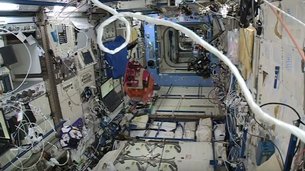
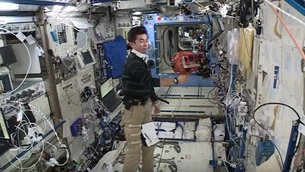
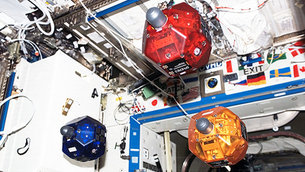
One of the Spheres – Synchronized Position Hold Engage and Reorient Experimental Satellite – drones resident in the Space Station was pressed into service for testing.
With 12 carbon dioxide gas thrusters enabling rotation and movement in all direction, the bowling ball-sized Spheres are essentially free-floating mini-spacecraft within the Station, used for testing a wide variety of technology.
For this test, a drone began navigating inside Japan’s module while recording stereo vision information from its two camera ‘eyes’. It then began to learn about the distances to walls and nearby obstacles so that when its stereo camera was switched off, it could then begin autonomous exploration using only a single camera.
 

Quadcopter for ground test

Operating in weightlessness, with no favoured up or down direction, added to the challenge. However, the experiment demonstrated that machine learning would indeed allow the normally stereo-viewing drone to recover from the loss of one camera.
The self-supervised learning software had previously been tested thoroughly at the TU Delft CyberZoo – a research lab for flying and walking robots – using quadcopters.
The experiment, presented on 27 September at the International Astronautical Congress in Guadalajara, Mexico, marked an important step in an ongoing research effort based on advanced artificial intelligence concepts, in collaboration between ESA, the Massachusetts Institute of Technology and the Micro Air Vehicles Lab of the Delft University of Technology.
 

Spheres drone with ISS crewman

“It was very exciting to see a drone in space learning using cutting-edge artificial intelligence methods for the very first time,” explains Dario Izzo, coordinating the research contribution from ESA’s Advanced Concepts Team.
“At ESA, in particular in our team, we’ve been working towards the goal for the last five years. In space applications, machine learning is not considered a reliable approach to autonomy: a ‘bad’ learning approach may result in a catastrophic failure of the entire mission.
 
SPHERES models
Spheres on Station

“Our approach, based on self-supervised learning, has a high degree of reliability and helps drone autonomy. A similar learning approach was successfully applied to self-driving cars, a task where reliability is also of paramount importance.”
Leopold Summerer, heading the  Advanced Concepts Team, adds: “This is a further step in our quest for truly autonomous space systems, which are increasingly in demand for deep-space exploration, complex operations, for reducing costs, and increasing capabilities and science opportunities.”
ESA
Guillermo Gonzalo Sánchez Achutegui
ayabaca@gmail.com
ayabaca@hotmail.com
ayabaca@yahoo.com
Inscríbete en el Foro del blog y participa : A Vuelo De Un Quinde - El Foro!

sábado, 1 de octubre de 2016

The National Science Foundation (NSF): NSF awards $94 million to create four new Science and Technology Centers .- NSF con premios de $ 94 millones de dólares para crear cuatro nuevos Centros de Ciencia y Tecnología...............

https://www.nsf.gov/news/news_summ.jsp?cntn_id=189782&WT.mc_id=USNSF_51&WT.mc_ev=click

Centers support long-term research at the forefront of innovation

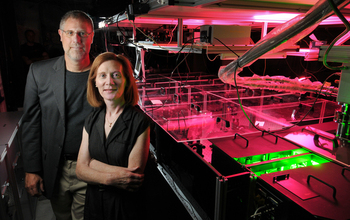
Margaret Murnane

Margaret Murnane is a physicist at the University of Colorado at Boulder.
Credit and Larger Version

September 26, 2016
Ambitious, complex research that leads to breakthrough discoveries requires large-scale, long-term investments. Today, the National Science Foundation (NSF) announces $94 million in funding to support four new Science and Technology Centers (STCs), partnerships that lay the foundations for advances in fields ranging from cell biology and mechanobiology to particle physics and materials science.
Each awardee will receive up to $24 million over a five-year period, with the possibility of a continuation for five additional years. In addition to these latest awards, NSF supports eight active STCs across the U.S.
Created in 1987, the STC Integrative Partnerships program supports collaborative, world-class research in areas of national importance. STCs address grand challenges at the intersection of scientific disciplines as well as focusing on new approaches to science and engineering within disciplines. Each STC involves partnerships across universities, federal labs, industry and other organizations.
"From deepening our understanding of intelligence, to developing energy-efficient electronics and next-generation polymers, NSF's Science and Technology Centers have stood at the forefront of discovery and innovation," said Suzi Iacono, head of the NSF Office of Integrative Activities. "The program's history sets high expectations for these newly awarded partnerships, and I'm pleased to see recipients poised to continue that legacy."
In addition to performing innovative research, STCs provide rich environments for training scientists and engineers. They actively integrate research and education, treating inquiry, discovery and creativity as inherent parts of the learning process. NSF also expects the centers to recruit, retain and mentor participants from groups traditionally underrepresented in science, technology, engineering and mathematics (STEM).
This year's four newly awarded STCs, principal investigators and their co-principal investigators and their sponsor institutions are:

Center for Bright Beams, J. Ritchie Patterson, Georg H. Hoffstaetter, Cornell University

Accelerators are important scientific tools that use beams of charged particles to investigate particle physics. This center's overarching research goal is to decrease the cost of key accelerator technologies while simultaneously increasing the intensity ("brightness") of charged particle beams by two orders of magnitude (roughly 100 times more intense). This STC will contribute to scientific advances in many disciplines, ranging from physics, to chemistry, to biology, by enhancing accelerator capabilities. The center will partner Cornell University with the University of Chicago; Chicago State University; the University of California, Los Angeles; the University of Florida; the University of Maryland; Brigham Young University; Morehouse College; Clark Atlanta University; the University of Toronto; the Fermi National Accelerator Laboratory; the Lawrence Berkeley National Laboratory; and TRIUMF (Canada's national laboratory for particle and nuclear physics and accelerator-based science).

Center for Cellular Construction, Wallace Marshall, Zev J. Gartner, Wendell Lim, University of California, San Francisco

Cell biology is a rapidly expanding field of science that explores the structure and properties of cells, yielding revolutionary discoveries in biology. This center's goal is to transform cell biology into a discipline that uses tools from engineering, and the physical and computer sciences to generate a greater understanding of the rules that govern cell behavior, while also enabling the design of cells that have useful functions. The center will develop tools to predict, design and test the impact on cellular function of changes to their internal organization. It will also create tools for building multicellular and multi-organism structures and develop living "bioreactors" that will generate products of commercial value. This STC will partner the University of California, San Francisco with University of California, Berkeley; San Francisco State University; Stanford University; the IBM Almaden Research Center; and the Exploratorium.

Science and Technology Center for Engineering MechanoBiology, Yale E. Goldman, Vivek B. Shenoy, Rebecca G. Wells, University of Pennsylvania; Guy Genin, Ram V. Dixit, Washington University in St. Louis; Christopher Chen, Boston University

Mechanobiology is a field that focuses on how forces influence plant and animal systems. This center's mission is to discover the principles that govern how biological systems communicate using molecular and cellular methods. The center will provide the intellectual foundations and materials for engineering new and powerful cell-based devices, and for training students in the foundations of mechanobiology. The center will bring together leading researchers from a diverse group of disciplines and institutions at the intersection of biology, mechanics and engineering. This STC will partner the University of Pennsylvania with Washington University in St. Louis; the University of Maryland; the New Jersey Institute of Technology; Bryn Mawr College; Alabama State University; and Boston University.
 
Science and Technology Center on Real-Time Functional Imaging, Margaret Murnane, Rafael Piestun, Markus B. Raschke, University of Colorado at Boulder; Naomi S. Ginsberg, University of California, Berkeley; Jianwei Miao, University of California, Los Angeles

As discoveries in science and technology proliferate at the nanometer and atomic scales, real-time functional imaging, which gives researchers the ability to detect what's happening at those tiny scales, becomes increasingly important. This center aims to advance real-time functional imaging by moving away from the current approach of using microscopes that employ a single imaging method -- optical, X-ray, nano-probe or electron microscopy, for example -- by combining and improving those techniques. Ultimately, the center seeks to enhance the research community's understanding of the structure and functionality of various types of matter as they change over time. This STC will partner the University of Colorado at Boulder with Fort Lewis College; Florida International University; the University of California, Berkeley; the University of California, Irvine and the University of California, Los Angeles.
-NSF-

Media Contacts Robert J. Margetta, NSF, (703) 292-2663,
rmargett@nsf.gov


The National Science Foundation (NSF) is an independent federal agency that supports fundamental research and education across all fields of science and engineering. In fiscal year (FY) 2016, its budget is $7.5 billion. NSF funds reach all 50 states through grants to nearly 2,000 colleges, universities and other institutions. Each year, NSF receives more than 48,000 competitive proposals for funding and makes about 12,000 new funding awards. NSF also awards about $626 million in professional and service contracts yearly.
 Get News Updates by Email 
Useful NSF Web Sites:
NSF Home Page:
https://www.nsf.gov
NSF News:
 https://www.nsf.gov/news/
For the News Media:
https://www.nsf.gov/news/newsroom.jsp
Science and Engineering Statistics:
https://www.nsf.gov/statistics/
Awards Searches:
 https://www.nsf.gov/awardsearch/

Wallace Marshall is a biochemistry professor at the University of California, San Francisco.
Credit and Larger Version
Yale E. Goldman is a professor of physiology at the University of Pennsylvania.
Credit and Larger Version
J. Ritchie Patterson is a physics professor at Cornell University.
Credit and Larger Version
The National Science Foundation (NSF)
Guillermo Gonzalo Sánchez Achutegui
ayabaca@gmail.com
ayabaca@hotmail.com
ayabaca@yahoo.com
Inscríbete en el Foro del blog y participa : A Vuelo De Un Quinde - El Foro!

domingo, 17 de julio de 2016

NASA : Researching 3D Printing Technology on the Space Station.- Investigando Tecnología de impresión 3D en la Estación Espacial

http://www.nasa.gov/image-feature/researching-3d-printing-technology-on-the-space-station

The 3D printer is reinstalled in the Microgravity Science Glovebox on the International Space Station.
Crew members on the International Space Station re-installed the first 3D printer in orbit, during the week of June 27, 2016, to continue research on the developing technology and how it can be used in space. NASA astronaut Jeff Williams installed the printer in the Microgravity Science Glovebox to begin another round of sample builds for NASA's 3D Printing in Zero-G Technology Demonstration. Williams took this photograph of the 3D printer on June 28, after installation.
 
The 3D printer, originally delivered to the station and tested in 2014, heats a relatively low-temperature plastic filament to build parts layer by layer using designs supplied to the machine.
The goal of having the printer on the orbiting laboratory is to demonstrate that additive manufacturing can be used to make a variety of parts and tools in space, reducing the need to send replacements from Earth. It is the first step toward establishing an on-demand machine shop in space -- a critical component to sustain deep-space crewed missions and in-space manufacturing. These new samples will be returned to Earth for comparison to similar objects manufactured by the printer before it was launched.
Image Credit: NASA
Last Updated: July 12, 2016
Editor: Sarah Loff
NASA
Guillermo Gonzalo Sánchez Achutegui
ayabaca@gmail.com
ayabaca@hotmail.com
ayabaca@yahoo.com
Inscríbete en el Foro del blog y participa : A Vuelo De Un Quinde - El Foro!

jueves, 9 de junio de 2016

NASA : New Mission Studying Neutron Stars On Track for Launch .- Una Nueva Misión, el explorador del estudio de las estrellas de neutrones en pista para el lanzamiento

http://www.nasa.gov/image-feature/new-mission-studying-neutron-stars-on-track-for-launch

NICER with protective blanketing and sunshades
A view of the Neutron star Interior Composition Explorer (NICER) X-ray Timing Instrument without its protective blanketing shows a collection of 56 close-packed sunshades—the white and black cylinders in the foreground—that protect the X-ray optics, as well as some of the 56 X-ray detector enclosures, on the gold-colored plate, onto which X-rays from the sky are focused.
NICER, an upcoming NASA astrophysics mission, will uncover the physics governing the ultra-dense interiors of neutron stars. Using the same platform, the mission will demonstrate trailblazing space navigation technology.
 
The NICER mission arrived at NASA’s Kennedy Space Center in Cape Canaveral, Florida, on June 8, 2016. Currently scheduled for launch to the International Space Station in February 2017 aboard a SpaceX Dragon cargo spacecraft, NICER will deploy as an external attached payload on the ISS ExPRESS Logistics Carrier 2. Its 56 X-ray optics and silicon detectors will observe and gather data about the interior composition of neutron stars and their pulsating cohort, pulsars.
Image Credit: NASA/Keith Gendreau
Last Updated: June 8, 2016
Editor: Sarah Loff
NASA
Guillermo Gonzalo Sánchez Achutegui
ayabaca@gmail.com
ayabaca@hotmail.com
ayabaca@yahoo.com
Inscríbete en el Foro del blog y participa : A Vuelo De Un Quinde - El Foro!

domingo, 15 de mayo de 2016

NASA : ‘Magnetoshells’.- From ‘Magnetoshells’ to Growable Habitats, NASA Invests in Next Stage of Visionary Technology Development.- De Magnetoshells '' a ampliable hábitats, la NASA invierte en Tecnología siguiente etapa de desarrollo visionario

Hola amigos: A VUELO DE UN QUINDE EL BLOG., la Agencia Espacial NASA, nos alcanza la información sobre las grandes inversiones que está realizando en tecnología..
More information.............

NASA Innovative Advanced Concepts (NIAC) Program Phase II concepts
Credits: NASA
NASA has selected eight technology proposals for investment that have the potential to transform future aerospace missions, introduce new capabilities, and significantly improve current approaches to building and operating aerospace systems.

Awards under Phase II of the NASA Innovative Advanced Concepts (NIAC) Program can be worth as much as $500,000 for a two-year study, and allow proposers to further develop concepts funded by NASA for Phase I studies that successfully demonstrated initial feasibility and benefit.

“The NIAC program is one of the ways NASA engages the U.S. scientific and engineering communities, including agency civil servants, by challenging them to come up with some of the most visionary aerospace concepts,” said Steve Jurczyk, associate administrator of NASA’s Space Technology Mission Directorate in Washington. “This year’s Phase II fellows have clearly met this challenge.”

Phase II studies allow awardees to refine their designs and explore aspects of implementing the new technology. This year’s Phase II portfolio addresses a range of leading-edge concepts, including: an interplanetary habitat configured to induce deep sleep for astronauts on long-duration missions; a highly efficient dual aircraft platform that may be able to stay aloft for weeks or even months at a time; and a method to produce “solar white” coatings for scattering sunlight and cooling fuel tanks in space down to 300 °F below zero, with no energy input needed.

The selected concepts are:
  • Advancing Torpor Inducing Transfer Habitats for Human Stasis to Mars, John Bradford, Space Works, Inc. in Atlanta
  • Cryogenic Selective Surfaces, Robert Youngquist, Kennedy Space Center in Florida
  • Directed Energy Interstellar Study, Philip Lubin, University of California, Santa Barbara
  • Experimental Demonstration and System Analysis for Plasmonic Force Propulsion, Joshua Rovey, University of Missouri in Rolla
  • Flight Demonstration of Novel Atmospheric Satellite Concept, William Engblom, Embry-Riddle Aeronautical University in Daytona Beach, Florida
  • Further Development of Aperture: A Precise Extremely Large Reflective Telescope Using Re-configurable Elements, Melville Ulmer, Northwestern University in Evanston, Illinois
  • Magnetoshell Aerocapture for Manned Missions and Planetary Deep Space Orbiters, David Kirtley, MSNW, LLC in Redmond, Washington
  • Tensegrity Approaches to In-Space Construction of a 1g Growable Habitat, Robert Skelton, Texas Engineering Experiment Station in La Jolla, California

NASA selected these projects through a peer-review process that evaluated innovativeness and technical viability.

“Phase II decisions are always challenging, but we were especially challenged this year with so many successful Phase I studies applying to move forward with their cutting-edge technologies,” said Jason Derleth, the NIAC program executive at NASA Headquarters in Washington. “Whether it's tensegrity habitats in space, new ways to get humans to Mars, delicate photonic propulsion, or any one of the other amazing Phase II studies NIAC is funding, I'm thrilled to welcome these innovations and their innovators back to the program. Hopefully, they will all go on to do what NIAC does best - change the possible.”

All projects are still in the early stages of development, most requiring 10 or more years of concept maturation and technology development before use on a NASA mission.

NIAC is funded by NASA’s Space Technology Mission Directorate, which innovates, develops, tests, and flies hardware for use in NASA’s future missions. Through programs such as NIAC, the directorate is demonstrating that early investment and partnership with scientists, engineers and citizen inventors from across the nation can provide technological dividends and help maintain America's leadership in the new global technology economy.

For a complete list of the selected proposals, and more information about NIAC, visit:


For more information about NASA’s Space Technology Mission Directorate, visit:


-end-
Gina Anderson
Headquarters, Washington
202-358-1160
gina.n.anderson@nasa.gov
Last Updated: May 14, 2016
Editor: Karen Northon
Tags:  Technology,
NASA
Guillermo Gonzalo Sánchez Achutegui
Inscríbete en el Foro del blog y participa : A Vuelo De Un Quinde - El Foro!

domingo, 8 de mayo de 2016

NASA : NASA Makes Dozens of Patents Available in Public Domain to Benefit U.S. Industry .- La NASA hace decenas de patentes disponibles en el dominio público para beneficiar a la industria de los EE.UU.

http://www.nasa.gov/press-release/nasa-makes-dozens-of-patents-available-in-public-domain-to-benefit-us-industry

NASA Technology Transfer Program
NASA has released 56 formerly-patented agency technologies into the public domain, making its government-developed technologies freely available for unrestricted commercial use. In addition to the release of these technologies, a searchable database now is available that catalogs thousands of expired NASA patents already in the public domain.

These technologies were developed to advance NASA missions but may have non-aerospace applications and be used by commercial space ventures and other companies free of charge, eliminating the time, expense and paperwork often associated with licensing intellectual property. The technologies include advanced manufacturing processes, sensors, propulsion methods, rocket nozzles, thrusters, aircraft wing designs and improved rocket safety and performance concepts.

“By making these technologies available in the public domain, we are helping foster a new era of entrepreneurship that will again place America at the forefront of high-tech manufacturing and economic competitiveness,” said Daniel Lockney, NASA’s Technology Transfer program executive. “By releasing this collection into the public domain, we are encouraging entrepreneurs to explore new ways to commercialize NASA technologies.”

This patents release is the latest in NASA’s long tradition of extending the benefits of its research and development into the public sector, where it may enhance the economy and quality of life for more Americans. The release also may help familiarize commercial space companies with NASA capabilities and result in new collaborations with private industry.

The innovations included in this transfer were selected by NASA officials using a rigorous review process, during which decision-makers looked for technologies that offer the potential for high unit values but are less likely to be licensed by outside companies because of low demand for resulting products (e.g. spacecraft), or the technology still requires significant development before it is marketable.

A few examples include:
  • Technologies designed to mitigate the dangerous gases created as humans live and work in space
  • Inventions related to rocket nozzles, injection systems and propellants that might help launch a new generation of commercial spacecraft
  • Methods for controlling airflow around vehicles in hypersonic flight

NASA's patent portfolio, managed by the agency’s Technology Transfer Program, includes more than 1,000 technologies in categories such as manufacturing, optics and sensors, and is available for industry use through licensing agreements.

To search the database of NASA-developed technologies now in the public domain, visit:


To learn more about the Technology Transfer Program, visit:


-end-
Gina Anderson
Headquarters, Washington
202-358-1160
gina.n.anderson@nasa.gov
Last Updated: May 5, 2016
Editor: Karen Northon
NASA
Guillermo Gonzalo Sánchez Achutegui
Inscríbete en el Foro del blog y participa : A Vuelo De Un Quinde - El Foro!

Mi lista de blogs