Mostrando entradas con la etiqueta The BRAIN Initiative. Mostrar todas las entradas

domingo, 1 de noviembre de 2015

NSF : Speeding up extreme big brain data analysis .- Acelerar el análisis de los datos estremos del cerebro grande

Hola amigos: A VUELO DE UN QUINDE EL BLOG., la Fundación Nacional de Ciencias de Los Estados Unidos, nos alcanza la información sobre un análisis extremo de un cerebro grande; ellos nos dicen que :
"Es difícil desentrañar los misterios del cerebro cuando el equipo se congela.

Para ayudar a los investigadores del cerebro frustrados, un equipo multidisciplinario de científicos de la Universidad de Utah ha creado un método más rápido para generar y explorar de alta resolución, imágenes en 3-D del cerebro.

Alessandra Angelucci, neurocientífico del Centro Oftalmológico Moran en el Departamento de Oftalmología de Utah cuya investigación es financiada por la National Science Foundation (NSF), dice que la herramienta permite a ella ya sus colegas a visualizar mejor las complejas conexiones entre las neuronas.

"Sabemos que la función cerebral surge de la actividad de las redes neuronales", dice Angelucci. "Para entender cómo funciona el cerebro, lo que necesitamos saber cómo es por cable."
More inforamtion....

Interactive software tool lets brain researchers explore large-scale, high-res imaging to better understand connections in the brain
screenshot of tool that maps connections between neurons with an image of a macaque brain
Big data visualization tools are vital to advance our understanding of the brain.
Credit and Larger Version
October 26, 2015

It's tough to unravel the mysteries of the brain when your computer is frozen.
To aid frustrated brain researchers, a multidisciplinary team of scientists at the University of Utah has created a faster method for generating and exploring high-resolution, 3-D images of the brain.
Alessandra Angelucci, a neuroscientist with the Moran Eye Center at Utah's Ophthalmology Department whose research is funded by the National Science Foundation (NSF), says the tool allows her and her colleagues to better visualize the complex connections between neurons.
"We know that brain function emerges from the activity of neural networks," Angelucci says. "To understand how the brain works, we need to know how it is wired."
The work by the Utah team is part of a movement across the scientific community to come up with new ways to use and analyze information. Scientific instruments ranging from brain scanners, to microscopes, to telescopes are increasingly improving and generating larger amounts of high-quality data, creating the need for more efficient data-processing approaches.
"This is really an extreme big data project," says Cameron Christensen, a Utah computer scientist on a team led by Valerio Pascucci at the SCI Institute at Utah, who created the new method at the Center for Extreme Data Management Analysis and Visualization. Pascucci and his team are funded by NSF's PetaApps program, designed to accelerate discovery through petascale simulations and analysis.
"We're living in a time of extreme big data. This tool could have applications for astronomy, climate change and other fields," says Christensen.
Big data tools are vital to advance our understanding of the brain, universe and other topics, as evidenced by national efforts such as The BRAIN Initiative.

New method

The tool is a new twist on an existing technology.
The technology, known as Visualization Streams for Ultimate Scalability (ViSUS), turns massive quantities of digital data into visual information that the human mind can understand. ViSUS has been used for years in several different areas of research, including clean energy simulations on high performance computing platforms.
The software processes terascale-sized datasets in a way that allows researchers to explore the images interactively. The typical laptop has about 4-15 gigabytes of memory. One terabyte has 1,000 times that much. That's doable for a supercomputer, but not a grad student's Mac.
"Previously, if you wanted to interact with this volume of data, you couldn't. Everything would freeze," Christensen says.
Think of the desk-smacking frustration involved in trying to open an image file 1,000 times greater than your computer can handle.
This is a frustration brain researchers know well.
A whole mouse brain is about 31 terabytes of imaging data. That is same amount of data as about 32 million digital photographs.
The visual cortex of the macaque brain, which Angelucci studies, is 318 terabytes.
"We call these 'terror-bytes,'" said Terry Sejnowski of the Salk Institute for Biological Sciences, a computational neuroscientist who moderated the Society for Neuroscience press conference at which the findings were announced.
The new approach developed by Pascucci's team to handle these terror-bytes is hierarchical, loading images of increasing resolution as the user clicks to see more details.
"It's a little like Google Maps, where you zoom in and in. Except with our technique, you don't reload all the data each time. You only download the differences between levels, so it's faster and requires less memory," he says. "Therefore, it opens the possibility of dealing with 3-D microscopy volumes instead of just 2-D maps."

Millimeters of brain

Angelucci and her colleagues used the technology to stream 3-D images of a primate's visual cortex.
They paired this tool with a neuroscience technique called CLARITY, which makes surrounding brain tissue transparent. (CLARITY was developed by NSF-funded researchers in 2013.)
"The development of CLARITY made our lives much easier," said postdoctoral fellow and neuroscientist Frederick Federer, who works with Angelucci. "But the datasets couldn't load on our computers."
The team is now developing automated ways to trace the connections between neurons in the images, and to make the new interface accessible for other researchers.
"New biological techniques paired with computational approaches are opening up new multidisciplinary opportunities to advance brain research," Federer says.
-NSF-
Media Contacts Sarah Bates, NSF, (703) 292-7738, sabates@nsf.gov
Related WebsitesNSF Understanding the Brain: http://nsf.gov/brain
The National Science Foundation (NSF) is an independent federal agency that supports fundamental research and education across all fields of science and engineering. In fiscal year (FY) 2015, its budget is $7.3 billion. NSF funds reach all 50 states through grants to nearly 2,000 colleges, universities and other institutions. Each year, NSF receives about 48,000 competitive proposals for funding, and makes about 11,000 new funding awards. NSF also awards about $626 million in professional and service contracts yearly.
Useful NSF Web Sites:
NSF Home Page: http://www.nsf.gov
NSF News:
 http://www.nsf.gov/news/
For the News Media:
 http://www.nsf.gov/news/newsroom.jsp
Science and Engineering Statistics:
 http://www.nsf.gov/statistics/
Awards Searches:

vsiualizations of different brains
Researchers paired the tool with the CLARITY technique for 3-D brain visualization.
Credit and Larger Version
mouse brain next to a penny  and a macaque brain comparing volume data sizes
A whole mouse brain is about 31 terabytes of imaging data, about 32 million digital photographs.
Credit and Larger Version
woman standing next to wall of screens.
The ViSUS technology provides a faster way to view, align and annotate terabyte-scale data.
Credit and Larger Version
neurons in a primate brain
The tool is a new twist on an existing software technology.
Credit and Larger Version
The National Science Foundation (NSF) 
 Guillermo Gonzalo Sánchez Achutegui
ayabaca@gmail.com
ayabaca@hotmail.com
ayabaca@yahoo.com 
Inscríbete en el Foro del blog y participa : A Vuelo De Un Quinde - El Foro!

domingo, 5 de julio de 2015

National Science Foundation - Seeing more deeply with laser light.- Ver más profundamente con luz láser

 Hola amigos: A VUELO DE UN QUINDE EL BLOG., hemos recibido información de la Fundación Nacional de Ciencias de Los Estados Unidos, indicándonos los beneficios de la utilización de los rayos láser; tanto es así que: Enfoque fotoacústica muestra potencial para expandir el alcance de bioimagen.
NSF, nos dice: " Un cráneo humano, en promedio, es de aproximadamente 0,3 pulgadas de grosor, o aproximadamente la profundidad de la más reciente teléfono inteligente. La piel humana, por otro lado, es de aproximadamente 0,1 pulgadas, o alrededor de tres granos de sal y profundas.
Aunque estas dimensiones son extremadamente delgada, todavía presentan grandes obstáculos para cualquier tipo de imágenes con luz láser.
 Por Qué? La luz del láser contiene fotones, o partículas minúsculas de la luz. Cuando los fotones se encuentran con el tejido biológico, se dispersan. Acorralar las pequeñas balizas para obtener detalles significativos sobre el tejido ha demostrado ser uno de los problemas más desafiantes investigadores láser han enfrentado..............."

More information........... 
http://www.nsf.gov/discoveries/disc_summ.jsp?cntn_id=135473&WT.mc_id=USNSF_51&WT.mc_ev=click

Photoacoustic approach shows potential to expand bioimaging's scope
mouse brain imaged using photoacoustic microscopy.
This mouse brain was imaged without imaging agents using photoacoustic microscopy.
Credit and Larger Version
June 19, 2015
A human skull, on average, is about 0.3 inches thick, or roughly the depth of the latest smartphone. Human skin, on the other hand, is about 0.1 inches, or about three grains of salt, deep.
While these dimensions are extremely thin, they still present major hurdles for any kind of imaging with laser light.
Why? Laser light contains photons, or miniscule particles of light. When photons encounter biological tissue, they scatter. Corralling the tiny beacons to obtain meaningful details about the tissue has proven one of the most challenging problems laser researchers have faced.
However, one research group at Washington University in St. Louis (WUSTL) decided to eliminate the photon roundup completely and use scattering to their advantage.
The result: An imaging technique that penetrates tissue up to about 2.8 inches. This approach, which combines laser light and ultrasound, is based on the photoacoustic effect, a concept first discovered by Alexander Graham Bell in the 1880s.
In his work, Bell found that a focused light beam produces sound when trained on an object and rapidly interrupted--he used a rotating, slotted wheel to create a flashing effect with sunlight.
Bell's concept is the foundation for photoacoustics, an area of a growing field known as biophotonics, which joins biology and light-based science known as phototonics. Biophotonics bridges photonics principles, engineering and technology that are relevant for critical problems in medicine, biology and biotechnology.
"We combine some very old physics with a modern imaging concept," says WUSTL researcher Lihong Wang, who pioneered the approach.
Wang and his WUSTL colleagues were the first to describe functional photoacoustic tomography (PAT) and 3-D photoacoustic microscopy (PAM). Both techniques follow the same basic principle: When the researchers shine a pulsed laser beam into biological tissue, it spreads out and generates a small, but rapid rise in temperature. This increase produces sound waves that are detected by conventional ultrasound transducers. Image reconstruction software converts the sound waves into high-resolution images.

Following a tortuous path

Wang first began exploring the combination of sound and light as a post-doctoral researcher.
At the time, he modeled photons as they traveled through biological material. This work led to an NSF CAREER grant to study ultrasound encoding of laser light to "trick" information out of the beam.
"The CAREER grant boosted my confidence and allowed me to study the fundamentals of light and sound in biological tissue, which benefited my ensuing career immensely," he says.
Unlike other optical imaging techniques, photoacoustic imaging detects ultrasonic waves induced by absorbed photons no matter how many times the photons have scattered. Multiple external detectors capture the sound waves regardless of their original locations.
"While the light travels on a highly tortuous path, the ultrasonic wave propagates in a clean and well-defined fashion," Wang says. "We see optical absorption contrast by listening to the object."
The approach does not require injecting imaging agents, so researchers can study biological material in its natural environment. Using photoacoustic imaging, researchers can visualize a range of biological material from cells and their component parts to tissue and organs. It detects single red blood cells in blood, as well as fat and protein deposits.
While PAT and PAM are primarily used by researchers, Wang and others are working on multiple clinical applications. In one case, researchers use PAM to study the trajectory of blood cells as they flow through vessels in the brain.
"By seeing individual blood cells, researchers can start to identify what's happening to the cells as they move through the vessels. Watching how these cells move could act as an early warning system to allow detection of potential blockage sites," says Richard Conroy, director of the Division of Applied Science and Technology at the National Institute of Biomedical Imaging and Bioengineering.

Minding the gap

Because PAT and PAM images can be correlated with those generated using other methods such as magnetic resonance imaging or positron emission tomography, these techniques can complement existing ones.
"One imaging modality can't do everything," says Conroy. "Comparing results from different modalities provides a more detailed understanding of what is happening from the cell level to the whole animal."
The approach could help bridge the gap between animal and human research, especially in neuroscience.
"Photoacoustic imaging is helping us understand how the mouse brain works. We can then apply this information to better understand how the human brain works," says Wang, who along with his team is applying both PAT and PAM to study mouse brain function.
Wang notes that one of the challenges currently facing neuroscientists is the lack of available tools to study brain activity such as action potentials, which occur when electrical signals travel along axons, the long fibers that carry signals away from the nerve cell body.
"The holy grail of brain research is to image action potentials," he says.
With funding from The BRAIN Initiative, Wang and his group are now developing a PAT system to capture images every one-thousandth of a second, fast enough to image action potentials in the brain.
"Photoacoustic imaging fills a gap between light microscopy and ultrasound," says Conroy. "The game-changing aspect of this [Wang's] approach is that it has redefined our understanding of how deep we can see with light-based imaging."
--  Susan Reiss, (703) 292-8070 sreiss@associates.nsf.gov
Investigators Lihong Wang
Related Institutions/Organizations Washington University
Related Programs Biophotonics
Total Grants $320,736
Related AgenciesNational Institute of Biomedical Imaging and Bioengineering
Related Websites
Brain power: Bright ideas and smart tools for neuroengineering:
 http://www.nsf.gov/brainpower
Height of light: Progress in lasers and other light sources:
 http://www.nsf.gov/eng/special/light/
On the road to ubiquity: NSF support for laser research: 
http://www.nsf.gov/discoveries/disc_summ.jsp?cntn_id=135463
Light technologies and missing professor mystery: A video by the National Science Foundation: https://www.youtube.com/watch?list=PL0ujJTaPsv3ehhaYWjxKE2uCdwikA8ac6&v=D3a2USvTpwQ

graphic showing red blood cells movement
View Video
Photoacoustic imaging of single flowing red blood cells.
Credit and Larger Version


 The National Science Foundation (NSF)
 Guillermo Gonzalo Sánchez Achutegui
ayabaca@gmail.com
ayabaca@hotmail.com
ayabaca@yahoo.com  
Inscríbete en el Foro del blog y participa : A Vuelo De Un Quinde - El Foro!

domingo, 5 de octubre de 2014

nsf.gov - National Science Foundation - National Science Foundation is dedicated to support for The BRAIN Initiative

Hola amigos: A VUELO DE UN QUINDE EL BLOG., la Fundación Nacional de Ciencia de Los Estados Unidos, empeñado en : "La Iniciativa BRAIN: sostiene que ..:" es verdaderamente un esfuerzo emocionante y potencialmente cambia el juego para desbloquear los secretos de uno de los misterios más perdurables de la humanidad", dijo el director de NSF France Córdova, quien habló en el evento. "En última instancia, nuestras inversiones en descubrimiento cerebro transformarán nuestra visión de quiénes somos, cómo nos relacionamos con los demás y cómo nos relacionamos con nuestro entorno siempre cambiante."

http://www.nsf.gov/news/news_summ.jsp?cntn_id=132882&WT.mc_id=USNSF_51&WT.mc_ev=click

During a White House conference, NSF encourages new partnerships and announces a new funding opportunity to advance fundamental brain research

Color image of neurons
NSF awarded $10.8 million in early-concept grants for brain research in August.
Credit and Larger Version
September 30, 2014
Today the White House announced its continued support for The BRAIN Initiative and revealed new commitments from non-federal agencies as part of the call to action to advance brain research. Government leaders also highlighted the progress that has been made since the initiative was first announced on April 2, 2013.
The National Science Foundation (NSF) funded approximately $20 million in BRAIN-related projects and activities in fiscal year 2014. This included the recently awarded 36 Early Concept Grants for Exploratory Research to enable new technologies to better understand how complex behaviors emerge from the activity of brain circuits.
"The BRAIN Initiative is truly an exciting and potentially game-changing effort to unlock the secrets of one of humankind's most enduring mysteries," said NSF Director France Córdova, who spoke at the event. "Ultimately, our investments in brain discovery will transform our view of who we are, how we relate to one another and how we interact with our ever-changing environment."
Today, as part of The BRAIN Initiative, NSF announced a new funding opportunity to support transformative and integrative research to accelerate our understanding of neural and cognitive systems. The competition focuses on two research themes: neuroengineering and brain-inspired concepts and designs, and individuality and variation--the first of which is one of NSF's key BRAIN thematic areas.
The program will support 15 to 25 grants for up to $12 million in total for fiscal year 2015.
NSF also announced the intention to expand its Industry/University Cooperative Research Centers (I/UCRC) program to encourage new industry-university partnerships as part of The BRAIN Initiative. The I/UCRC program has fostered long-term partnerships among academe, industry and government in various technology sectors via these centers for more than 30 years.
For these centers, NSF serves as catalyst to bring together different parties with mutual interests in specific fields to advance research and economic potential.
In a letter to the research community, NSF underscored the need for new collaborations to focus on identification of links between brain structure and function.
NSF plans to engage the neuroscience community in the coming year with several more activities--such as a BRAIN-focused "ideas lab," an intensive workshop focused on finding innovative solutions to grand challenges.
"NSF has proposed to significantly increase our investments in new interdisciplinary and transdisciplinary research and workforce development, as well as exploration of brain-inspired technologies, novel materials and components, and advanced manufacturing techniques," said Joanne Tornow, deputy assistant director for NSF's Directorate for Social, Behavioral & Economic Sciences, who also spoke at the event.
 
Advancing great brain science
 
NSF is one of three federal agencies, along with the National Institutes of Health and the Defense Advanced Research Projects Agency, with significant investments in brain research that helped to jumpstart The BRAIN Initiative.
While BRAIN began as a largely government-supported initiative, more private sector and academic institutions have become involved.
Today's event included commitment statements from new federal agency partners such as the Food and Drug Administration and Intelligence Advanced Research Projects Activity, as well as from a wide range of industrial, private and academic partners to advance the initiative's long-term goals--the development of new neurotechnologies that will help researchers better understand how the brain works.
"We fully support the president's call for private sector companies, research universities, foundations and philanthropies to partner with government agencies in pursuing the BRAIN Initiative," Tornow said. "We must leverage all of our collective resources and skills to pursue this daunting scientific and technological challenge."
Other NSF-funded BRAIN-related activities in fiscal year 2014 included a series of workshops sponsored by multiple scientific directorates, and multiple awards from core programs across the foundation. The MIT-based Science and Technology Center for Brains, Minds and Machines was also established in 2014.
Visit NSF.gov/brain for more information about NSF's support for The BRAIN Initiative.
-NSF-
Media Contacts Sarah Bates, NSF, (703) 292-7738, sabates@nsf.gov
Lily Whiteman, NSF, (703) 292-8070, lwhitema@nsf.gov
Related WebsitesUnderstanding the Brain:
 http://www.nsf.gov/brain
NSF BRAIN Initiative YouTube channel:
https://www.youtube.com/user/NSFbraininitiative
Brain power: Bright ideas and smart tools for neuroengineering:
http://nsf.gov/brainpower
White House BRAIN Fact Sheet:
The National Science Foundation (NSF) is an independent federal agency that supports fundamental research and education across all fields of science and engineering. In fiscal year (FY) 2014, its budget is $7.2 billion. NSF funds reach all 50 states through grants to nearly 2,000 colleges, universities and other institutions. Each year, NSF receives about 50,000 competitive requests for funding, and makes about 11,500 new funding awards. NSF also awards about $593 million in professional and service contracts yearly.
Useful NSF Web Sites:
NSF Home Page:
 http://www.nsf.gov
NSF News:
 http://www.nsf.gov/news/
For the News Media:
 http://www.nsf.gov/news/newsroom.jsp
Science and Engineering Statistics:

The National Science Foundation (NSF)
Guillermo Gonzalo Sánchez Achutegui
ayabaca@gmail.com
ayabaca@hotmail.com
ayabaca@yahoo.com
Inscríbete en el Foro del blog y participa : A Vuelo De Un Quinde - El Foro!

lunes, 18 de agosto de 2014

nsf.gov - National Science Foundation - NSF awards $10.8 million in early concept grants for brain research


36 new awards as part of NSF’s support for The BRAIN Initiative and potentially transformative insights into understanding the brain

Color image of the nerve cells in the brain of a songbird
New neurotechnologies can help researchers answer fundamental questions about how the brain works.
Credit and Larger Version
August 18, 2014
The National Science Foundation (NSF) has awarded 36 Early Concept Grants for Exploratory Research (EAGER) to enable new technologies to better understand how complex behaviors emerge from the activity of brain circuits.
These awards will contribute to NSF's growing portfolio of investments in support of President Obama's BRAIN Initiative, a multi-agency research effort that seeks to accelerate the development of new neurotechnologies that promise to help researchers answer fundamental questions about how the brain works.
Each NSF EAGER award is for $300,000 over a two-year period. The researchers receiving the awards, many first-time NSF grantees, will develop a range of conceptual and physical tools, from real-time whole brain imaging, to new theories of neural networks, to next-generation optogenetics.
Most of the awarded projects involve interdisciplinary teams of investigators; these 36 awards will support 76 researchers with expertise that spans nearly all scientific and engineering fields of study represented at NSF. Three of the projects involve international collaborations.
"Progress towards the goals of The BRAIN Initiative and our comprehension of the brain and behavior requires that scientists and engineers from diverse disciplines work together," said NSF Director France Córdova. "NSF is proud to invest in collaborative, fundamental projects that incubate innovative ideas in this exciting area of inquiry."
 
Catching the brain in action
In March, NSF asked researchers to submit ideas for early-stage, potentially ground-breaking new approaches to reveal how neuronal processes in the brain lead to complex behaviors in any organism. NSF reviewed the summaries and invited full proposals from applicants whose ideas best aligned with the outlined research topics. Five of NSF's scientific directorates were involved in funding the final selections.
EAGER awards, a funding mechanism within NSF's merit review system, are intended for short-term, proof-of-concept projects with high-payoff prospects.
"These new awards are a key element in NSF's overall, strategic efforts to support investigations into how the brain functions, in action and in context," said John Wingfield, NSF's assistant director for the Biological Sciences Directorate, which led the call for proposals.
"The research community is well-poised to tackle the challenges associated with understanding neural circuitry," Wingfield said. "With NSF's support, we expect these investments to lead to significant steps toward inventive new tools and technologies aimed at catching the brain in action."
These EAGER awards cap off numerous NSF-supported, BRAIN-related activities in fiscal year 2014. These activities include a series of workshops sponsored by multiple scientific directorates, the new MIT-based Science and Technology Center for Brains, Minds and Machines, and ongoing awards from core programs across the foundation.
Visit NSF.gov/brain for more information about NSF's support for The BRAIN Initiative.
The full list of primary investigators who will receive EAGER awards follows.
Florin Albeanu, Cold Spring Harbor Laboratory
Dora Angelaki, Baylor College of Medicine
Brenda Bloodgood, University of California, San Diego
Davide Comoletti, Rutgers
Stephen Cowen, University of Arizona
Steven Finkbeiner, University of California, San Francisco
Martha Gillette, University of Illinois at Urbana-Champaign
Ehud Isacoff, University of California, Berkeley
Hiro Matsunami, Duke University
Karen Mesce, University of Minnesota
Ethan Minot, Oregon State University
Partha Mitra, Cold Spring Harbor Laboratory
Mala Murthy, Princeton University
Carey Priebe, Johns Hopkins University
Todd Roberts, University of Texas, Southwestern
Aravi Samuel, Harvard University
Spencer Smith, University of North Carolina
Fidel Santamaria, University of Texas, San Antonio
Mriganka Sur, MIT
Martin Usrey, University of California, Davis
Matt Wachowiak, University of Utah
Edo Waks, University of Maryland
Donna Webb, Vanderbilt University
Ian Wickersham, MIT
Karen Zito, University of California, Davis
Directorate for Engineering
Stephen Boppart, University of Illinois, Urbana-Champaign
Bin He, University of Minnesota
Ute Hochgeschwender, Duke University
Nancy X. Xu, Old Dominion University
Directorate for Computer and Information Science and Engineering
Katherine Heller, Duke University
Directorate for Social, Behavioral and Economic Sciences
Andrea Chiba, University of California, San Diego
Catherine Stamoulis, Harvard Medical School
Directorate for Mathematical and Physical Sciences
William Bialek, Princeton University
David Kleinfeld, University of California, San Diego
Scott Laughlin, Stony Brook University
Charles Stevens, Salk Institute for Biological Studies
-NSF-

Media Contacts Sarah Bates, NSF, (703) 292-7738, sabates@nsf.gov
Lily Whiteman, NSF, (703) 292-8070, lwhitema@nsf.gov

Related WebsitesUnderstanding the Brain website:
 http://www.nsf.gov/brain
NSF BRAIN Initiative YouTube channel:
https://www.youtube.com/user/NSFbraininitiative
White House BRAIN Fact Sheet:
http://www.whitehouse.gov/the-press-office/2013/04/02/fact-sheet-brain-initiative
NIH BRAIN website:
 http://www.nih.gov/science/brain/


The National Science Foundation (NSF) is an independent federal agency that supports fundamental research and education across all fields of science and engineering. In fiscal year (FY) 2014, its budget is $7.2 billion. NSF funds reach all 50 states through grants to nearly 2,000 colleges, universities and other institutions. Each year, NSF receives about 50,000 competitive requests for funding, and makes about 11,500 new funding awards. NSF also awards about $593 million in professional and service contracts yearly.
 Get News Updates by Email 
Useful NSF Web Sites:
NSF Home Page:
 http://www.nsf.gov
NSF News:
http://www.nsf.gov/news/
For the News Media:
 http://www.nsf.gov/news/newsroom.jsp
Science and Engineering Statistics:
 http://www.nsf.gov/statistics/
Awards Searches:
http://www.nsf.gov/awardsearch/

The National Science Foundation (NSF)
Guillermo Gonzalo Sánchez Achutegui
ayabaca@gmail.com
ayabaca@hotmail.com
ayabaca@yahoo.com
Inscríbete en el Foro del blog y participa : A Vuelo De Un Quinde - El Foro!

viernes, 4 de abril de 2014

nsf.gov - National Science Foundation - New Understanding the Brain website features funding opportunities, research areas

Visitors can find brain-related information from across the agency in one place
Image of fruit fly brain with nerve cells.
NSF aims to enable scientific understanding of the full complexity of the brain.
Credit and Larger Version
April 2, 2014
On the first anniversary of President Obama's BRAIN Initiative announcement, the National Science Foundation (NSF) has launched a new portal at NSF.gov/brain dedicated to the agency's brain research-related funding opportunities and news.
"NSF-supported researchers explore the brain from all angles--from atoms to thoughts and behavior--resulting in some of the greatest neuroscience breakthroughs in our lifetime," said NSF Deputy Director Cora Marrett. "While NSF is committed to supporting brain research across disciplines and scales, we are equally committed to effective communication of these efforts and opportunities."
NSF funds potentially transformative, fundamental brain research across all areas of science and engineering. The Understanding the Brain portal allows visitors to find NSF brain-related information in one place.
The website also includes NSF's specific thematic research areas for the BRAIN (Brain Research through Advancing Innovative Neurotechnologies) Initiative, the latest funding and event announcements and a list of core programs that support neuroscience research, as well as public-facing articles and videos about new findings.
-NSF-
Media Contacts Sarah Bates, NSF, (703) 292-7738, sabates@nsf.gov
Lily Whiteman, NSF, (703) 292-8070, lwhitema@nsf.gov
Related WebsitesUnderstanding the Brain homepage: http://www.nsf.gov/brain
The National Science Foundation (NSF) is an independent federal agency that supports fundamental research and education across all fields of science and engineering. In fiscal year (FY) 2014, its budget is $7.2 billion. NSF funds reach all 50 states through grants to nearly 2,000 colleges, universities and other institutions. Each year, NSF receives about 50,000 competitive requests for funding, and makes about 11,500 new funding awards. NSF also awards about $593 million in professional and service contracts yearly.
Useful NSF Web Sites:
NSF Home Page:
http://www.nsf.gov/news/
For the News Media:
 http://www.nsf.gov/news/newsroom.jsp
Science and Engineering Statistics:
 
The National Science Foundation (NSF)
Guillermo Gonzalo Sánchez Achutegui

jueves, 3 de abril de 2014

nsf.gov - National Science Foundation - Understanding the Brain

New techniques reveal the brain’s complexity.
Credit: Deisseroth Lab

People control flying robots with brain-machine interface technology.
Credit: University of Minnesota
New techniques reveal the brain’s complexity.
Credit: Deisseroth Lab
Understanding the Brain — NSF's goal is to enable scientific understanding of the full complexity of the brain, in action and in context, through targeted, cross-disciplinary investments in research, technology, and workforce development. Understanding the Brain activities promise innovative and integrated solutions to challenges in our ability to predict how collective interactions between brain function and our physical and social environment enable complex behavior. NSF's strategic investments will support research and infrastructure designed to transform our view of who we are and how we relate to and interact with each other and our ever-changing environment.

BRAIN: Brain Research through Advancing Innovative Neurotechnologies

The BRAIN Initiative extends beyond the mapping of the brain and bridges the scales that span from atoms to thoughts and behavior, linking what is known about single cells and subcellular activities in the brain to whole brain function leading to complex behavior. This initiative holds great promise for addressing fundamental neurobiological questions about healthy brain function, laying the groundwork for advancing treatments for nervous system disorders or traumatic brain injury, and for generating brain-inspired "smart" technologies to meet future societal needs.
NSF is uniquely positioned to foster BRAIN Initiative research by bringing together a wide range of scientific and engineering disciplines, and empowering these national and international communities whose members are poised to cooperatively pursue and reveal the fundamental principles and processes underlying memories, thoughts and complex behaviors.

BRAIN Thematic Areas

News


Latest Tweets


The National Science Foundation (NSF)
Guillermo Gonzalo Sánchez Achutegui
ayabaca@gmail.com
ayabaca@hotmail.com
ayabaca@yahoo.com
Inscríbete en el Foro del blog y participa : A Vuelo De Un Quinde - El Foro!

lunes, 9 de septiembre de 2013

nsf.gov - New center to better understand human intelligence, build smarter machines

 
New center to better understand human intelligence, build smarter machines
NSF awards $25 million to MIT-based center to advance brain understanding
 
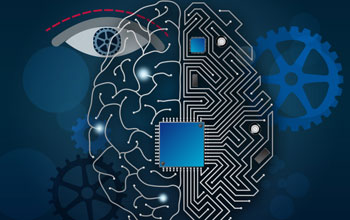
Illustration of computer and brain parts
Significant obstacles remain before the gap between brain and machine can be bridged.
Credit and Larger Version
September 9, 2013
Siri and Watson may seem brainy in certain situations, but to build truly smart, world-changing machines, researchers must understand how human intelligence emerges from brain activity.
Such an awesome challenge requires that scientists and engineers across key fields work together to learn how the brain performs complex computations, from social interactions to visual recognition. The hope is that through building intelligent machines, we can better understand ourselves.
To help encourage progress in this field, the National Science Foundation (NSF) recently awarded $25 million to establish a Center for Brains, Minds and Machines at the Massachusetts Institute of Technology (MIT). The center is one of three new research centers funded this year through NSF's Science and Technology Centers: Integrative Partnerships program.
"NSF is pleased to support a cohort of exceptionally strong center proposals in Fiscal Year 2013 that scientifically 'top the charts' in terms of their timeliness and their potential contribution to U.S. competitiveness," said Wanda Ward, NSF's office head of the Office of International and Integrative Activities, which oversees the program. "These new leading-edge centers will produce the next generation of diverse, globally engaged talent and have the potential to attract more Nobel Prize-caliber researchers."
The MIT center will also play a key role in the new BRAIN Initiative, an effort by federal agencies and private partners to support and coordinate research to understand how the brain works.
A computer that learns like you
Recent advances in areas ranging from artificial intelligence to neurotechnology present new opportunities for an integrated effort to produce major breakthroughs in fundamental knowledge. For example, some digital computers can now rival the raw processing power and memory of the human brain. New tools allow researchers to switch individual brain cells "on" and "off" to affect behavior. Yet, a three-year-old child can identify a door knob better than an intelligent machine can. Significant obstacles clearly remain before the gap between brain and machine can be bridged.
"Understanding the brain is one of the grand scientific challenges at the intersection of the physical, life, behavioral and engineering sciences," said John Wingfield, assistant director of NSF's Biological Sciences Directorate. "Despite major research and technological advances achieved in recent decades, a comprehensive understanding of the brain--how thoughts, memories and intelligent behavior emerge from dynamic brain activity--remains unexplained."
Human intelligence has many aspects--including an ability to understand people and surroundings by using vision and language--so the researchers will take a multi-faceted approach. Recent work in artificial intelligence has focused in part on improvements in modeling human vision and social interaction, producing self-driving cars and the verbally quick Watson, for example.
Intelligence is interdisciplinary
Work at the new MIT center will cross disciplines to build more human-like machines, with the goal of establishing a theory of intelligence.
The five-year award will enable the center's researchers to benefit from the expertise of neuroscientists, engineers, mathematicians and computational scientists through a global network of academic, industrial and technological partnerships. Tomaso Poggio, the Eugene McDermott Professor at the Department of Brain Sciences at MIT, is the principal investigator for the project.
The award will also help train the next generation of scientists and engineers. A summer school program, technical workshops and online courses are planned to create a new community of interdisciplinary researchers fluent in the study of intelligence.
"Investments such as this in collaborative, fundamental science projects will ultimately lead to discoveries that revolutionize our understanding of the brain, which is the goal of the new BRAIN Initiative," Wingfield said. "Progress in this area holds enormous potential to improve our educational, economic, health and social institutions."
The center's other principal investigators include Haym Hirsh, Dean of the Faculty of Computing and Information Science and Professor of Computer Science and Information Science at Cornell University; Lakshminarayanan Mahadevan, Lola England de Valpine Professor of Applied Mathematics at Harvard University and Matthew Wilson, Sherman Fairchild Professor of Neuroscience and Picower Scholar at MIT.
The Center for Brains, Minds and Machines will partner with the following institutions and organizations.
Academic institutions
  • California Institute of Technology
  • Cornell University
  • Harvard University
  • MIT
  • Rockefeller University
  • Stanford University
  • University of California, Los Angeles
  • Howard University
  • Hunter College
  • Universidad Central del Caribe, Puerto Rico
  • University of Puerto Rico, Río Piedras
  • Wellesley College
International partnerships
  • City University, Hong Kong
  • Hebrew University of Jerusalem
  • Italian Institute of Technology
  • Max Planck Institute for Biological Cybernetics, Tübingen
  • National Center for Biological Sciences, Bangalore, India
  • University of Genoa
  • Weizmann Institute of Science
-NSF-
Media Contacts Sarah Bates, NSF (703) 292-7738 sabates@nsf.gov
Lisa-Joy Zgorski, NSF (703) 292-8311 lzgorski@nsf.gov
Kimberly Allen, MIT News Office (617) 253-2702 allenkc@MIT.edu
Related WebsitesThe Center for Brains, Minds and Machines:
http://cbmm.mit.edu/
Prying Open the Black Box of the Brain:
 http://www.nsf.gov/discoveries/disc_summ.jsp?cntn_id=128239
Artificial-intelligence research revives its old ambitions:
 http://web.mit.edu/newsoffice/2013/center-for-brains-minds-and-machines-0909.html
Understanding the brain: the National Science Foundation and the BRAIN Initiative fact sheet:
 http://www.nsf.gov/news/news_summ.jsp?cntn_id=128960&org=NSF&from=news
Award Abstract #1231216: A Center for Brains, Minds and Machines: the Science and the Technology of Intelligence:
The National Science Foundation (NSF) is an independent federal agency that supports fundamental research and education across all fields of science and engineering. In fiscal year (FY) 2012, its budget was $7.0 billion. NSF funds reach all 50 states through grants to nearly 2,000 colleges, universities and other institutions. Each year, NSF receives about 50,000 competitive requests for funding, and makes about 11,500 new funding awards. NSF also awards about $593 million in professional and service contracts yearly.
Useful NSF Web Sites:
NSF Home Page:
 http://www.nsf.gov/news/
For the News Media:
http://www.nsf.gov/news/newsroom.jsp
Science and Engineering Statistics:
The National Science Foundation (NSF)
Guillermo Gonzalo Sánchez Achutegui

Mi lista de blogs