Mostrando entradas con la etiqueta The Microbes. Mostrar todas las entradas

sábado, 1 de octubre de 2016

the National Science Foundation (NSF) : Discovery Changing salt marsh conditions send resident microbes into dormancy.- Condiciones cambiantes en el pantano de sal, envían microbios residentes en lactancia..............

https://www.nsf.gov/discoveries/disc_summ.jsp?cntn_id=189412&WT.mc_id=USNSF_57&WT.mc_ev=click
Over time, nutrients such as nitrogen affect important marsh bacteria
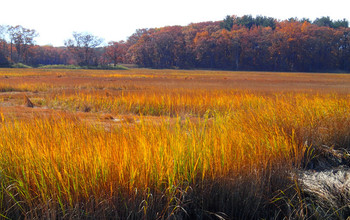
Sunset over a salt marsh at Plum Island, Massachusetts, as autumn arrives.

Sunset over a salt marsh at Plum Island, Massachusetts, as autumn arrives.
Credit and Larger Version

September 26, 2016
The following is part 22 in a series on the National Science Foundation's Long-Term Ecological Research (LTER) Network. Visit parts one, two, three, four, five, six, seven, eight, nine, 10, 11, 12, 13, 14, 15, 16,17, 18, 19, 20 and 21.
Could the future of a salt marsh be hidden in the health of its microbes? Scientists say yes.
Salt marshes play key roles in reducing the effects of urbanization and climate change. Marshes absorb carbon dioxide from the atmosphere, and their microbes break down carbon.
That's why researchers are working to find out how these vital ecosystems tick.
Jennifer Bowen of Northeastern University and colleagues have studied microbes in the sediments of salt marshes in the National Science Foundation (NSF) Plum Island Ecosystems Long-Term Ecological Research (LTER) site in northeastern Massachusetts.
They're working to discover how the marsh -- and the microbes in it -- change over time when outside influences, such as nitrogen, are introduced to the ecosystem.
"A lot of the ecological services salt marshes provide are facilitated by microbes," Bowen said. "They're involved in the carbon cycle and the nitrogen cycle, and they remove nutrient pollution through their metabolic processes."

Dormant microbes

In a new paper published in the journal Nature Communications, Bowen and her Northeastern colleague Patrick Kearns, who is first author of the paper, along with researchers at the Marine Biological Laboratory and Woods Hole Oceanographic Institution, set out to discover what would happen to microbes in salt marshes if specific nutrients were added to the environment -- through urbanization and climate change, for example.
Adding nutrients like nitrogen produced no change in the types of bacteria present in the salt marsh -- at least, temporarily. But over time, a large number of the microbes became dormant.
"It's kind of like a bear going into hibernation," Bowen said. "These dormant bacteria are in a low metabolic state. They just bide their time until environmental conditions return that are suitable for them."
When the microbes go dormant, they don't contribute to the critical ecosystem services that make salt marshes important.

Human-salt marsh interactions

"This study shows that human activities are affecting bacteria essential to salt marshes in ways we never suspected," said Matt Kane, program director in the NSF Division of Environmental Biology, which co-funded the research with NSF's Division of Ocean Sciences. "Coastal salt marshes provide many benefits -- supporting diverse wildlife, helping to reduce pollution, and protecting us from flooding."
What happens to salt marshes and their bacteria, Kane explained, ripples into human lives.
The study's results help explain why salt marshes contain so much microbial diversity. One group of microbes is specialized for a specific set of conditions, while another is linked with others. As the environment changes, different bacteria take advantage of the conditions that are most suitable to them.
"These investigators have made an important discovery about the resilience of microbial communities in salt marsh ecosystems," said David Garrison, program officer in NSF's Ocean Sciences Division.
A salt marsh, the researchers say, is a constant balancing act.
"If we see an increase in the abundance of bacteria that are able to decompose the marsh, we also see an increase in bacteria that can help fix carbon," Bowen said. "If a marsh is failing, there is no way to restore the microbes. But what can be created is an environment that will help these microbes thrive."
To save the marshes, she said, save their microbes.
-- Cheryl Dybas, NSF (703) 292-7734
  cdybas@nsf.gov
-- Lori Lennon, Northeastern University (617) 373-7686
  l.lennon@northeastern.edu


Investigators Jennifer Bowen
Related Institutions/Organizations University of Massachusetts Boston
Related Awards #1353140 Collaborative Research: Ecosystem Evolution and Sustainability of Nutrient Enriched Coastal Saltmarshes
Total Grants $220,177
Related WebsitesNSF Plum Island Ecosystems LTER Site:
https://lternet.edu/sites/pie
NSF Long-Term Ecological Research discovery articles series: https://www.nsf.gov/discoveries/disc_summ.jsp?cntn_id=138170
The Plum Island marsh expanse in summer at low tide.
Credit and Larger Version
Researcher Patrick Kearns fills tubes of mud to look at microbes' responses to nutrients.
Credit and Larger Version
Low tide in the marsh, with
Low tide in the marsh, with "Frank the Tank," a nutrient delivery system, in the background.
Credit and Larger Version
Patrick Kearns samples salt marsh sediments from West Creek on Plum Island.
Credit and Larger Version
Researchers take a break from field sampling in Plum Island's salt marshes.
Credit and Larger Versión

the National Science Foundation (NSF)
Guillermo Gonzalo Sánchez Achutegui
ayabaca@gmail.com
ayabaca@hotmail.com
ayabaca@yahoo.com
Inscríbete en el Foro del blog y participa : A Vuelo De Un Quinde - El Foro!

domingo, 13 de julio de 2014

nsf.gov - National Science Foundation - Ocean's microbial megacity: Like humans, the sea's most abundant organisms have clear daily cycles


Coordinated timing may have implications for ocean food web

electron micrograph of marine planktonic microbes, colorized for contrast.
Scanning electron micrograph of marine planktonic microbes, colorized for contrast.
Credit and Larger Version
July 10, 2014
Imagine the open ocean as a microbial megacity, teeming with life too small to be seen.
In every drop of water, hundreds of types of bacteria can be found.
Now scientists have discovered that communities of these ocean microbes have their own daily cycles--not unlike the residents of a bustling city who tend to wake up, commute, work and eat at the same times.
Light-loving photoautotrophs--bacteria that need solar energy to help them photosynthesize food from inorganic substances--have been known to sun themselves on a regular schedule.
But in new research results published in this week's issue of the journal Science, researchers working at Station ALOHA, a deep ocean study site 100 kilometers north of Oahu, Hawaii, observed species of bacteria turning on cycling genes at slightly different times.
The switches suggest a wave of activity that passes through the microbial community.
"I like to say that they are singing in harmony," said Edward DeLong, a biological oceanographer at the University of Hawaii at Manoa and an author of this week's paper.
"For any given species, the gene transcripts for specific metabolic pathways turn on at the same time each day."
The observations were made possible by advanced microbial community RNA sequencing techniques, which allow for whole-genome profiling of multiple species at once.
DeLong and colleagues deployed a free-drifting robotic Environmental Sample Processor (ESP) as part of a National Science Foundation (NSF) Center for Microbial Oceanography: Research and Education (C-MORE) research expedition to Station ALOHA.
Riding the same ocean currents as the microbes it follows, the ESP is equipped to harvest the samples needed for this high-frequency, time-resolved analysis of microbial community dynamics.
What the scientists saw was intriguing: different species of bacteria expressing different types of genes in varying, but consistent, cycles--turning on, for example, restorative genes needed to rebuild solar-collecting powers at night, then ramping up with different gene activity to build new proteins during the day.
"It was almost like a shift of hourly workers punching in and out on a clock," DeLong said.
"This research is a major advance in understanding microbial communities through studies of gene expression in a dynamic environment," said Matt Kane, a program director in NSF's Directorate for Biological Sciences, which co-funds C-MORE with NSF's Directorate for Geosciences.
"It was accomplished by combining new instrumentation for remote sampling with state-of-the-art molecular biological techniques."
The coordinated timing of gene firing across different species of ocean microbes could have important implications for energy transformation in the sea.
"For decades, microbiologists have suspected that marine bacteria were actively responding to day-night cycles," said Mike Sieracki, a program director in NSF's Directorate for Geosciences.
"These researchers have shown that ocean bacteria are indeed very active and likely are synchronized with the sun."
The mechanisms that regulate this periodicity remain to be determined.
Can you set your watch by them?
DeLong said that you can, but it matters whether you're tracking the bacteria in the lab or at sea.
For example, maximum light levels at Station ALOHA are different than light conditions in experimental settings in the laboratory, which may have an effect on microbes' activity and daily cycles.
"That's part of why it's so important to conduct this research in the open ocean environment," said DeLong.
"There are some fundamental laws to be learned about how organisms interact to make the system work better as a whole and to be more efficient."
Co-authors of the paper are Elizabeth Ottesen, Curtis Young, Scott Gifford, John Eppley, Roman Marin III, Stephan Schuster and Christopher Scholin.
The research also was funded by the Gordon and Betty Moore Foundation.
-NSF-
Media Contacts Cheryl Dybas, NSF, (703) 292-7734, cdybas@nsf.gov
Talia Ogliore, University of Hawaii at Manoa, (808) 956-4531, togliore@hawaii.edu
Related WebsitesNSF Grant: Center for Microbial Oceanography: Research and Education (C-MORE): http://www.nsf.gov/awardsearch/showAward?AWD_ID=0424599&HistoricalAwards=false
C-MORE:
The National Science Foundation (NSF) is an independent federal agency that supports fundamental research and education across all fields of science and engineering. In fiscal year (FY) 2014, its budget is $7.2 billion. NSF funds reach all 50 states through grants to nearly 2,000 colleges, universities and other institutions. Each year, NSF receives about 50,000 competitive requests for funding, and makes about 11,500 new funding awards. NSF also awards about $593 million in professional and service contracts yearly.
Useful NSF Web Sites:
NSF Home Page:
 http://www.nsf.gov
NSF News:
http://www.nsf.gov/news/
For the News Media:
 http://www.nsf.gov/news/newsroom.jsp
Science and Engineering Statistics:
 http://www.nsf.gov/statistics/
Awards Searches:
Men deploying of the Environmental Sample Processor (ESP) in the ocean
Deployment of the Environmental Sample Processor (ESP) for free-drifting plankton sampling.
Credit and Larger Version
Sketch of the Environmental Sample Processor (ESP), suspended from a floatation buoy.
Credit and Larger Version
Research vessel Kilo Moana at sea
Research vessel Kilo Moana, from which the Environmental Sample Processor (ESP) was deployed.
Credit and Larger Version
men on research vessel working with a floatation buoy
Floatation buoy from which the Environmental Sample Processor (ESP) is suspended.
Credit and Larger Version
Science cover
The researchers' results are described in the July 11, 2014, issue of Science magazine.
Credit and Larger Version
 
The National Science Foundation (NSF)
Guillermo Gonzalo Sánchez Achutegui

Mi lista de blogs