Mostrando entradas con la etiqueta Rainfall. Mostrar todas las entradas

domingo, 13 de agosto de 2017

the National Science Foundation(NSF) : Projected precipitation increases are bad news for water quality .- Los aumentos proyectados de la precipitación son malas noticias para la calidad del agua..

https://www.nsf.gov/news/news_summ.jsp?cntn_id=242494&WT.mc_id=USNSF_51&WT.mc_ev=click

More rainfall would lead to more algae blooms, dead zones
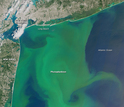
An extensive algae bloom in Lake Erie in August, 2011 resulted from record-breaking nutrient loads.

An extensive algae bloom in Lake Erie in August, 2011 resulted from record-breaking nutrient loads.
Credit and Larger Version

July 27, 2017

Increased precipitation from a changing climate could pollute U.S. waterways with excess nitrogen, increasing the likelihood of severe water quality impairment from coast to coast, according to a new study by scientists Eva Sinha and Anna Michalak of the Carnegie Institution for Science and Venkatramani Balaji of Princeton University.
The results are published in this week's issue of the journal Science.
The effects will be especially strong in the Midwest and Northeast, the researchers found.
Rainfall and other precipitation washes nutrients from human activities like agriculture and fossil fuel combustion into rivers and lakes. When these nutrients overload waterways, a process called eutrophication, the results can be dangerous.
Harmful, toxin-producing algae blooms can develop, as well as dangerous low-oxygen dead zones. Over the past several years, dead zones and algae blooms in coastal regions across the United States -- including the Gulf of Mexico, the Chesapeake Bay and Florida -- have received extensive news coverage.
Sinha and Michalak used models to predict how climate change might affect eutrophication.
"In the 1970s, we discovered human-caused eutrophication and took steps to reverse its course," said Tom Torgersen, director of the National Science Foundation's Water, Sustainability and Climate program, which funded the research. "As this paper shows, however, even seemingly minor climate variations can result in a return to the eutrophication of the past. It will take more research to create better management strategies just to stay even."
In an earlier study, Sinha and Michalak found that, while land use and land management control the supply of nitrogen, precipitation controls how much of that nitrogen flows from the land into waterways.
They noted that the amount of precipitation plays a large role in determining how much nitrogen runoff happens during a given year.
In the current study, they used these insights to predict how future changes to precipitation caused by climate change will, in and of themselves, affect nitrogen runoff and thereby increase the risk of water quality impairment in the U.S.
The scientists leveraged projections from 21 different models and looked at three possible future scenarios.
They found that if trends in greenhouse gas emissions follow a "business-as-usual" scenario, the resulting changes in climate will alter precipitation patterns in the U.S. and increase nutrient pollution by one-fifth by the end of the century. The effects will be particularly strong in the Corn Belt and in the Northeast.
Offsetting the increased amount of nitrogen being washed into waterways would be an enormous task, requiring a whopping one-third reduction in overall nitrogen inputs, such as fertilizer use.
"Our findings demonstrate that it is imperative that water quality management strategies account for the effect of future precipitation changes on nitrogen loading," Michalak said.
Sinha's and Michalak's results are specific to the U.S., but the researchers have identified India, China and Southeast Asia as areas at high risk for large increases in nitrogen pollution due to increased precipitation.
"These are regions that more than half the world's population calls home, so severe water quality impairments could have serious effects," Sinha said.
-NSF-
Media Contacts
Cheryl Dybas, NSF, (703) 292-7734, cdybas@nsf.gov
Natasha Metzler, Carnegie Institution for Science, (202) 939-1142, nmetzler@CarnegieScience.edu

The National Science Foundation (NSF) is an independent federal agency that supports fundamental research and education across all fields of science and engineering. In fiscal year (FY) 2017, its budget is $7.5 billion. NSF funds reach all 50 states through grants to nearly 2,000 colleges, universities and other institutions. Each year, NSF receives more than 48,000 competitive proposals for funding and makes about 12,000 new funding awards.
Useful NSF Web Sites:
NSF Home Page: https://www.nsf.gov
NSF News: https://www.nsf.gov/news/
For the News Media: https://www.nsf.gov/news/newsroom.jsp
Science and Engineering Statistics: https://www.nsf.gov/statistics/
Awards Searches: https://www.nsf.gov/awardsearch/
A cup of fouled water, scooped from Lake Erie during the 2011 algae bloom.
Credit and Larger Version
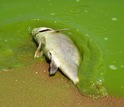
Fish suffocated in the Lake Erie algae bloom of August,2011.
Fish suffocated in the Lake Erie algae bloom of August, 2011.
Credit and Larger Version
A Lake Okeechobee algae bloom in the summer of 2016. Water discharge led to more downstream blooms.
Credit and Larger Version
A huge algae bloom happened off the Atlantic coast in August, 2015.
Credit and Larger Version
A large algae bloom off the Pacific Northwest coast occurred in July, 2014.
Credit and Larger Version
The National Science Foundation (NSF)
Guillermo Gonzalo Sánchez Achutegui
ayabaca@gmail.com
ayabaca@hotmail.com
ayabaca@yahoo.com
Inscríbete en el Foro del blog y participa : A Vuelo De Un Quinde - El Foro!

domingo, 5 de marzo de 2017

The National Science Foundation (NSF) :Changes in precipitation patterns influence natural selection at global scale .- Los cambios en los patrones de precipitación influyen en la selección natural a escala global

https://www.nsf.gov/news/news_summ.jsp?cntn_id=191171&WT.mc_id=USNSF_51&WT.mc_ev=click

Climate variation plays key role in evolution of plants and animals in the wild

Red deer on Scotland's Isle of Rum, where scientists are studying precipitation change effects.

Red deer on Scotland's Isle of Rum, where scientists are studying precipitation change effects.
Credit and Larger Version

March 2, 2017
What matters more for the evolution of plants and animals, precipitation or temperature? Scientists have found a surprising answer: rain and snow may play a more important role than how hot or cold it is. a vuelo
Rainfall and snowfall patterns are changing with climate variation, which likely plays a key role in shaping natural selection, according to results published today by an international team of researchers.
Twenty scientists from the United States, Canada, Europe and Australia contributed to the study. Their results were published in the journal Science.
The team assembled a database of 168 published studies that measured natural selection over certain time periods for plant and animal populations worldwide. The results from the data set the scientists examined showed that between 20 and 40 percent of variation in selection within studies could be attributed to variability in local precipitation.
"Previous evidence from other studies indicated that climate variation might be really important in how plants and animals evolve," said lead author and University of Arkansas biologist Adam Siepielski, whose work is supported by the National Science Foundation (NSF). "We wanted to know if we could explain variation in selection across diverse plant and animal populations through a few simple climate variables. It turns out that, yes, we can."
That's significant, he says, "especially considering the global scale of the study. These results suggest that variation in selection is actually partly predictable based on climate features like precipitation."
Adds Doug Levey, program director in NSF's Division of Environmental Biology, "These results show that changes in precipitation can have surprising evolutionary effects on plants and animals worldwide."
In a time of change for rainfall, snowstorms and other forms of precipitation, plants and animals are changing, too, Siepielski said. As an example, Siepielski cited birds that live in the Galápagos Islands, called medium ground finches. The birds' beak sizes and shapes have changed over several generations.
"Differences in precipitation over years have affected the sizes of seeds available for the birds to eat," Siepielski said. "Birds that had bills well-matched to eat particular seed sizes were the ones that tended to survive."
The team found that changes in temperature had much less effect than precipitation. Siepielski called that surprising. "Temperature didn't have much explanatory power," he said. "It might act on a different scale that we couldn't pick up in the data set."
"By showing that selection was influenced by climate variation," the researchers stated in their paper, "our results indicate that climate variability may cause widespread alterations in selection regimes, potentially shifting evolution on a global scale."
Translation: what comes down as rain or snow may radically alter how some species will evolve.
-NSF-
Media Contacts Cheryl Dybas, NSF, (703) 292-7734, cdybas@nsf.gov
Bob Whitby, University of Arkansas, (479) 575-4737, whitby@uark.edu


The National Science Foundation (NSF) is an independent federal agency that supports fundamental research and education across all fields of science and engineering. In fiscal year (FY) 2016, its budget is $7.5 billion. NSF funds reach all 50 states through grants to nearly 2,000 colleges, universities and other institutions. Each year, NSF receives more than 48,000 competitive proposals for funding and makes about 12,000 new funding awards. NSF also awards about $626 million in professional and service contracts yearly.
 Get News Updates by Email 
Useful NSF Web Sites:
NSF Home Page: https://www.nsf.gov
NSF News: https://www.nsf.gov/news/
For the News Media: https://www.nsf.gov/news/newsroom.jsp
Science and Engineering Statistics: https://www.nsf.gov/statistics/
Awards Searches: https://www.nsf.gov/awardsearch/

Medium ground finch in the Galapagos, site of a study of climate and natural selection.
Credit and Larger Version
Soay sheep in driving rain in the St. Kilda Archipelago in Scotland, a research site in the study.
Credit and Larger Version
Blue-tailed damselfly in Sweden, where a long-term precipitation study has been conducted.
Credit and Larger Version
Scientists met to compare findings from their precipitation research project.
Credit and Larger Version
The National Science Foundation (NSF)
Guillermo Gonzalo Sánchez Achutegui
ayabaca@gmail.com
ayabaca@hotmail.com
ayabaca@yahoo.com
Inscríbete en el Foro del blog y participa : A Vuelo De Un Quinde - El Foro!

domingo, 25 de agosto de 2013

nsf.gov - National Science Foundation - Global sea level rise temporarily dampened by 2010-11 Australia floods

Finding shows complex nature of Earth's climate interactions
aerial view the city of Rockhampton, Queensland, Australia,
The city of Rockhampton, Queensland, Australia, was completely inundated by the floods.
Credit and Larger Version
August 19, 2013
Three atmospheric patterns came together above the Indian and Pacific Oceans in 2010 and 2011. When they did, they drove so much precipitation over Australia that the world's ocean levels dropped measurably.
Unlike other continents, the soils and topography of Australia prevent almost all its precipitation from flowing into the ocean.
The 2010-11 event temporarily halted a long-term trend of rising sea levels caused by higher temperatures and melting ice sheets, according to a team of researchers at the National Center for Atmospheric Research (NCAR) in Boulder, Colo., and other institutions.
Now that the atmosphere's circulation has returned to its previous patterns, the seas are again rising.
These results will appear next month in the journal Geophysical Research Letters, published by the American Geophysical Union.
Co-authors of the paper are affiliated with NASA's Jet Propulsion Laboratory and the University of Colorado at Boulder.
The research was funded by the National Science Foundation (NSF), which sponsors NCAR, and by NASA.
"The scientists conclude that the Outback region in Australia played a crucial role in trapping a large amount of rainfall when widespread floods occurred over the continent," says Anjuli Bamzai, program director in NSF's Division of Atmospheric and Geospace Sciences, which funded the research.
"It's a beautiful illustration of how complicated our climate system is," says NCAR scientist John Fasullo, lead scientist on the project.
"The smallest continent in the world can affect sea level worldwide. Its influence is so strong that it can temporarily overcome the background trend of rising sea levels we see with climate change."
As the climate warms, the world's oceans have been rising in recent decades by just over three millimeters annually.
This is partly because heat causes water to expand, and partly because runoff from retreating glaciers and ice sheets is making its way into the oceans.
But for an 18-month period beginning in 2010, the oceans mysteriously dropped by about seven millimeters, more than offsetting the annual rise.
Fasullo and co-authors published research results last year demonstrating that the reason was related to the increased rainfall over tropical continents.
They also showed that the drop coincided with the atmospheric oscillation known as La Niña, which cooled tropical surface waters in the eastern Pacific and suppressed rainfall there--while enhancing it over portions of the tropical Pacific, Africa, South America and Australia.
However, an analysis of the historical record showed that past La Niña events only rarely accompanied such a pronounced drop in sea level.
Using a combination of satellite instruments and other tools, the new study finds that the picture in 2010-11 was uniquely complex.
In addition to La Nina, a rare combination of two other semi-cyclic climate modes came together. They drove such large amounts of rain over Australia that the continent received almost one foot (300 millimeters) of rain more than average.
The initial effects of La Niña were to cool surface waters in the eastern Pacific Ocean and push moisture to the west.
A climate pattern known as the Southern Annular Mode then coaxed the moisture into Australia's interior, causing widespread flooding across the continent.
Later in the event, high levels of moisture from the Indian Ocean driven by what's known as the Indian Ocean Dipole collided with La Niña-borne moisture in the Pacific, pushing even more moisture into the continent's interior.
These influences spurred one of the wettest periods in Australia's recorded history.
Australia's vast interior, called the Outback, is ringed by coastal mountains and is often quite dry.
Because of the low-lying nature of the continent's eastern interior, and the lack of river runoff in its western dry environment, most of the heavy rainfall of 2010-11 remained inland rather than flowing to the oceans.
While some of it evaporated in the desert sun, much of it sank into the dry, granular soil of the Western Plateau or filled the Lake Eyre basin in the east.
"No other continent has this combination of atmospheric set-up and topography," Fasullo says. "Only in Australia could the atmosphere carry such heavy tropical rains to such a large area, only to have those rains fail to make their way to the ocean."
For example, the Great Basin in the southwestern United States could trap water much like Australia--but atmospheric patterns don't transport such a large amount of moisture from the ocean to that arid region.
To conduct the research, the scientists turned to three observing instrument systems:
· NASA's Gravity Recovery and Climate Experiment satellites, which make detailed measurements of Earth's gravity field. The satellites enable scientists to monitor changes in the mass of continents.
· The Argo global array of 3,000 free-drifting floats that measure the temperature and salinity of the upper 6,000 feet of the world's oceans.
· Satellite-based altimeters that are continuously calibrated against a network of tide gauges. Scientists subtract seasonal and other variations to closely estimate global sea level changes.
Using these instruments, the researchers found that the land mass in Australia and, to a lesser extent, South America began to increase in 2010 as the continents experienced heavy and persistent rain.
At the same time, sea levels began to drop.
Since 2011, when the atmospheric patterns shifted out of their unusual combination, sea levels have been rising at a faster pace of about 10 millimeters per year.
Scientists are uncertain how often the three atmospheric events come together to cause such heavy rains over Australia.
Fasullo believes there may have been a similar event in 1973-74, which was another time of record flooding.
But modern observing instruments did not exist then, making it impossible to determine what took place in the atmosphere and whether it affected sea level rise.
"Luckily we've got great observations now," Fasullo says. "We need to maintain these observing platforms to understand our climate system."
-NSF-
Media Contacts Cheryl Dybas, NSF (703) 292-7734
cdybas@nsf.gov
David Hosansky, NCAR (303) 497-8611
hosansky@ucar.edu
Mary Catherine Adams, AGU (202) 777-7530
Related WebsitesNSF News: NSF, USDA, DOE Award Grants to Improve Predictions of Climate Change on Regional, Decadal Scales:
http://www.nsf.gov/news/news_summ.jsp?cntn_id=128415
NSF Publication: Discoveries in Sustainability:
 http://www.nsf.gov/pubs/2012/disco12001/disco12001.pdf
NSF News: Earth System Models at Decadal and Regional Scales Critical to Understanding Climate Change Effects:
The National Science Foundation (NSF) is an independent federal agency that supports fundamental research and education across all fields of science and engineering. In fiscal year (FY) 2012, its budget was $7.0 billion. NSF funds reach all 50 states through grants to nearly 2,000 colleges, universities and other institutions. Each year, NSF receives about 50,000 competitive requests for funding, and makes about 11,500 new funding awards. NSF also awards about $593 million in professional and service contracts yearly.
Useful NSF Web Sites:
NSF Home Page:
 http://www.nsf.gov
NSF News:
http://www.nsf.gov/news/
For the News Media:
 http://www.nsf.gov/news/newsroom.jsp
Science and Engineering Statistics:
 http://www.nsf.gov/statistics/
Awards Searches:
 
aerial view Australia's Fitzroy River in January 2011;
Australia's Fitzroy River in January 2011; its flooding isolated the city of Rockhampton.
Credit and Larger Version
A woman in Australia awaits rescue on a car roof.
Credit and Larger Version
map showing Rainfall in Australia in 2010 reached levels far above normal.
Rainfall in Australia in 2010 reached levels far above normal.
Credit and Larger Version
The entrance to the high ferris wheel in Brisbane under water.
The entrance to the high ferris wheel in Brisbane is submerged under water.
Credit and Larger Version
The flooded Burnett River at Gayndah, Australia, 220 miles northwest of Brisbane.
Credit and Larger Version
The National Science Foundation (NSF)
Guillermo Gonzalo Sánchez Achutegui

miércoles, 26 de septiembre de 2012

The Colors of Fall: Are Autumn Reds and Golds Passing Us By?

Climate change, land-use change, introduced pests and diseases altering fall foliage.
 Autumn leaves: How long will the brightest colors be with us?
Credit: David Lee
 Tall American chestnut trees once dominated Massachusetts forests; many died out.
Credit: David Foster
Beautiful Harvard Pond lies within NSF's Harvard Forest LTER site.
Credit: John Burk
Harvard Forest's Environmental Measurements Tower rises above oaks and white pines.
Credit: David Foster
 Long-term "Detritus Input Removal Treatment" plots measure leaves and soils.
Credit: David Foster
Harvard Forest's "PhenoCam" captures an ephemeral view from the forest's highest point.
Credit: NSF Harvard Forest LTER Site

The following is part eleven in a series on the National Science Foundation's Long-Term Ecological Research (LTER) Network. Visit parts one, two, three, four, five, six, seven, eight, nine and ten.
The falling leaves drift by the window, the autumn leaves of red and gold ...
It was 1947 when Johnny Mercer wrote the lyrics to the popular song "Autumn Leaves." Sixty-five years ago, Mercer likely didn't think the reds and golds of fall might someday fade.
But that's what's beginning to happen in U.S. Northeast and Mid-Atlantic regions.
Autumn colors were different there a century, or even a half-century, ago, and they will likely continue to change, says ecologist David Foster, principal investigator at the National Science Foundation's (NSF) Harvard Forest Long-Term Ecological Research (LTER) site in Massachusetts.
Harvard Forest is one of 26 such NSF LTER sites around the world in ecosystems from forests to deserts, grasslands to coral reefs.
"The brilliant fall foliage so emblematic of New England forests was not always so, as the history of Harvard Forest shows," says Saran Twombly, NSF LTER program director.
"Today the current, rapid changes linked with climate are unpredictable," says Twombly, "threatening both the forests and our deep appreciation of them."
The changes are largely a result of human activity: land-use change, introduced pests and diseases that affect forests, and climate change from fossil fuel emissions.
To date, the timing of leaf color change has stayed fairly consistent from year to year, says Foster, although out-of-sync weather conditions can advance it or hold it back.
At the start of the 20th century, much of the New England landscape south of Maine, famed for its brilliant maples, was covered by white pine forests that filled in abandoned fields and pastures left fallow.
As the white pines were harvested, they were succeeded by broadleaf, or deciduous, trees: maples, oaks, birches and others.
Autumn color flared across the landscape.
American chestnuts, whose leaves turn yellow in fall, were common trees in these forests, says Foster. But mature chestnuts were killed by an introduced fungal disease, Chestnut Blight.
Now only small chestnut sprouts linger. "Our forests would have produced more yellows and fewer reds with chestnuts in the mix," says Foster.
With many sugar maples, the forests turned a striking red. The trees' abundance in eastern Massachusetts and coastal southern New England is a result of extensive planting along roadsides during the 18th and 19th centuries.
Sugar maples provided a source of sap for maple sugar, important in the commerce of the day.
The maples are near the southern end of their range in Massachusetts. It's likely, says Foster, that they will move north over the next century, thanks to increasing temperatures.
Massachusetts may one day seem like Virginia to the trees--and to the September and October people who come to see them.
"Over time," Foster says, "the autumn colors of our forests may fade as conditions become less favorable for northern trees such as sugar maples."
The result will reverberate not only through forest ecosystems, but through a region economically dependent on fall foliage tourism.
Trees that are left behind, such as ashes, dogwoods and others, may face diseases already spreading through the forest. These diseases may be exacerbated by warmer temperatures.
For some trees, however, the yellows and reds of fall appear to offer a defense mechanism. The colors may repel insects and keep them from laying eggs on leaves, reducing damage to forests the following year.
Birches' bright yellow may be a "go away" sign to egg-laying insects: the color is a clue that the leaves are unpalatable or toxic. Insects move on, attracted to plants without defenses.
Deciduous trees aren't the only ones affected by environmental change and diseases. The loss of evergreen trees may also have an effect on autumn colors.
Hemlocks--conifers common in valleys, on steep slopes and along streams--are disappearing from Northeastern forests. The culprit is an introduced insect pest, the woolly adelgid.
At Harvard Forest, hemlocks are infested with woolly adelgids. The trees will begin to die over the next few years.
"It's not clear how far north these insect pests will move," says Foster. But as hemlocks fall, they will be replaced by black birches, whose leaves turn yellow in autumn.
Lack of rainfall in summer, such as this year's extensive drought, also affects trees and their ability to produce the shades of autumn.
They may lose their leaves prematurely or start to turn color earlier than usual. Their hues may look dull and washed out when they should be vibrant.
If April showers bring May flowers, July and August rains lead to the bright reds and yellows of September and October.
The Northeast is becoming a place of warmer temperatures, increasing droughts, changes in land use, and tree diseases and insect pests.  All are on-the-march through the forest.
--  Cheryl Dybas, NSF (703) 292-7734 cdybas@nsf.gov
Related Websites
NSF Long-Term Ecological Research Network: http://www.lternet.edu
NSF Harvard Forest LTER Site: http://harvardforest.fas.harvard.edu/research/LTER
 The National Science Foundation (NSF)
Guillermo Gonzalo Sánchez Achutegui
ayabaca@gmail.com
ayabaca@hotmail.com
ayabaca@yahoo.com
 Inscríbete en el Foro del blog y participa : A Vuelo De Un Quinde - El Foro!

Mi lista de blogs