Mostrando entradas con la etiqueta The International Space Station. Mostrar todas las entradas

viernes, 3 de abril de 2015

NASA : Boarding the Soyuz Spacecraft on Launch Day.- Abordando a la la nave espacial Soyuz el día del lanzamiento

Hola amigos: A VUELO DE UN QUINDE EL BLOG., hemos recibido información de la Agencia Espacial NASA, sobre los integrantes de la Expedición 43, que serán transportados por la the Soyuz TMA-16M spacecraft , y la tripulación será : Russian cosmonaut Mikhail Kornienko of the Russian Federal Space Agency (Roscosmos), top, NASA astronaut Scott Kelly, center, and Russian cosmonaut Gennady Padalka of Roscosmos . Quienes irán a la Estación Espacial Internacional.


Boarding the Soyuz Spacecraft on Launch Day
Expedition 43 Russian cosmonaut Mikhail Kornienko of the Russian Federal Space Agency (Roscosmos), top, NASA astronaut Scott Kelly, center, and Russian cosmonaut Gennady Padalka of Roscosmos wave farewell as they board the Soyuz TMA-16M spacecraft ahead of their launch to the International Space Station, Friday, March 27, 2015 in Baikonur, Kazakhstan.
Kelly and Kornienko will spend a year in space and return to Earth on Soyuz TMA-18M in March 2016. Most expeditions to the space station last four to six months. By doubling the length of this mission, researchers hope to better understand how the human body reacts and adapts to long-duration spaceflight. This knowledge is critical as NASA looks toward human journeys deeper into the solar system, including to and from Mars, which could last 500 days or longer.
The Soyuz is set to lift off at 3:42 p.m. EDT, Friday, March 27 on a six-hour, four-orbit flight to the station.
Image Credit: NASA/Bill Ingalls
NASA
Guillermo Gonzalo Sánchez Achutegui

Inscríbete en el Foro del blog y participa : A Vuelo De Un Quinde - El Foro!

martes, 20 de mayo de 2014

NASA : NASA's Newest Wind Watcher Arrives at Launch Site


Youtube Override: 
 
Components of NASA's International Space Station-RapidScat
Components of NASA's International Space Station-RapidScat instrument rest side by side in Kennedy Space Center's Space Station Processing Facility. ISS-RapidScat will measure Earth's ocean surface wind speed and direction from the station, data that will be used for weather and marine forecasting.
Image Credit: NASA/Dimitri Gerondidakis
 
Technicians at NASA’s Jet Propulsion Laboratory in Pasadena, California
Technicians at NASA’s Jet Propulsion Laboratory in Pasadena, California prepare NASA’s International Space Station-RapidScat instrument for shipping to NASA’s Kennedy Space Center. Built by JPL, ISS-RapidScat is slated to fly to the space station on the SpaceX-4 commercial cargo resupply in August.
Image Credit: 
NASA/JPL-Caltech
 
Artist's rendering of NASA's ISS-RapidScat instrument (inset)
 
Artist's rendering of NASA's ISS-RapidScat instrument (inset), which will launch to the International Space Station in 2014 to measure ocean surface wind speed and direction and help improve weather forecasts, including hurricane monitoring.
Image Credit: 
NASA/JPL-Caltech/Johnson Space Center
 
A new NASA Earth-observing mission that will measure ocean winds from the International Space Station has arrived at NASA’s Kennedy Space Center in Florida to begin final preparations for launch.
The International Space Station (ISS)-RapidScat scatterometer instrument arrived May 12 after a cross-country trip from NASA’s Jet Propulsion Laboratory (JPL) in Pasadena, California. The instrument, built at JPL, now will undergo final tests before being stowed aboard a SpaceX Dragon commercial cargo resupply spacecraft. The Dragon will launch on a SpaceX Falcon 9 rocket from Cape Canaveral Air Force Station, Florida, no earlier than August.
ISS-RapidScat is NASA's first scientific Earth-observing instrument specifically designed and developed to operate from the exterior of the space station. It will measure near-surface ocean wind speed and direction in Earth’s low and middle latitudes during its two-year mission. Its data will be used to support weather and marine forecasting, including tracking storms and hurricanes, as well as climate studies.
Winds over the ocean are a critical factor in determining regional weather patterns and studying climate. High winds in severe storms also can inflict major damage to shore populations and shipping. In some regions, ocean winds drive warm surface ocean waters away from coastlines, causing nutrient-rich deep water to rise to the surface, where they provide a major source of food for coastal fisheries. Changes in ocean winds also help us monitor large-scale changes in Earth’s climate variations, such as El Nino and La Nina.
Since 1999, NASA’s QuikScat satellite, along with satellites operated by international partners, has provided ocean surface winds information for use by the science and operational weather forecasting communities. In 2009, after 10 years of successful operations, QuikScat’s scatterometer instrument stopped providing ocean wind data.
Scatterometers are radar sensors that bounce microwaves off the ocean surface and measure the strength and direction of the echoes that return. The echoes are scattered by the presence of wind-driven waves on the ocean surface. ISS-RapidScat will help fill the gap left by the loss of these data and will extend a 15-year ocean wind climate record.
ISS-RapidScat’s berth on the space station will put it in an orbit that is unique from any other wind-measuring instrument currently in space. This orbit, with an altitude that varies from 233 to 270 miles (375 to 435 kilometers), will give scientists the first near-global direct observations of how ocean winds vary over the course of the day, while adding extra eyes in the tropics and midlatitudes to track the formation and movement of tropical cyclones. Its 560-mile-wide (900-kilometer) observation swath creates a map of winds over most of the ocean between 51.6 degrees north and south of the equator every 48 hours.
ISS-RapidScat also will extend the continuity and usefulness of the scatterometer data record from the international constellation of ocean wind satellites. Currently, satellites in the constellation observe at different times of the day. Using the space station’s orbit, it will be possible for ISS-RapidScat to observe areas where the orbits of the other scatterometers in the constellation intersect at the same time. This capacity will allow scientists to correct for previously unknown relative errors between the different wind satellites and extend QuikScat’s 10-plus-year record to create a continuous record.
ISS-RapidScat was developed in just a year-and-a-half, at roughly one-tenth the cost of developing a traditional satellite mission. Its development approach leverages space station capabilities and a combination of new industrial-grade hardware and older inherited hardware used to develop and test QuikScat. Additional cost savings are achieved by launching the instrument aboard a scheduled space station cargo resupply mission.
After arriving at the space station, ISS-RapidScat will be installed on the external payload facility on the Columbus module using the station’s robotic arm. The arm will be controlled from the ground during installation. ISS-RapidScat is an autonomous payload, requiring no interaction from station crew members.
ISS-RapidScat is a partnership between JPL and the International Space Station Program Office at NASA's Johnson Space Center in Houston, with support from the Earth Science Division of NASA’s Science Mission Directorate in Washington. Other mission partners include Kennedy; NASA’s Marshall Space Flight Center in Huntsville, Alabama; the European Space Agency; and SpaceX. JPL is managed for NASA by the California Institute of Technology in Pasadena.
For more information about ISS-RapidScat, visit:
NASA monitors Earth’s vital signs from land, air and space with a fleet of satellites and ambitious airborne and ground-based observation campaigns. NASA develops new ways to observe and study Earth’s interconnected natural systems with long-term data records and computer analysis tools to better see how our planet is changing. The agency shares this unique knowledge with the global community and works with institutions in the United States and around the world that contribute to understanding and protecting our home planet.
ISS-RapidScat is the third of five NASA Earth science missions scheduled to be launched this year, the most new NASA Earth-observing mission launches in the same year in more than a decade. For more information about NASA's Earth science activities in 2014, visit:
For more information about the International Space Station, visit:
 
NASA
Guillermo Gonzalo Sánchez Achutegui

domingo, 30 de junio de 2013

NASA - Nighttime Image of Texas Cities


 Nighttime Image of Texas Cities
One of the Expedition 36 crew members aboard the International Space Station, some 240 miles above Earth, used a 50mm lens to record this oblique nighttime image of a large part of the nation’s second largest state in area, including the four largest metropolitan areas in population. The extent of the metropolitan areas is easily visible at night due to city and highway lights.
The largest metro area, Dallas-Fort Worth, often referred to informally as the Metroplex, is the heavily cloud-covered area at the top center of the photo. Neighboring Oklahoma, on the north side of the Red River, less than 100 miles to the north of the Metroplex, appears to be experiencing thunderstorms. The Houston metropolitan area, including the coastal city of Galveston, is at lower right. To the east near the Texas border with Louisiana, the metropolitan area of Beaumont-Port Arthur appears as a smaller blotch of light, also hugging the coast of the Texas Gulf. Moving inland to the left side of the picture one can delineate the San Antonio metro area. The capital city of Austin can be seen to the northeast of San Antonio.
NASA
Guillermo Gonzalo Sánchez Achutegui
ayabaca@gmail.com
ayabaca@hotmail.com
ayabaca@yahoo.com

 Viewing Options:  
Public Channel


Inscríbete en el Foro del blog y participa : A Vuelo De Un Quinde - El Foro

lunes, 10 de junio de 2013

NASA - Targeting Earth Photographs From Orbit


 Targeting Earth Photographs From Orbit

Download Image

› Full Size
NASA
Guillermo Gonzalo Sánchez Achutegui
ayabaca@gmail.com
ayabaca@hotmail.com
ayabaca@yahoo.con
Inscríbete en el Foro del blog y participa : A Vuelo De Un Quinde - El Foro!

martes, 12 de marzo de 2013

NASA - - Staring at the Sun with SAGE III


 NASA engineer Chip Holloway waits for the sun to align with the Stratospheric Aerosol and Gas Experiment (SAGE III) during a clean room

Download Image

› Full Size

NASA
Guillermo Gonzalo Sánchez Achutegui
ayabaca@gmail.com
ayabaca@hotmail.com
ayabaca@yahoo.com
Inscríbete en el Foro del blog y participa : A Vuelo De Un Quinde - El Foro!

lunes, 4 de marzo de 2013

NASA - SpaceX-2 Mission Launch


 Space Exploration Technologies' Falcon 9 rocket lifts off Space Launch Complex 40 on Cape Canaveral Air Force Station in Florida at 10:10 a.m. EST on Friday, March 1, 2013, carrying a Dragon capsule filled with cargo.

Download Image

› Full Size 
 
 NASA
Guillermo Gonzalo Sánchez Achutegui
ayabaca@gmail.com
ayabaca@hotmail.com
ayabaca@yahoo.com
Inscríbete en el Foro del blog y participa : A Vuelo De Un Quinde - El Foro!

domingo, 16 de diciembre de 2012

NASA Progressing Toward First Launch of Orion Spacecraft


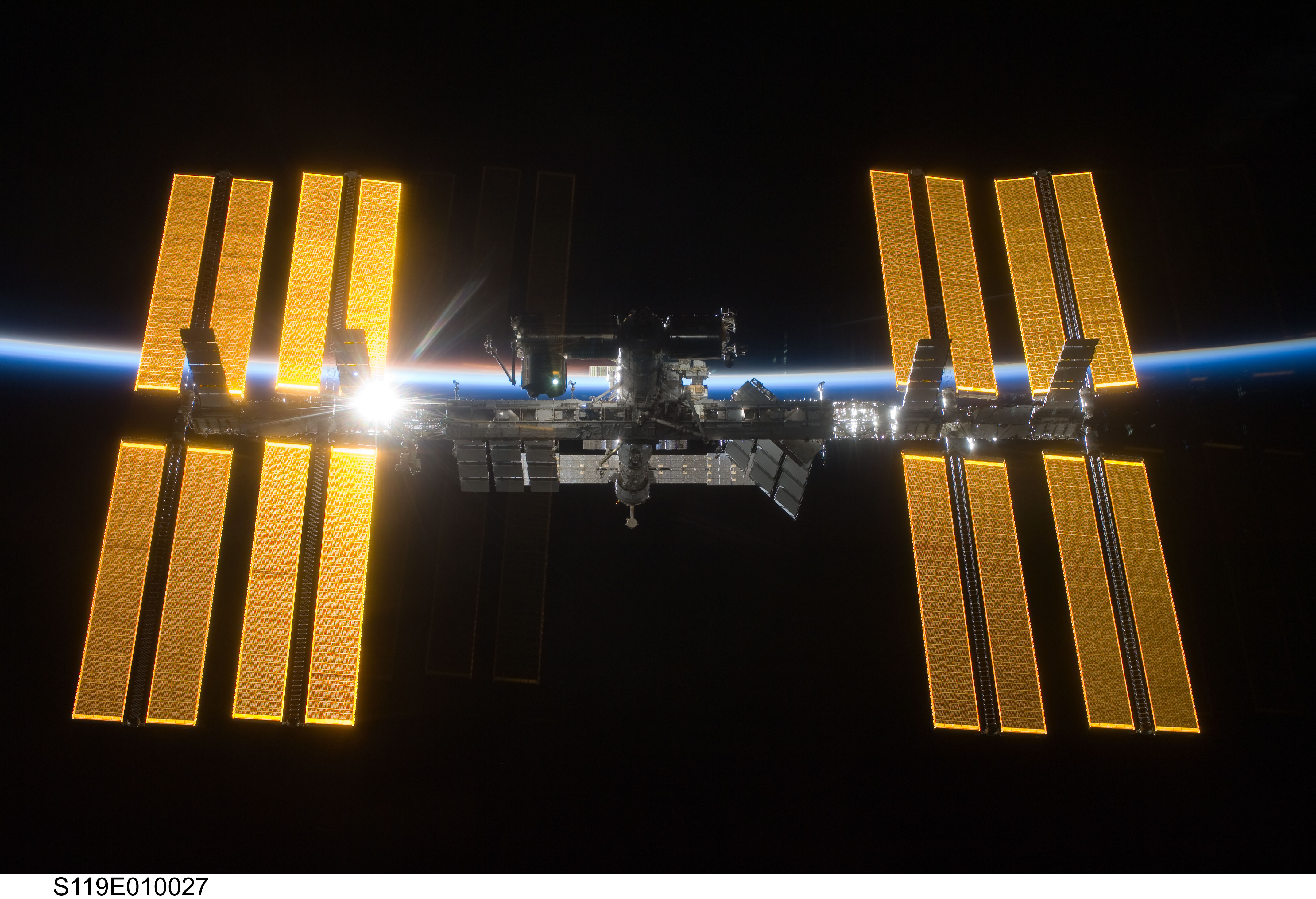
 http://www.nasa.gov/images/content/712424main_image1_XL.jpgThe International Space Station taken from Space Shuttle Discovery as the Sun rises from behind Earth. The STS-119 and Expedition 18 crew took this picture after leaving the Space Station in March 2009. (NASA/ESA)
View large image

International Space Station Salutes the Sun
12.07.12
 
The International Space Station taken from Space Shuttle Discovery as the Sun rises from behind Earth. The STS-119 and Expedition 18 crew took this picture after leaving the Space Station in March 2009.  (NASA/ESA) The International Space Station taken from Space Shuttle Discovery as the Sun rises from behind Earth. The STS-119 and Expedition 18 crew took this picture after leaving the Space Station in March 2009. (NASA/ESA)
View large image

SOLAR consists of three complementary instruments: SOVIM (SOlar Variable and Irradiance Monitor) covers the near-ultraviolet, visible and thermal-infrared regions of the spectrum; SOL-ACES (SOLar Auto-Calibrating Extreme UV/UV Spectrophotometers) measures the extreme ultraviolet; and SOLSPEC (SOLar SPECtral Irradiance measurements) covers the 180–3000 nm wavelength range.  (ESA) SOLAR consists of three complementary instruments: SOVIM (SOlar Variable and Irradiance Monitor) covers the near-ultraviolet, visible and thermal-infrared regions of the spectrum; SOL-ACES (SOLar Auto-Calibrating Extreme UV/UV Spectrophotometers) measures the extreme ultraviolet; and SOLSPEC (SOLar SPECtral Irradiance measurements) covers the 180–3000 nm wavelength range. (ESA)
View large image

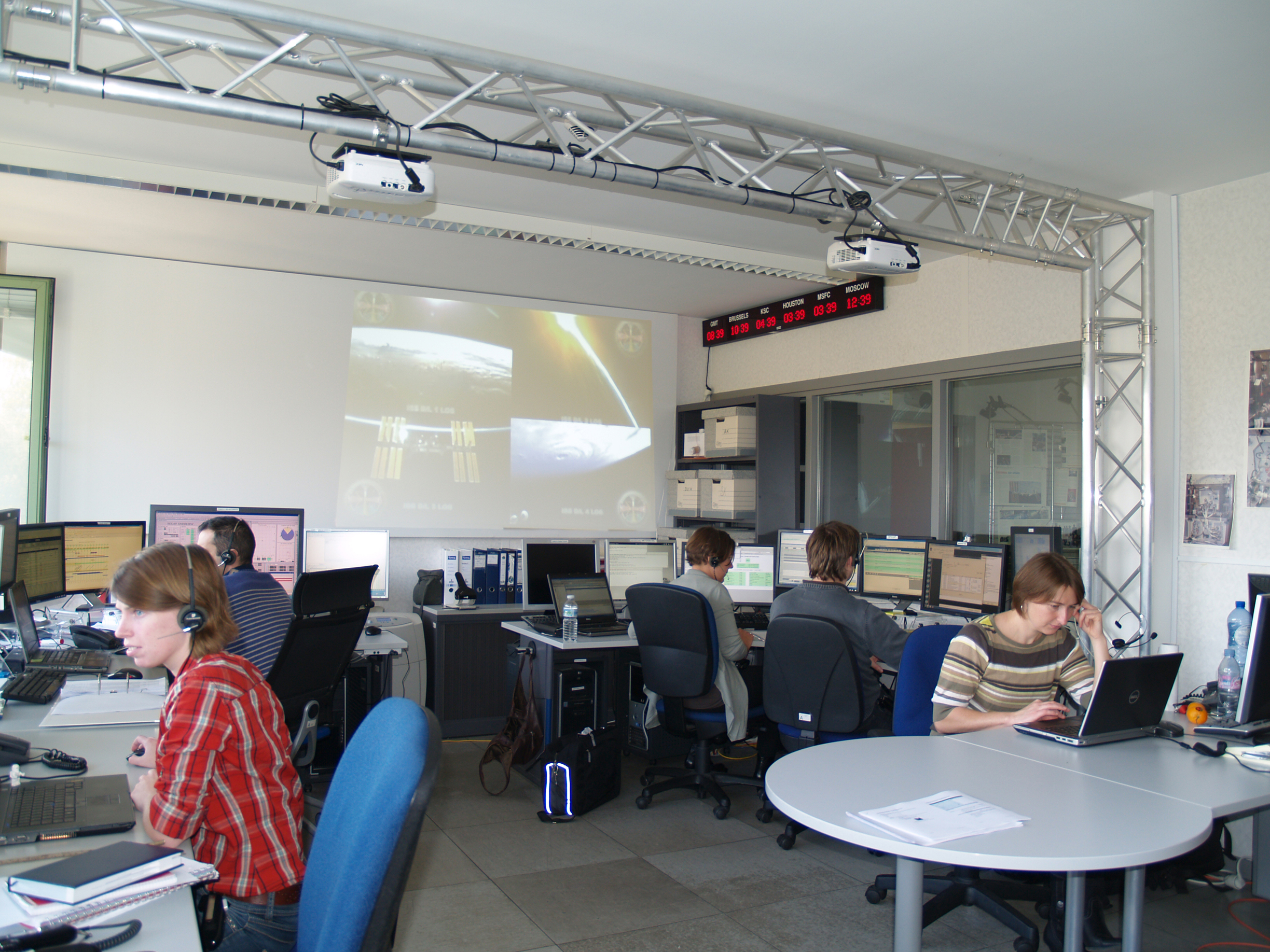
The Belgian User Support and Operations Centre is part of the ground segment for the International Space Station. It is open 24 hours a day to make sure in-orbit payloads operate as planned, provide astronaut training and process scientific data received from the experiments. It is located in Uccle, Belgium on the premises of the Belgian Institute for Space Aeronomy. (BUSOC) The Belgian User Support and Operations Centre is part of the ground segment for the International Space Station. It is open 24 hours a day to make sure in-orbit payloads operate as planned, provide astronaut training and process scientific data received from the experiments. It is located in Uccle, Belgium on the premises of the Belgian Institute for Space Aeronomy. (BUSOC)
View large image

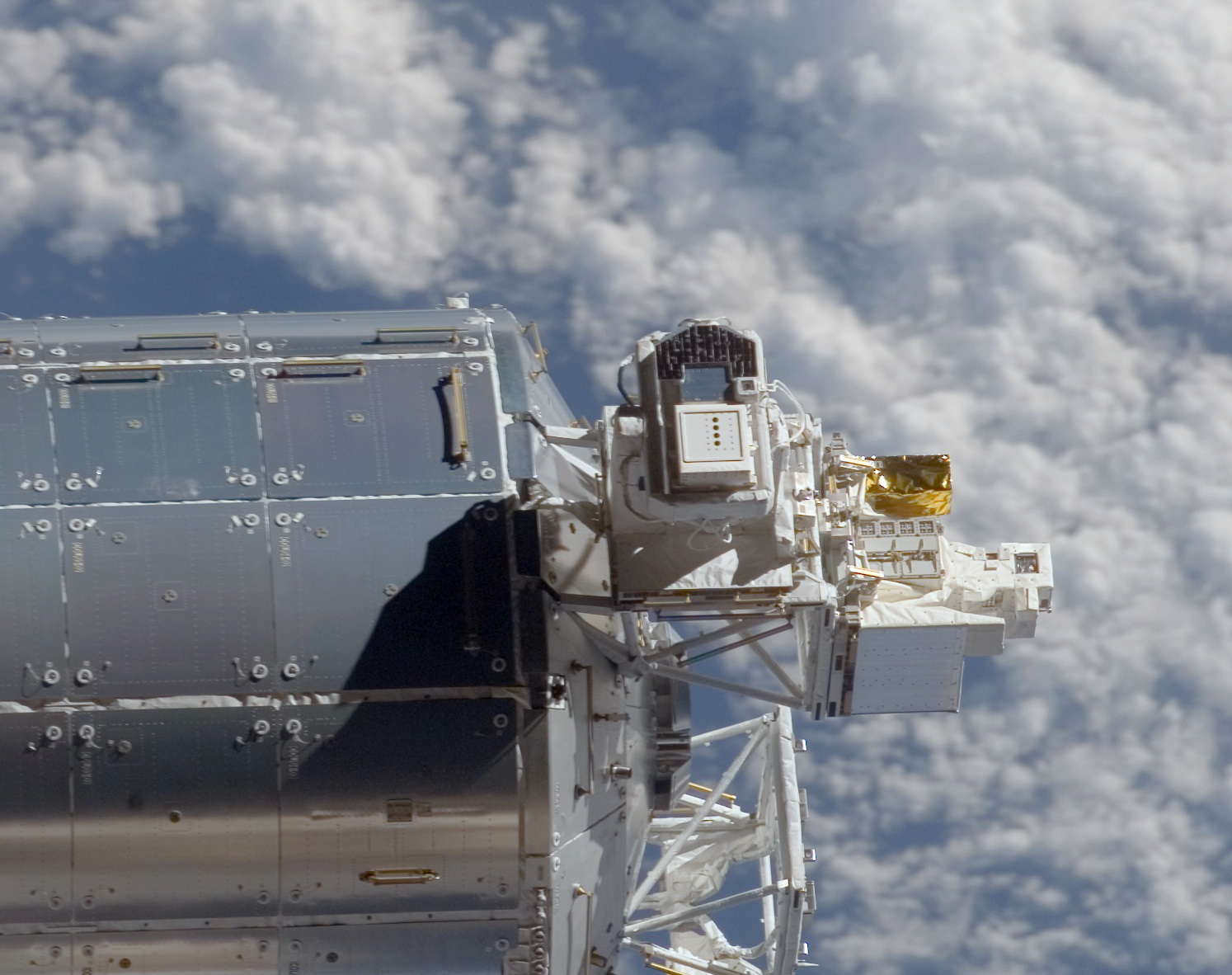
SOLAR installed on ESA's Columbus laboratory on the International Space Station. SOLAR consists of three complementary instruments: SOVIM (SOlar Variable and Irradiance Monitor) covers the near-ultraviolet, visible and thermal-infrared regions of the spectrum; SOL-ACES (SOLar Auto-Calibrating Extreme UV/UV Spectrophotometers) measures the extreme ultraviolet; and SOLSPEC (SOLar SPECtral Irradiance measurements) covers the 180–3000 nm wavelength range. (ESA/NASA) SOLAR installed on ESA's Columbus laboratory on the International Space Station. SOLAR consists of three complementary instruments: SOVIM (SOlar Variable and Irradiance Monitor) covers the near-ultraviolet, visible and thermal-infrared regions of the spectrum; SOL-ACES (SOLar Auto-Calibrating Extreme UV/UV Spectrophotometers) measures the extreme ultraviolet; and SOLSPEC (SOLar SPECtral Irradiance measurements) covers the 180–3000 nm wavelength range. (ESA/NASA)
View large image Recently the International Space Station turned itself to position the European Space Agency's SOLAR instrument for a better view of the sun. It was the first time the station changed attitude for scientific reasons alone.

"The European scientists requested this so they could increase science and bridge over the two solar cycles," said Julie Robinson, International Space Station Program scientist. "The International Space Station Program took a look at the request and we were glad that we could change attitude to support the scientists."

SOLAR has been monitoring our sun's output since it was installed on ESA's Columbus laboratory module in February 2008. The package will celebrate its fifth anniversary next year.

"That is quite an achievement," says Nadia This, operations engineer at the Belgian User Support and Operations Centre, which controls SOLAR. "The instrument was designed to work for only 18 months."

SOLAR needs to be in direct view of the sun to take measurements but the space station's normal orbit obscures the view for two weeks every month.

"We want to record a complete rotation of the sun and that takes around 25 days," explains This.

The solution is to rotate the whole station, but moving the almost 925,000-pound orbital outpost -- the size of a typical block of apartments -- is not a simple undertaking.

Aside from calculating the correct orbit to keep SOLAR in view of the sun, other factors need to be taken into account such as ensuring the solar panels that power the station are not left in the dark.

Communication antennas need to be reoriented to stay in contact with Earth and other scientific experiments must be adjusted.

High-level discussions with all five space station partners were needed before the go-ahead was given.

SOLAR started recording a full rotation of the Sun on Nov. 19. On Dec. 1 the station spent two hours turning about 7 degrees so that observations could continue. It held this angle for 10 days before returning to its original attitude. As usual, the Belgian center will be following SOLAR's progress 24 hours a day.

SOLAR's observations are improving our understanding of the sun and allowing scientists to create accurate computer models to predict its behavior. The more accurate data we acquire, the more we will understand our nearest star's influence on Earth.

Recently, the 11-year solar cycle has shown irregularities, and the next maximum is expected in 2013, so SOLAR's spectral readings are of particular interest to scientists.

This original story was written and published by the European Space Agency on Nov. 28, 2012.
NASA Progressing Toward First Launch of Orion Spacecraft
 
 
WASHINGTON -- Recent engineering advances by NASA and its industry partners across the country show important progress toward Exploration Flight Test-1 (EFT-1), the next step to launching humans to deep space. The uncrewed EFT-1 mission, launching from NASA's Kennedy Space Center in Florida in 2014, will test the re-entry performance of the agency's Orion capsule, the most advanced spacecraft ever designed, which will carry astronauts farther into space than ever before.

"These recent milestones are laying the foundation for our first flight test of Orion in 2014," said Dan Dumbacher, deputy associate administrator for exploration systems development at NASA Headquarters in Washington. "The work being done to prepare for the flight test is really a nationwide effort and we have a dedicated team committed to our goal of expanding the frontier of space."

A tool that will allow the titanium skeleton of the Orion heat shield to be bolted to its carbon fiber skin is at the Denver facility of the spacecraft's prime contractor Lockheed Martin. This will enable workers to begin assembling the two pieces of the heat shield. Almost 3,000 bolts are needed to hold the skeleton to the skin. A special stand was built to align the skin on the skeleton as holes for the bolts are drilled. Work to bolt the skeleton to the skin will be completed in January. The heat shield then will be shipped to Textron Defense Systems near Boston where the final layer, an ablative material very similar to that used on the Apollo spacecraft, will be added. The completed heat shield is scheduled to be ready for installation onto the Orion crew module at Kennedy next summer.

To test the heat shield during EFT-1's re-entry, Orion will travel more than 3,600 miles above Earth's surface, 15 times farther than the International Space Station's orbital position. This is farther than any spacecraft designed to carry humans has gone in more than 40 years. Orion will return home at a speed almost 5,000 mph faster than any current human spacecraft.

This week, engineers at NASA's Marshall Space Flight Center in Huntsville, Ala., received materials to begin manufacturing the adapter that will connect the Orion capsule to a United Launch Alliance Delta IV heavy-lift rocket for EFT-1. Two forward and two aft rings will be welded to barrel panels to form two adapters. This adapter design will be tested during EFT-1 for use during the first launch of NASA's next heavy-lift rocket, the Space Launch System (SLS), in 2017. SLS will launch NASA's Orion spacecraft and other payloads beyond low Earth orbit, providing an entirely new capability for human exploration.

Data from the adapter on the flight test will provide Marshall engineers with invaluable experience developing hardware early in the design process. Designing the adapter once for multiple flights also provides a cost savings.

Of the two adapters welded at Marshall, one will attach Orion to the Delta IV heavy-lift rocket used for EFT-1. The other adapter will be a structural test article to gain knowledge on the design.

NASA's Ground Systems Development and Operations (GSDO) Program also has passed a major agency review that lays the groundwork at Kennedy to support future Orion and SLS launches. The GSDO Program completed a combined system requirements review and system definition review, in which an independent board of technical experts from across NASA evaluated the program's infrastructure specifications, budget and schedule. The board confirmed GSDO is ready to move from concept development to preliminary design. The combination of the two assessments represents a fundamentally different way of conducting NASA program reviews. The team is streamlining processes to provide the nation with a safe, affordable and sustainable launch facility.

The GSDO program last week also led the third Stationary Recovery Test Working Group session in Norfolk, Va. The team presented to the U.S. Navy detachment that will recover the capsule during EFT-1 a complete list of tasks required to accomplish stationary recovery test objectives. The working group outlined the plan for roles and responsibilities to accomplish required test procedures. Included in these presentations were the commanding officer of the USS Mesa Verde and the fleet forces command director of operations, who both expressed complete support for the test.

For more information about NASA's exploration programs:

 
NASA
Guillermo Gonzalo Sánchez Achutegui
ayabaca@gmail.com
ayabaca@hotmail.com
ayabaca@yahoo.com
 Inscríbete en el Foro del blog y participa : A Vuelo De Un Quinde - El Foro!

martes, 4 de diciembre de 2012

NASA - Super Typhoon Bopha

 
 This astronaut photo of Super Typhoon Bopha was taken on Sunday, Dec. 2 from the International Space Station, by Astronaut Ford as the Category 4 storm bore down on the Philippines with winds of 135 mph. Image Credit: NASA

Download Image

› Full Size 

 Guillermo Gonzalo Sánchez Achutegui
ayabaca@gmail.com
ayabaca@hotmail.com
ayabaca@yahoo.com
 Inscríbete en el Foro del blog y participa : A Vuelo De Un Quinde - El Foro!

jueves, 29 de noviembre de 2012

ESA Portal - International Space Station salutes the Sun


 Internationl Space Station with sunrise
International Space Station
Download:
The International Space Station taken from Space Shuttle Discovery as the Sun rises from behind Earth.
The STS-119 and Expedition 18 crew took this picture after leaving the Space Station in March 2009. Credits: NASA/ESA
This weekend the International Space Station will turn itself to position ESA’s SOLAR instrument for a better view of the Sun. It will be the first time the Station has changed attitude for scientific reasons alone.

SOLAR has been monitoring our Sun’s output since it was installed on ESA’s Columbus laboratory module in February 2008. The package will celebrate its fifth anniversary next year. 
 http://www.esa.int/images/solar.jpg

SOLAR
Download:
 SOLAR consists of three complementary instruments: SOVIM (SOlar Variable and Irradiance Monitor) covers the near-ultraviolet, visible and thermal-infrared regions of the spectrum; SOL-ACES (SOLar Auto-Calibrating Extreme UV/UV Spectrophotometers) measures the extreme ultraviolet; and SOLSPEC (SOLar SPECtral Irradiance measurements) covers the 180–3000 nm wavelength range. 
Credits: ESA
“That is quite an achievement,” says Nadia This, operations engineer at the Belgian User Support and Operations Centre that controls SOLAR. “The instrument was designed to work for only 18 months.”
SOLAR needs to be in direct view of the Sun to take measurements but the Space Station’s normal orbit obscures the view for two weeks every month.
“We want to record a complete rotation of the Sun and that takes around 25 days,” explains Nadia.
 BUSOC
Belgian support centre
Download:
 The Belgian User Support and Operations Centre is part of the ground segment for the International Space Station.
It is open 24 hours a day to make sure in-orbit payloads operate as planned, provide astronaut training and process scientific data received from the experiments.
It is located in Uccle, Belgium on the premises of the Belgian Institute for Space Aeronomy. 
Credits: BUSOC
The solution is to rotate the whole Station but moving a 450 tonne orbital outpost the size of a typical block of flats is not a simple undertaking.
Aside from calculating the correct orbit to keep SOLAR in view of the Sun, other factors need to be taken into account such as ensuring the solar panels that power the Station are not left in the dark.
Communication antennas need to be reoriented to stay in contact with Earth and other scientific experiments must be adjusted.
High-level discussions with all five Space Station partners were needed before the go-ahead was given.
 http://www.esa.int/images/213124solarandcolumbus.jpg
SOLAR on Station
Download:
 HI-RES JPEG (Size: 384 kb)
SOLAR installed on ESA’s Columbus laboratory on the International Space Station. SOLAR consists of three complementary instruments: SOVIM (SOlar Variable and Irradiance Monitor) covers the near-ultraviolet, visible and thermal-infrared regions of the spectrum; SOL-ACES (SOLar Auto-Calibrating Extreme UV/UV Spectrophotometers) measures the extreme ultraviolet; and SOLSPEC (SOLar SPECtral Irradiance measurements) covers the 180–3000 nm wavelength range. 
Credits: ESA/NASA

SOLAR started recording a full rotation of the Sun on 19 November. On 1 December the Station will spend two hours turning about 7º so that observations can continue. It will hold this angle for ten days before returning to its original attitude. As usual, the Belgian centre will be following its progress 24 hours a day.
SOLAR’s observations are improving our understanding of the Sun and allowing scientists to create accurate computer models and predict its behaviour. The more accurate data we acquire, the more we will understand our nearest star’s influence on Earth.
Recently, the 11-year solar cycle has shown irregularities and the next maximum is expected in 2013, so SOLAR’s spectral readings are of particular interest to scientists.
ESA
Guillermo Gonzalo Sánchez Achutegui
ayabaca@gmail.com
ayabaca@hotmail.com
ayabaca@yahoo.com
  Inscríbete en el Foro del blog y participa : A Vuelo De Un Quinde - El Foro!

domingo, 23 de septiembre de 2012

NASA: Wildland Fires in Idaho


Download Image

› Full Size 

 Inscríbete en el Foro del blog y participa : A Vuelo De Un Quinde - El Foro!

miércoles, 15 de agosto de 2012

Astronomy: Canadarm2 and HTV-3


Download Image

› Full Size 

NASA
Guillermo Gonzalo Sánchez Achutegui
ayabaca@gmail.com
ayabaca@hotmail.com
ayabaca@yahoo.com
 Inscríbete en el Foro del blog y participa : A Vuelo De Un Quinde - El Foro!

domingo, 15 de julio de 2012

Astronomy: Latest Crew Blasts Off For International Space Station


  Expedition 32 Flight Engineers Suni Williams, Yuri Malenchenko and Aki Hoshide

WASHINGTON -- Three new crew members are on their way to the International Space Station. NASA Flight Engineer Sunita Williams, Russian Soyuz Commander Yuri Malenchenko and Japan Aerospace Exploration Agency Flight Engineer Akihiko Hoshide blasted off from the Baikonur Cosmodrome in Kazakhstan at 10:40 p.m. EDT Saturday, July 14 (8:40 a.m. Baikonur time July 15).

Williams, Malenchenko and Hoshide are scheduled to dock their Soyuz TMA-05M spacecraft to the Rassvet module of the station at 12:52 a.m. EDT Tuesday, July 17. They will join Expedition 32 Commander Gennady Padalka of the Russian Federal Space Agency and Flight Engineers Joe Acaba of NASA and Sergei Revin of Russia, who have been aboard the orbiting laboratory since May 17.

The six crew members will work together for about two months. Acaba, Padalka and Revin are scheduled to return to Earth Sept. 17. Before they depart, Padalka will hand over command of the station and Expedition 33 to Williams. She, Malenchenko and Hoshide will return home in mid-November.

NASA Television will provide live docking coverage beginning at 12:15 a.m., July 17. Hatch opening and welcoming ceremonies will occur about three hours later.

To follow Twitter updates from the Expedition 32 and 33 astronauts, visit:


For more information about Expedition 32 and the International Space Station, visit:
NASA
Guillermo Gonzalo Sánchez Achutegui
ayabaca@gmail.com 
ayabaca@hotmail.com 
ayabaca@yahoo.com
 Inscríbete en el Foro del blog y participa : A Vuelo De Un Quinde - El Foro!

martes, 26 de junio de 2012

Astronomy: Station Crew Sees 'Night-Shining' Clouds


Download Image

› Full Size

 NASA
 Guillermo Gonzalo Sánchez Achutegui
 ayabaca@gmail.com 
ayabaca@hotmail.com 
ayabaca@yahoo.com
Inscríbete en el Foro del blog y participa : A Vuelo De Un Quinde - El Foro!

miércoles, 13 de junio de 2012

Astronomy: Delving inside Earth from space‏

Hi My Friends: A VUELO DE UN QUINDE EL BLOG., ESA astronaut André Kuipers is running experiments on the International Space Station that are shedding light on conditions deep inside Earth. Orbiting some 400 km above us, Geoflow is offering insights into the inner workings of our planet.
Download:
 HI-RES GIF (Size: 1322 kb)
Geoflow data from the International Space Station showing how a liquid between two revolving concentric spheres moves as the temperature between the outer and inner sphere changes.
Six European teams led by the University of Cottbus in Germany recreated aspects of mantle flow in the Geoflow laboratory. Experiments simulating these conditions can verify and improve computer models.
Understanding how Earth’s mantle flows is a major interest for geophysics because it could help to explain earthquakes or volcanic eruptions. The results could also benefit industry by improving spherical gyroscopes, bearings and centrifugal pumps, for example. 
Credits: ESA

ESA astronaut André Kuipers is running experiments on the International Space Station that are shedding light on conditions deep inside Earth. Orbiting some 400 km above us, Geoflow is offering insights into the inner workings of our planet.

Descending 3000 km under our feet, Earth’s mantle is a semi-solid fluid under our thin outer crust. The highly viscous layers vary with temperature, pressure and depth.
Understanding how the mantle flows is a major interest for geophysics because it could help to explain earthquakes or volcanic eruptions. Computers can model it, but how can scientists be sure they are correct?
The deepest that humans have ever drilled is just over 12 km, so investigating the mantle directly is out of reach for th
Download:
 HI-RES JPEG (Size: 4434 kb)
The complete Geoflow laboratory experiment that was installed on the International Space Station. Geoflow is used to verify and improve computer models of fluid convection.
Six European teams led by the University of Cottbus in Germany recreated aspects of mantle flow in the Geoflow laboratory.
Understanding how Earth’s mantle flows is a major interest for geophysics because it could help to explain earthquakes or volcanic eruptions. The results could also benefit industry by improving spherical gyroscopes, bearings and centrifugal pumps, for example. 
Credits: ESA

 Instead of probing Earth’s depths directly, six European teams led by the University of Cottbus in Germany looked to recreate aspects of mantle flow in a laboratory. Experiments simulating these conditions can verify and improve the computer models.
This poses a different problem, however. How can gravity be simulated without Earth’s gravity itself influencing the results?
The solution is to send an experiment to our largest weightless laboratory: the International Space Station.
 Inside the Geoflow experiment two revolving concentric spheres heat a liquid. By observing how the liquid moves in response to temperature differences, scientists are verifying and improving computer models of fluid convection.
The results could benefit industry by improving spherical gyroscopes, bearings and centrifugal pumps, for example. 
Credits: ESA

 Planet in a box

ESA sponsored the development of an experiment that mimics the geometry of a planet. Called Geoflow, it contains two revolving concentric spheres with a liquid between them.
The inner sphere represents Earth’s core, with the outer sphere acting as the crust. The liquid, of course, is the mantle.
 Free from the influence of Earth’s gravity, a high-voltage electrical field creates artificial gravity for the experiment.
As the spheres rotate slowly and a temperature difference is created between the shells, movement in the liquid is closely monitored. The temperatures can be controlled down to a tenth of a degree.
This Envisat radar image features six of Hawaii’s eight major volcanic islands. Visible from right to left are the Big Island of Hawaii, Kahoolawe, Maui, Lanai, Molokai and Oahu. In addition to two other major islands, there are also 124 islets. This image was created by combining three Envisat radar scans (27 March 2006, 16 April 2007 and 21 January 2008) of the same area. The colours in the image result from variations in the surface that occurred between acquisitions. 
Credits: ESA

André has seen plumes of hotter liquid rising towards the outer shell – as predicted by computer simulations.
Mushroom-like plumes in fluids exposed to strong temperature differences might explain the Hawaiian line of volcanoes in the South Pacific.
A better understanding of our planet is not the only outcome of Geoflow. The results could also benefit industry by improving spherical gyroscopes, bearings and centrifugal pumps, for example.
 ESA
 Guillermo Gonzalo Sánchez Achutegui
 ayabaca@gmail.com
 ayabaca@hotmail.com
 ayabaca@yahoo.com
 Inscríbete en el Foro del blog y participa : A Vuelo De Un Quinde - El Foro!

viernes, 23 de septiembre de 2011

ASTRONOMY: Earth's Moon

Hi myFriends: A VUELO DE UN QUINDE EL BLOG.,THE MOON OBSERVED FROM THE INTERNATIONAL SPACE STATION, I KNOW IT CAN SEE VERY BEAUTIFUL AND IT HAS A CAPTIVATION .................I LOVE TO THIS WONDERFUL SATELLITE...... Photographed by the Expedition 28 crew aboard the International Space Station, this image shows the moon, the Earth's only natural satellite, at center with the limb of Earth near the bottom transitioning into the orange-colored troposphere, the lowest and most dense portion of the Earth's atmosphere. The troposphere ends abruptly at the tropopause, which appears in the image as the sharp boundary between the orange- and blue-colored atmosphere. The silvery-blue noctilucent clouds extend far above the Earth's troposphere.
Image Credit: NASA

Guillermo Gonzalo Sanchez Achutegui
ayabaca@gmail.com
ayabaca@hotmail.com

viernes, 16 de septiembre de 2011

ASTRONOMY: NASA Announces Design For New Deep Space Exploration System

Hi My Friends: A VUELO DE UN QUINDE EL BLOG., NASA is ready to move forward with the development of the Space Launch System -- an advanced heavy-lift launch vehicle that will provide an entirely new national capability for human exploration beyond Earth's orbit. The Space Launch System will give the nation a safe, affordable and sustainable means of reaching beyond our current limits and opening up new discoveries from the unique vantage point of space.
SLS Launch
Artist concept of SLS launching.


The Space Launch System, or SLS, will be designed to carry the Orion Multi-Purpose Crew Vehicle, as well as important cargo, equipment and science experiments to Earth's orbit and destinations beyond. Additionally, the SLS will serve as a back up for commercial and international partner transportation services to the International Space Station.


"This launch system will create good-paying American jobs, ensure continued U.S. leadership in space, and inspire millions around the world," NASA Administrator Charles Bolden said. "President Obama challenged us to be bold and dream big, and that's exactly what we are doing at NASA. While I was proud to fly on the space shuttle, tomorrow's explorers will now dream of one day walking on Mars."

The SLS rocket will incorporate technological investments from the Space Shuttle Program and the Constellation Program in order to take advantage of proven hardware and cutting-edge tooling and manufacturing technology that will significantly reduce development and operations costs. It will use a liquid hydrogen and liquid oxygen propulsion system, which will include the RS-25D/E from the Space Shuttle Program for the core stage and the J-2X engine for the upper stage. SLS will also use solid rocket boosters for the initial development flights, while follow-on boosters will be competed based on performance requirements and affordability considerations. The SLS will have an initial lift capacity of 70 metric tons. That's more than 154,000 pounds, or 77 tons, roughly the weight of 40 sport utility vehicles. The lift capacity will be evolvable to 130 metric tons -- more than 286,000 pounds, or 143 tons -- enough to lift 75 SUVs. The first developmental flight, or mission, is targeted for the end of 2017.

Future Exploration Destinations
An artist's concept shows the Orion Multipurpose Crew Vehicle and future destinations for human exploration beyond Earth orbit: the moon, an asteroid and Mars. NASA has selected the design of a new Space Launch System that will take the agency's astronauts farther into space than ever before, create high-quality jobs here at home, and provide the cornerstone for America's future human space exploration efforts. The booster will be America’s most powerful since the Saturn V rocket that carried Apollo astronauts to the moon and will launch humans to places no one has gone before.The SLS will carry human crews beyond low Earth orbit in the Orion Multi-Purpose Crew Vehicle. The rocket will use a liquid hydrogen and liquid oxygen fuel system, where RS-25D/E engines will provide the core propulsion and the J2X engine is planned for use in the upper stage
.

Credit: NASA

This specific architecture was selected, largely because it utilizes an evolvable development approach, which allows NASA to address high-cost development activities early on in the program and take advantage of higher buying power before inflation erodes the available funding of a fixed budget. This architecture also enables NASA to leverage existing capabilities and lower development costs by using liquid hydrogen and liquid oxygen for both the core and upper stages. Additionally, this architecture provides a modular launch vehicle that can be configured for specific mission needs using a variation of common elements. NASA may not need to lift 130 metric tons for each mission and the flexibility of this modular architecture allows the agency to use different core stage, upper stage, and first-stage booster combinations to achieve the most efficient launch vehicle for the desired mission.

"NASA has been making steady progress toward realizing the president's goal of deep space exploration, while doing so in a more affordable way," NASA Deputy Administrator Lori Garver said. "We have been driving down the costs on the Space Launch System and Orion contracts by adopting new ways of doing business and project hundreds of millions of dollars of savings each year.

" The Space Launch System will be NASA's first exploration-class vehicle since the Saturn V took American astronauts to the moon over 40 years ago. With its superior lift capability, the SLS will expand our reach in the solar system and allow us to explore cis-lunar space, near-Earth asteroids, Mars and its moons and beyond. We will learn more about how the solar system formed, where Earth's water and organics originated and how life might be sustained in places far from our Earth's atmosphere and expand the boundaries of human exploration. These discoveries will change the way we understand ourselves, our planet, and its place in the universe.
NASA Announces Design For New Deep Space Exploration System :
New Heavy-lift Rocket Will Take Humans Far Beyond Earth.-

WASHINGTON -- NASA has selected the design of a new Space Launch System that will take the agency's astronauts farther into space than ever before, create high-quality jobs here at home, and provide the cornerstone for America's future human space exploration efforts.

This new heavy-lift rocket-in combination with a crew capsule already under development, increased support for the commercialization of astronaut travel to low Earth orbit, an extension of activities on the International Space Station until at least 2020, and a fresh focus on new technologies-is key to implementing the plan laid out by President Obama and Congress in the bipartisan 2010 NASA Authorization Act, which the president signed last year. The booster will be America's most powerful since the Saturn V rocket that carried Apollo astronauts to the moon and will launch humans to places no one has gone before.

"This launch system will create good-paying American jobs, ensure continued U.S. leadership in space, and inspire millions around the world," NASA Administrator Charles Bolden said. "President Obama challenged us to be bold and dream big, and that's exactly what we are doing at NASA. While I was proud to fly on the space shuttle, tomorrow's explorers will now dream of one day walking on Mars.

" This launch vehicle decision is the culmination of a months-long, comprehensive review of potential designs to ensure the nation gets a rocket that is not only powerful but also evolvable so it can be adapted to different missions as opportunities arise and new technologies are developed.

"Having settled on a new and powerful heavy-lift launch architecture, NASA can now move ahead with building that rocket and the next-generation vehicles and technologies needed for an ambitious program of crewed missions in deep space," said John P. Holdren, assistant to the President for Science and Technology. "I'm excited about NASA's new path forward and about its promise for continuing American leadership in human space exploration.

" The SLS will carry human crews beyond low Earth orbit in a capsule named the Orion Multi-Purpose Crew Vehicle. The rocket will use a liquid hydrogen and liquid oxygen fuel system, where RS-25D/E engines will provide the core propulsion and the J2X engine is planned for use in the upper stage. There will be a competition to develop the boosters based on performance requirements.

The decision to go with the same fuel system for the core and the upper stage was based on a NASA analysis demonstrating that use of common components can reduce costs and increase flexibility. The heavy-lift rocket's early flights will be capable of lifting 70-100 metric tons before evolving to a lift capacity of 130 metric tons.

The early developmental flights may take advantage of existing solid boosters and other existing hardware. These flights will enable NASA to reduce developmental risk, drive innovation within the agency and private industry, and accomplish early exploration objectives.

"NASA has been making steady progress toward realizing the president's goal of deep space exploration, while doing so in a more affordable way," NASA Deputy Administrator Lori Garver said. "We have been driving down the costs on the Space Launch System and Orion contracts by adopting new ways of doing business and project hundreds of millions of dollars of savings each year.

" NASA elected to initiate a competition for the booster stage based on performance parameters rather than on the type of propellant because of the need for flexibility. The specific acquisition strategy for procuring the core stage, booster stage, and upper stage is being developed and will be announced at a later time. To learn more about the development of the SLS, visit:
http://go.nasa.gov/newlaunchsystem
http://www.nasa.gov/exploration
Guillermo Gonzalo Sánchez Achutegui
ayabaca@gmail.com


Mi lista de blogs