Mostrando entradas con la etiqueta Winter. Mostrar todas las entradas

domingo, 22 de enero de 2017

The National Science Foundation (NSF) : Atmospheric scientists take to the skies to test cloud seeding for snow .- Los científicos de la atmósfera toman el cielo para probar la siembra de nubes para la nieve.....

https://www.nsf.gov/news/news_summ.jsp?cntn_id=190748&WT.mc_id=USNSF_51&WT.mc_ev=click

Researchers study whether cloud seeding increases snowfall

Pilots from Weather Modification, Inc., prepare the cloud seeding aircraft with seeding flares.

Pilots from Weather Modification, Inc., prepare the cloud seeding aircraft with seeding flares.
Credit and Larger Version

January 13, 2017
Can cloud seeding -- dispersing particles into the air with the aim of increasing precipitation -- increase snowfall? This week, a team of researchers began a cloud-seeding project in southwestern Idaho to answer that question.
Cloud seeding is a process by which artificial ice nuclei, such as silver iodide particles, are released into clouds, either from the air or via ground-based generators.
The Idaho project, funded by the National Science Foundation (NSF) and dubbed SNOWIE (Seeded and Natural Orographic Wintertime Clouds -- the Idaho Experiment), will run from January 7 to March 17 in and around the Payette Basin, 50 miles north of Boise.
"Scientists are still uncertain about cloud seeding for increasing precipitation, despite ongoing operations around the globe," says Nick Anderson, program director in NSF's Division of Atmospheric and Geospace Sciences. "SNOWIE is the most comprehensive study to date on cloud seeding in winter."
 
More snow?
 
Snow from winter storms develops when ice crystals form on dust and other particles known as "ice nuclei." In many storms, the lack of natural ice nuclei at warmer temperatures results in less precipitation. In addition, weak updrafts in clouds and other factors limit the ability of ice nuclei to form.
In some areas affected by droughts, cloud seeding may increase mountain snowfall and, ultimately, water supplies for communities and for crop irrigation. Water resource managers, hydropower companies and agriculture businesses usually pay for the practice, seeing it as a potential way of alleviating water shortages.
"SNOWIE researchers have an array of advanced instrumentation and modeling to focus on the fine-scale aspects of clouds to determine whether seeding operations are resulting in precipitation enhancement," Anderson says. "Improved information about cloud seeding, and winter precipitation in general, is especially important for water resources, such as those related to hydropower and for agriculture."
 
SNOWIE: A multi-institution collaboration
 
SNOWIE researchers, led by atmospheric scientist Jeff French of the University of Wyoming, are working in concert with the Boise-based Idaho Power Company, which obtains a large amount of its power through hydroelectric dams. The company is covering the cost of cloud seeding and some instrumentation.
"Idaho Power is interested in putting more snow on the ground in the mountains, which leads to more water in rivers from snowmelt," says French. "In turn, that leads to more power generation capability throughout the year."
Researchers aboard an aircraft provided by Idaho Power will release silver iodide into the atmosphere, while scientists on the NSF-funded University of Wyoming King Air plane will take measurements to help understand the effects. The King Air is a twin turbo-prop aircraft designed and used for atmospheric research.
Along with University of Wyoming researchers and the Idaho Power Company, scientists at the University of Colorado, the University of Illinois at Urbana-Champaign, the National Center for Atmospheric Research (NCAR) and the Center for Severe Weather Research are participating in SNOWIE.
The project has a series of intensive observation periods, during which the researchers will obtain measurements while cloud seeding is happening and when it's not.
"Part of understanding seeding is understanding the natural processes of a winter storm," French says. "It's important to be out there during a storm's evolution to take measurements even when seeding is not occurring."
 
Research in the air and on the ground
 
While much of the research will take place aboard the King Air, some will take place on the ground. The team will model precipitation using the Cheyenne supercomputer at the NCAR-Wyoming Supercomputing Center. The models will simulate clouds and snowfall -- created in natural storms and with cloud seeding -- over the Payette Basin.
"Results from SNOWIE will lead to a new and important understanding of cold-season precipitation -- both natural precipitation and precipitation augmented through cloud seeding -- and will have an impact throughout the American West, a region that increasingly suffers from drought and water shortage," French says.
For more on NSF-supported snow projects, please see The Science of Winter.
-NSF-

Media Contacts Cheryl Dybas, NSF, (703) 292-7734,
 cdybas@nsf.gov
Ron Podell, University of Wyoming, (307) 766-2929,
 rpodell@uwyo.edu


The National Science Foundation (NSF) is an independent federal agency that supports fundamental research and education across all fields of science and engineering. In fiscal year (FY) 2016, its budget is $7.5 billion. NSF funds reach all 50 states through grants to nearly 2,000 colleges, universities and other institutions. Each year, NSF receives more than 48,000 competitive proposals for funding and makes about 12,000 new funding awards. NSF also awards about $626 million in professional and service contracts yearly.
 Get News Updates by Email 
Useful NSF Web Sites:
NSF Home Page: https://www.nsf.gov
NSF News: https://www.nsf.gov/news/
For the News Media: https://www.nsf.gov/news/newsroom.jsp
Science and Engineering Statistics: https://www.nsf.gov/statistics/
Awards Searches: https://www.nsf.gov/awardsearch/

The NSF-supported University of Wyoming King Air research plane taxis across an icy tarmac.
Credit and Larger Version
A Doppler-on-Wheels radar unit operates from a remote mountaintop location, requiring a lot of shoveling.
A Doppler-on-Wheels radar unit operates from a remote mountaintop location.
Credit and Larger Version
Researchers from the University of Illinois at Urbana-Champaign prepare to launch an instrument package.
Researchers prepare to launch an instrument package.
Credit and Larger Version
Snow gauges, operated by the National Center for Atmospheric Research, measure how much snow falls.
Credit and Larger Version
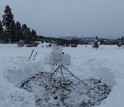
A radiometer from the University of Colorado measures how much supercooled liquid clouds contain.
Credit and Larger Version
The National Science Foundation (NSF)

Guillermo Gonzalo Sánchez Achutegui
ayabaca@gmail.com
ayabaca@hotmail.com
ayabaca@yahoo.com
Inscríbete en el Foro del blog y participa : A Vuelo De Un Quinde - El Foro!

viernes, 15 de enero de 2016

NSF : New NSF special report: Let It Snow! The Science of Winter .-

Hola amigos: A VUELO DE UN QUINDE EL BLOG., Nieve - ese icono de invierno - mantas de la tierra con un hermoso silencio. El amor o el odio, todos dependemos de nieve. Nuestro suministro de agua durante todo el año viene en gran parte de la nieve derretida.
Pero no somos los únicos que necesitan nieve.
Especies de hongos microscópicos y 800 libras-alces requieren como mucho, si no más. Sobreviven el invierno viviendo en iglú de la naturaleza: la nieve.
Y profusión de primavera de flores? Están fertilizados por nutrientes en la nieve.
Si usted está planeando para patinar en un lago congelado o río este invierno, a pie en una pendiente de nieve, o, cuando llega la primavera, dependerá de deshielo para llenar su depósito, puede que tenga que pensar dos veces.
El invierno está cambiando, cada vez menos como las estaciones frías podemos recordar. El "nuevo invierno" tiene consecuencias mucho más allá de diciembre a marzo. Afecta la primavera y el verano, también, incluyendo fechas de floración de plantas '- y especies como los colibríes que dependen de los tiempos de floración de precisión para el néctar.
More information...

Report reveals inner worlds of snow and winter, and their importance to humans and ecosystems

screenshot of website showing a snowflake and text let it snow the science of winter
Love it, hate it, we all depend on snow. In many areas, the year-round water supply depends on snow.
Credit and Larger Version
January 13, 2016
Snow -- that icon of winter -- blankets the land with a beautiful silence. Love it or hate it, we all depend on snow. Our year-round water supply largely comes from snowmelt.
But we're not the only ones who need snow.
Species from microscopic fungi to 800-pound-moose require it as much, if not more. They survive the winter by living in nature's igloo: snow.
And spring's profusion of flowers? They're fertilized by nutrients in snow.
If you're planning to skate on a frozen lake or river this winter, ski on a snowy slope, or, when spring arrives, depend on snowmelt to fill your reservoir, you may need to think twice.
 
A view of the new Winter


In celebration of snow and winter as we know it, and in a look at what winter may be like in the future, the National Science Foundation (NSF) has launched a new special report: Let It Snow! The Science of Winter.
The report focuses on projects supported largely by NSF's Directorate for Geosciences and Directorate for Biological Sciences/Division of Environmental Biology.
Grants from these areas fund research on subjects as diverse as measuring snowfall; tracking snowstorm "bombs," as whiteouts are known in meteorology; studying animals and plants that live beneath the snow in an ecosystem called the subnivian; searching for snowmelt, or "white gold"; and the bane of winter -- dust from the atmosphere that causes snow to melt before its time.
 
Go winter storm-chasing, enter nature's igloo
 
In the report, explore such topics as winter storm-chasing, a conifer tree's view of snow, life in nature's igloo, and where our winters have gone.
Watch a video of snowflakes photographed by a new high-speed camera, and another on the water that's locked in snow and ice: a zero sum game.
As you look out your window at a snow-covered landscape, or perhaps one that has been so in the past -- and even if you live below the snowline -- find out what scientists are learning about winter.
It matters, even if you never see a snowflake.
-NSF-

Media Contacts Cheryl Dybas, NSF, (703) 292-7734, cdybas@nsf.gov


The National Science Foundation (NSF) is an independent federal agency that supports fundamental research and education across all fields of science and engineering. In fiscal year (FY) 2016, its budget is $7.5 billion. NSF funds reach all 50 states through grants to nearly 2,000 colleges, universities and other institutions. Each year, NSF receives more than 48,000 competitive proposals for funding and makes about 12,000 new funding awards. NSF also awards about $626 million in professional and service contracts yearly.
 Get News Updates by Email 
Useful NSF Web Sites:
NSF Home Page:
 http://www.nsf.gov
NSF News:
http://www.nsf.gov/news/
For the News Media:
 http://www.nsf.gov/news/newsroom.jsp
Science and Engineering Statistics:
 http://www.nsf.gov/statistics/
Awards Searches:
 http://www.nsf.gov/awardsearch/
illustration showing 3 globes of continents and the jet stream and polar vortex
Can autumn snowfall in Siberia predict winter in the U.S. and Europe? Yes, say researchers.
Credit and Larger Version
illustration showing a satellite, mountains, forest and water
Scientists at NSF's Critical Zone Observatories study snowmelt and water resources.
Credit and Larger Version
illustration showing plants and animals under snow
A secret world, unseen by most humans, is alive beneath the surface of winter's snow.
Credit and Larger Version
a willow ptarmigan
The willow ptarmigan is one of many species that use snow as an insulating blanket.
Credit and Larger Version
frozen frog
How do wood frogs survive being frozen in winter? By living under the snow surface.
Credit and Larger Version

The National Science Foundation (NSF)
Guillermo Gonzalo Sánchez Achutegui
ayabaca@gmail.com
ayabaca@hotmail.com
ayabaca@yahoo.com
Inscríbete en el Foro del blog y participa : A Vuelo De Un Quinde - El Foro!

jueves, 14 de enero de 2016

NSF: Discovery Peering into the secret world of life beneath winter snows .- Mirando en el mundo secreto de la vida bajo las nieves del invierno

Hola amigos: A VUELO DE UN QUINDE EL BLOG.,  la Fundación de Ciencias de los Estados Unidos de América, the National Science Foundation (NSF), ha hecho un gran descubrimiento como viven la fauna y la flora, durante le crudo invierno en el Hemisferio Norte.
NSF, nos dice : La nieve cubre alrededor del 40 por ciento de las masas de tierra años de la Tierra tras año. Y, como los científicos están descubriendo, la nieve es crítica para los animales y plantas que viven en las latitudes del norte, así como aquellos en latitudes muy lejos del sur, como la Patagonia en la punta de América del Sur. Asegura su - y nuestra - la supervivencia.

"Sin la nieve, la vida vegetal y animal sería completamente diferente", dice el biólogo Jonathan Pauli de la Universidad de Wisconsin-Madison.

Pauli y científicos como Ben Zuckerberg, también de la Universidad de Wisconsin-Madison, son miembros de una nueva generación de investigadores llamados ecologistas invierno. El campo, que se centra en las relaciones entre los animales, plantas y sus entornos nevados, es relativamente nuevo.

"En comparación con otros hábitats, ecosistemas de nieve han sido escasamente explorado", dice Pauli. "Eso es un descuido importante, teniendo en cuenta la importancia de la nieve es en la vida de tantas especies."
More information.....

Snow sustains species from frogs to birds to mammals in winter and beyond
illustration showing plants and animals under snow
A secret world, unseen by most humans, is alive just beneath the winter snow.
Credit and Larger Version
January 5, 2016
Snow covers some 40 percent of Earth's land masses year in and year out. And, as scientists are discovering, snow is critical to animals and plants that live in northern latitudes, as well as those in far southern latitudes like Patagonia at the tip of South America. It ensures their -- and our -- survival.
"Without snow, plant and animal life would be completely different," says biologist Jonathan Pauli of the University of Wisconsin-Madison.
Pauli and scientists such as Ben Zuckerberg, also of the University of Wisconsin-Madison, are members of a new breed of researchers called winter ecologists. The field, which focuses on relationships among animals, plants and their snow-covered environments, is relatively new.
"Compared to other habitats, snow ecosystems have been barely explored," Pauli says. "That's a major oversight, considering how important snow is in the lives of so many species."
That list of species includes humans. Our spring and summer water resources depend heavily on meltwater from winter snows.
 
Nature's igloo
 
With a grant from the National Science Foundation (NSF)'s MacroSystems Biology Program, Pauli and Zuckerberg conduct research on what's called the subnivium, a seasonal and sensitive refuge beneath the snow's surface that's insulated and maintains a constant temperature. It's nature's igloo.
"We know very little about plants and animals that survive winter beneath the snow," says Liz Blood, a program director in NSF's Directorate for Biological Sciences. "This research is taking an innovative approach to studying the consequences of climate change on overwintering success of plants and animals in the subnivium."
What will happen if snow disappears in a warmer world?
Pauli and colleagues believe warming winters caused by climate change reduce the subnivium's duration, depth and insulation.
As a result of these altered conditions, they report in the journals Frontiers in Ecology and the Environment and PLOS One, the subnivium is showing more temperature variability and decreased -- not increased -- temperatures. Without enough snow, temperatures fall due to loss of insulation.
"In a warmer world with less snow, winter soils would be colder because the insulating snow layer on top is reduced," says Henry Gholz, a program director in NSF's Division of Environmental Biology. "That has implications for farmers planting crops in spring, as well as for the many burrowing mammals, microbes and insects that overwinter in snow."
The changes will have important implications for species that need the subnivium to survive, Zuckerberg says, "and will lead to large-scale shifts in their ranges."
Everything depends, adds Pauli, on having enough snow.
 
No two snowflakes, nor snows, alike
 
As children learn, no two snowflakes form in quite the same way. And, as northern peoples like the Inuit of Alaska know, nor are there two snows, nor snowfalls, exactly alike.
Annui, api, pukak. Qali, siqoq, kimoagruk. Upsik, qamaniq, siqoqtoaq -- these are the snow-words of the Inuit of northwestern Alaska. They've also become terms for snow used by many winter ecologists.
  • Perhaps you're reading this article nestled by a roaring fire, protected from the elements in a warm den or living room. Outside your icicle-laden window, you notice falling snow: annui.
  • Should you awaken one morning to snow covering the ground, you're seeing api.
  • Pukak is the layer at the bottom of a snow bank, "which is critical to the small mammals that live there in winter," Pauli says. "There's an entire world going on beneath the snow that we can't see."
  • Qali snow, nature's paintbrush, frosts the limbs of trees, and is no less ecologically important, providing shelter to birds and other animals seeking escape from the cold. The golden-crowned kinglet, for example, a tiny songbird of northern forests, survives winter's frigid nights because it can huddle under qali on conifer branches.
  • Trees whose branches are iced-over are said to be covered with kanik, and snow that swirls in whorls is siqoq. When those snows form drifts, they're known as kimoagruk.
  • Winter winds may eventually compact snow into a hard surface, called upsik, which offers a highway to animals like deer and moose that navigate best on hard-packed surfaces.
  • Qamaniq leaves hollows around the bases of trees; it offers shelter to birds such as ruffed and spruce grouse, and to snowshoe hares.
  • As spring arrives, it brings siqoqtoaq, "the sun crust" in the surface layer of snow that melts by day and re-freezes by night. In siqoqtoaq, microbes called snow algae, dormant during early winter months, bloom bright red and green.
Species need snow
 
Gazelles in the Gobi Desert in northern China and southern Mongolia rely on "snow mines," oases of water from melting snows buried beneath the sand. Other species use snow in ways that are just as resourceful.
Tiny mammals like shrews don't migrate but spend their winters in the subnivium. River otters slide down snowbanks and through openings in ice-covered waters to find fish. Gangly moose use snow as a footstools, to better reach tender shoots at the ends of branches. And some of the tiniest forms of life -- fungi and other microorganisms that live in and under the snow -- remain active throughout the winter.
Without fungi, wildflowers' summer bloom in mountain environments wouldn't happen. Fungi increase their metabolism as winter progresses, releasing nutrients from their by-products as snow melts in spring.
 
Snow research in a greenhouse
 
Since plants and animals depend on snow cover in winter, what lies ahead when the global climate's increased warmth has reduced snow levels?
"We should be very concerned about these changes," Pauli says.
He, Zuckerberg, Warren Porter of the University of Wisconsin-Madison and Brian McMahon of Operation Fresh Start are working to assess climate change effects on the sensitive subnivian habitat.
Using micro-greenhouses placed at sites in Wisconsin, Minnesota and Michigan, the ecologists mimic climate conditions predicted for the Great Lakes region by 2050. The micro-greenhouses automatically open when it snows, allowing a subnivium to form inside.
The research reveals how future subnivium conditions will affect the physiology, survival and distribution of species dependent on this realm-beneath-the-snow.
To date, micro-greenhouse experiments show that although ambient temperature within a micro-greenhouse is set at 5 degrees Celsius warmer than the temperature outside the greenhouse, "the natural daily minimum subnivium temperature drops significantly lower inside," Pauli says.
Translation: less snow is falling.
Without snow cover and its insulation, the greenhouse interior -- and its subnivian inhabitants such as hibernating amphibians -- are exposed to the winter cold.
"Our findings suggest climate change could have considerable effects on the refuge quality of the subnivium," Pauli says.
The future for plants and animals, including us, say Pauli and Zuckerberg, looks brightest as a white, not green, winter.
-- Cheryl Dybas, NSF (703) 292-7734
 cdybas@nsf.gov
Related Programs MacroSystems Biology
Related WebsitesNSF Grant: Warming Winters and Regional Implications for the Subnivean Climate: http://www.nsf.gov/awardsearch/showAward?AWD_ID=1340632&HistoricalAwards=false
NSF Discovery: The Search for White Gold: Snowmelt:
http://nsf.gov/discoveries/disc_summ.jsp?cntn_id=127580
NSF Discovery: The Depths of Winter: How Much Snow Is In Fact On the Ground?: http://www.nsf.gov/news/news_summ.jsp?cntn_id=123106
NSF Discovery: Dust-on-Snow: On Spring Winds, Something Wicked This Way Comes: http://www.nsf.gov/discoveries/disc_summ.jsp?cntn_id=116707
NSF Discovery: Inside a Snowstorm: Scientists Obtain Close-Up Look at Old Man Winter: http://www.nsf.gov/news/news_summ.jsp?cntn_id=118365
NSF Discovery: A Tree Stands in the Sierra Nevada: The Link Among Conifers, Snowmelt and Water Resources:
 http://www.nsf.gov/discoveries/disc_summ.jsp?cntn_id=125091&org=NSF
Video: Snow in warming winters:
 https://vimeo.com/134676387
a willow ptarmigan
The willow ptarmigan is a common resident of the subnivium; it uses snow as an insulating blanket.
Credit and Larger Version
frozen wood frog on snow
How do wood frogs survive being frozen in winter? By living under the snow surface.
Credit and Larger Version
A winter ecologist peers beneath the subnivium and into the den of a porcupine living there.
A winter ecologist peers beneath the subnivium and into a porcupine den.
Credit and Larger Version
map of north america showing snwo cover
The depth and extent of snow cover in North America are rapidly decreasing, affecting the subnivium.
Credit and Larger Version
A micro-greenhouse and research equipment in the field with snow
A micro-greenhouse can reproduce climate change's effects on the world under snow.
Credit and Larger Version
the National Science Foundation (NSF)
Guillermo Gonzalo Sánchez Achutegui
ayabaca@gmail.com
ayabaca@hotmail.com
ayabaca@yahoo.com
Inscríbete en el Foro del blog y participa : A Vuelo De Un Quinde - El Foro!

domingo, 1 de marzo de 2015

NASA : Chicago in Winter .- El crudo invierno en Chicago visto desde la Estación Espacial Internacional

Hola amigos: A VUELO DE UN QUINDE EL BLOG., hemos recibido de la Agencia Espacial NASA, una vista captada desde la Estación Espacial Internacional, de Chicago lleno de hielo, por el crudo invierno que está padeciendo.
NASA, nos dice : "Desde la Estación Espacial Internacional (ISS), la Agencia Espacial Europea astronauta Samantha Cristoforetti tomó esta fotografía de Chicago y lo publicó a los medios sociales, el 19 de febrero de 2015. Ella escribió, "¿Cómo te gusta #Chicago vestida para el invierno?"
NASA, agrega : "Miembros de la tripulación de la estación espacial fotografiar la Tierra desde su punto de vista único situado a 200 kilómetros por encima de la superficie, como parte del programa de Observaciones Crew Tierra. Fotografías registran cómo el planeta está cambiando con el tiempo, a partir de los cambios causados por el hombre, como el crecimiento urbano y la construcción de embalses, con eventos dinámicos naturales como huracanes, inundaciones y erupciones volcánicas. Los astronautas han utilizado cámaras de mano para fotografiar la Tierra hace más de 40 años, comenzando con Las Misiones Mercury en la década de 1960. La ISS mantiene una altitud de entre 220 a 286 millas (354 a 460 kilómetros) sobre la Tierra, y una inclinación orbital de 51.6˚, proporcionando un excelente escenario para la observación de las zonas más pobladas del mundo.
Chicago in Winter
From the International Space Station (ISS), European Space Agency astronaut Samantha Cristoforetti took this photograph of Chicago and posted it to social media on Feb. 19, 2015. She wrote, "How do you like #Chicago dressed for winter?"
Crewmembers on the space station photograph the Earth from their unique point of view located 200 miles above the surface as part of the Crew Earth Observations program. Photographs record how the planet is changing over time, from human-caused changes like urban growth and reservoir construction, to natural dynamic events such as hurricanes, floods and volcanic eruptions. Astronauts have used hand-held cameras to photograph the Earth for more than 40 years, beginning with the Mercury missions in the early 1960s. The ISS maintains an altitude between 220 - 286 miles (354 - 460 km) above the Earth, and an orbital inclination of 51.6˚, providing an excellent stage for observing most populated areas of the world.
Image Credit: NASA/ESA/Samantha Cristoforetti
NASA
Guillermo Gonzalo Sánchez Achutegui
ayabaca@gmail.com
ayabaca@hotmail.com
ayabaca@yahoo.com
Inscríbete en el Foro del blog y participa : A Vuelo De Un Quinde - El Foro!

Mi lista de blogs